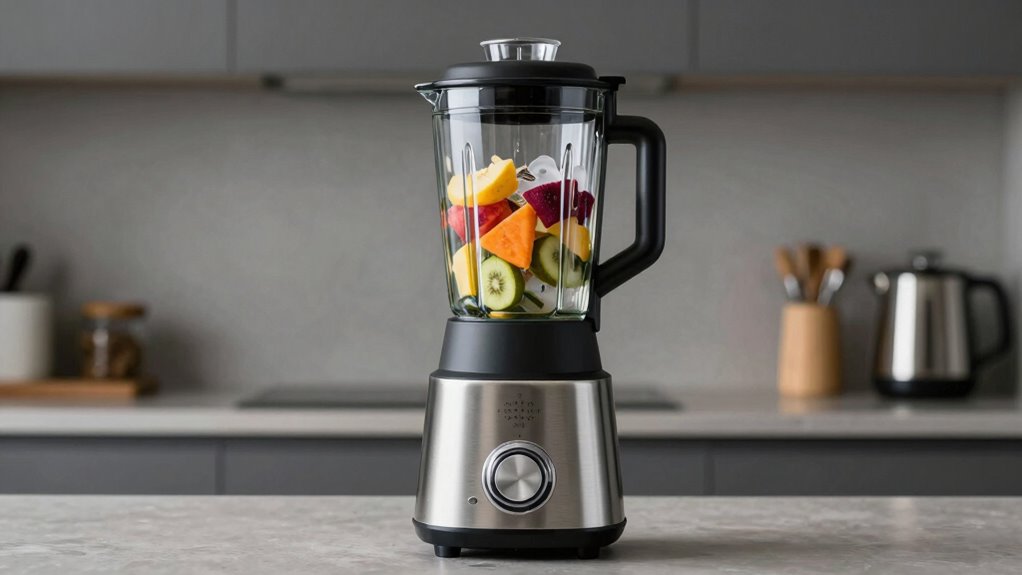

Many people believe that higher wattage means a better blender, but that’s not always true. Instead, focus on the motor’s design, blade quality, and control options. A powerful motor with poor blades or limited settings won’t perform well. Reputable brands pay attention to efficiency and durability. If you keep exploring, you’ll discover which specs really make a difference in blending quality and longevity.

Get health and wellness essentials delivered free — and shop member deals
- Fast, free delivery on millions of items
- Access to Prime Big Deal Days deals on October 6–7
- Prime Video, Amazon Music and more included
Key Takeaways
- Motor size and brand reputation are more important for performance than wattage alone.
- High wattage doesn’t guarantee better blending; blade design and efficiency are crucial.
- Adjustable speed controls and variable settings enhance blending versatility and precision.
- Power output doesn’t directly correlate with noise levels or durability.
- Focus on real-world performance, including blade quality and motor efficiency, rather than horsepower figures.
high quality blender with variable speed control
As an affiliate, we earn on qualifying purchases.
As an affiliate, we earn on qualifying purchases.
What Blender Specs Actually Impact Performance?

Ever wonder which Blender specs truly affect its performance? The key factors are motor size and brand reputation. A larger motor size generally means more power, allowing the blender to handle tougher ingredients and blend more smoothly. However, don’t assume a higher wattage always equals better performance—motor design matters too. motor design can influence efficiency and noise levels, making a significant difference in daily use. Additionally, brand reputation often correlates with quality control and reliability, ensuring consistent performance over time. Reputable brands tend to produce reliable, durable blenders with consistent quality. They often invest in better motor engineering and quality control, which impacts durability and ensures your blender performs well over time. So, instead of just chasing the highest wattage, focus on a reputable brand with a motor size suited for your blending needs. These specs directly influence how well your blender performs daily, especially when considering performance consistency over prolonged use. Moreover, understanding user reviews can provide insights into real-world durability and performance.
reliable motor blender for tough ingredients
As an affiliate, we earn on qualifying purchases.
As an affiliate, we earn on qualifying purchases.
Does Motor Wattage Determine Blender Power?
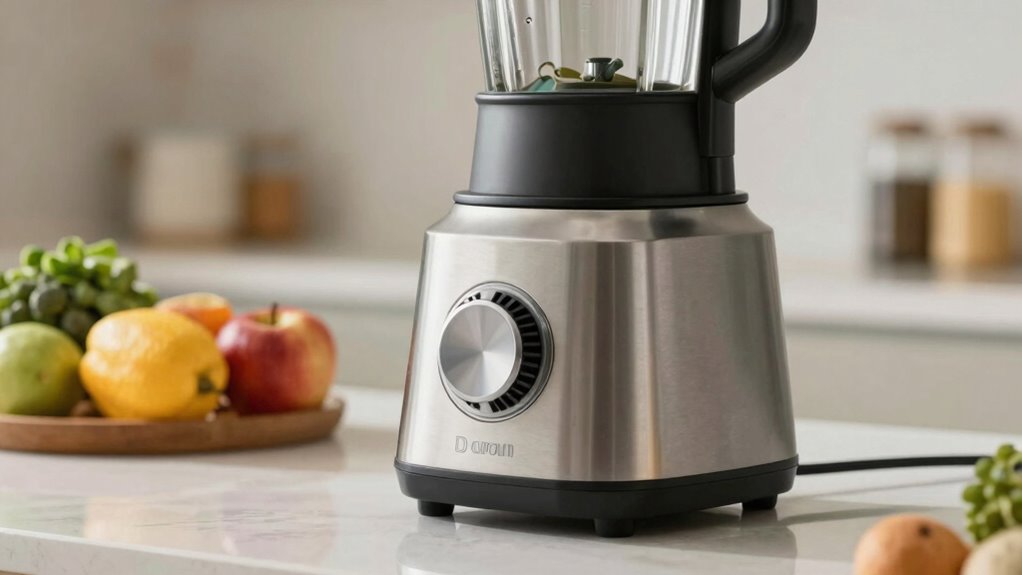
While motor wattage is often seen as a key indicator of a blender’s power, it doesn’t tell the whole story. Higher motor wattage or blender horsepower doesn’t automatically mean better performance. Instead, many other factors influence how well a blender handles tough ingredients. Think about how the motor’s power translates into blade speed and torque. Also, consider the design of the blades, the motor’s efficiency, and how well the motor manages heat during heavy use. Here’s what really matters:
Motor wattage alone doesn’t determine a blender’s true blending power or efficiency.
- The quality of the blades that chop and blend efficiently
- How the motor’s power is transferred through the drive system
- The motor’s ability to sustain high speeds without overheating
- Overall design and engineering that maximize power output
- Motor efficiency plays a crucial role in a blender’s real-world performance, affecting how effectively it can process challenging ingredients. Additionally, power transfer efficiency impacts how effectively the motor’s energy is converted into blending action, making it an essential consideration. Recognizing the importance of motor durability can also help you choose a blender that maintains performance over time, especially during heavy use. Factors such as heat management are vital to prevent overheating and ensure consistent operation during extended blending tasks.
blender with durable blades and efficient motor
As an affiliate, we earn on qualifying purchases.
As an affiliate, we earn on qualifying purchases.
Do Blade Design and Material Make a Difference?
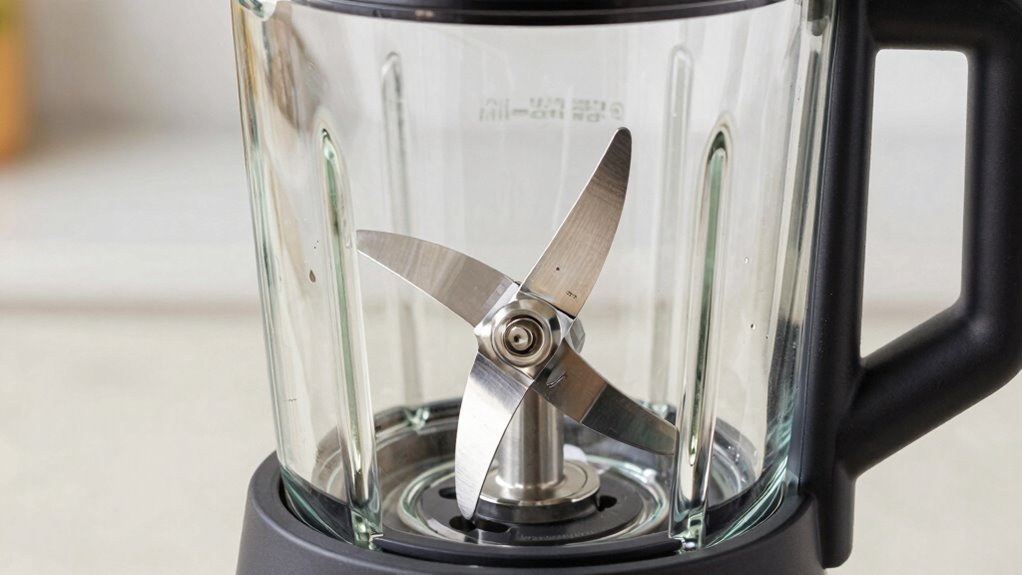
Have you ever wondered if the design and materials of blender blades really affect blending performance? The answer is yes. Blade design directly impacts how effectively your blender processes ingredients, especially tough or fibrous items. Well-designed blades with sharper angles can cut more efficiently, reducing strain on your motor. Material versatility also plays a key role; blades made from high-quality stainless steel or other durable materials offer better blade durability, resisting dulling and corrosion over time. Using blades with proper blade geometry can significantly improve blending results. Additionally, choosing blades made from high-quality materials ensures longevity and consistent performance, resisting wear and maintaining sharpness longer. Proper blade maintenance also extends the lifespan of your blades, keeping them sharp and effective. This means you won’t need to replace blades frequently, saving you money and hassle. An often overlooked factor is the blade thickness, which can influence how well your blender handles dense or frozen ingredients. While motor power is important, the right blade design and quality materials make a noticeable difference in blending performance and longevity. Invest in blades that combine thoughtful design with durable materials for the best results.
best brand for performance blender
As an affiliate, we earn on qualifying purchases.
As an affiliate, we earn on qualifying purchases.
How Important Are Speed Settings and Variable Controls?
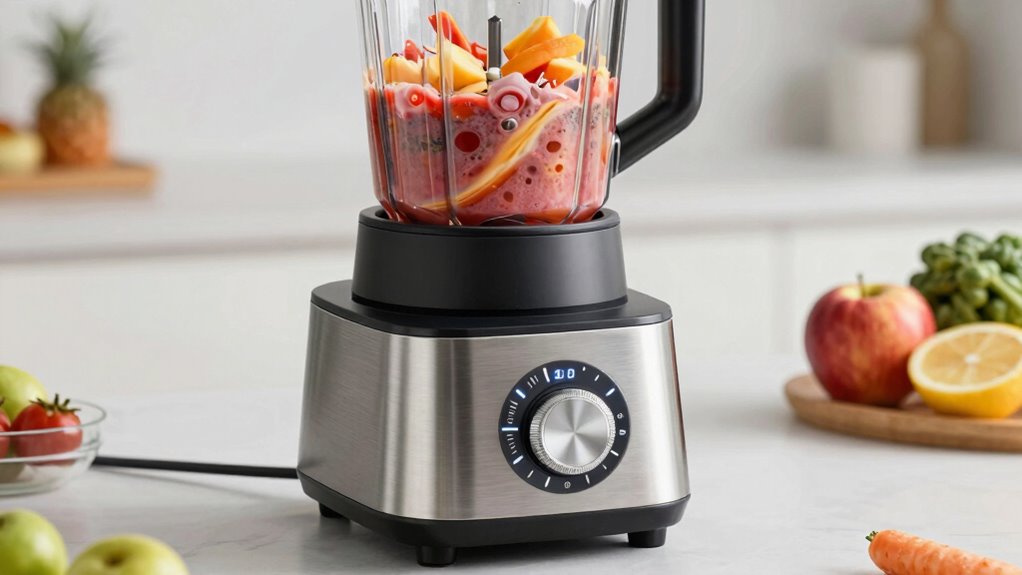
Speed settings and variable controls are essential because they allow you to tailor blending intensity to different ingredients and recipes. With adjustable speed, you can smoothly process everything from delicate herbs to tough ice or frozen fruit. The motor size influences how well these controls perform; a larger motor offers more power for precise adjustments without stalling. A reputable brand reputation assures you of durability and consistent performance at various speeds. Imagine:
Adjustable speed and a powerful motor ensure smooth blending and perfect textures every time.
- Fine-tuning blending for silky smoothies
- Powering through tough ingredients seamlessly
- Achieving perfect textures with slow or fast speeds
- Reducing splatter and mess during operation
These features let you customize each blend, making your appliance versatile and effective for a wide range of tasks, regardless of motor size or brand reputation.
Top Blender Myths About Power and Performance Debunked

Many people believe that a powerful motor alone guarantees top performance in a blender, but this isn’t always true. A high wattage doesn’t necessarily mean quieter blender noise or better blending results. In fact, some powerful models generate more noise, which can be disruptive. Additionally, the aesthetic design of a blender plays a significant role in its overall appeal and user experience, often outweighing raw power. A sleek, well-designed blender can blend smoothly and efficiently without being overly loud or bulky. Furthermore, considering the Watering Tips for Indoor Plants can provide insight into how design and functionality impact overall performance. So, don’t be swayed solely by motor specs. Focus on how the blender performs in real-world use, its noise levels, and how its aesthetic design fits your kitchen, rather than just its horsepower. Power isn’t everything—performance includes noise and style, too. Recognizing performance factors beyond power can help you choose a blender that truly meets your needs.
Frequently Asked Questions
How Does Container Size Affect Blending Efficiency?
Container size directly affects blending efficiency by influencing blending speed and effectiveness. A larger container capacity allows you to blend bigger quantities at once, which can slow down blending if the motor isn’t powerful enough. Conversely, a smaller container promotes quicker blending with less strain on the motor. Choose a container size that matches your typical blending needs; an appropriately sized container guarantees smooth, efficient blending without overloading your blender.
Are Higher-Priced Blenders Necessarily More Powerful?
Higher-priced blenders aren’t always more powerful, but they often have better motor durability and come from reputable brands, which can guarantee longer-lasting performance. You should look beyond price tags and focus on motor strength, build quality, and brand reputation. Cheaper models may lack durability, while more expensive ones typically offer enhanced power and longevity, making them a worthwhile investment if you want reliable blending over time.
What Role Does Motor Type Play in Performance?
Motor type directly impacts your blender’s performance by influencing motor durability and electrical efficiency. A durable motor guarantees it can handle heavy blending without burning out, giving you long-lasting reliability. Electrical efficiency means it uses less power while delivering strong performance, saving you money on energy bills. Choosing the right motor type helps you get smooth blends quickly and keeps your blender working well over time.
Can a Blender’s Noise Level Indicate Its Power?
Imagine you’re blending tough ingredients, and the noise level spikes—this often suggests higher power. Noise levels can hint at a blender’s power, but it’s not a foolproof indicator. Sometimes, a loud blender might have a powerful motor, but others could be noisy due to design. So, while noise levels can give you clues, they don’t reliably indicate overall power; check specs for a better picture.
Do Additional Features Impact Overall Blending Capability?
Additional features can enhance your blending experience, but they don’t directly impact overall blending capability. Focus on motor durability, as a sturdy motor ensures consistent performance over time, and aesthetic appeal, which makes your blender more enjoyable to use daily. While extra functions might add convenience, they shouldn’t replace a powerful motor or a durable build, both of which are essential for effective, long-lasting blending results.
Conclusion
Don’t fall for the myth that a higher wattage magically turns your blender into a superhero. The real power lies in blade design, motor efficiency, and smart features—these are your secret weapons for perfect smoothies and crushing ice effortlessly. Forget the wattage hype; focus on what actually matters. With the right specs, your blender becomes a culinary powerhouse, capable of transforming ingredients into silky smooth masterpieces faster than you can say “blend!”
Fall Picks
fall essentials
As an affiliate, we earn on qualifying purchases.