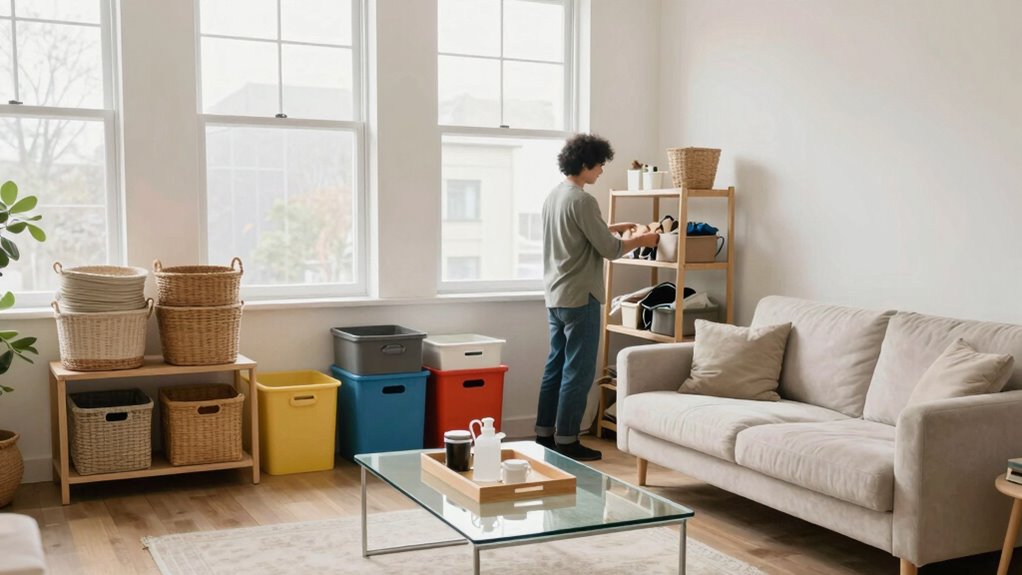

To declutter without meltdowns, focus on quick, manageable 15-minute resets. Use simple strategies like creating designated piles—keep, donate, recycle, discard—and tackle one small area at a time. Set a timer and stay mindful of emotional triggers, giving yourself permission to set aside sentimental items temporarily. Celebrate small wins to stay motivated and maintain a positive mindset. If you keep this approach, you’ll discover effective ways to create calm and order with less stress.

Get health and wellness essentials delivered free — and shop member deals
- Fast, free delivery on millions of items
- Access to Prime Big Deal Days deals on October 6–7
- Prime Video, Amazon Music and more included
Key Takeaways
- Set a timer for 15 minutes to stay focused and prevent overwhelm during your decluttering session.
- Create designated piles (“Keep,” “Donate,” “Recycle,” “Discard”) to streamline decision-making.
- Break the process into small areas or tasks to make the reset manageable and less intimidating.
- Allow yourself to set aside sentimental items temporarily to avoid emotional overload.
- Celebrate small wins to maintain a positive mindset and build momentum consistently.

Decluttering can feel overwhelming, especially when emotions run high or possessions hold sentimental value. It’s common to get stuck in a cycle of attachment, guilt, or frustration, which makes even small tasks seem intimidating. To tackle this without feeling overwhelmed, it helps to develop effective sorting strategies. These strategies guide you through the process, making decisions clearer and faster. Start by creating designated piles or boxes labeled “Keep,” “Donate,” “Recycle,” and “Discard.” This simple framework helps you stay organized and focused. When you’re faced with items that evoke emotional triggers, pause and ask yourself if you truly need or value that object. Sometimes, recognizing the emotional trigger behind your hesitation can help you detach and make more rational choices. For example, if an item reminds you of a loved one who’s no longer in your life, acknowledge the sentiment but remind yourself that memories aren’t stored in physical objects. This awareness helps you avoid unnecessary emotional drain and keeps the process moving smoothly.
Being mindful of emotional triggers and how they influence decision-making can make the decluttering process more manageable. You don’t need hours to declutter; a quick 15-minute room reset can make a tangible difference. Set a timer and commit to working steadily during that time. Focus on one area, like a countertop, drawer, or corner of a room, rather than trying to do everything at once. As you sort, keep your sorting strategies in mind—quickly decide what’s essential, what can be given away, or what no longer serves a purpose. When faced with sentimental items or things tied to emotional triggers, give yourself permission to set those aside temporarily if you’re feeling overwhelmed. You can revisit them later when you’re more prepared emotionally. The key is to stay intentional and avoid getting lost in nostalgia or regret.
Throughout the process, remember that decluttering isn’t about perfection; it’s about progress. Celebrate small victories, like clearing a single drawer or removing a pile of clutter from your desk. If emotions start running high, take a deep breath and remind yourself of your goal: creating a calmer, more organized space. Sometimes, just the act of decluttering for 15 minutes can restore a sense of control and peace. Keep your mindset positive and focus on the benefits of a tidier environment. Over time, these short, focused sessions will build momentum, making the entire process feel less intimidating and more manageable. With consistent effort and mindful sorting strategies, you’ll find yourself decluttering without meltdowns and enjoying a cleaner, more peaceful space.
15-minute decluttering organizer bins
As an affiliate, we earn on qualifying purchases.
As an affiliate, we earn on qualifying purchases.
Frequently Asked Questions
How Can I Motivate Reluctant Family Members to Declutter?
You can motivate reluctant family members by encouraging family participation and offering decluttering incentives. Make it fun by setting a timer for quick, 15-minute resets, and involve everyone in choosing what to keep or donate. Celebrate small wins together, and offer rewards like treats or extra screen time. When they see the benefits and feel involved, they’ll be more likely to join in without resistance.
What Tools Are Best for Quick Room Resets?
Tools for quick room resets are like a Swiss Army knife—versatile and handy. Use clear storage solutions to quickly contain clutter, making it easier to see what needs to be done. Incorporate organizing hacks like labeled bins and portable baskets to streamline the process. A timer keeps you focused, and a laundry basket can be a catch-all for items you want to sort later. These tools make cleanup faster and more efficient.
How Do I Handle Sentimental Items During Decluttering?
When handling sentimental items, acknowledge your emotional attachment and prioritize sentimental storage solutions. Take a moment to reflect on each item’s significance before deciding to keep, donate, or discard. Set boundaries—if an item sparks too much emotion, consider photographing it for memory preservation and then letting it go. This approach helps you manage emotional attachment while efficiently decluttering, ensuring you respect your feelings without overwhelming yourself.
What if I Feel Overwhelmed by the Clutter?
When clutter feels overwhelming, take a deep breath and practice mindful breathing to calm your mind. Break the task into small, manageable steps, focusing on one area at a time. Don’t hesitate to seek emotional support from a friend or family member if needed. Remember, it’s okay to pause and recharge; decluttering is a process, not a race. You’ve got this—step by step.
How Often Should I Perform a Room Reset?
You should perform a room reset weekly or bi-weekly, depending on your clutter levels and timing strategies. This frequency helps you maintain a tidy space without feeling overwhelmed. Commit to a consistent schedule, like every Sunday evening or midweek, so decluttering becomes a routine. Adjust the timing recommendations based on your lifestyle, ensuring you stay proactive and prevent clutter from piling up, keeping your space calm and manageable.
labelled storage boxes for decluttering
As an affiliate, we earn on qualifying purchases.
As an affiliate, we earn on qualifying purchases.
Conclusion
By following these simple 15-minute resets, you’ll transform your space and your mindset in no time. Remember, even a tiny effort can turn chaos into calm — it’s like wielding a magic wand over your home! So don’t let clutter take over your life; instead, take control with quick, focused decluttering. Before you know it, your home will shine brighter than a star, and you’ll feel lighter than a feather, ready to conquer anything!
As an affiliate, we earn on qualifying purchases.
emotional trigger decision-making tools
As an affiliate, we earn on qualifying purchases.
As an affiliate, we earn on qualifying purchases.
Cold & flu season Picks
humidifiers
As an affiliate, we earn on qualifying purchases.