To reduce eye strain without needing new glasses, you can start by managing blue light exposure with filters or night modes, and adjusting your screen brightness to match ambient lighting. Set up your workspace ergonomically, keeping your monitor at eye level and at arm’s length. Take regular breaks using the 20-20-20 rule, and blink often to prevent dryness. Small changes like these can make a big difference—continue exploring how to optimize your eye comfort.
Key Takeaways
- Use blue light filters or screen protectors to reduce eye fatigue from digital devices.
- Adjust screen brightness to match ambient lighting for comfortable viewing.
- Follow the 20-20-20 rule: look 20 feet away for 20 seconds every 20 minutes.
- Set up your workspace ergonomically, keeping screens at eye level and maintaining good posture.
- Take regular breaks, blink often, and practice eye exercises to relax eye muscles.
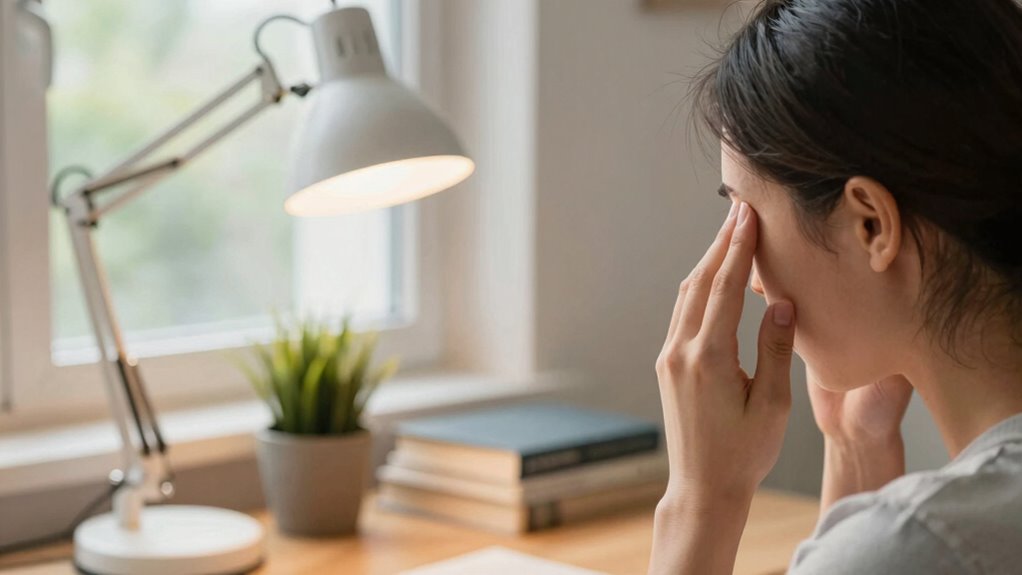
Eye strain has become a common issue in our digital age, but you can take simple steps to relieve it. One of the easiest ways is by reducing the amount of blue light reaching your eyes. Blue light filters are designed to do just that. You can find apps and screen protectors that block or filter blue light, especially during evening hours. Using these filters helps decrease eye fatigue and makes it easier to relax your eyes after long periods of screen time. Additionally, adjusting your device’s brightness to match your environment prevents your eyes from constantly adjusting between bright screens and dim surroundings. Most devices now have built-in settings for blue light filters or night modes, so take advantage of those features.
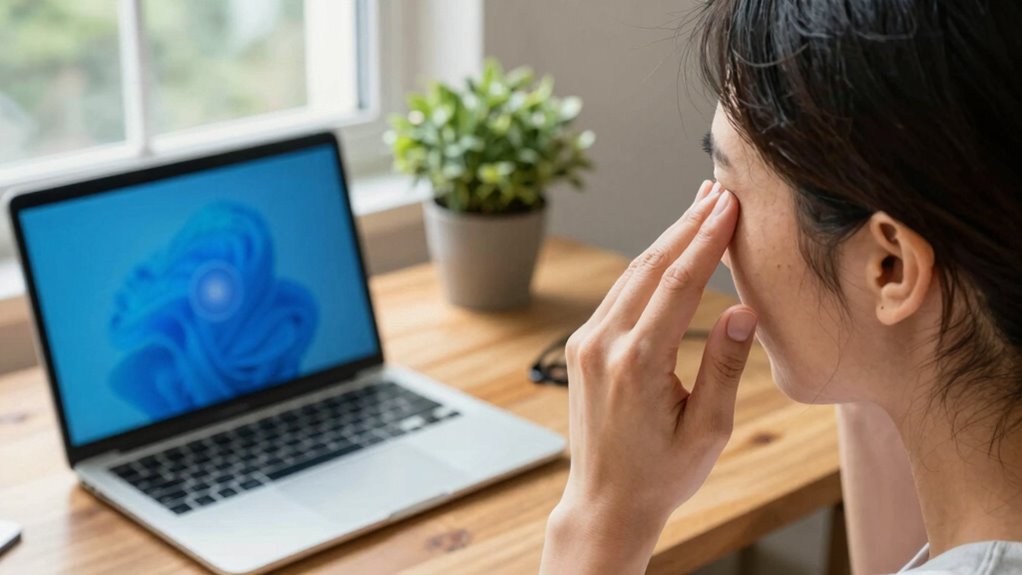
Reduce eye strain by using blue light filters and adjusting screen brightness for a more comfortable digital experience
Beyond screen adjustments, setting up an ergonomic workspace plays a essential role in preventing eye strain. Your monitor should be positioned about an arm’s length away, with the top of the screen slightly below eye level. This helps you maintain a natural, comfortable head and neck position while working. Make sure your chair supports good posture, allowing your feet to rest flat on the ground and your back to be fully supported. A well-organized, ergonomic setup reduces muscle tension and encourages you to take breaks more frequently, which is fundamental for eye health. When your workspace is optimized, you’re less likely to strain your eyes trying to focus or adjust awkwardly. Incorporating ergonomic principles can further improve your overall comfort and reduce eye strain over time.
Taking regular breaks is another necessary step. Follow the 20-20-20 rule: every 20 minutes, look at something 20 feet away for at least 20 seconds. This simple habit relaxes your eye muscles and prevents constant focusing fatigue. Blink more often during screen use to keep your eyes moist and reduce dryness. If you feel your eyes becoming tired, give them a gentle massage or splash cold water on your face to refresh yourself.
Finally, pay attention to your overall eye health by staying hydrated and maintaining good lighting conditions. Proper ambient lighting reduces glare and minimizes eye strain. If you wear contact lenses, ensure they are clean and well-fitted to avoid additional discomfort. You don’t need new glasses to manage eye strain effectively—small changes like these, combined with blue light filters and an ergonomic setup, can make a noticeable difference. By implementing these straightforward strategies, you can enjoy your digital devices comfortably and protect your eyes from unnecessary fatigue.
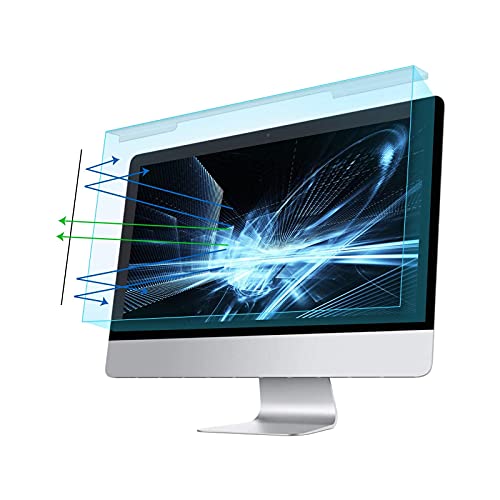
MOSISO 23-24 inch Computer Blue Light Blocking Screen Protector Anti-UV Eye Protection Filter Film Panel for Diagonal 23,23.6,23.8,24 inch 16:9 Widescreen Desktop PC LED Monitor(21.26×13.39 inch/LxW)
Dimension: 21.26 x 13.39 inch/L x W. Compatible with iMac 24 inch;compatible with Lenovo Ideacentre 23.8;compatible with HP…
As an affiliate, we earn on qualifying purchases.
As an affiliate, we earn on qualifying purchases.
Frequently Asked Questions
Can Eye Exercises Really Reduce Eye Strain Effectively?
Yes, eye exercises can effectively reduce eye strain. Vision therapy and eye relaxation techniques help strengthen eye muscles and improve focus, easing discomfort from prolonged screen time. Regularly practicing these exercises, like the 20-20-20 rule or blinking exercises, promotes relaxation and reduces fatigue. Incorporating eye relaxation techniques into your routine can make a noticeable difference, especially if you spend hours in front of screens daily.
How Does Proper Lighting Help Prevent Eye Strain?
Imagine uncovering the secret to eye comfort—proper lighting. When you optimize ambient illumination and reduce glare, your eyes work less hard, preventing strain. Bright, evenly distributed light helps you see clearly without flickering or harsh shadows. Keep screens at eye level and avoid reflections. This simple step creates a soothing environment, so your eyes stay relaxed, focused, and free from fatigue throughout your day.
Are There Specific Dietary Changes That Benefit Eye Health?
You can improve your eye health with simple dietary changes. Focus on nutrition tips like eating foods rich in omega-3 fatty acids, leafy greens, and colorful fruits. These provide antioxidant benefits that protect your eyes from damage. Incorporate nuts, carrots, and fish into your diet regularly. Staying hydrated also helps maintain eye moisture. These small steps support your vision and reduce eye strain without needing new glasses.
How Often Should I Take Breaks During Screen Time?
You should take a break every 20 minutes during screen time to reduce eye strain. Use ergonomic desk setups to guarantee proper posture and minimize discomfort. Adjust your screen brightness so it matches your environment, preventing glare and reducing eye fatigue. Follow the 20-20-20 rule: look at something 20 feet away for 20 seconds. These simple steps help protect your eyes without needing new glasses.
Do Blue Light Filters Make a Difference in Eye Strain Relief?
Blue light filters can help reduce eye strain, especially if you spend long hours in front of screens. While their effectiveness varies, applying a filter can lessen glare and digital eye fatigue. You might notice fewer headaches and less dryness. Keep in mind, the benefits depend on proper filter use and your individual sensitivity. Combining filters with regular breaks maximizes eye comfort, making screen time more manageable.
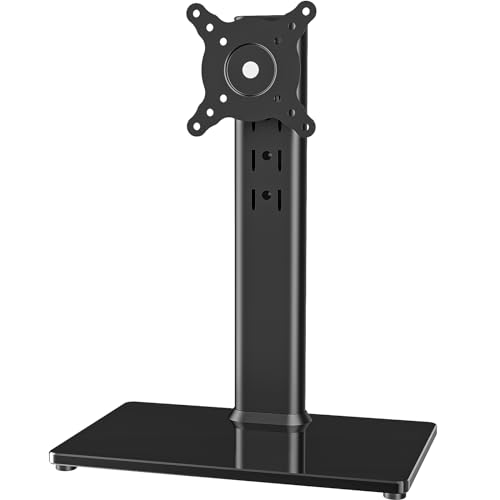
Single LCD Computer Monitor Free-Standing Desk Stand Mount Riser for 13 inch to 32 inch screen with Swivel, Height Adjustable, Rotation, Vesa Base Stand Holds One (1) Screen up to 77Lbs(HT05B-001))
COMPATIBILITY ☞ Single Computer monitor mount free standing Desk Stand Riser fitting screens for 13,15,17,19,21,23,27,30,32 inch LCD LED…
As an affiliate, we earn on qualifying purchases.
As an affiliate, we earn on qualifying purchases.
Conclusion
So, next time your eyes feel like they’ve been through a marathon, remember, you don’t need to splash out on new glasses. Try blinking more, take breaks, or just stare at something far away—your eyes will thank you (or at least pretend to). Who knew that simple tricks could save you from the glare of your screens and the agony of eye strain? Your eyeballs will thank you for the free upgrade!

Stylish Blue Light Blocking Glasses for Women or Men – Ease Computer and Digital Eye Strain, Dry Eyes, Headaches and Blurry Vision – Instantly Blocks Glare from Computers and Phone Screens w/Case
BLUE LIGHT GLASSES – Eyeglasses that protect your eyes: Blue light from computer screens can lead to eyestrain….
As an affiliate, we earn on qualifying purchases.
As an affiliate, we earn on qualifying purchases.
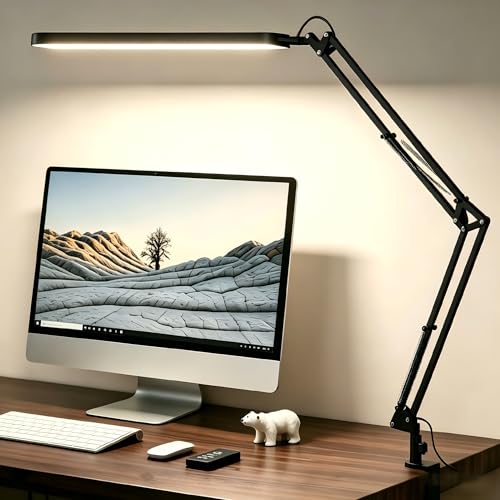
SKYLEO Desk Lamp for Home Office, Eye Comfortable LED Desk Light for Long Hours, Adjustable Swing Arm with Memory Function, Black
Comfortable Light for Long Working Hours – Designed for home office and study desks, this LED desk lamp…
As an affiliate, we earn on qualifying purchases.
As an affiliate, we earn on qualifying purchases.