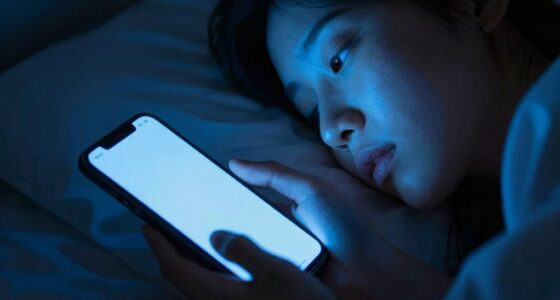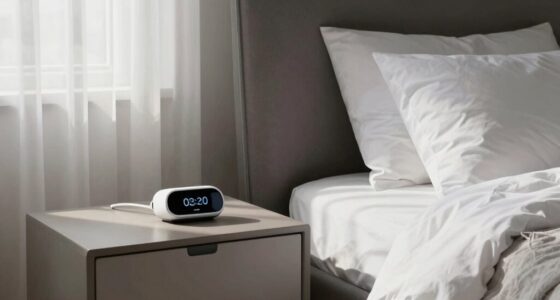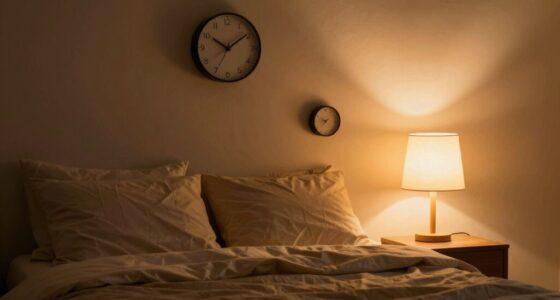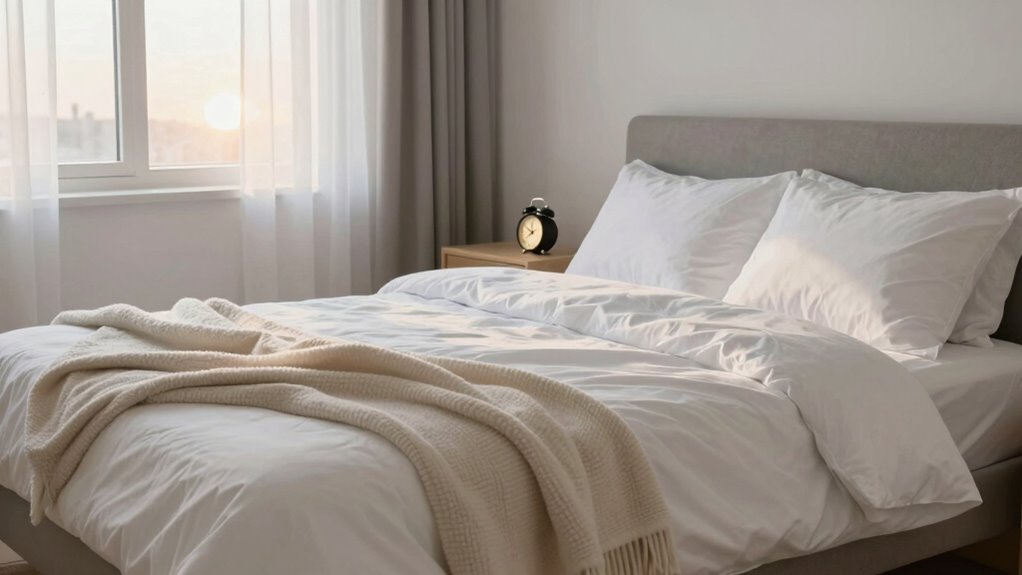

To reset your sleep schedule within 48 hours after travel, focus on optimizing light exposure by spending mornings outside to sync your circadian rhythm. maintain a consistent sleep and wake time aligned with your destination’s schedule, avoid long naps, and stay hydrated. Create a dark, quiet sleep environment and steer clear of caffeine or alcohol before bed. For more effective strategies, follow steps that help your internal clock adjust quickly and comfortably.

Get health and wellness essentials delivered free with Prime
- Fast, free delivery on millions of items
- Prime Video, Amazon Music and more included
- Member-only deals all year
Key Takeaways
- Expose yourself to morning sunlight to synchronize your circadian rhythm with your home time zone.
- Maintain consistent sleep and wake times aligned with your usual routine.
- Stay hydrated and avoid caffeine or alcohol before bedtime to improve sleep quality.
- Create a dark, quiet, and cool sleep environment to support rest.
- Limit long naps; opt for short 20-30 minute naps early in the day if needed.
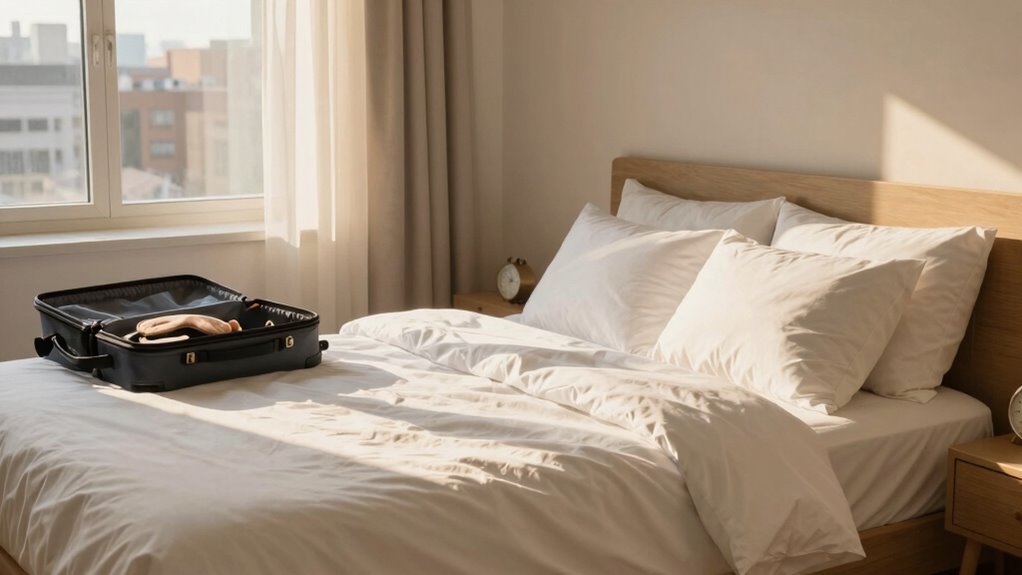
Travel can disrupt your sleep patterns, leaving you feeling tired and off-balance once you return home. When you cross multiple time zones, your body struggles to adjust, often causing jet lag that messes with your circadian rhythm—the internal clock that regulates your sleep-wake cycle. This misalignment makes you feel groggy during the day and restless at night, making it hard to get back to a normal schedule. Luckily, you can reset your sleep in just 48 hours by understanding how your circadian rhythm works and taking targeted steps to realign it.
First, it’s essential to expose yourself to natural light as soon as possible after arriving home. Light is the primary cue your brain uses to set your internal clock. Spend time outdoors during the day, especially in the morning, to signal to your brain that it’s daytime. This helps your circadian rhythm synchronize with the local time, reducing jet lag symptoms. If natural light isn’t available, consider using a light therapy box to simulate sunlight. This quick adjustment can markedly accelerate your body’s internal clock realignment.
Next, pay close attention to your sleep schedule. Try to go to bed and wake up at the same times as your usual routine, even if you’re feeling tired or jet-lagged. Consistency is key in resetting your circadian rhythm. Initially, you might feel sleepy earlier or later than usual, but stick to your schedule. Avoid napping for long periods during the day, as this can interfere with your nighttime sleep. If you’re extremely tired, opt for a brief 20-30 minute nap early in the afternoon rather than long rest periods, which may make falling asleep at night more difficult.
Hydration also plays a role in resetting your sleep cycle. Dehydration from travel can worsen fatigue and disrupt sleep quality. Drink plenty of water throughout the day, but avoid caffeine and alcohol close to bedtime. Caffeine can interfere with falling asleep, while alcohol might make you feel sleepy initially but disrupt your sleep later in the night. Keep your environment cool, dark, and quiet to promote better sleep. Using blackout curtains and white noise machines can help create an ideal sleeping environment, further supporting your circadian rhythm realignment.
Additionally, understanding how your circadian rhythm responds to external cues can help you optimize your adjustments and speed up the process. Finally, give your body time to adjust. Within 48 hours of following these steps, your internal clock should start to realign with your current time zone. Be patient, and listen to your body’s signals. The combination of light exposure, consistent schedule, proper hydration, and a relaxing sleep environment will help you overcome jet lag and restore your sleep pattern efficiently. Remember, your circadian rhythm is adaptable, and with intentional effort, you can regain your rhythm quickly and feel energized again.
As an affiliate, we earn on qualifying purchases.
Frequently Asked Questions
Can I Use Sleep Aids During the Reset Process?
Yes, you can use sleep aids during the reset process, but prioritize medication safety. Consult your doctor to confirm they’re appropriate for your situation. Consider natural remedies like melatonin or herbal teas as safer options to support your sleep. Avoid relying solely on medication, and focus on establishing a consistent sleep schedule. Combining natural remedies with good sleep habits helps you reset effectively without risking your health.
How Does Jet Lag Affect Sleep Quality?
Jet lag disrupts your sleep quality by throwing off your circadian rhythms, making it hard for your body to recognize when it’s time to sleep or wake. It also reduces melatonin production, which signals your body to sleep. This imbalance causes difficulty falling asleep, staying asleep, and feeling rested. To restore quality sleep, focus on syncing your schedule with natural light and maintaining consistent sleep times, helping your circadian rhythms and melatonin levels rebalance.
Is It Safe to Reset Sleep Schedules Alone?
Yes, it’s generally safe to reset your sleep schedule alone, especially if you monitor your progress with sleep tracking. Make sure your sleep environment is comfortable, dark, and quiet to support your adjustments. Pay attention to how you feel and avoid pushing yourself too hard. If you experience persistent issues or feel unwell, consult a healthcare professional. Taking these precautions helps you reset safely and effectively.
What if My Schedule Doesn’t Improve After 48 Hours?
If your schedule doesn’t improve after 48 hours, don’t panic—you’re not alone in feeling like this is a mountain. Keep sleep tracking to identify patterns and try light therapy to boost your progress. Sometimes, it takes a bit longer to reset your internal clock. Stay consistent, avoid screens before bed, and give your body time to adapt. Persistence is key—you’re closer than you think!
Are There Specific Foods That Help Reset Sleep Patterns?
Yes, certain foods can help reset your sleep patterns. Focus on meal timing by eating dinner a few hours before bed, avoiding heavy or sugary foods. Incorporate sleep-friendly snacks like almonds, bananas, or chamomile tea, which contain natural sleep aids like magnesium and tryptophan. These choices promote relaxation and support your body’s natural sleep cycle, making it easier to fall asleep and reset your schedule quickly.
As an affiliate, we earn on qualifying purchases.
Conclusion
Think of your sleep schedule like a garden that needs tending. With just 48 hours of consistent routines, you can uproot the chaos caused by travel and plant new habits that bloom. Stick to your plan, stay disciplined, and watch your sleep pattern reawaken. Before you know it, your body will settle into a natural rhythm, ready to face each day refreshed. Resetting your sleep is the key to turning travel chaos back into your personal sanctuary.
As an affiliate, we earn on qualifying purchases.
As an affiliate, we earn on qualifying purchases.
Halloween Picks
halloween
As an affiliate, we earn on qualifying purchases.