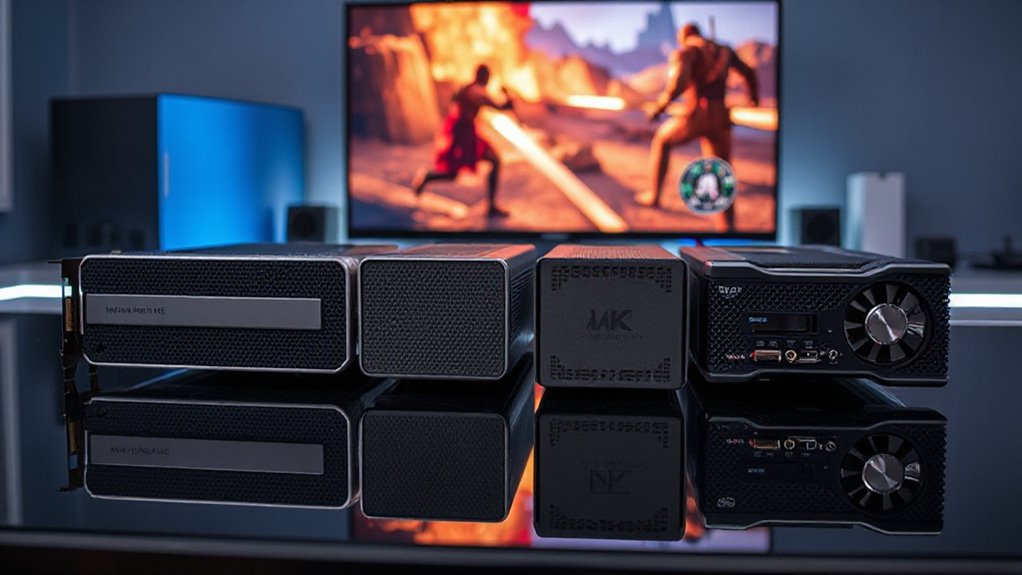

When selecting a capture card 4k for streaming, the main considerations are resolution, latency, compatibility, and ease of setup. The ASUS TUF Gaming CU4K30 stands out for its reliable 4K passthrough and HDR support, making it ideal for high-quality streams. The Elgato 4K Capture Card offers ultra-low latency and HDMI 2.1 support, perfect for gamers wanting seamless gameplay. However, tradeoffs often involve higher costs for premium features or compatibility limitations with certain systems. Keep reading for a detailed breakdown of these options and how to choose the right one for your streaming needs.
Open a free Amazon Business account
Business pricing, bulk buying and tax-exempt orders.
Create a free accountAs an affiliate, we earn on qualifying purchases.
Key Takeaways
- High-end options like the Elgato 4K Capture Card excel in low latency and future-proof HDMI 2.1 support, but come at a premium price.
- Many affordable capture cards offer pass-through 4K support at 60Hz, though their recording capabilities often max out at 1080p 60FPS.
- Compatibility with various operating systems and streaming setups is critical; some cards are plug-and-play, while others require additional software or internal installation.
- Latency and passthrough performance are decisive for gamers, especially those streaming gameplay in real-time with minimal delay.
- Build quality and driver stability can significantly affect long-term reliability, especially with frequent updates or intensive use.
| ASUS TUF Gaming CU4K30 Capture Card – 4K/2K/1080P 120 FPS HDR Passthrough, USB 3.2, Plug & Play |  | Best Overall for Gaming and High-Quality Streaming | Hardware Interface: USB, USB Type C | Video Capture Resolution: 4K | Operating System: Windows | VIEW ON AMAZON | See Our Full Breakdown |
| Elgato Cam Link 4K Capture Card for DSLR, Camcorder, Action Cam |  | Best for Camera Quality and Versatile Use | Connectivity: USB-A | Interface: USB 3.0 | Video Resolution: Up to 4K60 | VIEW ON AMAZON | See Our Full Breakdown |
| 4K HDMI Video Capture Card for Streaming and Recording |  | Best Portable 1080P 60FPS Capture for Versatile Use | Video Resolution: 1080P 60FPS | Input: HDMI | Output: USB 3.0 | VIEW ON AMAZON | See Our Full Breakdown |
| Newhope USB 3.0 HDMI Capture Card, 1080P 60FPS with 4K Pass-Through |  | Best for Multi-Platform Use with 4K Pass-Through | Video Resolution: 1080P 60FPS | Pass-Through Resolution: 4K | Input: HDMI | VIEW ON AMAZON | See Our Full Breakdown |
| Capture Card, 4K HDMI Video Capture Card, 1080P 60FPS, USB 3.0 for Streaming and Recording |  | Best for Broad Compatibility and External Microphone Support | Resolution: 1080P 60FPS | Input Support: HDMI | Output Support: up to 2K30Hz | VIEW ON AMAZON | See Our Full Breakdown |
| Acer USB 3.0 HDMI Capture Card, 4K HDMI Loop-Out, 1080P 60Hz for Streaming |  | Best for Versatile, Plug-and-Play Streaming | Video Input: 4K HDMI | Video Output: 1080P@60Hz | Technology: YUY2 | VIEW ON AMAZON | See Our Full Breakdown |
| Elgato 4K Capture Card, HDMI 2.1, 4K144 Ultra-Low Latency |  | Best for Professional-Grade Streaming and Gaming | Resolution: 4K at 144fps | HDMI Version: HDMI 2.1 | Frame Rate: up to 240fps at 1080p | VIEW ON AMAZON | See Our Full Breakdown |
| AVerMedia Live Gamer Ultra S 4K60 HDMI Capture Card with RGB24, GC553Pro |  | Best for HDR Gaming and Versatile Recording | Resolution: 4K60 HDR | VRR Support: Yes | Input Support: 3440×1440, 2560×1080 | VIEW ON AMAZON | See Our Full Breakdown |
| AVerMedia GC573 Live Gamer 4K Internal Capture Card |  | Best for Internal, High-Performance 4K60 Streaming | Video Resolution: 4K60 HDR10 | Frame Rate: up to 240 fps | Pass-through: Zero-lag 4K HDR10 | VIEW ON AMAZON | See Our Full Breakdown |
| XIIXMASK USB 3.0 HDMI Capture Card, 1080P 60FPS, 4K Pass-Through |  | Best for Reliable, Multi-Device Compatibility | Video Input: HDMI 4K 60Hz | Loop-out: 4K 60Hz | Capture Resolution: 1080P 60FPS, 2K 30FPS | VIEW ON AMAZON | See Our Full Breakdown |
| Elgato 4K Pro Internal Capture Card, 8K60 Passthrough |  | Best for High-End Internal 4K/8K Streaming with Ultra-Low Latency | Resolution: 8K60 passthrough, 4K60 capture | Frame Rate: up to 240fps in 1080p | Connectivity: HDMI 2.1 in/out | VIEW ON AMAZON | See Our Full Breakdown |
| capture card 4k for streaming | Compatibility |
|---|---|
| ASUS TUF Gaming CU4K30 Capture | — |
| Elgato Cam Link 4K Capture Car | Windows 10/11, macOS |
| 4K HDMI Video Capture Card for | PS5, Xbox, Switch, DSLR, PC |
| Newhope USB 3.0 HDMI Capture C | Windows, macOS, Linux, consoles |
| Capture Card | Windows, Mac OS |
| Acer USB 3.0 HDMI Capture Card | Switch, PS5, PS4, Xbox, DSLR, PC, macOS, Android |
| Elgato 4K Capture Card | — |
| AVerMedia Live Gamer Ultra S 4 | Windows 10/11, macOS 13/14+, iPadOS 17+ |
| AVerMedia GC573 Live Gamer 4K | PS5, PS4 Pro, Xbox Series X/S, Xbox One X |
| XIIXMASK USB 3.0 HDMI Capture | Windows 7/8/10, Mac OS, Linux, Android, Xbox One, PS3/PS4/PS5, Switch |
| Elgato 4K Pro Internal Capture | — |
More Details on Our Top Picks
ASUS TUF Gaming CU4K30 Capture Card – 4K/2K/1080P 120 FPS HDR Passthrough, USB 3.2, Plug & Play
This ASUS model stands out for its support of 4K HDR passthrough at 60Hz, offering excellent visual quality during live streams. Compared to the Elgato Cam Link 4K, which excels at camera compatibility, the ASUS focuses on gameplay with 4K passthrough and console support, making it ideal for gamers who want high-quality visuals without software complexity. The major tradeoff is its limitation to 30 fps at 4K, which might be a drawback for high-frame-rate recording or streaming. Its plug-and-play USB-C connection simplifies setup, but it requires a capable USB 3.2 port for optimal performance. Durability is a plus, with a sturdy alloy shell for prolonged use. However, it lacks advanced streaming features or bundled editing software, making it less suitable for content creators needing those tools.
Pros:- Supports 4K HDR passthrough at 60Hz for high-quality gaming streams
- Plug-and-play with no additional drivers required
- Compatible with OBS Studio and multiple gaming consoles
Cons:- Limited to 30 fps at 4K resolution, not ideal for high-frame-rate recording
- Requires USB 3.2 Type-C port for best performance
- No included software for editing or advanced features
Best for: Serious gamers looking for reliable 4K HDR passthrough and seamless console integration.
Not ideal for: Streamers who need 4K recording at higher frame rates or advanced streaming features.
- Hardware Interface:USB, USB Type C
- Video Capture Resolution:4K
- Operating System:Windows
- AV Output:H.264, H.265
- Platform:Xbox
- Minimum System Requirements:Device with USB 3.2 Type-C port
- Item Weight:423 g
- Item Dimensions:6.4 x 5.5 x 2.5 inches
Our verdict“Best suited for gamers who prioritize high-quality 4K passthrough with reliable plug-and-play setup.”
Elgato Cam Link 4K Capture Card for DSLR, Camcorder, Action Cam
This pick is ideal for streamers who want to incorporate high-quality cameras into their setup, supporting 4K60 and 1080p60 streams. Compared to the ASUS CU4K30, which excels at gaming, the Elgato Cam Link prioritizes camera compatibility and low latency, making it perfect for content creators and professional streamers. Its main limitation is the need for a compatible camera with clean HDMI output and a recent model for full 4K60 support, which can involve extra costs. The USB-A connection, while common, may require adapters for newer Macs or laptops. Its ultra-low latency ensures smooth video, but it doesn’t support direct recording; instead, it acts as a high-quality pass-through device.
Pros:- Supports 4K60 and 1080p60, delivering sharp, professional-quality video
- Ultra-low latency for real-time streaming
- Compatible with a broad range of cameras and devices
Cons:- Requires a compatible camera with clean HDMI output
- Limited to USB-A, needing adapters for some systems
- No onboard recording or advanced streaming features
Best for: Streamers who want to use DSLR or mirrorless cameras as webcams for broadcast-quality video.
Not ideal for: Gamers seeking 4K recording at high frame rates or those without compatible cameras.
- Connectivity:USB-A
- Interface:USB 3.0
- Video Resolution:Up to 4K60
- Supported Devices:DSLR, camcorder, action cam
- Compatibility:Windows 10/11, macOS
- Microphone Input:None
Our verdict“Best for creators who want to upgrade their webcam with professional camera feeds for streaming or recording.”
4K HDMI Video Capture Card for Streaming and Recording
This capture card is tailored for users needing straightforward 1080P60 recording, making it suitable for casual streamers and gamers. Compared to the ASUS CU4K30, which offers 4K passthrough, this device limits capture to 1080P, but its portability and compatibility with a broad array of consoles and PCs make it a flexible choice. Its plug-and-play setup and low latency are appealing, but the lack of 4K recording capabilities could be a drawback for those wanting higher resolution content. The HDMI loop-out supports real-time preview, and the device’s compact size makes it easy to carry around, yet it doesn’t include advanced software or editing tools, which limits its appeal for professional content creators.
Pros:- High-quality 1080P 60FPS video capture
- Plug-and-play with broad device compatibility
- Portable and lightweight design
Cons:- Limited to 1080P capture, no 4K recording
- Requires USB 3.0 for best performance
- Lacks bundled software or editing features
Best for: Casual gamers and streamers seeking a lightweight, easy-to-use 1080P60 capture device.
Not ideal for: Streamers or professionals aiming for 4K quality or higher frame rates for recording.
- Video Resolution:1080P 60FPS
- Input:HDMI
- Output:USB 3.0
- Compatibility:PS5, Xbox, Switch, DSLR, PC
- Latency:Low
- Dimensions:Compact
Our verdict“Ideal for casual streamers who need a straightforward, portable capture solution at 1080P.”
Newhope USB 3.0 HDMI Capture Card, 1080P 60FPS with 4K Pass-Through
This device offers a solid balance of 1080P60 capture with 4K pass-through, making it suitable for gamers and streamers wanting quality without complex setup. Compared to the Elgato Cam Link, which focuses on camera quality, this model emphasizes versatility across multiple devices, including consoles and PCs, with real-time 4K pass-through for smooth gameplay. Its plug-and-play design simplifies setup, but it’s limited to 1080P for recording and doesn’t support 4K capture itself. The microphone input adds value for commentary, yet only accepts 3.5mm TRS headsets, which can be limiting. Compatibility is broad, but users should be aware of the need for third-party streaming software for full functionality.
Pros:- Supports 1080P 60FPS recording with 4K pass-through
- Real-time HDMI loop-out for uninterrupted gameplay
- Plug-and-play with easy setup
Cons:- Limited to 1080P capture, no 4K recording
- Microphone input only accepts 3.5mm TRS headsets
- Requires third-party software for streaming
Best for: Gamers and streamers who need broad device support with 4K pass-through for smooth gameplay.
Not ideal for: Content creators who require 4K recording or professional audio input options.
- Video Resolution:1080P 60FPS
- Pass-Through Resolution:4K
- Input:HDMI
- Audio Input:3.5mm TRS
- Compatibility:Windows, macOS, Linux, consoles
- Features:Real-time HDMI loop-out
Our verdict“Best for gamers who want versatile device support with smooth 1080P streaming and 4K pass-through.”
Capture Card, 4K HDMI Video Capture Card, 1080P 60FPS, USB 3.0 for Streaming and Recording
This capture card provides a straightforward 1080P60 capture with 4K pass-through, making it suitable for users who prioritize compatibility over native 4K recording. Compared with the Newhope model, which offers similar features, this device emphasizes support for a range of devices, including gaming consoles and cameras, with simple plug-and-play operation. Its main tradeoff is its limitation to 2K30Hz output, which might not satisfy those needing higher resolution or frame rates for recording. The inclusion of a 3.5mm microphone input is beneficial for commentary but is limited to standard TRS headsets. The device is well-suited for streamers focused on low-latency gameplay and easy setup, but it falls short for those requiring 4K recording or advanced features.
Pros:- Supports 1080P 60FPS recording with 4K pass-through
- Plug-and-play setup with no drivers needed
- Supports external microphone input for commentary
Cons:- Limited to 2K30Hz output resolution
- No native 4K recording functionality
- Requires a 3.5mm TRS microphone headset
Best for: Streamers and content creators seeking compatibility across devices with basic 1080P capture.
Not ideal for: High-end professionals needing native 4K recording or higher output resolutions.
- Resolution:1080P 60FPS
- Input Support:HDMI
- Output Support:up to 2K30Hz
- Interface:USB 3.0
- Compatibility:Windows, Mac OS
- Microphone Input:3.5mm TRS
Our verdict“Ideal for streamers who want broad device support with reliable 1080P streaming at minimal setup effort.”
Acer USB 3.0 HDMI Capture Card, 4K HDMI Loop-Out, 1080P 60Hz for Streaming
This capture card stands out for its simplicity and broad device compatibility, making it an excellent choice for streamers who prioritize ease of use without sacrificing 4K input quality. Unlike the Elgato 4K Capture Card, which offers ultra-low latency and higher frame rate options, the Acer model focuses on straightforward 4K pass-through and 1080P output, making it more accessible for casual setups. Its built-in mic-in supports commentary directly, but it lacks detailed latency specs and may face compatibility hiccups with older devices. Compared to the XIIXMASK, which offers 4K pass-through but at a slightly higher price, the Acer provides a balanced solution for users seeking quick setup and device flexibility.
Pros:- High-quality 4K HDMI pass-through with smooth 1080P output
- Plug-and-play design requiring no drivers or extra setup
- Built-in microphone input for easy commentary
Cons:- Limited details on latency, which could impact timing-critical streams
- No bundled accessories or cables, requiring additional purchases
- Potential compatibility issues with some older devices
Best for: Streamers and content creators who want a reliable, plug-and-play device compatible with multiple platforms without complex setup.
Not ideal for: High-end gamers or professional streamers needing ultra-low latency and high frame rate capture for competitive play.
- Video Input:4K HDMI
- Video Output:1080P@60Hz
- Technology:YUY2
- Mic-in:Yes
- Compatibility:Switch, PS5, PS4, Xbox, DSLR, PC, macOS, Android
- Power:No external power required
- Size:Small and lightweight
Our verdict“This option suits streamers seeking a simple, versatile capture device with good 4K pass-through and broad compatibility.”
Elgato 4K Capture Card, HDMI 2.1, 4K144 Ultra-Low Latency
The Elgato 4K Capture Card excels at delivering high-resolution, high-frame-rate streams with minimal delay, making it ideal for competitive gamers and streamers who need ultra-low latency. Its HDMI 2.1 support enables 4K at 144fps, and with up to 240fps at 1080p, it surpasses most alternatives like the AVerMedia GC573 in raw performance. However, this power comes with a price tag and the need for high-performance hardware, making it less suitable for casual users or those with older PCs. Compared to the AVerMedia GC573, which emphasizes HDR and VRR support, the Elgato focuses on maximum frame rates and low latency, perfect for fast-paced gameplay.
Pros:- Supports 4K at 144fps and up to 240fps at 1080p for ultra-smooth gameplay
- HDMI 2.1 compatibility enables high frame rate recording
- Ultra-low latency ensures real-time responsiveness
Cons:- Requires high-performance PC hardware and high-speed connections
- Significantly more expensive than entry-level options
- Overkill for users only streaming at 60fps or lower
Best for: Professional streamers and gamers who demand the highest frame rates and minimal lag for competitive play.
Not ideal for: Casual streamers or users with lower-end hardware who can’t support HDMI 2.1 and high data throughput.
- Resolution:4K at 144fps
- HDMI Version:HDMI 2.1
- Frame Rate:up to 240fps at 1080p
- Latency:Ultra-low
- Connectivity:USB 3.2 Gen 2
- Size:Compact
Our verdict“This pick is best for gamers and streamers who need top-tier performance for fast-paced, high-resolution broadcasts.”
AVerMedia Live Gamer Ultra S 4K60 HDMI Capture Card with RGB24, GC553Pro
The AVerMedia Live Gamer Ultra S offers 4K60 HDR capture with support for VRR passthrough, making it a powerful option for gamers seeking high-quality visuals and smooth gameplay. Its ability to handle ultrawide resolutions and 5.1-channel audio adds flexibility for professional streamers. Compared with the GC573, which emphasizes internal 4K60 HDR recording, the Ultra S excels in live streaming scenarios where HDR and VRR support are priorities. However, it requires a relatively recent PC and some technical know-how for setup, which could be a barrier for beginners. Its customizable RGB lighting can also enhance aesthetic setups but may be unnecessary for some.
Pros:- Supports 4K60 HDR with VRR passthrough for smooth, high-quality streams
- Compatible with multiple consoles and devices, including Switch and Xbox
- Offers ultrawide support and 5.1 audio for immersive streaming
Cons:- Requires USB 3.2 Gen 1 port and potentially more complex setup
- Limited info on bundled software features and ease of use
- Higher cost compared to basic capture cards
Best for: Enthusiast gamers and streamers who want HDR support and broad device compatibility for immersive streams.
Not ideal for: Casual or beginner streamers who prefer simple plug-and-play setups without complex configurations.
- Resolution:4K60 HDR
- VRR Support:Yes
- Input Support:3440×1440, 2560×1080
- Audio:5.1-channel
- Connectivity:USB 3.2 Gen 1 Type-C
- Compatibility:Windows 10/11, macOS 13/14+, iPadOS 17+
Our verdict“Ideal for enthusiasts seeking HDR and VRR support in a versatile, high-quality capture device for demanding gaming streams.”
AVerMedia GC573 Live Gamer 4K Internal Capture Card
The AVerMedia GC573 delivers 4K60 HDR10 recording with zero-lag pass-through, making it a top choice for those who prefer built-in, internal capture solutions. It offers high-frame recording up to 240 fps and customizable RGB lighting, appealing to users who want a sleek, integrated setup for next-gen consoles like PS5 and Xbox Series X/S. Compared with the external options like the Elgato 4K Capture Card, the GC573 is more suited for users willing to install an internal card for lower latency and cleaner cable management. Its setup complexity and need for compatible hardware could deter beginners, but it rewards with reliable performance and premium features for advanced users.
Pros:- Supports 4K60 HDR10 with zero-lag pass-through
- High-frame recording up to 240 fps for smooth gameplay
- Customizable RGB lighting to match setup aesthetics
Cons:- Requires compatible PC and internal installation, which can be complex
- Setup may be daunting for beginners
- Higher initial cost compared to external cards
Best for: Advanced users and streamers who want a dedicated internal solution for 4K60 HDR recording and zero-lag pass-through.
Not ideal for: Casual streamers or those with less powerful PCs who prefer easy, external plug-and-play devices.
- Video Resolution:4K60 HDR10
- Frame Rate:up to 240 fps
- Pass-through:Zero-lag 4K HDR10
- Compatibility:PS5, PS4 Pro, Xbox Series X/S, Xbox One X
- Lighting:RGB with three preset modes
- Software:AVerMedia Gaming Utility
Our verdict“This is best suited for power users who need a dedicated internal capture card with professional-grade features.”
XIIXMASK USB 3.0 HDMI Capture Card, 1080P 60FPS, 4K Pass-Through
The XIIXMASK USB 3.0 HDMI Capture Card offers 4K pass-through and 1080P60 capture, making it a flexible option for streaming, gaming, and online meetings. Its strong stability and low latency support diverse devices, including consoles, PCs, and Android systems. While it doesn’t record at higher frame rates like the Elgato or AVerMedia options, it provides a balanced performance for users who prioritize reliability and broad compatibility. Compared to the Acer card, which emphasizes simplicity, the XIIXMASK adds more stability and multi-platform support, though it still limits capture to 60FPS at 1080P and doesn’t support party chat recording. It’s a solid choice for those who need dependable performance across many devices.
Pros:- Supports 4K pass-through and 1080P 60FPS capture
- Stable connection with low latency and good heat dissipation
- Compatible across multiple operating systems and devices
Cons:- Limited to 60FPS at 1080P, less ideal for fast-paced gaming
- No party chat recording or advanced software features
- Requires software restart for audio setup in OBS
Best for: Streamers and professionals needing a stable, multi-device compatible capture solution for consistent streams and meetings.
Not ideal for: High-end gamers or streamers requiring 4K60 capture at higher frame rates or advanced HDR features.
- Video Input:HDMI 4K 60Hz
- Loop-out:4K 60Hz
- Capture Resolution:1080P 60FPS, 2K 30FPS
- Audio Input:3.5mm microphone/headset
- Connectivity:USB 3.0, USB C
- Compatibility:Windows 7/8/10, Mac OS, Linux, Android, Xbox One, PS3/PS4/PS5, Switch
Our verdict“This device is well-suited for users seeking a dependable, multi-platform compatible capture card for general streaming and video conferencing.”
Elgato 4K Pro Internal Capture Card, 8K60 Passthrough
The Elgato 4K Pro stands out for its ability to handle both 4K60 capture and 8K60 passthrough, making it ideal for future-proof streaming setups. Compared to the Elgato 4K Capture Card, which focuses solely on 4K capture, this model’s support for 8K passthrough offers more versatility for creators with high-end hardware. The inclusion of HDMI 2.1 ensures high frame rates and smooth visuals, even at 4K60, with ultra-low latency crucial for synchronized gameplay. However, its internal installation requirement may be a barrier for casual users or those unfamiliar with hardware assembly, and the high price reflects its premium features. Limited details on included accessories mean additional costs might be involved. This pick is best suited for streamers with advanced PC setups who want maximum future-proofing and top-tier performance.Pros:- Supports 8K60 passthrough and 4K60 capture, future-proofing your setup
- HDMI 2.1 connectivity enables high frame rates and smooth visuals
- Ultra-low latency for precise synchronization between gameplay and stream
- Compatible with popular streaming apps like OBS, Twitch, and Zoom
Cons:- Requires internal installation, which may be complex for some users
- Premium pricing might be prohibitive for budget-conscious streamers
- Limited information on bundled accessories or additional cables
Best for: Enthusiast streamers and professional content creators with high-end PCs seeking 8K passthrough and ultra-low latency.
Not ideal for: Casual streamers or beginners who prefer plug-and-play solutions and want an external card without internal installation.
- Resolution:8K60 passthrough, 4K60 capture
- Frame Rate:up to 240fps in 1080p
- Connectivity:HDMI 2.1 in/out
- Features:Variable Refresh Rate (VRR), ultra-low latency
Our verdict“This card is ideal for experienced streamers who want cutting-edge, high-resolution performance and are comfortable with internal hardware installation.”
How We Picked
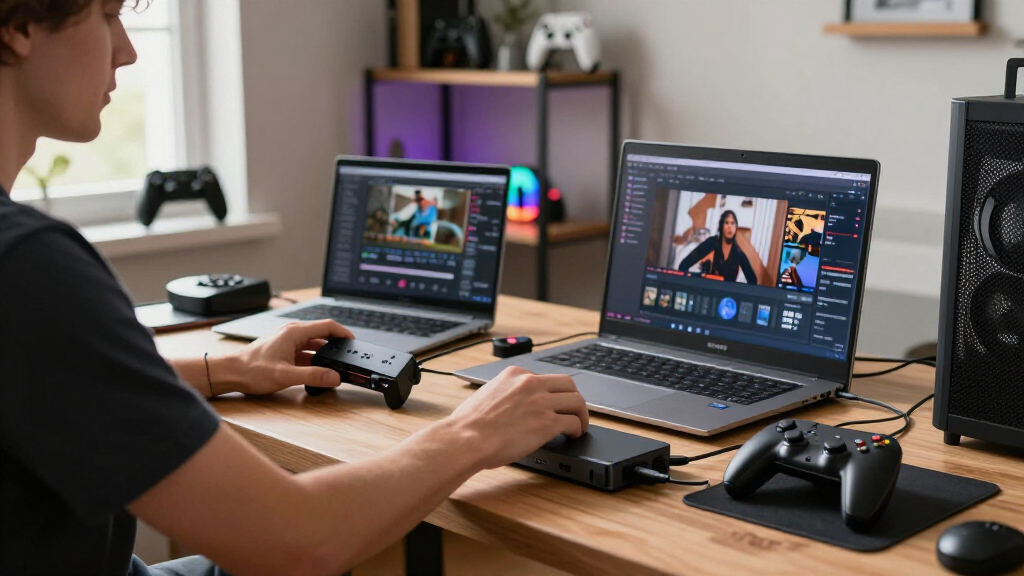
The products in this lineup were evaluated based on their performance in real-world streaming scenarios, focusing on resolution support, latency, and compatibility. Ease of setup and driver stability were key factors, as these influence the user experience over time. Price-to-performance ratio was also considered, ensuring options suit a range of budgets without sacrificing core features. By comparing features like HDMI version, pass-through capability, and software support, I prioritized products that deliver consistent, reliable streams suitable for both casual and professional broadcasters.Factors to Consider When Choosing Capture Card 4k For Streaming
Choosing the right capture card 4k for streaming involves balancing multiple factors to match your specific needs. Beyond raw resolution, consider latency, compatibility, and future-proofing features like HDMI 2.1 support. It’s also vital to evaluate your setup—whether you’re streaming from a console, PC, or DSLR—as this impacts connector types and system requirements. Quality drivers and build reliability prevent frustrating interruptions during live broadcasts. This guide will walk through key considerations to help you avoid common pitfalls and find a capture card that aligns with your streaming goals.Resolution and Frame Rate Support
Ensure the capture card supports 4K resolution at your desired frame rate, ideally 60FPS, for smooth, professional-looking streams. Some cards advertise 4K passthrough but record only at lower resolutions or frame rates, which can compromise your stream quality. Consider future needs—if you plan to upgrade your system or streaming setup, choosing a card with HDMI 2.1 support may provide more headroom for higher resolutions and refresh rates down the line. Always verify both recording and passthrough capabilities to match your streaming platform and content type.
Latency and Pass-Through Performance
Low latency is critical for real-time gaming streams. A capture card with minimal delay ensures your gameplay remains synchronized with what viewers see, preventing lag or disconnects. HDMI passthrough quality directly impacts this; premium cards often include features like HDR and 4K/120Hz pass-through, which help maintain visual fidelity without sacrificing performance. Cheaper options might introduce noticeable lag or degrade image quality during live gameplay, so assess reviews carefully if latency is a top priority.
Compatibility and Ease of Use
Check whether the capture card is compatible with your operating system, streaming software, and hardware setup. Some models are plug-and-play on Windows and Mac, while others require specific drivers or internal installation, which can be daunting for beginners. Consider the input and output options—HDMI, USB, or PCIe—and ensure they match your devices. Reliable driver support and straightforward setup are essential to avoid technical headaches during live streams or recording sessions.
Build Quality and Long-Term Reliability
Durability and driver stability affect the longevity of your investment. Cheaper, poorly manufactured cards may encounter issues after heavy use or driver updates, causing interruptions or degraded performance. Opt for reputable brands with positive user feedback and regular firmware updates. A well-built device with quality components offers peace of mind and consistent performance, especially if you plan to stream frequently or professionally.
Price and Future-Proofing
While budget options can fulfill basic needs, investing in a higher-end card often provides better compatibility with upcoming technologies like HDMI 2.1 and 8K passthrough. Consider your long-term plans—if you anticipate expanding or upgrading your setup, spending more now can save money later. However, evaluate whether the premium features are truly necessary for your current streaming goals, as some high-priced models may have features you’ll never use. Balance your budget with your desire for future-proofing and performance.
Frequently Asked Questions
Can I use a 4K capture card for streaming gameplay at 1080p?
Absolutely. Most 4K capture cards are fully capable of capturing and streaming at 1080p with high frame rates. Using a 4K card for lower resolutions often allows you to benefit from better color fidelity and lower compression artifacts. Additionally, capturing at 4K provides flexibility for future upgrades or multi-platform streaming, making it a versatile choice even if you currently stream at 1080p.
Is HDMI 2.1 necessary for good 4K streaming?
HDMI 2.1 offers higher bandwidth, enabling 4K streaming at 120Hz or with additional features like variable refresh rate passthrough. While HDMI 2.1 isn’t strictly necessary for 4K 60Hz streams, it provides more future-proofing and smoother gameplay if you plan to upgrade your hardware. If you want the latest technology and maximum flexibility, opting for an HDMI 2.1-compatible card makes sense, but for most current streaming needs, HDMI 2.0 models suffice.
Are internal capture cards better than external ones?
Internal capture cards, typically PCIe-based, often provide lower latency and higher stability since they connect directly to your motherboard. They’re better suited for high-end streaming setups and professional use. External capture cards are more portable and easier to set up, making them ideal for users who need flexibility or have limited internal space. Both types can deliver excellent performance if chosen with the right specs, but your setup and mobility needs will influence which is best for you.
What should I consider if I want to stream from a console?
When streaming from a console, ensure the capture card supports HDMI input compatible with your device, and check for 4K passthrough if you want to display high-resolution gameplay on your monitor. Compatibility with your console’s output settings is also essential. Some capture cards have specific features for console streaming, like HDMI loop-out, which can simplify your setup. Always verify the card’s compatibility with your specific console model and your streaming software preferences.
How important is driver support and software compatibility?
Reliable driver support and seamless software compatibility are vital for a smooth streaming experience. Poor or unstable drivers can cause crashes, dropped feeds, or synchronization issues during live streams. Choose a product from a reputable manufacturer that regularly updates drivers and offers compatible streaming software. Good software support simplifies setup, allows for customization, and reduces technical issues, especially during extended or professional broadcasts.
Conclusion
For most streamers wanting a reliable, high-quality 4K capture experience, the Elgato 4K Capture Card offers an excellent balance of performance and user-friendliness, making it the best overall pick. Those on a budget should consider models like the Newhope USB 3.0 HDMI Capture Card, which provides solid 4K passthrough at a lower price. If you’re seeking a premium, future-proof solution, the Elgato 4K Pro Internal Capture Card or the AVerMedia GC573 bring advanced features for professional streams. Beginners and casual streamers will find the plug-and-play options easier to set up, while gamers needing ultra-low latency should prioritize cards with HDMI 2.1 support. Match your choice to your streaming goals, setup complexity, and budget for the best results.
Flea & tick season Picks
flea and tick prevention
As an affiliate, we earn on qualifying purchases.