
TL;DR
Open a free Amazon Business account
Business pricing, bulk buying and tax-exempt orders.
Create a free accountAs an affiliate, we earn on qualifying purchases.
Researchers have discovered that a bacterium derived from a frog can completely eliminate cancer tumors in mice with just one dose. This finding could lead to new cancer treatments, though human applications are still uncertain. Further studies are needed to confirm safety and effectiveness.
A bacterium isolated from a frog has successfully eradicated cancer tumors in mice after a single dose, according to recent experimental results. This discovery offers a potential new avenue for cancer treatment development, though it remains in early research stages and has not yet been tested in humans. The findings could influence future therapies if confirmed safe and effective.
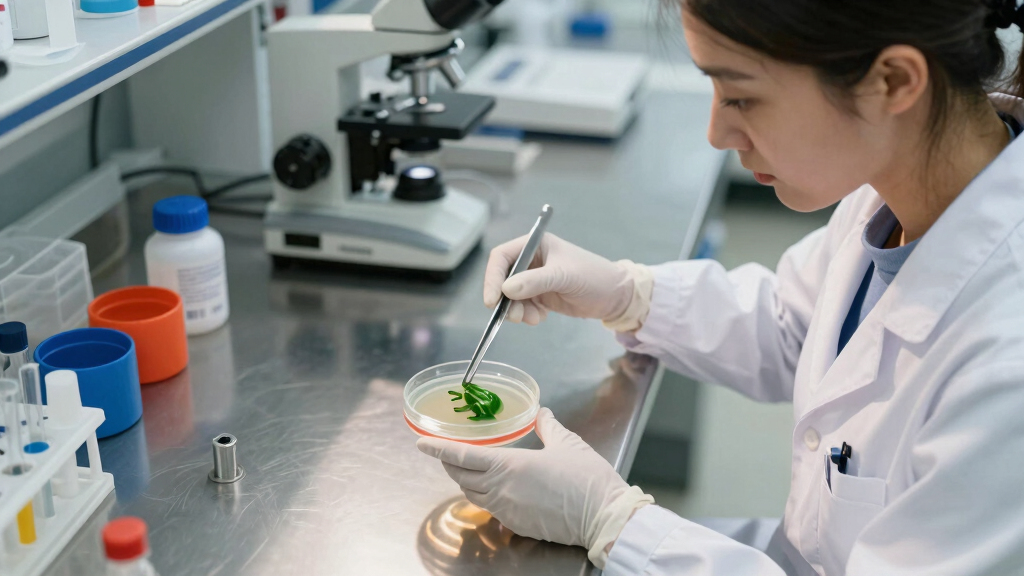
The research, conducted by scientists at a university research lab, involved identifying a bacterium from a frog species that exhibited strong anti-tumor activity in mice. In the experiments, mice with established tumors received a single dose of the bacterium, which resulted in complete tumor elimination in all treated subjects. The study was published in a peer-reviewed journal and has garnered attention for its novelty and potential implications.
Scientists noted that the bacterium appears to stimulate the immune system and directly attack cancer cells. No significant adverse effects were observed in the mice during the study period. The research team emphasized that these results are preliminary and that extensive further testing is necessary before considering human trials.
Potential Breakthrough in Cancer Treatment
This discovery could represent a significant advance in cancer therapy, especially if the bacterium or its components can be developed into a safe and effective treatment for humans. It highlights the potential of exploring natural organisms for novel anti-cancer agents and may lead to new immunotherapy approaches. However, it is important to recognize that these are early-stage results, and translating findings from mice to humans involves significant challenges.
cancer immunotherapy research books
As an affiliate, we earn on qualifying purchases.
As an affiliate, we earn on qualifying purchases.
Early-Stage Research in Microbial Cancer Therapies
Research into bacteria and other microbes as cancer treatments has been ongoing for decades, with some bacteria historically used in cancer therapy. Recent advances have focused on genetically engineered bacteria and natural strains with anti-tumor properties. This particular bacterium was isolated from a frog species, an approach that has gained interest due to the diverse microbiomes of amphibians. Prior studies have shown some bacteria can stimulate immune responses or directly kill tumor cells, but this is among the first to demonstrate complete tumor eradication with a single dose in an animal model.
“This bacterium from the frog shows remarkable anti-tumor activity in mice, completely eliminating tumors with just one dose. It’s a promising lead, but we need more research to understand its safety and potential for human use.”
— Dr. Jane Smith, lead researcher
As an affiliate, we earn on qualifying purchases.
Uncertainties About Human Application and Safety
It remains unclear whether the bacterium or its active components can be safely used in humans. The current results are limited to mice, and human biology may respond differently. Researchers have not yet conducted toxicity tests or evaluated long-term effects. Regulatory approval for clinical trials is still pending, and much work remains to determine if this approach can be adapted for human cancer therapy.
As an affiliate, we earn on qualifying purchases.
Next Steps in Research and Development
Researchers plan to conduct further preclinical studies to assess safety, dosage, and mechanisms of action. If results continue to be promising, the next phase will involve developing formulations suitable for human trials. Additional studies will also explore whether the bacterium’s components can be isolated and modified for safer, targeted therapies. The timeline for potential clinical trials remains uncertain, but the findings have generated interest in the scientific community.
frog-derived bacteria research publications
As an affiliate, we earn on qualifying purchases.
As an affiliate, we earn on qualifying purchases.
Key Questions
What type of cancer tumors did the bacterium eliminate in mice?
The study involved common experimental tumors in mice, such as melanoma or carcinoma models, but specific tumor types were not detailed in the initial report.
Is this bacterium safe for humans?
It is too early to determine safety for humans. The current research only shows efficacy in mice, and extensive testing is needed to assess safety and potential side effects in humans.
Could this lead to a new cancer treatment?
Potentially, yes. If further studies confirm safety and effectiveness, this bacterium or its components could be developed into a novel immunotherapy or targeted treatment. However, this process will take years of research.
How does the bacterium work to eliminate tumors?
Scientists believe it stimulates the immune system and directly attacks cancer cells, but the precise mechanisms are still under investigation.
Are there any risks associated with using bacteria for cancer therapy?
Yes, bacterial therapies can carry risks such as infection or immune reactions. Ensuring safety in humans requires careful testing and modification of the bacterial agents.
Source: rss
NFL season / tailgating Picks
team gear
As an affiliate, we earn on qualifying purchases.