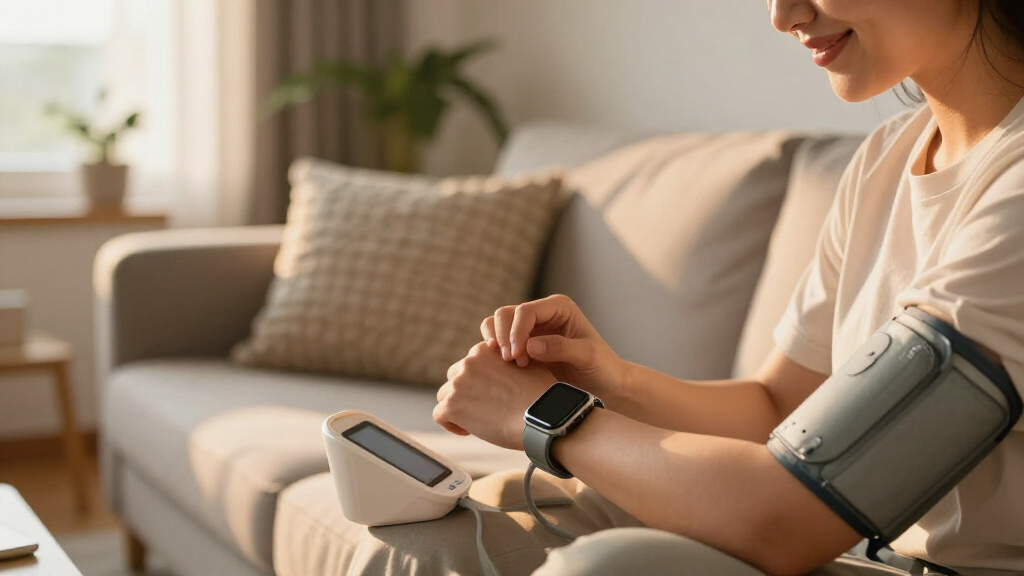

Home health monitoring devices can help you track blood pressure, blood oxygen, or heart rhythm between appointments. My best overall pick is the KardiaMobile 6L for its six-lead ECG recordings, while the iHealth Track stands out for upper-arm blood pressure tracking and the Innovo iP900BP-B for app-connected oxygen readings. The main tradeoffs are whether you need a spot check or a record over time, how much setup and app use you want, and whether a wrist or fingertip device suits you. These monitors can support routine tracking, but they do not replace medical evaluation or diagnose every condition. Read on for the full comparison and guidance on choosing by measurement and use.

Get health and wellness essentials delivered free — and shop member deals
- Fast, free delivery on millions of items
- Access to Prime Big Deal Days deals on October 6–7
- Prime Video, Amazon Music and more included
Key Takeaways
- KardiaMobile 6L offers the most detailed ECG format in this lineup, while the one-lead KardiaMobile is a simpler, more portable heart-rhythm option.
- For routine blood pressure checks, the iHealth Track upper-arm monitor pairs a wide-range cuff with app tracking; wrist models trade some positioning ease for compactness.
- The two app-linked pulse oximeters serve a different buyer from the simpler fingertip models: they add phone-based records, but also require more setup.
- Oklar’s upper-arm monitor is a straightforward alternative for shoppers who want a home BP machine without making app features the priority.
- The Zacurate and basic OLED fingertip oximeters focus on quick readings, while Bluetooth models are better suited to people who want to save and review readings.
| KardiaMobile 6L EKG |  | Best Overall for Detailed Heart Rhythm Analysis | Leads: 6 | Compatibility: Most smartphones and tablets | App Required: Yes | VIEW LATEST PRICE | See Our Full Breakdown |
| KardiaMobile 1-Lead EKG Monitor, FDA-Cleared Personal Heart Monitor for Detecting AFib and Arrhythmias |  | Best for Portability and On-the-Go Heart Checks | Model Number: AC-009 | Unit Count: 1 | UPC: 040232360961, 850214007049 | VIEW LATEST PRICE | See Our Full Breakdown |
| Oklar Wrist Blood Pressure Monitor, FDA Cleared Rechargeable BP Machine |  | Best for Accurate, Fast Blood Pressure Readings at Home | Measurement Time: 35 seconds | User Memory: 240 readings for two users | Cuff Size: 4.92 to 8.46 inches | VIEW LATEST PRICE | See Our Full Breakdown |
| Fingertip Pulse Oximeter Blood Oxygen Saturation Monitor with OLED Screen, Lanyard, and Batteries |  | Best Compact Device for SpO2 and Pulse Rate Monitoring | Display: OLED | Power: 2 x AAA Batteries | Auto Power-Off: Yes | VIEW LATEST PRICE | See Our Full Breakdown |
| Oklar FDA Cleared Blood Pressure Monitor Upper Arm BP Machine for Home Use |  | Best for Easy, Reliable Upper Arm Blood Pressure Monitoring | Operation: One-button | Display: Backlit LED | Memory: 240 readings (120 per user) | VIEW LATEST PRICE | See Our Full Breakdown |
| iHealth Push Wrist Blood Pressure Monitor with App |  | Best for Travel | Cuff Size: 5 1/2″ to 7 3/4″ | Battery: 2 AAA batteries | Connectivity: Bluetooth | VIEW LATEST PRICE | See Our Full Breakdown |
| Innovo iP900BP-B Fingertip Pulse Oximeter with Bluetooth and App |  | Best Smart Pulse Oximeter | Measurements: SpO2, pulse rate, respiratory rate | Display: Multi-directional, 6 layouts | Connectivity: Bluetooth | VIEW LATEST PRICE | See Our Full Breakdown |
| iHealth Track Smart Upper Arm Blood Pressure Monitor with Wide-Range Cuff |  | Best Overall | Cuff Size: 8.7″ – 16.5″ (22-42cm) | Batteries: 4 AAA | Connectivity: Bluetooth 4.0+ | VIEW LATEST PRICE | See Our Full Breakdown |
| Zacurate 500 Series Fingertip Pulse Oximeter with Silicone Cover, Batteries, and Lanyard |  | Best Value | SpO2 Range: Up to 100% | Measurements: SpO2, pulse rate, pulse strength | Display: Large digital LED | VIEW LATEST PRICE | See Our Full Breakdown |
| EMAY 6L Portable ECG Monitor – Record ECG and Heart Rate in 6 Channels |  | Best Subscription-Free ECG | Channels: 6 channels (6L) | Connectivity: Bluetooth and USB | Battery: Rechargeable lithium battery | VIEW LATEST PRICE | See Our Full Breakdown |
| home health monitoring device | Display |
|---|---|
| KardiaMobile 6L EKG | — |
| KardiaMobile 1-Lead EKG Monito | — |
| Oklar Wrist Blood Pressure Mon | — |
| Fingertip Pulse Oximeter Blood | OLED |
| Oklar FDA Cleared Blood Pressu | Backlit LED |
| iHealth Push Wrist Blood Press | — |
| Innovo iP900BP-B Fingertip Pul | Multi-directional, 6 layouts |
| iHealth Track Smart Upper Arm | Multi-color backlit |
| Zacurate 500 Series Fingertip | Large digital LED |
| EMAY 6L Portable ECG Monitor | — |
More Details on Our Top Picks
KardiaMobile 6L EKG
The KardiaMobile 6L stands out for its ability to produce a comprehensive six-lead EKG, offering richer data than the single-lead options like the KardiaMobile 1-Lead. This provides a clearer picture of complex arrhythmias and is ideal for those needing detailed heart monitoring at home. However, its reliance on a compatible smartphone and exclusion of pacemaker users limits its universal applicability. Compared to simpler devices, it offers more diagnostic insight but involves a higher cost and setup complexity. The device is FDA cleared and recommended by doctors, making it suitable for users who want a serious, clinically relevant tool. Still, it doesn’t detect heart attacks, which is a notable limitation for users seeking complete cardiac risk assessment.Pros:- Provides detailed six-lead EKG data for better heart analysis
- No subscription needed for full features
- FDA-cleared and recommended by healthcare professionals
Cons:- Requires a compatible smartphone or tablet to operate
- Does not detect heart attacks or other cardiac events beyond arrhythmias
Best for: Individuals with diagnosed or suspected complex arrhythmias who want detailed, multi-lead data for ongoing monitoring.
Not ideal for: Users seeking basic, standalone heart rhythm checks or those with pacemakers, as the device isn’t compatible with pacemaker systems.
- Leads:6
- Compatibility:Most smartphones and tablets
- App Required:Yes
- Subscription:No
- FDA Cleared:Yes
- Detects:AFib, Bradycardia, Tachycardia, Normal Sinus Rhythm
Our verdict“This device is perfect for users needing detailed heart rhythm data but requires a compatible device and is not suitable for pacemaker users.”
KardiaMobile 1-Lead EKG Monitor, FDA-Cleared Personal Heart Monitor for Detecting AFib and Arrhythmias
The KardiaMobile 1-Lead offers a compact, lightweight design that makes it ideal for quick, everyday use, surpassing bulkier monitors like the Oklar Wrist Blood Pressure Monitor in portability. It delivers a medical-grade ECG in just 30 seconds, perfect for users who want instant results without complex setup. Unlike larger devices, it doesn’t require Bluetooth or Wi-Fi, simplifying its use. However, its single-lead design limits the depth of heart rhythm analysis and it cannot detect heart attacks. It is FDA cleared and highly portable, making it a top choice for active individuals or frequent travelers needing reliable, quick assessments. Still, it relies on a smartphone app, which could be a barrier for some users.Pros:- Extremely portable and lightweight for easy carry
- Provides quick, medical-grade ECG results in 30 seconds
- Detects AFib and arrhythmias effectively
- No cords or Bluetooth required
Cons:- Limited to single-lead analysis, less comprehensive than six-lead devices
- Requires a smartphone and app for full functionality
Best for: Active individuals or travelers who need a quick, reliable heart rhythm check without bulky equipment.
Not ideal for: Users needing detailed six-lead analysis or those without smartphones, as the device depends heavily on app connectivity.
- Model Number:AC-009
- Unit Count:1
- UPC:040232360961, 850214007049
- Battery:Replaceable CR2016, lasts up to 2 years with 2-3 EKGs per day
- Compatibility:Most smartphones
- FDA Clearance:Yes
Our verdict“This pick makes the most sense for active users wanting quick, reliable heart rhythm checks on the go.”
Oklar Wrist Blood Pressure Monitor, FDA Cleared Rechargeable BP Machine
The Oklar Wrist Blood Pressure Monitor offers quick, reliable measurements in just 35 seconds, making it a solid choice for regular tracking at home. Its fast detection surpasses traditional manual cuffs, and the voice broadcast feature simplifies use for visually impaired or elderly users. Compared to upper-arm monitors like the Oklar Upper Arm BP Monitor, its wrist design is more portable but can be less accurate if not positioned correctly. Its rechargeable battery adds convenience, though the charging adapter isn’t included, which might be inconvenient. The device’s cuff size may not suit very large or small wrists, limiting its universal fit. Still, for those prioritizing speed and portability, it’s an effective tool.Pros:- Fast and accurate readings in 35 seconds
- Voice broadcast for ease of use
- Large, clear LED display
- Rechargeable for portable convenience
Cons:- Charging adapter not included
- Limited cuff size for very small or large wrists
Best for: Individuals who need quick, accurate blood pressure checks at home and value portability.
Not ideal for: Users with very large or very small wrists, due to cuff size limitations, or those requiring professional-grade accuracy.
- Measurement Time:35 seconds
- User Memory:240 readings for two users
- Cuff Size:4.92 to 8.46 inches
- Battery:Rechargeable with Type-C cable
- Voice Broadcast:Yes
- FDA Cleared:Yes
Our verdict“This device is ideal for users wanting fast, reliable blood pressure readings with a focus on portability.”
Fingertip Pulse Oximeter Blood Oxygen Saturation Monitor with OLED Screen, Lanyard, and Batteries
The Fingertip Pulse Oximeter excels in portability, providing quick readings of blood oxygen saturation and pulse rate through a bright OLED display. Its simple one-button operation makes it accessible for everyday use, outdoor activities, or fitness tracking. Unlike bulkier, Bluetooth-enabled oximeters like the Innovo iP900BP-B, this device offers straightforward functionality without the need for app connectivity. However, its reliance on AAA batteries, which are not rechargeable, adds ongoing cost. It’s limited to fingertip measurements, which might not suit all users, and it lacks advanced features like Bluetooth or data storage. Still, its ease of use makes it suitable for quick checks and outdoor excursions.Pros:- Bright, easy-to-read OLED display with waveform
- Portable and lightweight for on-the-go use
- Simple one-button operation for quick results
- Includes batteries and lanyard for convenience
Cons:- Requires 2 AAA batteries which are not rechargeable
- Limited to fingertip measurements, may not fit all users
Best for: Fitness enthusiasts or outdoor adventurers needing a portable, no-fuss SpO2 and pulse monitor.
Not ideal for: Users requiring continuous monitoring, advanced data tracking, or Bluetooth connectivity for health records.
- Display:OLED
- Power:2 x AAA Batteries
- Auto Power-Off:Yes
- Included:Lanyard, Instruction Manual
Our verdict“This pick suits users seeking a straightforward, portable pulse oximeter for quick health checks during outdoor activities.”
Oklar FDA Cleared Blood Pressure Monitor Upper Arm BP Machine for Home Use
The Oklar Upper Arm BP Monitor offers straightforward operation with a large backlit LED display, making it accessible for users of all ages. Its ability to store up to 240 readings for two users helps track health trends over time, a feature less common in compact devices like the wrist monitor. Its dual power options enhance convenience, but it isn’t rechargeable, requiring replacement batteries. The cuff size covers a broad range but may not fit very small or very large arms comfortably. This device makes the most sense for those wanting a dependable, simple blood pressure monitor for regular use at home, especially if they prefer the traditional upper-arm measurement method.Pros:- One-button operation for quick, easy measurements
- Large, clear LED display for easy reading
- Stores up to 240 readings for two users
- Dual power options for flexibility
Cons:- Uses replaceable batteries, not rechargeable
- Cuff size may not fit very small or very large arms
Best for: Home users needing a reliable, easy-to-use upper arm blood pressure monitor for regular tracking.
Not ideal for: Individuals with very small or very large arms outside the cuff size range, or those seeking Bluetooth connectivity for digital records.
- Operation:One-button
- Display:Backlit LED
- Memory:240 readings (120 per user)
- Power:3AA batteries or Type-C cable
- Cuff Size:8.7 – 15.7 inches
Our verdict“This device is well-suited for home users seeking a dependable, straightforward blood pressure monitor with ample storage.”
iHealth Push Wrist Blood Pressure Monitor with App
Most home blood pressure monitors anchor you to a desk drawer, but the iHealth Push earns its spot by being genuinely pocketable. Compared with the iHealth Track Smart, it trades the larger cuff and bigger screen for a wrist-worn design that fits in a carry-on without a second thought — a fair swap for anyone measuring on the road. Its advanced inflation technology means the cuff inflates only as much as needed, which makes readings noticeably more comfortable than budget wrist units like the Oklar Wrist. The free app turns 99 stored readings into shareable trend charts, which matters more than raw memory count once you’re reviewing weeks of data. The compromise: wrist placement is more technique-sensitive than upper arm monitors, and you’ll burn through AAA batteries with regular use.
Pros:- Compact, travel-friendly design
- Comfortable inflation that adjusts to the individual
- Bluetooth syncing with a free tracking app
- 99-reading memory for trend analysis
Cons:- Wrist readings are more sensitive to positioning than upper arm cuffs
- Reliant on AAA batteries
- App experience depends on smartphone compatibility
Best for: Frequent travelers and commuters who need blood pressure tracking away from home without hauling an arm-cuff unit
Not ideal for: Buyers with limited wrist dexterity or tremors — wrist monitors require precise positioning to stay accurate
- Cuff Size:5 1/2″ to 7 3/4″
- Battery:2 AAA batteries
- Connectivity:Bluetooth
- Memory:Stores 99 readings
- Measurement Location:Wrist
- Warranty:12 months
Our verdict“If blood pressure monitoring needs to happen outside the house, this is the pick; if accuracy is your sole priority, get the iHealth Track instead.”
Innovo iP900BP-B Fingertip Pulse Oximeter with Bluetooth and App
Where the Zacurate 500 Series is a solid dumb display, the Innovo iP900BP-B is the oximeter for people who want their readings to live somewhere useful. Its Bluetooth app connection logs SpO2, pulse rate, and even respiratory rate over time, which the Zacurate simply cannot do. The improved sensor holds accuracy even at low perfusion — a genuine advantage for users with cold hands or poor circulation, where cheaper oximeters produce erratic numbers. Six display layouts and multi-directional rotation make it readable from either hand. Be honest about its limits, though: this is a spot-check device, not a continuous monitor, so anyone wanting overnight oxygen tracking needs clinical-grade equipment instead.
Pros:- Reliable readings even at low perfusion
- Bluetooth app syncing with full data history
- Tracks respiratory rate in addition to SpO2 and pulse
- Six display layouts viewable from any angle
Cons:- Not built for continuous overnight monitoring
- Full functionality requires the smartphone app
- Not a substitute for medical-grade equipment
Best for: Athletes, pilots, and health trackers who want oxygen and pulse data saved and charted, not just glanced at
Not ideal for: Anyone needing continuous overnight or medical-grade monitoring — this is a spot-check device only
- Measurements:SpO2, pulse rate, respiratory rate
- Display:Multi-directional, 6 layouts
- Connectivity:Bluetooth
- App Compatibility:iPhone and Android
- Use Cases:Sports, aviation, home use
- Sensor:Improved low-perfusion sensor
Our verdict“The best choice if you want your oximeter data recorded and exported — pick the Zacurate if you just need quick on-screen numbers.”
iHealth Track Smart Upper Arm Blood Pressure Monitor with Wide-Range Cuff
This is the pick I’d point most households toward, and the reasoning is straightforward: it combines clinical-grade accuracy (ESH 2010 validated) with the easiest reading experience in this lineup. Its color-coded backlit display instantly shows whether a reading falls in the green, yellow, or red zone — no interpretation required, which matters for older family members who won’t dig through an app. The 8.7″–16.5″ wide-range cuff fits far more arm sizes than typical monitors, and unlike the iHealth Push, upper arm placement delivers more forgiving, consistent readings. It also flags heart rhythm disturbances, a feature wrist units here lack. The tradeoffs are mild: it’s a desk-bound device you won’t travel with, and it eats four AAA batteries.
Pros:- Clinically validated to ESH 2010 standards
- Color-coded display makes readings instantly interpretable
- Wide-range cuff fits most arm sizes
- Detects heart rhythm disturbances
Cons:- Not portable compared with wrist monitors
- Requires Bluetooth 4.0+ for app syncing
- Battery replacement needed with regular use
Best for: Households wanting one dependable, validated blood pressure monitor that seniors and younger users can both operate without confusion
Not ideal for: Travelers and people with very large upper arms beyond 16.5″ — go wrist-style or check cuff fit before buying
- Cuff Size:8.7″ – 16.5″ (22-42cm)
- Batteries:4 AAA
- Connectivity:Bluetooth 4.0+
- Display:Multi-color backlit
- Memory:99 readings on device, unlimited in app
- Standards:Meets ESH 2010 performance standards
- Extra Features:Heart rhythm disturbance detection
Our verdict“If you’re buying one blood pressure monitor for the whole household, this is the one that balances accuracy, clarity, and fit best.”
Zacurate 500 Series Fingertip Pulse Oximeter with Silicone Cover, Batteries, and Lanyard
Sometimes you just need a number, fast, for as little money as possible — and that’s exactly the Zacurate 500 Series‘s job. It delivers SpO2, pulse rate, and pulse strength in about 10 seconds on a large LED display, with no app to install, no pairing to fail, and no learning curve. Compared with the Innovo iP900BP-B, you give up Bluetooth logging and respiratory rate tracking, but you also skip the app dependency entirely — a real plus for less tech-inclined buyers. The bundled silicone cover, lanyard, and batteries mean it works out of the box and survives a gym bag. Note the age restriction: this isn’t suitable for children under 12, and readings are spot checks only.
Pros:- Accurate readings in about 10 seconds
- Large, easy-to-read LED display
- Includes silicone cover, lanyard, and batteries
- No app or setup required
Cons:- No connectivity or data logging
- Limited to users aged 12 and above
Best for: Budget-conscious buyers, gym-goers, and older family members who want instant readings with zero app setup
Not ideal for: Data-driven users who want readings logged and exported — spend more on the Innovo with Bluetooth
- SpO2 Range:Up to 100%
- Measurements:SpO2, pulse rate, pulse strength
- Display:Large digital LED
- Power:2 x AAA batteries
- Included Accessories:Silicone cover, lanyard, batteries
- Suitable Age:12 and above
- Warranty:12 months
Our verdict“The simplest, cheapest way to check oxygen and pulse at a glance — buy it if you don’t need your data stored.”
EMAY 6L Portable ECG Monitor – Record ECG and Heart Rate in 6 Channels
In a category increasingly dominated by monthly fees, the EMAY 6L stands out for one reason: no subscription, ever. That’s its sharpest contrast with the KardiaMobile 6L, which locks premium analysis behind recurring payments. Here you get six-channel ECG recording, heart rate display, and case review, with data moving to your phone over Bluetooth or to a PC over USB — flexibility the Kardia ecosystem doesn’t match. The rechargeable lithium battery also beats the disposable-battery approach of every blood pressure monitor in this roundup. But be clear-eyed about what this is: an OTC wellness device, not a diagnostic instrument, and it’s off-limits to anyone with an implanted pacemaker. If you want clinician-validated AFib detection, Kardia’s FDA-cleared analysis is worth its fees.
Pros:- No subscription required for any feature
- Six-channel ECG recording with case review
- Works with both smartphones (Bluetooth) and PCs (USB)
- Rechargeable battery instead of disposables
Cons:- Not a substitute for hospital-grade ECG equipment
- Not suitable for patients with implanted pacemakers
- Lacks the clinician-validated automated analysis of rivals like KardiaMobile
Best for: Heart-conscious users who want unlimited ECG recording and PC export without paying recurring software fees
Not ideal for: Anyone with an implanted pacemaker, or buyers expecting hospital-grade diagnostic output from a consumer device
- Channels:6 channels (6L)
- Connectivity:Bluetooth and USB
- Battery:Rechargeable lithium battery
- Functions:Sample mode, case review, measurement
- Subscription:None required
- Intended Use:OTC home health monitoring
- Compatibility:Smartphones and PCs
Our verdict“Choose this over KardiaMobile if subscription fees annoy you more than the absence of professional-grade AI analysis — otherwise pay for the Kardia.”
How We Picked
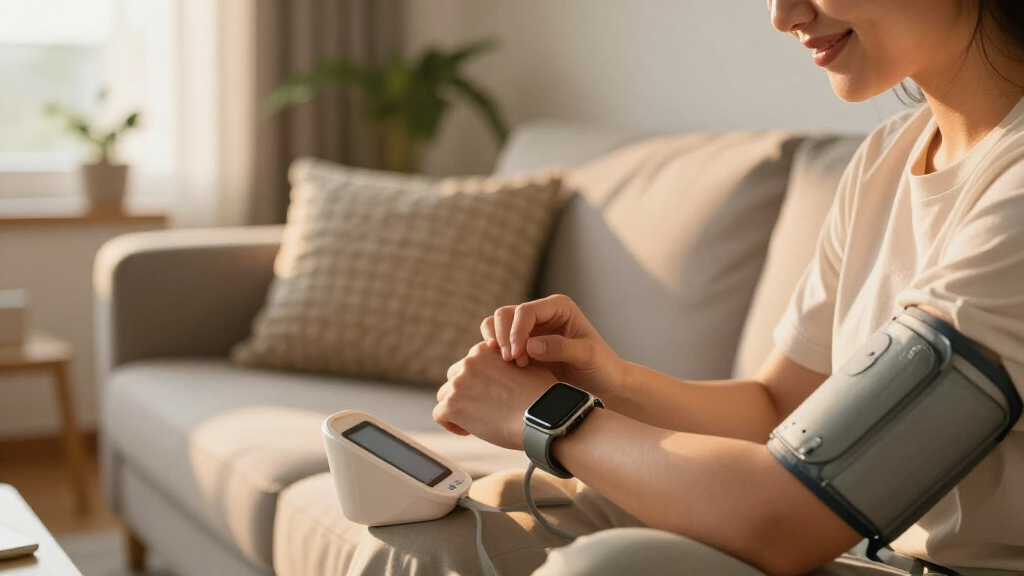
I ranked these devices by how well their measurement type, day-to-day usability, recordkeeping, and practical design match common home monitoring needs. I gave more weight to devices that offer a clear use case and useful tracking without making setup or interpretation harder than necessary. For blood pressure, that meant weighing upper-arm and wrist formats, cuff fit, and app support; for ECGs, I compared the number of leads and portability; for oximeters, I considered ease of spot checks and whether connected records add value.
The ranking reflects differences within this specific lineup, not a claim that one device is right for every person or condition. A multi-lead ECG ranks well for buyers who need more recording detail, while a simpler monitor may be a better value for routine checks. Product descriptions identify FDA clearance for some models, but I do not treat that label as a substitute for checking intended use, measurement instructions, or clinician advice. Home readings can be affected by fit, positioning, movement, and other factors, so usability and repeatable technique matter alongside features.
| home health monitoring device | Display |
|---|---|
| KardiaMobile 6L EKG | — |
| KardiaMobile 1-Lead EKG Monito | — |
| Oklar Wrist Blood Pressure Mon | — |
| Fingertip Pulse Oximeter Blood | OLED |
| Oklar FDA Cleared Blood Pressu | Backlit LED |
| iHealth Push Wrist Blood Press | — |
| Innovo iP900BP-B Fingertip Pul | Multi-directional, 6 layouts |
| iHealth Track Smart Upper Arm | Multi-color backlit |
| Zacurate 500 Series Fingertip | Large digital LED |
| EMAY 6L Portable ECG Monitor | — |
Factors to Consider When Choosing Home Health Monitoring Devices
Start with the measurement you actually need to track. A blood pressure cuff, pulse oximeter, and personal ECG answer different questions, and buying the most feature-rich device will not help if it measures the wrong thing or is difficult to use consistently.
Choose the Measurement Before the Device
Blood pressure monitors, pulse oximeters, and ECG devices measure different signals, so they are not interchangeable. If a clinician has asked you to track blood pressure, an ECG monitor will not provide the requested readings, even if it records heart activity. Pulse oximeters provide oxygen saturation and pulse estimates, but they do not explain why a reading is unusual. A common mistake is buying a device based on a symptom search instead of a specific monitoring need. Ask your clinician which measurement, schedule, and reporting format would be useful. That answer can narrow the category before you compare individual models.
Match the Monitor to Your Routine
The best device is one you can use correctly on the days you need it. Upper-arm cuffs can take more space and require proper placement, while wrist monitors are compact but depend on holding the wrist at the right level. A fingertip oximeter is quick to put on, yet cold hands, movement, or nail products may affect a reading. ECG devices ask you to follow a specific recording posture and may rely on an app to display or save results. Think through where you will take readings, who will operate the device, and whether you can repeat the same steps each time. Convenience matters because a difficult routine can lead to gaps or inconsistent technique.
Check Fit and Measurement Technique
Fit is a functional requirement, not a minor accessory detail. A cuff that does not suit your arm can make blood pressure readings unreliable, so measure first and check the stated range against your arm circumference. Wrist devices also need careful positioning; compact size does not remove the need to follow instructions. Fingertip monitors must sit securely, and users should wait for a stable reading rather than relying on a glance during movement. Before buying, look for clear setup instructions and a display you can read comfortably. If another person will help take readings, make sure the device’s steps work for both of you.
Decide Whether App Records Are Worth the Setup
Connected devices can make it easier to review trends or share saved measurements, but an app adds another step to every monitoring routine. Check whether a phone is required, whether the app supports your device, and whether the person taking readings is comfortable managing Bluetooth and account setup. A paper log may be enough for a short period of tracking, while a longer routine can benefit from saved history. Do not assume that an app’s graph interprets a reading medically; it mainly organizes data. Choose connectivity when the record itself helps you follow a clinician’s plan or maintain a consistent history. Otherwise, a readable standalone display may be simpler.
Pay for the Capability You Will Use
More leads, Bluetooth, or a larger feature set can justify a higher price when they solve a real need. A six-lead ECG offers a different kind of recording from a one-lead model, but buyers who only need a basic rhythm capture may prefer the smaller, simpler option. Likewise, an app-connected oximeter is useful only if reviewing saved readings matters to you. Compare the ongoing effort as well as the purchase price: batteries, charging, app setup, and accessories can shape the experience over time. Avoid paying extra for features that do not match the measurement plan you intend to follow. When a clinician recommends a particular type of monitor, prioritize that guidance over extra consumer features.
Know What a Home Reading Can Tell You
A home monitor provides a measurement under particular conditions; it does not, by itself, establish a diagnosis or explain a cause. Read the device instructions for how to prepare, when to repeat a measurement, and what to do with the result. Trends may be more useful than a single unexpected number, but do not ignore urgent symptoms while waiting for another reading. Keep notes about timing, activity, and unusual circumstances if your clinician asks you to report measurements. Consumer apps and device labels should not replace professional interpretation. Ask a healthcare professional how to respond to readings that fall outside your personal plan.
Frequently Asked Questions
Should I buy a wrist or upper-arm blood pressure monitor?
Choose based on fit, handling, and the monitoring instructions you have been given. Upper-arm monitors such as the iHealth Track and Oklar model use a cuff around the upper arm, while wrist options are smaller and easier to carry. Wrist readings depend on holding the device at the correct height, which can be difficult for some users. Check cuff or wrist fit and follow the measurement method recommended by your clinician. If readings will guide care decisions, ask whether your clinician prefers one format and bring the device to an appointment to compare technique.
Is a six-lead ECG worth paying more for than a one-lead model?
A six-lead model records more views of the heart’s electrical activity than a one-lead device, which may be useful when that added recording detail matches a clinician’s monitoring plan. It also brings a different recording process and may not be necessary for someone seeking a simple, portable rhythm check. Compare the KardiaMobile 6L with the one-lead KardiaMobile by asking what recording format your clinician can use and how often you expect to take readings. Neither device should be treated as a stand-alone diagnosis. If you have symptoms or a concerning result, follow medical advice rather than relying on a consumer recording alone.
Do I need an app-connected pulse oximeter?
An app can be useful if you need to keep a history of oxygen and pulse readings or share that record with a healthcare professional. The Innovo Bluetooth model offers connected tracking, while the basic fingertip options are more direct for occasional spot checks. App use also means managing a phone connection and possibly an account, so it may complicate use for someone who wants a simple display. Decide whether saved trends are part of your monitoring plan before paying for connectivity. An app organizes measurements; it does not determine what they mean medically.
Can I use these devices instead of seeing a clinician?
No. These devices can help collect readings at home, but they do not replace an examination, diagnosis, or treatment advice. A normal reading does not rule out every health problem, and an unusual reading can result from technique or conditions during measurement. Follow the instructions for repeat readings and the plan provided by your healthcare professional. Seek timely care for symptoms that concern you, regardless of what a consumer device reports. Ask a clinician which readings to record and when to contact them.
What should I check before buying a home blood pressure monitor for someone else?
Start with the user’s arm measurement and hand strength or dexterity, then check that the cuff fits and the controls are manageable. A wrist unit may be easier to put on independently, but positioning can be demanding; an upper-arm cuff may offer a familiar format but require more help. Consider whether the person can read the screen, charge or replace batteries, and use a connected app if the model depends on one. Practice the measurement steps together and compare technique with a clinician when possible. The simplest device that fits the person’s routine may produce a more useful record than a feature-heavy model they rarely use.
Conclusion
For the broadest ECG recording capability in this group, my best overall pick is the KardiaMobile 6L; choose the KardiaMobile one-lead if portability and a simpler recording matter more. For best value in routine blood pressure checks, the Oklar upper-arm monitor keeps the focus on the core task, while the iHealth Track is a stronger fit if you want an app record and wide-range cuff. The best premium-style option for buyers who want connected oxygen tracking is the Innovo iP900BP-B, and the best for beginners is a straightforward fingertip oximeter such as the Zacurate 500 Series for occasional spot checks. Choose an Oklar or iHealth wrist monitor when compact handling matters and you can follow wrist positioning instructions. Match the device to the measurement your clinician wants you to track, then prioritize fit and a routine you can repeat.
Fall Picks
fall essentials
As an affiliate, we earn on qualifying purchases.