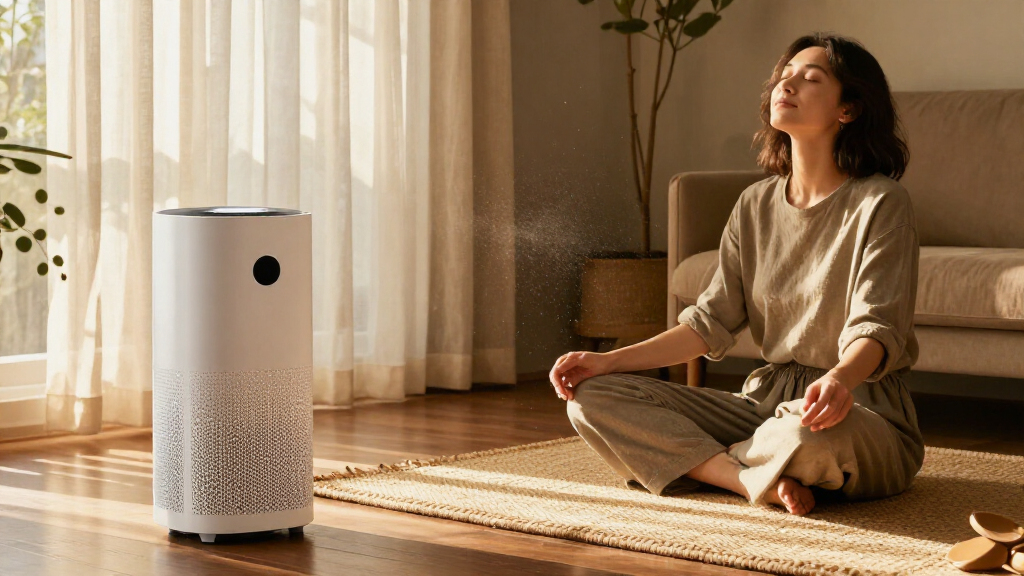

For most allergy-prone households, I’d start with the Levoit Vital 200S-P: its large-room design and smart controls make it a versatile choice for everyday pollen and dust management. The Levoit Vital 100S-P is a strong alternative for smaller spaces, while the Blueair Blue Pure 511i Max suits buyers who want a compact smart purifier. The main tradeoff is between room coverage, noise and filter upkeep, so a bigger unit is not automatically the better match. I compare all 15 options by their fit for allergy-related particles, room size, usability and maintenance. Read on for the full breakdown and help matching a purifier to your space.

Get health and wellness essentials delivered free with Prime
- Fast, free delivery on millions of items
- Prime Video, Amazon Music and more included
- Member-only deals all year
Complete the kit


Key Takeaways
- The Levoit Vital 200S-P leads for broad household use because its large-room format and smart controls offer a useful balance of coverage and day-to-day convenience.
- The Vital 100S-P is the more manageable Levoit option for smaller rooms, especially for buyers who value a washable pre-filter and do not need the larger model’s room reach.
- Room coverage separates these picks more than extra modes do: compact models such as the Clorox Tabletop suit close-range, small-room use, while large-room units are better matched to open areas.
- Smart features are most useful when they reduce daily effort. Auto modes and air-quality monitoring can simplify operation, but they do not replace choosing a unit sized for the room.
- Bundles and specialty features change the buying equation. The PuroAir 240 two-pack can suit buyers covering multiple rooms, while scent diffusers and UV features are secondary to filtration fit and routine maintenance.
| VOOPNU Air Purifier with 360° Filtration, White |  | Best Compact Pick | Coverage area: Up to 1,076 sq. ft. | Dimensions: 6.69 x 6.69 x 9.84 inches | Filtration: Three-layer filtration system | VIEW LATEST PRICE | See Our Full Breakdown |
| Levoit Vital 100S-P Air Purifier with Washable Pre-Filter |  | Best for Pet-Allergy Households | Model: Vital 100S-P | Room coverage: 222 sq. ft. at 4.8 air changes per hour; up to 1,073 sq. ft. at 1 air change per hour | CADR: 143 (smoke) | VIEW LATEST PRICE | See Our Full Breakdown |
| ECOSELF Air Purifier for Large Rooms up to 2,400 sq ft with True HEPA Filter |  | Best for Large Rooms with Air-Quality Monitoring | Coverage area: Up to 2,400 sq. ft. | Air purification frequency: Twice per hour in large rooms | Filtration: True HEPA; captures 99.97% of airborne particles | VIEW LATEST PRICE | See Our Full Breakdown |
| FreAire HAP605 Air Purifier for Large Rooms, White |  | Best for Quiet Large-Room Operation | Model: HAP605 | Room coverage: Up to 2,600 sq. ft. | Air inlets: One front inlet and two side inlets | VIEW LATEST PRICE | See Our Full Breakdown |
| LEVOIT Vital 200S-P Smart Air Purifier for Large Rooms |  | Best for Verified Pollen-Cleaning Performance | Model: Vital 200S-P | Recommended room area: Up to 1,875 sq. ft. | AHAM verified: Yes | VIEW LATEST PRICE | See Our Full Breakdown |
| Clorox Tabletop Air Purifier with True HEPA Filter for Small Rooms |  | Best Compact Bedroom Pick | Filter: Two-stage 360° filter with pre-filter and True HEPA filter | Particle capture: 99.97% of particles as small as 0.1 microns | Room coverage: Up to 200 sq. ft. | VIEW LATEST PRICE | See Our Full Breakdown |
| Levoit Core 200S-P Smart Air Purifier |  | Best Smart Pick for Small Rooms | Filter: 3-in-1 filter with activated carbon | Particle removal: 99.97% of dust, pollen, and dander sized 0.1–0.3 microns | Room size: 140 sq. ft. | VIEW LATEST PRICE | See Our Full Breakdown |
| Clorox Medium Room Air Purifier with True HEPA Filter |  | Best for Automatic Air-Quality Response | Filter: Three-stage True HEPA and active carbon | Particle capture: 99.97% of particles as small as 0.1 microns | Room coverage: 225 sq. ft. at 5 air changes per hour; up to 1,000 sq. ft. at 1 air change per hour | VIEW LATEST PRICE | See Our Full Breakdown |
| DREO Air Purifier with HEPA Filter, PM2.5 Monitor, Auto and Sleep Modes, and Scent Diffuser |  | Best for Real-Time Particle Monitoring | Model: DR-HAP008 (Dreo 338) | CADR: 115 CFM | Filter: 3-in-1: pre-filter, high-efficiency filter, activated carbon | VIEW LATEST PRICE | See Our Full Breakdown |
| Blueair Blue Pure 511i Max Smart Air Purifier |  | Best for Quiet Bedroom Operation | Filtration: HEPASilent dual filtration | Particle capture: 99.97% of airborne particles down to 0.1 microns | Small-room cleaning: 237 sq. ft. in about 12.5 minutes | VIEW LATEST PRICE | See Our Full Breakdown |
| PuroAir 240 HEPA Air Purifier, 2-Pack, Black |  | Best for Purifying Two Rooms | Model: PuroAir 240 | Quantity: 2 | Filtration: Pre-filter, HEPA filter, and activated carbon | VIEW LATEST PRICE | See Our Full Breakdown |
| AromaRoom True HEPA Air Purifier for Bedrooms and Baby Rooms |  | Best for Quiet Bedrooms | Model: AP103-A | Coverage area: 323 ft² (30 m²) | Air circulation: Twice per hour | VIEW LATEST PRICE | See Our Full Breakdown |
| Levoit Core 300-P Air Purifier for Home |  | Best Compact Pick | Model: Core 300-P | Filter type: 3-in-1 filtration | CADR: 143 CFM smoke; 153 CFM dust; 167 CFM pollen | VIEW LATEST PRICE | See Our Full Breakdown |
| GermGuardian AC4825E 22-Inch HEPA Air Purifier Tower, Gray |  | Best for Odors Alongside Allergens | Model: AC4825E | Height: 22 inches | Filter type: True HEPA with activated carbon pre-filter | VIEW LATEST PRICE | See Our Full Breakdown |
| KNKA APH4000 Air Purifier for Home, White |  | Best for Pet-Focused Large-Room Use | Model: APH4000 | Maximum room coverage: 1,695 sq ft at 1 air refresh per hour | Air refresh rate: 4.8 times per hour in rooms up to 350 sq ft | VIEW LATEST PRICE | See Our Full Breakdown |
| air purifiers for allergie | Model |
|---|---|
| VOOPNU Air Purifier with 360° | — |
| Levoit Vital 100S-P Air Purifi | Vital 100S-P |
| ECOSELF Air Purifier for Large | — |
| FreAire HAP605 Air Purifier fo | HAP605 |
| LEVOIT Vital 200S-P Smart Air | Vital 200S-P |
| Clorox Tabletop Air Purifier w | — |
| Levoit Core 200S-P Smart Air P | — |
| Clorox Medium Room Air Purifie | — |
| DREO Air Purifier with HEPA Fi | DR-HAP008 (Dreo 338) |
| Blueair Blue Pure 511i Max Sma | — |
| PuroAir 240 HEPA Air Purifier | PuroAir 240 |
| AromaRoom True HEPA Air Purifi | AP103-A |
| Levoit Core 300-P Air Purifier | Core 300-P |
| GermGuardian AC4825E 22-Inch H | AC4825E |
| KNKA APH4000 Air Purifier for | APH4000 |
More Details on Our Top Picks
VOOPNU Air Purifier with 360° Filtration, White
The VOOPNU Air Purifier pairs a small footprint with a stated coverage area of up to 1,076 sq. ft., making it easier to place than the larger FreAire HAP605. Its 360° intake and three-layer filtration are intended to capture airborne pollutants from multiple directions, while a 22 dB low-noise setting suits bedrooms where fan sound matters. The coverage figure does not say how many air changes per hour it delivers, though, so I would not treat it as equivalent to a model with a specified cleaning rate. The essential-oil tray adds fragrance, not allergy filtration, and continuous operation is recommended. I’d choose it for flexible placement in a modest room, but the requirement for genuine replacement filters adds an ongoing compatibility constraint.
Pros:- Compact 6.69-inch square footprint allows placement on a desk, shelf, or bedside surface.
- 360° intake and three-layer filtration address airborne particles from multiple directions.
- Stated noise level as low as 22 dB is suited to quiet rooms and sleep.
- Essential-oil tray provides an optional way to add fragrance.
Cons:- Coverage is listed without an air-change rate, so the large-area figure is hard to compare with measured room-cleaning rates.
- Manufacturer recommends continuous operation, which may not suit buyers who want to run a purifier only occasionally.
- Off-brand filters may reduce efficiency or damage the unit, limiting replacement options.
Best for: Bedroom or home-office owners who want a compact purifier with quiet operation and flexible placement.
Not ideal for: Buyers who need a clearly stated air-change rate for a large allergy-prone room or want flexibility to use off-brand replacement filters.
- Coverage area:Up to 1,076 sq. ft.
- Dimensions:6.69 x 6.69 x 9.84 inches
- Filtration:Three-layer filtration system
- Air intake:360°
- Pollutant capture:99.97%
- Noise level:As low as 22 dB
- Essential-oil tray:Yes; add 3–5 drops
- Certifications:DOE, ETL, FCC, CARB, CE, ROHS
Our verdict“Choose the VOOPNU if compact placement and quiet operation matter more than a clearly specified cleaning rate or broad filter choice.”
Levoit Vital 100S-P Air Purifier with Washable Pre-Filter
For homes where pet fur and dander add to seasonal allergies, the Levoit Vital 100S-P offers a useful balance of particle filtration and day-to-day upkeep. Its washable pre-filter can catch larger material such as fur before it reaches the other stages, while the stated 99.97% capture for 0.1–0.3 μm particles covers fine airborne particles. The key sizing distinction matters: 222 sq. ft. is the room size at 4.8 air changes per hour; the 1,073 sq. ft. figure is only at one air change per hour. Compared with the VOOPNU, Levoit gives clearer performance context and adds app scheduling, but it takes more room and its 25 dB Sleep Mode is not as quiet on paper. I’d favor it for a frequently used bedroom or pet room, not a huge open-plan area at its faster cleaning rate.
Pros:- Three-stage filtration is specified to capture 99.97% of particles sized 0.1–0.3 μm.
- Washable pre-filter helps collect pet fur and larger debris before it reaches the main filter.
- App controls support scheduling, timers, filter-life checks, and voice assistant connections.
- Pet, Auto, and Sleep modes let users adjust operation to different routines.
Cons:- The 1,073 sq. ft. figure corresponds to only one air change per hour; faster cleaning is specified for 222 sq. ft.
- At 25 dB in Sleep Mode, it is not as quiet on paper as the VOOPNU or ECOSELF models at 22 dB.
- Manufacturer recommends genuine Levoit replacement filters.
Best for: Pet owners with allergies who want a washable pre-filter, app scheduling, and frequent cleaning in a bedroom or medium-sized room.
Not ideal for: Buyers expecting several air changes per hour across a very large open room, or those who do not want app-connected controls.
- Model:Vital 100S-P
- Room coverage:222 sq. ft. at 4.8 air changes per hour; up to 1,073 sq. ft. at 1 air change per hour
- CADR:143 (smoke)
- Particle filtration efficiency:99.97% for particles sized 0.1–0.3 μm
- Filter type:3-stage
- Noise level:25 dB
- Controls:App, buttons, Amazon Alexa, Google Assistant
- Special modes:Pet, Auto, Sleep
- Pre-filter and odor filtration:Washable pre-filter; activated carbon filter for odors, fumes, and VOCs
Our verdict“Pick the Vital 100S-P for pet-related allergens and connected controls in a room near its 222 sq. ft. frequent-cleaning rating.”
ECOSELF Air Purifier for Large Rooms up to 2,400 sq ft with True HEPA Filter
The ECOSELF Large-Room Air Purifier is the standout here for buyers who want live air-quality feedback in a broad shared space. Its PM2.5 display and infrared sensor can prompt automatic fan-speed changes, so users do not have to choose a setting every time conditions shift. The product states coverage up to 2,400 sq. ft. and purification twice per hour in large rooms; that rate gives more useful context than the VOOPNU’s coverage figure alone, though it is still worth matching the room and operating conditions to the claim. Its 22 dB Sleep Mode is quieter on paper than the FreAire HAP605’s 20 dB? No—the FreAire is rated quieter, so light sleepers may prefer that model. ECOSELF adds a filter indicator and aromatherapy, but official replacement filters are recommended. I’d pick it for monitored coverage, not the quietest listed sleep setting.
Pros:- Designed for rooms up to 2,400 sq. ft., with a stated purification frequency of twice per hour in large rooms.
- PM2.5 display and infrared sensor can automatically adjust fan speed as readings change.
- Sleep Mode is rated at 22 dB.
- Filter indicator, timer, lock controls, and aromatherapy add operating and maintenance options.
Cons:- Its 22 dB Sleep Mode is not as quiet on paper as the FreAire HAP605’s 20 dB rating.
- Manufacturer recommends official ECOSELF replacement filters.
- The product data does not provide a CADR figure for direct comparison with the Levoit Vital 200S-P.
Best for: Households seeking automatic PM2.5-based fan adjustment and stated twice-per-hour cleaning across a large shared room.
Not ideal for: Light sleepers prioritizing the lowest listed sleep noise or buyers who want a product with broadly interchangeable replacement filters.
- Coverage area:Up to 2,400 sq. ft.
- Air purification frequency:Twice per hour in large rooms
- Filtration:True HEPA; captures 99.97% of airborne particles
- Air-quality monitoring:PM2.5 display and infrared sensor
- Sleep Mode noise level:22 dB
- Operating modes and controls:Timer, fan speed, Auto Mode, Sleep Mode, lock controls
- Maintenance feature:Filter indicator
- Additional feature:Aromatherapy function
- Certifications:ETL, FCC, EPA, CARB, DOE
Our verdict“Choose ECOSELF when automatic particle monitoring and broad stated coverage matter more than the quietest sleep setting or a published CADR.”
FreAire HAP605 Air Purifier for Large Rooms, White
Among the large-room choices, the FreAire HAP605 puts quiet sleep operation and practical pet cleanup first. Its front and side inlets provide three-direction intake, while a washable pre-filter can collect larger debris before it reaches the main filter. The 20 dB Sleep Mode is the lowest stated sleep-noise figure in this group, undercutting the ECOSELF’s 22 dB rating. It also has a PM2.5 sensor and Auto Mode, though ECOSELF provides a PM2.5 display and an explicit twice-per-hour large-room purification rate that make its monitoring and coverage claims easier to interpret. FreAire’s coverage reaches 2,600 sq. ft., but the data does not specify a cleaning rate for that area. The main filter is recommended for replacement every 3–6 months, so this is a better fit for owners comfortable with regular filter upkeep.
Pros:- Three-direction air inlets support intake from the front and both sides.
- PM2.5 sensor and Auto Mode adjust fan speed in response to changing air quality.
- 20 dB Sleep Mode is the lowest stated sleep-noise level among these five options.
- Reusable washable pre-filter supports routine collection of larger particles and pet debris.
Cons:- The 2,600 sq. ft. coverage claim is not paired with an air-change rate.
- Main-filter replacement is recommended every 3–6 months.
- Genuine replacement filters are recommended for proper fit and airflow.
Best for: Pet-owning households with a large room who want a washable pre-filter, automatic sensing, and a quiet sleep setting.
Not ideal for: Buyers who need a stated air-change rate for the full room size or want to avoid frequent main-filter replacement.
- Model:HAP605
- Room coverage:Up to 2,600 sq. ft.
- Air inlets:One front inlet and two side inlets
- Air-quality sensor:PM2.5
- Modes:Auto, Turbo Pet, Sleep
- Sleep Mode noise level:20 dB
- Pre-filter:Reusable and washable
- Main-filter replacement interval:Every 3–6 months
- Warranty:1 year
Our verdict“Choose the FreAire HAP605 for quiet sleep operation and washable pre-filter maintenance in a large room, provided its replacement schedule suits you.”
LEVOIT Vital 200S-P Smart Air Purifier for Large Rooms
The LEVOIT Vital 200S-P is the clearest choice here for buyers who want a published pollen-cleaning measure rather than relying on a broad coverage claim. Its AHAM-verified pollen CADR of 289 CFM, alongside dust and smoke figures, gives a more direct basis for comparing room-cleaning performance than the ECOSELF and FreAire listings provide. The U-shaped inlet is designed to help capture pet hair and odors, making this model relevant for homes where animal allergens accompany pollen. Its stated coverage is up to 1,875 sq. ft., less than the ECOSELF’s 2,400 and FreAire’s 2,600 sq. ft., so buyers prioritizing maximum stated area may prefer those models. LEVOIT lists a 27 dB noise level, and the product data does not specify filtration percentage or particle-size range. I’d choose it for measured performance transparency, while checking replacement-filter type for the household’s needs.
Pros:- AHAM-verified CADR figures provide a direct performance reference for pollen, dust, and smoke.
- Pollen CADR of 289 CFM is the highest specified allergen-related performance figure in this group.
- Traditional and U-shaped inlets are designed to help trap pet hair and odors.
- Coverage is specified up to 1,875 sq. ft.
Cons:- Product data does not specify a filtration percentage or particle-size range.
- Its stated coverage is below the ECOSELF and FreAire large-room figures.
- Different replacement filters serve different needs, so buyers must select a suitable filter type.
Best for: Allergy sufferers who want AHAM-verified pollen, dust, and smoke CADR figures and need a large-room purifier with a pet-hair-conscious inlet.
Not ideal for: Buyers who need a stated particle-capture percentage or particle-size range, or who prioritize the largest listed room coverage.
- Model:Vital 200S-P
- Recommended room area:Up to 1,875 sq. ft.
- AHAM verified:Yes
- CADR (pollen):289 CFM
- CADR (dust):254 CFM
- CADR (smoke):250 CFM
- Noise level:27 dB
- Air inlets:Traditional inlet and U-shaped inlet
- Target particles:Dust, pollen, pet hair, dander, smoke
Our verdict“Pick the Vital 200S-P if verified pollen-cleaning figures matter more to you than the broadest coverage claim or a stated particle-capture percentage.”
Clorox Tabletop Air Purifier with True HEPA Filter for Small Rooms
For allergy relief in a bedroom or small home office, this tabletop Clorox keeps the setup simple: its 360-degree intake draws air through a pre-filter and True HEPA filter rated to capture 99.97% of particles as small as 0.1 microns. It can refresh an 80-square-foot room up to five times per hour, a better match for a small sleep space than the Clorox Medium Room, which covers more ground and adds air-quality sensing. Three fan speeds, a timer, and an adjustable night light add useful bedside control, while its 3.2-pound body is easy to move. The tradeoff is limited reach: at 200 square feet, the stated rate falls to two air changes per hour. I’d choose it for a compact room, not as a whole-room solution for larger spaces.
Pros:- 360-degree intake and a pre-filter plus True HEPA filtration capture fine particles and larger debris.
- Up to five air changes per hour in an 80-square-foot room suits a small bedroom.
- Three fan speeds, timer settings, and an adjustable night light offer useful bedside control.
- Compact 3.2-pound design is easy to reposition.
Cons:- Air changes drop to two per hour at the stated maximum room size of 200 square feet.
- The filter is recommended for replacement every 6–12 months.
Best for: People who want a lightweight purifier for a bedroom, nursery, or small office of roughly 80 square feet, with simple controls and a night light.
Not ideal for: People with a large bedroom or open-plan space who need frequent air changes across more than 200 square feet.
- Filter:Two-stage 360° filter with pre-filter and True HEPA filter
- Particle capture:99.97% of particles as small as 0.1 microns
- Room coverage:Up to 200 sq. ft.
- Air changes:Up to 5 per hour in 80 sq. ft.; 2 per hour in 200 sq. ft.
- Controls:3 fan speeds; 2-, 4-, or 8-hour timer
- Noise:23 dB
- Dimensions and weight:7.5 × 7.5 × 9.5 in.; 3.2 lb
- Filter replacement:Every 6–12 months
Our verdict“Choose this Clorox for a small bedroom where compact size and straightforward HEPA filtration matter more than broad coverage or air-quality automation.”
Levoit Core 200S-P Smart Air Purifier
The Levoit Core 200S-P is the small-room choice for allergy sufferers who want app or voice control alongside particle filtration. Its 3-in-1 filter captures 99.97% of dust, pollen, and dander in the 0.1–0.3-micron range, while activated carbon helps with household odors and fumes. In a 140-square-foot room, it delivers 4.8 air changes per hour; that defined coverage makes its allergy use easier to judge than the Blueair Blue Pure 511i Max, whose supplied figures also include a much larger one-hour coverage claim. Levoit adds a filter-life indicator, timer, and display-off button, handy for bedroom routines. Its limits are equally clear: it is not a large-room unit, and its lowest stated noise is 27 dB, above Blueair’s 19 dB minimum. Replacement filters are also recommended to be genuine Levoit parts.
Pros:- Captures 99.97% of dust, pollen, and dander sized 0.1–0.3 microns.
- Provides 4.8 air changes per hour in a clearly specified 140-square-foot room.
- App, touch, and voice controls pair with a filter-life indicator and timer.
- Display-off setting and noise as low as 27 dB suit bedroom use.
Cons:- The stated frequent-refresh coverage is limited to 140 square feet.
- The manufacturer recommends genuine Levoit replacement filters.
- Its 27 dB minimum is not as quiet as the Blueair Blue Pure 511i Max’s stated 19 dB.
Best for: Apartment dwellers or bedroom users who want app and voice controls, filter-life tracking, and frequent air refreshes in a room around 140 square feet.
Not ideal for: People seeking one purifier for a large or open-plan room, or those who prioritize the lowest stated operating noise.
- Filter:3-in-1 filter with activated carbon
- Particle removal:99.97% of dust, pollen, and dander sized 0.1–0.3 microns
- Room size:140 sq. ft.
- Air changes:4.8 per hour in a 140 sq. ft. room
- Controls:App, touch, and voice; Amazon Alexa and Vera compatibility
- Noise:As low as 27 dB
- Dimensions and weight:8.1 × 8.1 × 12.6 in.; 6.6 lb
- Additional features:Filter-life indicator, timer, and display-off button
Our verdict“Pick the Core 200S-P if you want connected controls and frequent filtration for a small room, but look elsewhere for larger spaces or the quietest stated operation.”
Clorox Medium Room Air Purifier with True HEPA Filter
For buyers who want the purifier to respond to changing indoor air without constant manual adjustments, this Clorox Medium Room combines a PM2.5 display, color-coded feedback, and auto mode with three-stage filtration for larger particles, fine particulates, and odors. Its strongest allergy-use figure is five air changes per hour in rooms up to 225 square feet. That gives it more frequent-refresh capacity than the Clorox Tabletop, though the tabletop model is lighter and better suited to a bedside surface. Clorox lists coverage up to 1,000 square feet, but only at one air change per hour, so I would not treat that as equivalent to its 225-square-foot allergy-focused coverage. The unit stays relatively compact at 5.8 pounds, but its 120-watt draw is higher than the small-room options here, and the filter needs periodic replacement.
Pros:- Three-stage filtration combines a pre-filter, True HEPA filter, and active carbon.
- Provides five air changes per hour in rooms up to 225 square feet.
- PM2.5 display, color-coded light, and auto mode offer at-a-glance air feedback and automatic response.
- 360-degree airflow and a 5.8-pound body fit a range of room layouts.
Cons:- The 1,000-square-foot coverage figure corresponds to only one air change per hour.
- At 120 watts, it draws more power than the small-room models in this batch.
- The filter is recommended for replacement every 6–12 months.
Best for: People with a medium-sized bedroom or living room who want a PM2.5 readout and automatic fan adjustment while targeting frequent air refreshes.
Not ideal for: People who need fast, frequent filtration across a very large open space or want a particularly low-power small-room model.
- Filter:Three-stage True HEPA and active carbon
- Particle capture:99.97% of particles as small as 0.1 microns
- Room coverage:225 sq. ft. at 5 air changes per hour; up to 1,000 sq. ft. at 1 air change per hour
- Airflow:360°
- Air-quality feedback:PM2.5 digital display and color-coded light
- Modes and controls:Auto mode; touch and button controls
- Noise and power:30 dB; 120 W
- Dimensions and weight:8.74 × 8.74 × 14.65 in.; 5.8 lb
- Filter life:6–12 months
Our verdict“Choose this Clorox for a medium room where automatic air-quality response matters, but use its 225-square-foot figure—not its one-change-per-hour maximum—as the allergy-focused coverage guide.”
DREO Air Purifier with HEPA Filter, PM2.5 Monitor, Auto and Sleep Modes, and Scent Diffuser
The DREO DR-HAP008 suits allergy-focused buyers who want live particle feedback as well as adjustable purification. Its PM2.5 sensor and AQI display show changing readings, while Auto mode can adjust the fan; the 3-in-1 filter pairs a pre-filter and high-efficiency layer with activated carbon for odors. At 115 CFM, it is AHAM Verified and rated for 4.8 air changes per hour in rooms up to 178 square feet. That puts it between the Levoit Core 200S-P and the larger-coverage Clorox Medium Room for stated frequent-refresh area. Sleep mode turns off display lights, and the scent diffuser adds an optional fragrance feature. That diffuser may not suit people sensitive to added scents, and the 856-square-foot figure is only at one air change per hour, not the faster rate useful for managing airborne allergens.
Pros:- PM2.5 sensor and AQI display provide real-time air-quality information.
- Auto mode adjusts purification speed based on sensed air quality.
- 3-in-1 filtration includes an activated carbon layer to help reduce odors.
- Sleep mode turns off display lights, and the unit offers four speed settings.
Cons:- The 4.8-air-change-per-hour rating applies to rooms up to 178 square feet.
- The 856-square-foot coverage claim is based on only one air change per hour.
- The built-in scent diffuser may be a poor fit for people who avoid added fragrance.
Best for: People who want a live PM2.5/AQI display and automatic fan adjustment in a bedroom or other room up to 178 square feet.
Not ideal for: People sensitive to fragrance, or buyers expecting frequent air changes throughout a large room based on the maximum coverage figure.
- Model:DR-HAP008 (Dreo 338)
- CADR:115 CFM
- Filter:3-in-1: pre-filter, high-efficiency filter, activated carbon
- Room coverage:Up to 178 sq. ft. at 4.8 ACH; up to 856 sq. ft. at 1 ACH
- Air-quality monitoring:PM2.5 sensor with AQI display from 1–999
- Modes and speeds:Auto, Turbo, Sleep, and Normal; 4 speed settings
- Airflow:360° spiral airflow
- Certifications:AHAM Verified; ENERGY STAR certified
- Annual energy use:Approximately 125 kWh
Our verdict“Choose the DREO if live particle readings and auto adjustment are priorities for a modest-sized room, but skip it if you avoid fragrance features or need frequent filtration across a large space.”
Blueair Blue Pure 511i Max Smart Air Purifier
The Blueair Blue Pure 511i Max is the quiet-focused option here, with stated operation as low as 19 dB and sensor-driven fan adjustment that can respond as indoor air changes. Its HEPASilent dual filtration captures 99.97% of airborne particles down to 0.1 microns, including pollen, dust, pet dander, and mold particles—an allergy-relevant range shared with the Levoit Core 200S-P. Blueair’s smart app adds scheduling, controls, air-quality monitoring, and filter reminders, while 360-degree intake supports flexible placement in a compact room. Its supplied coverage figures need context: the unit cleans 237 square feet in about 12.5 minutes, while the 1,138-square-foot figure describes an hour of operation, not frequent room refreshes at that size. Compared with the smaller stated room target of the Levoit, Blueair offers a different coverage claim, but buyers should match the purifier to their room and desired air-change rate.
Pros:- HEPASilent dual filtration captures 99.97% of airborne particles down to 0.1 microns.
- Stated operation as low as 19 dB is well suited to quiet bedrooms.
- Air-quality sensors adjust fan speed automatically.
- App supports monitoring, controls, scheduling, and filter reminders.
Cons:- The 1,138-square-foot figure represents cleaning over an hour, not a stated frequent-refresh rate for that room size.
- Its compact-room focus makes it a less clear fit for large spaces than the Clorox Medium Room’s five-change rating up to 225 square feet.
Best for: Light sleepers, parents, or pet owners who want quiet operation, automatic fan adjustment, and app scheduling in a compact room.
Not ideal for: People who need clearly stated frequent air changes across a large room, or buyers who do not want app-connected features.
- Filtration:HEPASilent dual filtration
- Particle capture:99.97% of airborne particles down to 0.1 microns
- Small-room cleaning:237 sq. ft. in about 12.5 minutes
- One-hour coverage:Up to 1,138 sq. ft.
- Noise:As low as 19 dB
- Air intake:360°
- Smart features:Air-quality sensors, automatic fan adjustment, mobile app, scheduling, and filter reminders
- Color:Blue
Our verdict“Pick the Blue Pure 511i Max for quiet, app-connected bedroom filtration, but confirm its room-size performance against the air-change rate you want rather than relying on the one-hour coverage figure.”
PuroAir 240 HEPA Air Purifier, 2-Pack, Black
The two-unit bundle is the main reason I’d choose this PuroAir: it lets allergy sufferers place a purifier in separate spaces, such as a bedroom and living room, rather than relying on one machine to cover both. Its pre-filter, HEPA filter, and activated carbon target pollen, dust, pet dander, smoke, and some odors, while a particle sensor can adjust operation when it detects polluted air. Compared with the single-room AromaRoom AP103-A, this pairing offers more placement flexibility, but its stated coverage of up to 1,000 square feet is based on just one room refresh per hour—not frequent cleaning across a large open area. Sleep mode and a two-year warranty add practical appeal. I’d also check replacement-filter availability and upkeep before buying, since costs and intervals aren’t specified here.
Pros:- Two purifiers allow coverage to be split between separate rooms.
- Three-layer filtration targets pollen, dust, pet dander, smoke, and VOCs.
- Particle sensor adjusts power when it detects polluted air.
- Sleep mode and stated support for continuous operation suit regular home use.
Cons:- The 1,000-square-foot coverage claim corresponds to one air refresh per hour.
- Replacement-filter costs and recommended replacement intervals are not provided.
Best for: Households with allergy triggers in two separate rooms that want sensor-led operation and a quiet bedroom setting.
Not ideal for: Buyers who need rapid, repeated air cleaning across a large open-plan space or who want clearly stated filter replacement intervals and costs.
- Model:PuroAir 240
- Quantity:2
- Filtration:Pre-filter, HEPA filter, and activated carbon
- Stated coverage:Up to 1,000 sq ft in one hour
- Sensor:Smart particle sensor
- Modes:Sleep mode
- Warranty:2 years
- Certifications:CARB, ETL, ISO, UL
Our verdict“Choose this two-pack if you want sensor-equipped filtration in two rooms, but not if you need a clearly specified high air-refresh rate.”
AromaRoom True HEPA Air Purifier for Bedrooms and Baby Rooms
For a bedroom or nursery, the AromaRoom’s strongest allergy-focused advantage is quiet sleep operation: it’s rated at 22 dB on low, with True HEPA filtration for pollen, dust, and other fine particles. It circulates air twice per hour in rooms up to 323 square feet, a more specific room-use guide than the PuroAir 240’s one-refresh-per-hour coverage claim. The included smoke-remover filter adds another layer of relevance for households dealing with smoke, while the optional fragrance pad is an extra rather than a substitute for filtration. I’d favor this over the more feature-rich KNKA APH4000 when low-noise bedroom use matters more than a real-time air-quality display or pet-focused modes. Its limits are clear: the filter is recommended for replacement every three to six months, and the unit isn’t recommended for humid rooms.
Pros:- True HEPA filtration targets pollen, dust, and other airborne particles.
- Low sleep-mode noise is specified at 22 dB.
- Twice-per-hour circulation is stated for rooms up to 323 square feet.
- Smoke-remover filter and three timer settings add practical bedroom flexibility.
Cons:- Recommended filter replacement every three to six months adds ongoing upkeep.
- Not recommended for high-humidity locations such as bathrooms.
- The fragrance pad does not include essential oils.
Best for: Light sleepers, parents, and allergy sufferers who want a quiet purifier for a bedroom or nursery up to 323 square feet.
Not ideal for: People seeking a large-room purifier, those who want automatic air-quality control, or households planning to use it in a bathroom or other humid location.
- Model:AP103-A
- Coverage area:323 ft² (30 m²)
- Air circulation:Twice per hour
- Filtration:True HEPA
- Particle size captured:0.1–0.3 microns
- Sleep-mode noise:22 dB on low
- Timer settings:2, 4, and 8 hours
- Recommended filter replacement:Every 3–6 months
Our verdict“Pick the AromaRoom for quiet, clearly sized bedroom use, not for humid spaces or broad whole-home coverage.”
Levoit Core 300-P Air Purifier for Home
The Core 300-P suits allergy sufferers who want a compact, lightweight purifier with useful particle-specific performance figures. Its listed pollen CADR is 167 CFM, and the unit is specified to deliver 4.8 air changes per hour in a 222-square-foot room. That smaller-room rate is a more useful guide for regular pollen reduction than its headline 1,073-square-foot coverage, which is only one air change per hour. Compared with the taller GermGuardian AC4825E, the Levoit is easier to place on a shelf or move between rooms, while the GermGuardian adds an optional UV-C light and odor-focused carbon pre-filter. The Core 300-P instead keeps controls straightforward: manual fan-speed adjustment, timers, a filter-change indicator, and a display light-off option. Its no Auto Mode or smart connectivity means less hands-off operation, and the 120V specification limits it to compatible power setups.
Pros:- Pollen CADR of 167 CFM gives a useful particle-specific performance reference.
- Specified 4.8 air changes per hour in a 222-square-foot room.
- Compact 7.9-pound design is easier to move than a tower purifier.
- Sleep mode, timer, light-off option, and filter-change indicator support simple daily use.
Cons:- No Auto Mode or smart connectivity; fan speed requires manual adjustment.
- The 1,073-square-foot figure corresponds to one air change per hour.
- Filter replacement is recommended every six to eight months.
Best for: Apartment dwellers and allergy sufferers who want a portable purifier for a bedroom or other modest-sized room with a stated pollen CADR.
Not ideal for: Buyers who want automatic sensor-based adjustments, smart controls, or a purifier for a large room that needs frequent air changes.
- Model:Core 300-P
- Filter type:3-in-1 filtration
- CADR:143 CFM smoke; 153 CFM dust; 167 CFM pollen
- Filtration efficiency:99.97% for 0.1–0.3 μm airborne particles
- Air changes:4.8 per hour in 222 sq ft; once per hour in 1,073 sq ft
- Sleep-mode noise:24 dB
- Dimensions and weight:8.7 × 8.7 × 14.2 in; 7.9 lb
- Recommended filter replacement:Every 6–8 months
Our verdict“Choose the Core 300-P for portable, manually controlled filtration in a smaller allergy-prone room, rather than automated large-room cleaning.”
GermGuardian AC4825E 22-Inch HEPA Air Purifier Tower, Gray
The GermGuardian is a practical choice when allergens and household odors are both concerns. A True HEPA filter targets dust, pollen, and pet dander, while the activated carbon pre-filter helps with cooking and pet smells. In a 153-square-foot room, it’s specified to circulate air every 12.5 minutes; its much larger 743-square-foot figure means only one air change per hour. That makes the smaller-room rating the more relevant one for allergy-focused use. Compared with the Levoit Core 300-P, the GermGuardian is a taller tower and adds an optional UV-C light, while the Levoit provides a compact form and a stated pollen CADR. UV-C is an added feature, not a replacement for particle filtration, and the bulb and filters require ongoing maintenance. I’d choose this for a modest room where odor reduction matters as much as capturing airborne particles.
Pros:- True HEPA filtration captures dust, pollen, and pet dander.
- Activated carbon pre-filter helps reduce cooking and pet odors.
- Specified circulation every 12.5 minutes in a 153-square-foot room.
- Three fan speeds include a quiet sleep mode.
Cons:- Coverage up to 743 square feet corresponds to only one air change per hour.
- UV-C light is optional, rather than a standard filtration feature.
- Replacement filters and UV-C bulbs require ongoing maintenance.
Best for: Pet owners or households with cooking odors who want HEPA particle filtration and carbon filtration in a modest-sized room.
Not ideal for: People who need frequent air changes in a large room, want a compact unit, or prefer to avoid maintaining a separate UV-C bulb.
- Model:AC4825E
- Height:22 inches
- Filter type:True HEPA with activated carbon pre-filter
- Particle capture:99.97% of particles as small as 0.1 microns
- Room coverage:153 sq ft every 12.5 minutes; up to 743 sq ft once per hour
- Fan speeds:3, including sleep mode
- Additional feature:Optional UV-C light
- Certifications:CARB Certified, ETL Certified, Zero Ozone Verified
Our verdict“Choose the GermGuardian for a smaller room where odor control matters alongside allergy filtration, not for frequent cleaning across a large space.”
KNKA APH4000 Air Purifier for Home, White
The KNKA APH4000 is the lineup’s strongest fit for pet households needing flexible operation: PET mode, dual filter cartridges, washable pre-filters, and activated carbon address hair, particles, and odors without making the unit a one-mode appliance. Its stated 4.8 air changes per hour in rooms up to 350 square feet is the figure I’d use for allergy planning; the maximum 1,695-square-foot coverage is only one refresh per hour. That distinction matters when pollen or dander is the reason for running a purifier. Compared with the PuroAir 240 two-pack, the KNKA brings Auto mode, an air-quality display, and higher stated pollen CADR, but it offers one unit rather than two separate placements. Sleep mode is rated at 22–24 dB. The main tradeoff is maintenance: both filter cartridges are recommended for replacement every three to six months.
Pros:- PET mode and dual three-stage filter cartridges suit homes with animal-related particles and odors.
- Washable pre-filters help capture larger debris before it reaches the main filters.
- Auto mode and a real-time AQI display provide feedback and automatic operation.
- Rated for 4.8 air changes per hour in rooms up to 350 square feet.
Cons:- The maximum 1,695-square-foot coverage is based on one air refresh per hour.
- Filter cartridges are recommended for replacement every three to six months.
Best for: Pet owners who want a large-capacity purifier with washable pre-filters, dedicated PET mode, and automatic air-quality monitoring.
Not ideal for: Buyers who need frequent air refreshes across the full 1,695-square-foot stated area or want longer stated filter-replacement intervals.
- Model:APH4000
- Maximum room coverage:1,695 sq ft at 1 air refresh per hour
- Air refresh rate:4.8 times per hour in rooms up to 350 sq ft
- Smoke/dust/PM2.5 CADR:226 CFM (384 m³/h)
- Pollen CADR:244 CFM (415 m³/h)
- Filtration:Three-stage system with washable pre-filter, high-efficiency filter, and activated carbon
- Modes:PET, ECO, Sleep, and Auto
- Sleep-mode noise:22–24 dB
- Filter replacement interval:Every 3–6 months
Our verdict“Pick the KNKA for pet-focused, feature-rich cleaning in a room up to 350 square feet, not for fast allergen removal across its maximum stated area.”

How We Picked
I ranked these 15 air purifiers by how well their stated design and features match the needs of allergy-prone households: capturing airborne particles, fitting the intended room, and supporting consistent everyday use. I gave greater weight to filtration claims, room-size suitability, controls, noise-related modes and upkeep than to extras that do not directly improve a buyer’s ability to run a purifier regularly. Products with different footprints and configurations are not interchangeable; a tabletop model can be a sensible choice for a small room without being a substitute for a large-room unit.
The Levoit Vital 200S-P ranks first for its combination of large-room positioning and smart operation. The Vital 100S-P follows as a more compact, maintainable alternative, while models such as the Blueair 511i Max stand out for buyers who value a smaller smart unit. I placed smaller or more specialized options lower for general allergy use, not because they lack a place, but because their room scale, bundle format or extra features narrow the situations where they make the most sense. I also treated filter replacement and ongoing cleaning as part of the ownership decision, not as an afterthought.
Factors to Consider When Choosing Air Purifiers For Allergies
Before choosing among these models, I’d match the purifier to the room and the way you live in it. The right pick is the one you can run consistently, maintain comfortably and position where it can circulate air—not necessarily the one with the biggest coverage claim or the longest feature list.
Match Coverage to the Room You Actually Use
Start with the room where symptoms are most bothersome, rather than trying to treat an entire home with one unit. Open layouts, high ceilings and frequent door openings can make a stated room-area figure less useful than it looks on a box. A unit sized close to the room’s needs may need to run harder, while a larger model can offer more headroom but take up more space. Check how the manufacturer defines coverage and whether that figure reflects a faster or slower air-cleaning cycle. For bedrooms, also think about where the purifier can sit without blocking an intake or blowing directly at the bed. If you need coverage in separate rooms, two appropriately placed units may work better than moving one purifier around.
Read Filtration Claims With the Whole System in Mind
For allergies, the central question is whether the purifier is designed to capture airborne particles such as pollen, dust and pet dander. Look for clear information about the filter type and how air moves through the unit, rather than assuming that a word like “clean” or “medical” guarantees a particular result. A pre-filter can catch larger debris and protect the main filter, but it needs regular cleaning to remain useful. Seals and the path air takes through the housing also matter because air that bypasses the filter does not get the same treatment. Extra technologies may appeal to some buyers, but they should not distract from the core filter design. If a listing leaves basic filtration details vague, I would compare it carefully with models that state them more clearly.
Treat Noise and Placement as Part of Performance
A purifier only helps while it is running, so the sound it makes at the setting you can tolerate matters in practice. Sleep modes can reduce noise, though they may also lower fan speed and change how quickly air cycles through the room. Consider whether the unit will sit in a bedroom, a shared living space or beside a desk, since the same sound level can feel very different in each setting. Leave room around the intake and outlet, and avoid hiding the purifier behind furniture or curtains. A compact device is easier to place but may be a poor match for a large room if it cannot move enough air for your needs. When possible, prioritize a model you can run steadily over one you expect to switch off because it is disruptive.
Budget for Filters and Routine Upkeep
The purchase decision includes replacement filters, cleaning time and access to compatible parts. Check the recommended replacement interval and whether the filter is easy to find for the exact model; a low-maintenance design can be more valuable than a feature you rarely use. Washable pre-filters can reduce how often the main filter has to handle larger particles, but they still need cleaning and should be dried as directed. Filter-life indicators can help with scheduling, yet they may estimate use rather than measure every household’s pollutant load. Pet hair, cooking and heavy seasonal pollen can change how quickly a filter needs attention. I’d compare the upkeep routine before committing, especially if you plan to run the purifier every day.
Choose Smart Controls Only When They Solve a Real Problem
App control, air-quality displays and automatic modes can make operation easier, particularly when the purifier is in a room you do not check often. They can also add setup steps, connectivity requirements and more settings to manage. A reliable manual control panel may suit someone who wants to set a speed and leave it alone. Auto mode is convenient, but it is not a substitute for choosing a suitable room size or maintaining the filter. Displays and sensors can be helpful signals, though their readings may not represent every part of a room. Pay for smart functions when remote scheduling or hands-off adjustments fit your routine, not simply because a model offers more controls.
Separate Allergy Priorities From Extra Features
Some models add scent trays, UV-related features or bundled units, but those extras do not automatically make a purifier better for airborne allergens. A scent feature may be unwelcome to people sensitive to fragrances, so check whether it can be left unused. A multi-unit pack can make sense for separate bedrooms, but confirm that each unit suits the room where it will operate. Compact tabletop models offer easy placement, though their smaller scale limits where they are most useful. Before choosing a specialty feature, ask whether it addresses a problem you actually have and whether it complicates cleaning or filter replacement. For allergy-focused buying, a well-sized unit with clear filtration details and manageable upkeep is often the simpler choice.
Frequently Asked Questions
Should I buy one large-room purifier or separate units for the bedroom and living room?
I’d base this on whether the rooms connect freely and where you spend the most time. One large-room model may suit an open area, but it cannot clean a closed bedroom as effectively from down the hall. Separate units let you place filtration close to the rooms where you sleep or relax, though they add filter and cleaning duties. If you are unsure, prioritize the room where symptoms or exposure feel most disruptive. A tabletop model may work for a small personal space, while larger rooms call for a unit designed for that scale.
Is a washable pre-filter enough to avoid replacing the main filter often?
No. A washable pre-filter can collect larger debris and help protect the main filter, but it does not replace the particle-capturing filter in the system. You still need to follow the manufacturer’s cleaning instructions and replace the main filter when required. Homes with pets, frequent cooking or heavy seasonal pollen may load filters faster than a lightly used room. Check the cost and availability of the replacement filter before choosing a model. I’d treat a washable pre-filter as a maintenance convenience, not a promise of filter-free ownership.
Do smart air-quality sensors tell me whether my allergy triggers are gone?
Not necessarily. A sensor can show changes in the particles it detects, but it may not identify a specific allergen or represent air conditions across the whole room. Its reading can also be affected by where the unit sits and what is happening nearby. Use the display or auto mode as an operating aid, not as proof that pollen, dust or pet dander has been eliminated. Room sizing, placement and filter upkeep still matter. If you prefer a simple routine, a model with manual controls may be enough.
Should I choose a purifier with a scent diffuser if I have allergies?
Only if you want that feature and can use it without discomfort. A scent diffuser is separate from the purifier’s particle filtration, and fragrance can bother some people with sensitivities. Check whether the scent function is optional and whether the unit remains fully usable when it is off. If fragrance is a concern in your household, a simpler model may be the easier choice. I would give room fit and filter details more weight than an added scent option.
When does a two-pack make more sense than a single higher-capacity purifier?
A two-pack can be a practical fit when you want separate units in distinct rooms, such as a bedroom and a home office. It gives you placement flexibility, but each purifier still has its own room limits and maintenance needs. A single larger unit may be easier to manage in one open area, while it may not serve closed rooms well. Compare the size and stated coverage of each included purifier rather than treating the bundle as one combined system. The best choice depends on your floor plan and whether you are willing to maintain multiple filters.
Conclusion
For best overall, I’d choose the Levoit Vital 200S-P for a household seeking large-room coverage with smart controls. The best value in flexibility is the Levoit Vital 100S-P for smaller rooms and buyers who appreciate a washable pre-filter; for a lower-complexity start, the Clorox Medium Room model is a straightforward option to compare. My best premium-style pick is the Blueair Blue Pure 511i Max for buyers who want a compact smart purifier, while the ECOSELF or FreAire models are worth considering when a large-room format is the priority. For specific needs, look at the Clorox Tabletop for a small space and the PuroAir 240 two-pack for separate rooms. Match the room, noise tolerance and upkeep routine first, then choose the features you will actually use.