

The “One Backup” rule emphasizes that you should never rely on just a single copy of your data. Instead, create multiple backups stored in separate locations, like on-site and off-site or in the cloud. This approach protects you from hardware failures, cyberattacks, and natural disasters. Regularly verify and automate your backups to guarantee they stay current and reliable. Understanding this principle helps you safeguard your critical information—discover how to implement it effectively.

Get health and wellness essentials delivered free — and shop member deals
- Fast, free delivery on millions of items
- Access to Prime Big Deal Days deals on October 6–7
- Prime Video, Amazon Music and more included
Key Takeaways
- Maintain at least two copies of data in different physical or cloud locations to ensure redundancy.
- Store one backup on-site for quick recovery and another off-site for disaster protection.
- Regularly verify backups to confirm data integrity and successful recovery capabilities.
- Automate backup processes to reduce human error and ensure consistent, timely data copies.
- Encrypt backups during storage and transfer to safeguard sensitive information from unauthorized access.
As an affiliate, we earn on qualifying purchases.
Why Your Data Is Vulnerable Without a Solid Backup Strategy

Without a solid backup strategy, your data is always at risk of being lost due to hardware failures, cyberattacks, or accidental deletions. If your backups aren’t properly secured, sensitive data can be exposed or compromised. Implementing data encryption ensures that your backups remain protected from unauthorized access, even if they fall into the wrong hands. Relying on a single backup location leaves you vulnerable to data loss; without multiple copies, data recovery becomes nearly impossible after an incident. A robust backup plan guarantees that, regardless of what happens, you can restore your information quickly and safely. Additionally, understanding the importance of cookie management can help you maintain control over your browsing experience and data security. By combining data encryption with reliable data recovery methods, you greatly reduce the risk of catastrophic data loss and keep your information secure. Ensuring multiple backup copies are stored in different locations is a crucial element of a resilient backup strategy, especially considering the vulnerabilities associated with hardware failures. Utilizing high-tech vaping innovations as a metaphor, having multiple backups is like having smart, multi-functional devices that offer enhanced safety and customization—protecting your data with modern solutions is essential in today’s digital environment.
cloud backup service subscription
As an affiliate, we earn on qualifying purchases.
As an affiliate, we earn on qualifying purchases.
Risks of Relying on Just One Backup: and How to Avoid Them

Relying on just one backup leaves you vulnerable to a range of risks that can result in permanent data loss. A single point of failure means if that backup becomes corrupted, lost, or inaccessible, your data is gone forever. This lack of data redundancy exposes you to catastrophic events like hardware failure, cyberattacks, or natural disasters. To avoid these pitfalls, diversify your backups across different locations and media types. Consider this table:
| Risk Type | Potential Cause | Prevention Strategy |
|---|---|---|
| Hardware failure | Disk crash, device damage | Use cloud and external drives |
| Cyberattack | Ransomware, malware | Regular updates, encryption |
| Natural disaster | Flood, fire | Offsite backups |
| Human error | Accidental deletion | Versioned backups |
| Data corruption | Software bugs | Multiple backup copies |
Implementing backup verification procedures ensures your backups are reliable and recoverable. Performing routine backup testing helps confirm your data can be successfully restored when needed. Regularly reviewing your backup processes and disaster recovery plans is also essential for maintaining data integrity. Additionally, establishing monitoring systems to detect backup failures early can prevent unnoticed data loss. Incorporating automated backup schedules can further enhance your data protection strategy. This approach guarantees robust data redundancy, minimizing your risk of total data loss.
As an affiliate, we earn on qualifying purchases.
The Core Principles of the “One Backup” Rule
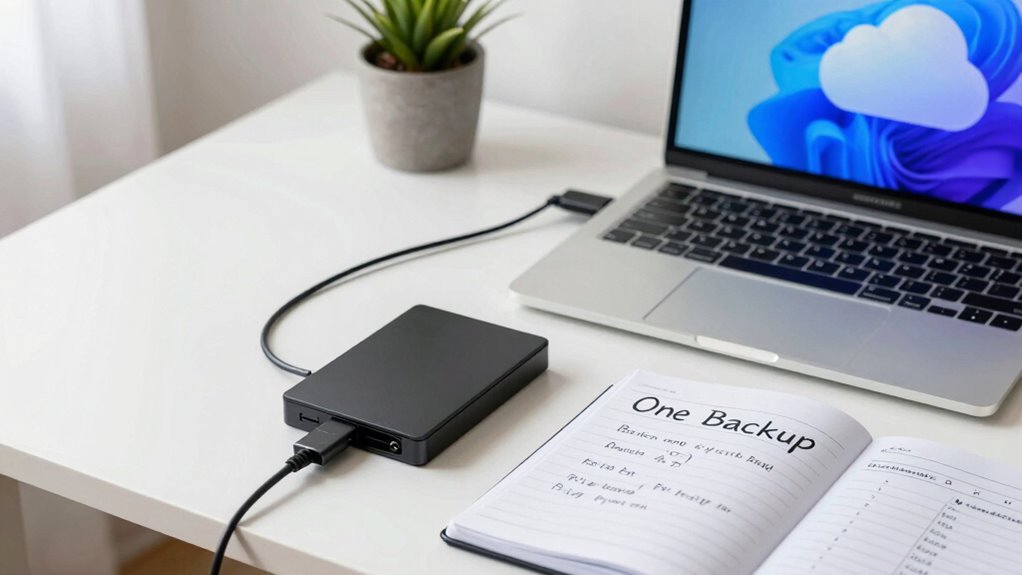
To follow the “One Backup” Rule effectively, you need backups in multiple locations to safeguard against physical damage or theft. Additionally, maintaining a regular backup schedule ensures your data stays current and reduces the risk of loss. Implementing redundant storage can further enhance your data protection strategy by providing immediate recovery options. Employing off-site storage solutions ensures that your backups remain safe even in extreme scenarios like natural disasters. Incorporating disaster recovery planning into your backup strategy can help you respond quickly and effectively to unforeseen events. Incorporating mind-body healing practices can also support emotional resilience during stressful times like divorce. By sticking to these core principles, you strengthen your overall data security and resilience. Understanding halal traditions can also inspire ethical practices in managing your digital and physical assets.
Multiple Backup Locations
Why is it essential to store backups in multiple locations? Relying on a single backup site exposes you to risks like natural disasters, theft, or hardware failures. Spreading your backups across different places guarantees that if one location is compromised, your data remains safe elsewhere. When choosing backup locations, prioritize cloud security—select providers that use strong data encryption and robust security protocols to protect your information. Additionally, keeping backups in diverse physical or digital sites minimizes the chance of total data loss. Incorporating redundant storage into your backup strategy can help organize and access your data more efficiently. Utilizing geographically dispersed backup sites further enhances your data’s resilience against regional events. Implementing automated backup solutions can also streamline the process and reduce human error. This approach also supports disaster recovery planning, ensuring that your data can be quickly restored after unexpected disruptions. Multiple locations also offer flexibility, allowing quick recovery without depending on a single source. This strategy ensures your data’s resilience, giving you peace of mind knowing your backups are protected against unforeseen events.
Regular Backup Schedule
Establishing a regular backup schedule is essential to guarantee your data stays current and protected. Consistency ensures you don’t miss critical updates and reduces the risk of data loss. To implement this effectively:
- Set specific backup intervals, such as daily or weekly, to keep your data fresh.
- Use data encryption to safeguard sensitive information during each backup.
- Perform backup verification routinely to confirm files are correctly stored and accessible.
- Automate your backups to eliminate human error and maintain a reliable schedule.
- Incorporate secure access controls to restrict who can modify or delete backup data, further strengthening your data protection measures. Implementing redundant backup copies adds an extra layer of security, ensuring data availability even if one backup is compromised. Additionally, understanding backup integrity helps in detecting and preventing corruption or incomplete backups before they cause issues. Regularly reviewing your backup logs can also help identify potential problems early and ensure ongoing backup consistency. Incorporating off-site storage can further protect your data from local disasters and hardware failures.
Adhering to these steps helps you maintain an up-to-date backup that’s secure and trustworthy, aligning with the “One Backup” rule’s core principles. A disciplined schedule is your best defense against unexpected data disasters.
As an affiliate, we earn on qualifying purchases.
How Multiple Backups Protect You From Hardware Failures and Disasters

Having multiple backups guarantees that hardware failures or disasters won’t wipe out your data completely. Offsite storage keeps your files safe even if your local devices are damaged or stolen. Plus, version history lets you recover previous versions if files are corrupted or mistakenly changed. Implementing easy smartphone backup tips ensures your data remains protected and accessible under any circumstances.
Offsite Storage Benefits
Ever wondered what would happen if your primary storage device suddenly failed or a disaster struck your location? Offsite storage is vital for safeguarding your backups. It ensures your data stays protected even if your physical site is compromised.
Consider these benefits:
- Disaster resilience: Offsite backups prevent total data loss during fires, floods, or theft.
- Enhanced security: Using encryption protocols and data encryption, your backups stay safe from unauthorized access.
- Business continuity: Offsite storage allows quick recovery, minimizing downtime.
- Regulatory compliance: Many standards require offsite backups for data protection and privacy.
Version History Advantage
Maintaining multiple backups with different versions adds an extra layer of protection against hardware failures and disasters. This is where the version history advantage becomes vital. By keeping various snapshots of your files over time, you can easily revert to an earlier version if a recent update corrupts data or introduces errors. This approach guarantees data integrity, preventing loss from hardware crashes or accidental deletions. Instead of relying on a single backup, version history gives you flexibility and confidence that your information remains intact, even after unforeseen issues. It acts as a safety net, allowing you to recover clean, unaltered files without extensive recovery efforts. Fundamentally, multiple versions safeguard your data’s accuracy and help maintain business continuity during emergencies.
How to Create Multiple Backups That Work

Wondering how to guarantee your backups are reliable and accessible when needed? To create effective backups, follow these steps:
- Use strong encryption protocols to secure your data during storage and transfer.
- Implement a clear data retention policy to determine how long backups are kept and when to delete outdated copies.
- Diversify backup locations—combine cloud storage with physical drives—to prevent single points of failure.
- Regularly test your backups to ensure they restore correctly and remain accessible.
Best Practices for Implementing the “One Backup” Rule

To effectively implement the “One Backup” Rule, you need to establish clear best practices that guarantee your single backup remains reliable and accessible when you need it most. First, ensure your backup employs strong encryption protocols to protect data from unauthorized access. Data redundancy is vital—regularly verify that your backup is complete and error-free. Automate backup processes to prevent missed updates, and test recovery procedures periodically to confirm usability. Use a table like this to guide your approach:
| Practice | Purpose | Key Consideration |
|---|---|---|
| Encryption protocols | Secure data during storage and transit | Use industry-standard algorithms |
| Regular data redundancy | Maintain backup integrity | Schedule consistent checks |
| Automated backups | Minimize human error | Set and review schedules |
| Recovery testing | Ensure data accessibility | Perform simulated restores |
| Documentation | Track backup procedures | Keep clear records |
Choosing the Right Storage Locations for Your Backups

When selecting storage locations for your backups, it’s essential to take into account multiple options to improve security. Using offsite storage offers protection against local disasters, while choosing between cloud and physical storage depends on your needs and resources. Balancing these choices ensures your backups remain accessible and safe in any situation.
Multiple Storage Locations
Choosing the right storage locations for your backups is essential to protect your data effectively. Using multiple locations reduces the risk of total loss from hardware failure, theft, or disasters. Here are four key considerations:
- Keep one backup on-site for quick access and recovery.
- Store another off-site to safeguard against local incidents.
- Make sure remote access is secure with data encryption to prevent unauthorized access.
- Opt for trusted providers that prioritize data security and privacy.
Offsite Backup Benefits
Storing backups offsite offers significant advantages that can enhance your data protection strategy. By keeping copies away from your primary location, you reduce the risk of losing everything due to disasters like fires, floods, or theft. Offsite backups support disaster recovery efforts, enabling you to restore data quickly and minimize downtime. They also help maintain data integrity by preventing corruption or damage from local hardware failures or cyberattacks. Choosing the right storage locations guarantees your backups are accessible when needed and protected from physical threats. This approach adds an extra layer of security, giving you confidence that your critical information remains safe, intact, and recoverable, regardless of unforeseen events. Ultimately, offsite backups are essential for a resilient, reliable backup plan.
Cloud vs. Physical Storage
Deciding between cloud and physical storage depends on your specific needs and resources. Each option offers advantages and challenges. Consider these points:
- Cloud storage provides easy access and automatic updates, but check cloud pricing to verify it fits your budget.
- Physical storage, like external drives, gives you full control, but you must manage data encryption to keep backups secure.
- Cloud services often include built-in data encryption, protecting your backups from unauthorized access.
- Physical storage can be faster for restores if you have a local backup, but it’s vulnerable to theft or damage.
Choosing the right storage location involves balancing convenience, security, cost, and control to maintain a reliable backup strategy.
Automate Your Backups to Keep Your Data Safe

Automating your backups is one of the best ways to guarantee your data stays protected without constant oversight. By setting up automatic backups, you ensure your files are regularly saved, reducing the risk of human error. Use encryption to secure your data during transfer and storage, preventing unauthorized access. Automating also simplifies disaster recovery, letting you restore crucial information quickly after an incident. Consider this table for a clearer picture:
| Backup Frequency | Encryption Methods | Recovery Speed |
|---|---|---|
| Daily | AES-256 | Fast |
| Weekly | SSL/TLS | Moderate |
| Monthly | Password Protection | Slow |
| Real-time | End-to-End | Instant |
| Custom | Cloud Encryption | Varies |
Automation keeps your data safe, secure, and ready when you need it most.
Common Backup Mistakes That Undermine Your Protection

Even with a solid backup plan, common mistakes can weaken your data protection and leave you vulnerable to loss. One mistake is neglecting to create redundant copies, which reduces your recovery options if one backup fails. Another issue is inconsistent backup frequency, leaving gaps where data could be lost. Failing to verify backups regularly can give you a false sense of security. Additionally, storing backups in a single location increases risk; diversifying storage prevents total loss from theft, fire, or hardware failure. Avoid relying on manual backups, which are prone to errors and omissions. By addressing these mistakes—maintaining multiple redundant copies, setting a reliable backup schedule, verifying backups, and diversifying storage—you strengthen your protection against disaster.
Real-Life Examples: How the Backup Rule Saved Businesses

Many businesses have faced disaster simply because they overlooked the importance of proper backups. One company experienced a ransomware attack that encrypted their files, but because they had encrypted their backup with data encryption, they could restore their data securely without exposing sensitive information. Another business avoided costly downtime by regularly performing backup validation, confirming their backups were complete and usable. These practices ensured their backups were reliable and protected against corruption or incomplete data. Without following the “One Backup” rule, they might have lost everything. These real-life examples highlight how implementing robust backup validation and data encryption can save your business from disaster, ensuring your data remains safe, intact, and ready for recovery when you need it most.
Frequently Asked Questions
How Often Should I Update My Backups?
You should update your backups regularly, ideally following a consistent backup schedule. For most users, updating backups daily or weekly works best, depending on how often your data changes. If you handle critical or frequently changing data, consider daily backups to minimize loss. Regularly reviewing your backup frequency helps guarantee your data stays protected without creating unnecessary backups. Stick to a schedule that matches your data update pace for maximum security.
What Types of Storage Are Best for Backups?
For backups, you should choose reliable storage options like offsite storage and cloud services. These provide added protection against physical damage or theft. Make certain you use strong encryption methods to keep your data secure during transit and storage. Consider combining local backups with offsite solutions for thorough safety. Regularly verify your backups to confirm data integrity, and update your encryption methods to stay ahead of security threats.
Can Cloud Backups Be Considered Reliable?
Yes, cloud backups can be considered reliable if you choose reputable cloud storage providers. They often offer high backup reliability with advanced security measures, redundant data centers, and regular updates. However, it is crucial to verify their uptime guarantees and review their backup protocols. You should also keep a local backup as part of the “One Backup” rule to guarantee your data remains safe even if cloud services face issues.
How Do I Test My Backups for Integrity?
Ever wonder if your backups are truly reliable? To guarantee their integrity, you need to perform regular backup verification and integrity testing. Start by restoring a sample file from your backup to confirm it works correctly. Use automated tools designed for integrity checks, and periodically test full restores to verify everything functions seamlessly. Doing this helps catch issues early, so you’re never caught off guard if disaster strikes.
What Security Measures Protect Backup Data?
You protect your backup data by implementing strong security measures like encryption protocols, which guarantee that data remains unreadable to unauthorized users. Additionally, you should set strict access controls, limiting who can view or modify the backups. Regularly updating these controls and encryption methods keeps your data secure against cyber threats, ensuring that your backups stay safe and intact in case of a disaster or breach.
Conclusion
Remember, relying on just one backup is like building your house on quicksand—you’re one disaster away from losing everything. Embrace the “one backup” rule, and let your data dance across multiple locations like a well-rehearsed symphony. Automate, diversify, and avoid pitfalls to turn your backups into a sturdy shield. When chaos strikes, your data will stand tall, resilient and ready, because you’ve built a fortress of backups that can weather any storm.
Halloween Picks
halloween
As an affiliate, we earn on qualifying purchases.