
TL;DR

Get health and wellness essentials delivered free with Prime
- Fast, free delivery on millions of items
- Prime Video, Amazon Music and more included
- Member-only deals all year
Researchers have described the Knight Alzheimer Research Imaging dataset, which brings together 6,217 brain imaging sessions from 1,645 people aged 42 to 97. Its repeated MRI and PET scans, combined with clinical and cognitive assessments, give researchers a resource for examining how amyloid, tau and brain structure relate to aging and Alzheimer’s disease; the dataset does not itself establish causes or predict an individual’s future condition.
A paper in Nature Communications describes a research dataset containing 6,217 brain imaging sessions from 1,645 people, ranging from healthy aging to symptomatic Alzheimer’s disease. The Knight Alzheimer Research Imaging resource pairs repeated MRI and PET scans with clinical and cognitive assessments, giving researchers a way to study how brain structure and Alzheimer’s-associated proteins relate to cognitive health over time.
The dataset was developed by the Knight Alzheimer Disease Research Center at Washington University in St. Louis. Participants were between 42 and 97 years old, and more than 800 had imaging at multiple time points; some were followed for more than 15 years. The paper presents the resource and examines relationships between imaging measures, age, clinical status and cognitive performance.
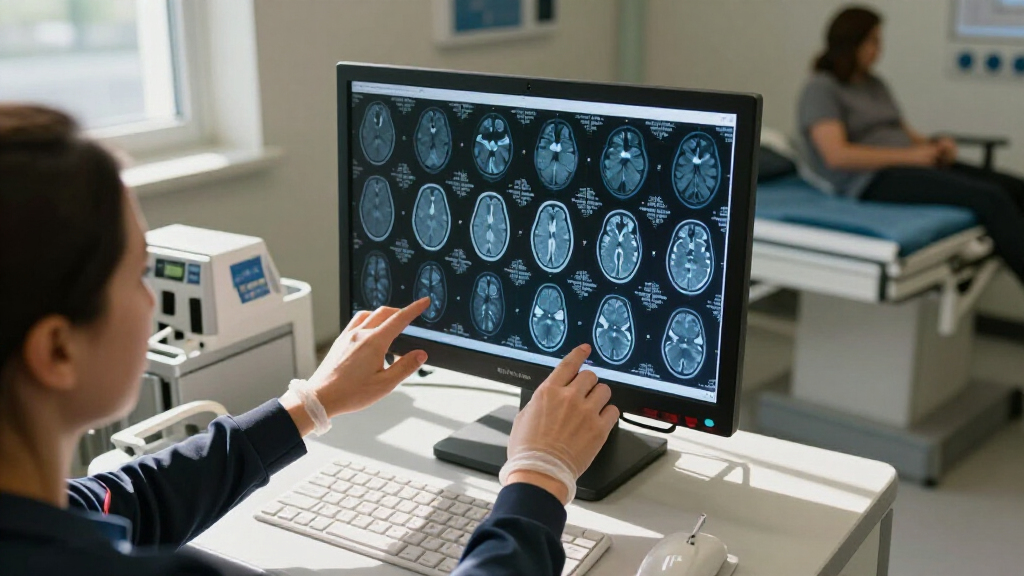
The scans cover several aspects of the brain. The resource includes structural, functional and diffusion MRI, as well as PET imaging to measure amyloid and tau, proteins associated with Alzheimer’s disease. It also links imaging to clinical and cognitive assessments, genetic information, fluid biomarkers and demographic data. Qualified researchers can access raw scans and processed measures, including anatomical segmentations and quantified biomarkers.
The study reports 3,385 MRI sessions involving 1,571 participants, 2,684 amyloid PET scans from 1,370 participants, and 1,113 tau PET scans from 826 participants. Some people had repeat scans, and 792 underwent MRI, amyloid PET and tau PET. Clinical assessments were available for 1,643 participants within two years of a scan. Most participants had no recorded cognitive impairment: 1,120 had a maximum Clinical Dementia Rating score of 0. The score ranges from 0, indicating no impairment, to higher scores indicating greater impairment.
A Resource for Studying Early Changes
Alzheimer’s-related changes can develop long before noticeable symptoms, according to the paper’s background. Following people with repeated scans may help researchers examine how amyloid and tau measures, brain structure and cognitive performance change alongside one another. That is relevant to studies of the period before clinical impairment, when researchers are working to understand disease development and potential opportunities for intervention.
The value here is the combination of measures over time, not proof that a particular scan can diagnose Alzheimer’s or predict an individual’s outcome. The dataset may support future investigations into associations and patterns across groups. Its large number of observations also does not, on its own, show that every participant has complete scans or long-term follow-up.
Alzheimer's disease research books brain imaging MRI PET
As an affiliate, we earn on qualifying purchases.
As an affiliate, we earn on qualifying purchases.
How the KARI Dataset Was Assembled
Studying preclinical Alzheimer’s disease requires information collected before symptoms are apparent, alongside measures of molecular pathology, brain structure and cognition. The KARI dataset was built for that purpose, drawing on participants assessed through a single research center. The paper says this setting supports consistent data collection standards and quality over time, although some variation in imaging hardware is inevitable.
The cohort is weighted toward people without clinical impairment, which the researchers identify as useful for studying early stages of disease. Of participants with clinical ratings, 362 reached a maximum score of 0.5, associated in the report with very mild impairment; 150 reached 1, indicating mild dementia, and 11 reached 2, indicating moderate dementia. The mean age was 71.9 years; participants with a score above 0 averaged 75.7, compared with 70 among those with a score of 0. These are characteristics of this research cohort, not estimates of Alzheimer’s prevalence in the general population.
““the necessary context and quality-assurance metrics to utilize this expansive resource for their own investigations.””
— The study authors, as described by News-Medical
Alzheimer's disease caregiver guide evidence based
As an affiliate, we earn on qualifying purchases.
As an affiliate, we earn on qualifying purchases.
What the Scans Cannot Establish Yet
The report describes the dataset and examines associations between imaging biomarkers and clinical or cognitive measures; it does not establish that changes in amyloid, tau or brain structure directly cause a particular cognitive outcome. Nor does the reported material show that the scans can diagnose Alzheimer’s in an individual or forecast when symptoms will appear. Association is not a clinical prediction.
Follow-up is uneven across scan types: 801 participants had repeated MRI, 632 had repeated amyloid PET, and 228 had follow-up tau PET. The source material does not provide the full results of the analyses relating imaging measures to the Knight Preclinical Alzheimer Cognitive Composite, including the direction and size of each association. It also does not specify here how access applications are handled or what further findings researchers may produce using the resource.
cognitive assessment tools for dementia screening clinicians
As an affiliate, we earn on qualifying purchases.
As an affiliate, we earn on qualifying purchases.
Further Studies Using the Resource
The immediate next step is for qualified researchers to use the dataset for their own investigations, drawing on its imaging, cognitive, clinical and biomarker information. The paper provides context and quality-assurance measures for that work. Future studies can examine particular relationships in more detail, including how repeated imaging measures correspond with changes in cognition over time.
No specific follow-up publication or research milestone is identified in the source report. Readers should look to subsequent peer-reviewed studies for results that test particular hypotheses; this dataset paper is a description of the resource, not a report of a new Alzheimer’s treatment or an individual screening tool.
Key Questions
What is the Knight Alzheimer Research Imaging dataset?
It is a research resource developed by Washington University in St. Louis’ Knight Alzheimer Disease Research Center. It combines brain imaging with clinical, cognitive, genetic, fluid-biomarker and demographic information.
How many people and scans are included?
The paper reports 1,645 participants and 6,217 neuroimaging acquisitions. More than 800 participants had imaging at multiple time points, with some followed for more than 15 years.
Does the dataset show that a brain scan can predict Alzheimer’s?
No. The paper describes a resource for research into relationships between imaging measures and cognitive or clinical status. The report does not establish an individual diagnostic or prediction tool.
What do the MRI and PET scans measure?
MRI scans examine aspects of brain structure, function and tissue. PET scans in the dataset measure amyloid and tau, proteins associated with Alzheimer’s disease.
Why include people without cognitive impairment?
Many Alzheimer’s-related changes may occur before noticeable symptoms. Including people without recorded impairment lets researchers investigate brain and biomarker patterns in earlier, symptom-free stages.
Source: rss
Cold & flu season Picks
humidifiers
As an affiliate, we earn on qualifying purchases.