TL;DR
A turkey roasting pan should fit your whole bird and oven, leave room for airflow, and have a sturdy base and strong handles for safe lifting. Stainless steel is durable and often suits stovetop gravy; nonstick can simplify cleanup but needs careful handling and attention to its temperature limits. A rack helps lift the turkey, while a food thermometer—not the pan—helps you check doneness.
The turkey is golden, the kitchen smells like sage and roasting juices, and then you reach for the pan. If its handles wobble or its sides bump the oven door, dinner gets stressful fast. A good turkey roasting pan should fit your bird, suit your oven, and feel stable when it is full of hot drippings.

Get health and wellness essentials delivered free with Prime
- Fast, free delivery on millions of items
- Prime Video, Amazon Music and more included
- Member-only deals all year
This guide will help you choose between stainless steel, aluminum, enamel, and nonstick, decide whether you need a rack, and check whether your pan can move to the stovetop for gravy. You’ll also find practical ways to handle a heavy roast and clean the pan without damaging its finish. Think of the pan as the stage: it supports the show, but your cooking technique determines how it ends.
There’s no single pan that works best for every kitchen. A compact oven, a large bird, limited storage, or a love of stovetop gravy can change what makes sense for you. The key is matching the pan to the job before Thanksgiving morning.
Measure your oven, door clearance, and rack position before buying a pan.
Choose sturdy handles and a firm base for lifting a heavy turkey and hot drippings.
Stainless steel can suit stovetop gravy; nonstick can ease cleanup but needs careful use within its temperature limit.
A rack helps raise the turkey above drippings, but sturdy vegetables can work as a substitute.
Use a food thermometer to check doneness; pan design, color, and juices cannot confirm it.
Choose a pan that fits your turkey and your oven
Turkey roasting pans work best when they hold the whole bird without crowding it and still fit in your oven with room for air to circulate. Measure the oven interior, including the distance between rack positions and clearance at the door, then compare those numbers with the pan’s exterior dimensions. The interior measurement tells you whether the bird can roast without being pressed against the pan; the exterior measurement tells you whether you can actually slide the loaded pan in and out. A pan that fits on paper can still be awkward when you need to slide it past the oven frame.
For example, if you buy a large bird each year, check that its legs and wings fit inside the pan without pressing against the sides. When a bird is crowded, the sides can limit airflow and make it harder to position or remove it. An oversized pan has a different drawback: it may be harder to maneuver and can leave a broad area of exposed pan where drippings spread thinly, which may make them more prone to burning. Leave enough open space around the turkey to handle it safely and let air circulate, while avoiding more pan than your oven and cooking plans require.
Think about the loaded pan, too. A whole turkey plus drippings can be heavy, and a pan that seems manageable in the store can feel like a wobbly tray near a hot oven. Strong handles give you a steadier grip, and a firm base helps keep the pan from flexing as you lift it. If you’re comparing two sizes, the one that fits the bird and oven comfortably is usually easier to handle than the biggest one on the shelf.
Before buying, check the empty pan’s path from oven to counter. Can you hold both handles without touching the oven door? Is there a heat-safe spot nearby where the pan can rest? Planning for that path matters because the pan is most difficult to handle when it is hot, heavy, and full of liquid. These small measurements make a big difference when a hot roast is waiting.
Products Worth Considering

Withings Body Scan Smart Scale with Segmental Body Composition and ECG, Black

Oura Ring 5 Smart Ring, Silver, Size 10

Coway Airmega Mighty2 Air Purifier, AP-1512N
As an affiliate, we earn on qualifying purchases.
Pick a material that matches your cooking and cleanup habits
Stainless steel is a durable, coating-free choice that often works well for browning and stovetop gravy, as long as the pan is approved for your burner. Its lack of a nonstick coating means you can usually use sturdier utensils, but food and drippings may take more effort to clean. Nonstick can make cleanup easier, but you need to avoid scratching the surface and follow the maker’s oven-temperature limit. Aluminum heats efficiently, while enamel-coated steel can be lighter and less expensive; each has tradeoffs.
Imagine you like scraping browned bits into gravy after roasting. Those browned bits add flavor, so a sturdy stainless pan with a flat base may be a good fit, but check its instructions before setting it over a burner. A pan designed only for oven use may not be safe on direct heat, and an uneven base can heat inconsistently. If your main goal is rinsing away sticky drippings with less effort, nonstick may appeal to you. That convenience comes with a coating to protect: use utensils that won’t scratch the finish and don’t exceed its stated temperature range.
Aluminum can react with acidic foods unless it has a suitable treatment or coating, so check the product details before cooking an acidic mixture in it. Enameled steel is easy to lift compared with many heavy pans, but a chip in the finish calls for careful handling and cleaning. These differences affect more than convenience: material and construction influence how you can cook in the pan, how much it weighs when full, and what cleaning methods it can tolerate. No material wins every kitchen task; the right choice depends on how you cook and what you want to clean.
Recent designs may advertise induction compatibility, dishwasher-safe parts, or lighter construction. Treat those as product-specific details rather than guarantees. For example, a pan may be dishwasher-safe but still need gentle care to preserve its finish, and induction use depends on its base being compatible. Read the care instructions for the exact pan, especially if it has coated surfaces, joined handles, or parts made from different materials. The specific instructions matter because a feature label alone doesn’t describe every limit on use and care.
Use a rack to lift the bird and make the pan more versatile
A roasting rack raises the turkey above the liquid in the pan, which helps keep the underside from sitting in drippings and gives hot air more room to circulate. A V-shaped rack cradles the bird, while a flat rack may work for other roasts, too. The shape affects how the bird sits: a V-shaped rack can hold it securely, while a flat one leaves a broader surface for other foods. You don’t have to buy a rack if your pan doesn’t include one: sturdy vegetables or a bed of aromatics can provide some lift.
For a simple substitute, arrange thick-cut onions, carrots, and celery in the pan and rest the turkey on top. The vegetables add a little height, and the drippings collect below for gravy. The setup is a bit like a small bridge: it holds the bird above the liquid while leaving space underneath. The vegetables also soften as they cook, so they may not hold the bird as firmly for a long roast as a metal rack would. Keep the pieces sturdy enough to support the weight rather than choosing soft vegetables that will collapse early.
A rack can also make it easier to lift or reposition a bird, but it adds another item to wash and store. A removable rack may be especially useful if you often roast different foods, because it can be taken out when you want the pan’s full flat surface. If you roast a turkey only once a year, a nest of vegetables may be plenty. If you often cook large roasts, a removable rack can earn its place in the cupboard.
Neither a rack nor a special pan guarantees crisp skin or even cooking. Browning also depends on the oven, airflow, the turkey’s surface dryness, and your cooking technique. A rack changes the bird’s contact with the pan and drippings, but it can’t control moisture on the skin or correct uneven oven heat. The rack supports the roast; it can’t take over the rest of the job.
Check the handles and base before lifting a heavy roast
Strong handles and a sturdy base matter because a roasting pan carries more than a turkey: it may also hold hot fat, vegetables, and juices. Thin, flexible metal can buckle under weight, increasing the chance of a spill. That flexibility can also make the pan harder to keep level, so drippings may slosh as you move it. Look for handles you can grip securely and a base that feels stable when you hold the empty pan.
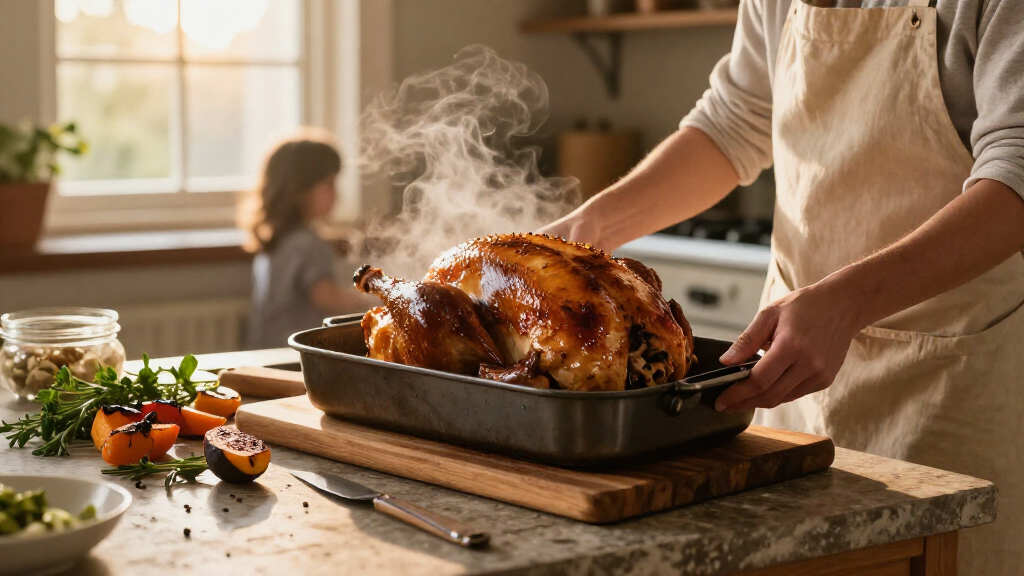
Picture carrying a heavy roast from a low oven while wearing oven mitts. Handles that are too small or sit close to the pan can make it hard to keep your hands clear of the hot sides. If possible, try the grip before buying, or check product photos and dimensions. A pan that feels solid before cooking is easier to manage when full, though an empty-pan test cannot show how it will balance with a heavy bird inside; secure, well-positioned handles and a clear lifting route still matter.
If you use a disposable foil pan, set it on a sturdy baking sheet for support before adding the bird. Thin foil can bend when you lift it, especially once it holds a heavy turkey and its juices. The baking sheet acts like a firm tray beneath a soft paper plate: it gives the foil more support during the trip to and from the oven. This works best when the sheet is already under the foil pan before the food is added, since sliding it underneath later can be difficult and risky.
Set the pan down on a stable, heat-safe surface, and avoid placing a very hot pan on a cold or wet surface if the material could be damaged by a sudden temperature change. Keep your route from oven to counter clear before lifting. Planning the landing spot and route reduces the need to pause, turn, or shift your grip while carrying a sloshing pan.
Follow these steps for a safer roast and easier cleanup
To use a roasting pan well, check its fit and instructions first, then set up a stable way to support the bird and the hot pan. The pan holds the whole bird and can collect its drippings, but safe doneness checks and careful handling still depend on you. Each step addresses a different problem: fit prevents oven-access surprises, the rack or vegetables support the bird, and a thermometer checks what the pan cannot tell you. Here’s a straightforward routine for roast day.
- Check the fit. Confirm that the pan, turkey, oven rack, and oven door all have enough clearance before you heat the oven. This is easier to correct while everything is cool than when the turkey is ready to go in.
- Read the care label. Check the pan’s maximum oven temperature, stovetop compatibility, and dishwasher guidance. These details determine whether you can make gravy in the pan and how you can clean it afterward.
- Set up the bird. Place it on a suitable rack, or use sturdy vegetables to lift it above the pan’s bottom. A stable support helps keep the bird from resting in liquid and makes it easier to position.
- Lift with support. Use oven mitts and secure handles. If the pan is disposable, keep it on a sturdy baking sheet. Support matters most when the pan is hot and loaded with liquid, since a flexible pan can bend as you carry it.
- Check doneness with a thermometer. Follow current food-safety guidance for where and how to check; color and juices alone are not reliable. The pan can collect juices, but it cannot show whether the turkey has reached a safe temperature.
- Cool and clean the pan. Let it cool, then soak stuck drippings in warm, soapy water and use a cleaning method suitable for its finish. Matching the cleaning method to the material can help avoid scratches or damage.
For example, if you plan to make gravy in the roasting pan, check stovetop compatibility before you roast. That avoids discovering at the last minute that the pan shouldn’t sit directly over your burner. Follow current food-safety guidance and ask a qualified food-safety professional if you need help with specific handling questions.
Decide whether a rack, stovetop use, or extra storage is worth it
The best roasting pan earns its space by doing jobs you actually use. Some pans can also handle vegetables, lasagna, or large roasts, and a removable rack can make that flexibility more useful. Before you buy, weigh those benefits against storage space, pan weight, and cleanup. A feature has value when it solves a recurring problem; otherwise, it can add weight, cost, or another part to clean without changing your routine.
Suppose you roast a turkey once a year and usually cook smaller meals. A simpler pan that stores easily may serve you better than a heavy model with a rack and features you rarely use. If you make gravy directly from drippings every holiday, a flat-bottomed pan approved for your stovetop could save you from transferring liquid to another pot. That convenience is useful only if the pan fits your burner and is safe for direct heat, so check the instructions before treating stovetop use as a deciding feature.
Think about whether the rack nests inside the pan, too. A rack that sits neatly in the pan takes less cupboard space; one stored separately can be awkward beside baking sheets and casserole dishes. Lighter pans may be easier to lift, while a heavier pan can feel more stable. A lighter pan can be especially useful if you often lift it alone, but it still needs a base that supports the loaded weight. Check handles and base construction before deciding that either quality alone makes a pan better.
A dishwasher-safe label can be handy, but it doesn’t tell you everything about long-term care. Coatings and finishes may last longer with gentle hand-washing, depending on the product instructions. Consider how often you will use the pan and whether its care requirements suit the time and storage you have. Choose the features that make your own roast-day routine simpler, then give the pan the care its manufacturer recommends.
Frequently Asked Questions
What size roasting pan do I need for a turkey?
Choose a pan that fits the bird without crowding and leaves room for airflow. Measure the oven interior, rack position, and door clearance as well as the pan’s exterior dimensions. Check that the loaded pan will be manageable to lift.
Do I need a rack to roast a turkey?
No. A rack lifts the bird above the drippings, but you can use sturdy vegetables or aromatics to provide some lift. Whichever option you choose, make sure it supports the turkey’s weight.
Is stainless steel or nonstick better for a roasting pan?
Stainless steel is durable and can work well for stovetop gravy if the pan is approved for your burner. Nonstick may simplify cleanup, but you need to protect the coating from scratches and stay within the manufacturer’s temperature limit. Your cooking and cleaning habits can guide the choice.
Can I make gravy directly in the roasting pan?
Sometimes. Check that the pan’s material and construction suit your burner before heating it on the stovetop. A flat base may help, but manufacturer instructions should guide you.
Can I use a disposable foil pan for a whole turkey?
Yes, but thin foil can bend under a heavy bird and hot juices. Set the pan on a sturdy baking sheet before adding the turkey, and carry the supported pan carefully.
How do I know when my turkey is done?
Use a food thermometer and follow current food-safety guidance for where and how to check the temperature. Color and juices alone aren’t reliable indicators, and the roasting pan’s material or size cannot confirm doneness.
Conclusion
Choose a pan that fits your turkey and oven, feels secure in your hands, and suits the way you plan to cook and clean. A rack and extra features can help, but they can’t replace a stable grip or a food thermometer.
When the kitchen fills with the warm smell of roasting herbs, you want to focus on the meal—not wrestle a wobbly pan. Measure first, choose for your routine, and let the pan carry its share of the work.