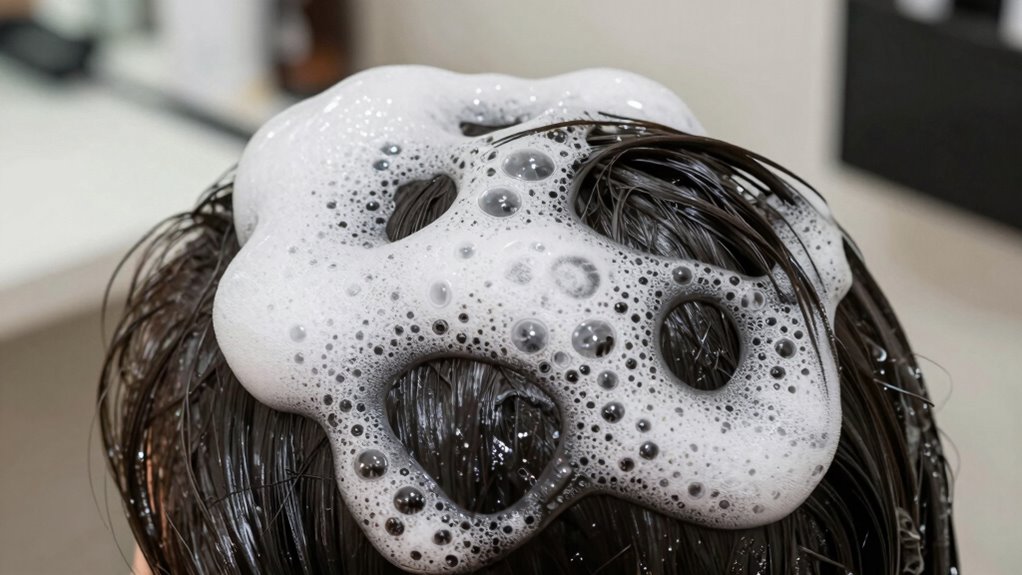

Many believe more foam means cleaner hair, but foam actually results from surfactant levels and water hardness, not cleaning power. Hard water minerals and high surfactant concentrations create thick lathers that can be misleading. True cleanliness shows in how your hair feels—soft, manageable, and shiny—and how your scalp looks. To get it right, you need to understand what signs to look for and how to choose the right shampoo, so keep exploring to learn more.

Get health and wellness essentials delivered free with Prime
- Fast, free delivery on millions of items
- Prime Video, Amazon Music and more included
- Member-only deals all year
Key Takeaways
- Foam results from surfactants reducing water’s surface tension, not an indicator of cleaning effectiveness.
- Hard water minerals can cause excess foam, misleading perceptions of cleanliness without actual dirt removal.
- Hair’s softness, shine, and scalp condition are better indicators of cleanliness than foam volume.
- Excessive foam may strip natural oils, leading to dryness and scalp irritation, not cleaner hair.
- Proper shampooing techniques and ingredient balance are key, as foam alone doesn’t reflect hair or scalp health.
Products Worth Considering

Garmin Venu 3 Fitness Smartwatch, 45 mm, Black

Hyperice Normatec 3 Leg Compression Boots – Standard Size

Oral-B iO Series 3 Rechargeable Electric Toothbrush for Adults, Black, with 2 Brush Heads and Travel Case
As an affiliate, we earn on qualifying purchases.
Why Does Shampoo Foam Up? The Science Behind It
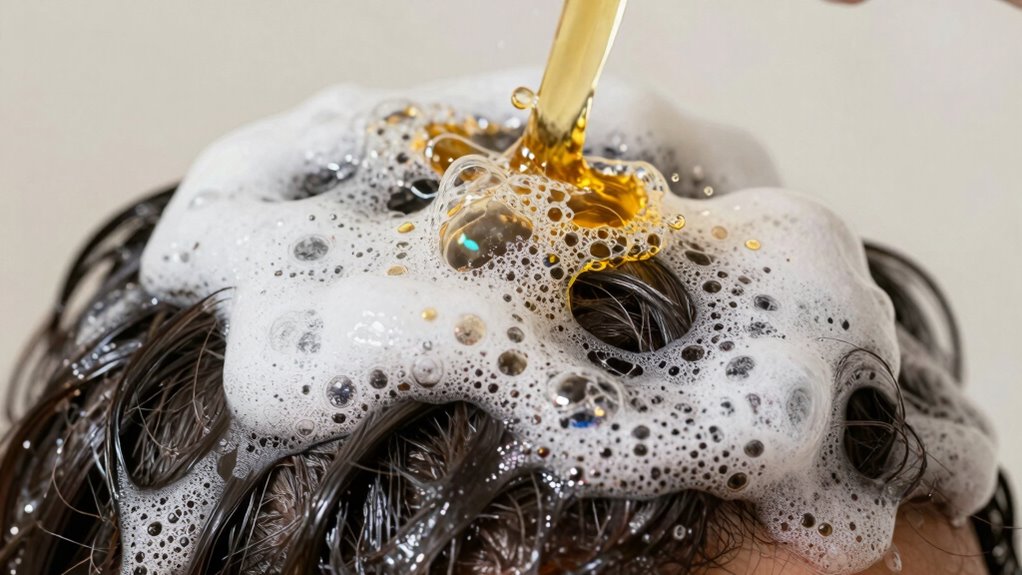
When you lather shampoo, you might wonder what causes it to foam so vigorously. The answer lies in surfactant chemistry, which involves molecules that reduce water’s surface tension. These surfactants form bubbles that create foam, and their foam stability determines how long the lather lasts. Foam stability depends on the surfactant’s structure and concentration, influencing how well it traps air and resists popping. Stronger foam stability results in a thicker, more abundant lather, but it doesn’t necessarily mean your hair is cleaner. Instead, the foam’s properties are designed to help distribute the shampoo evenly across your scalp and hair. Additionally, foam stability can be affected by the presence of other ingredients in the shampoo formulation, which can either enhance or weaken the foam. Understanding foam chemistry helps clarify why more foam doesn’t equate to more cleaning power. Moreover, formulation factors such as the pH level and added stabilizers play a crucial role in determining foam behavior and effectiveness. Recognizing the role of surfactants can help consumers make better decisions about their hair care products.
What Causes Excess Foam in Shampoo?
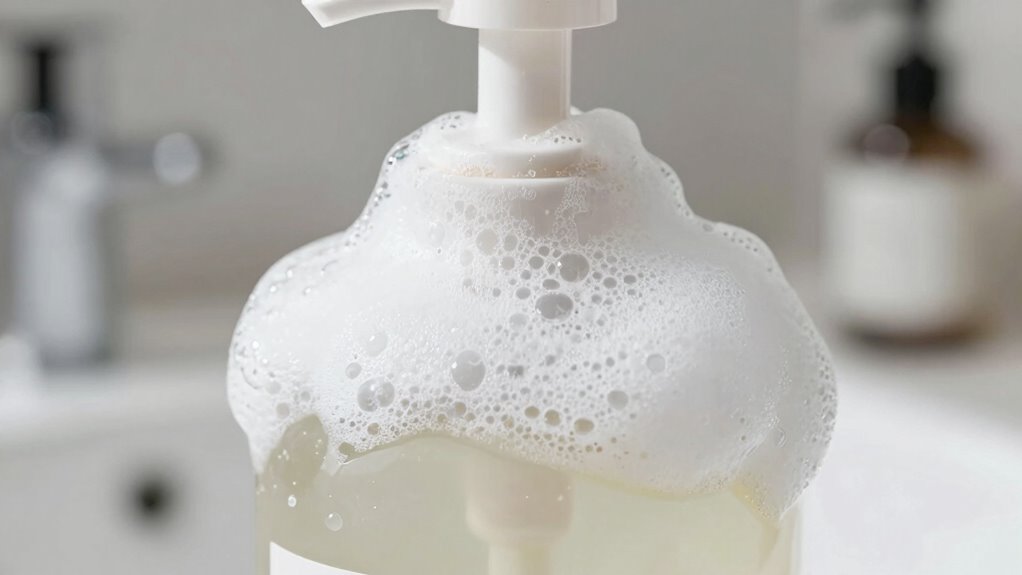
You might notice more foam than usual when your shampoo has high surfactant levels or interacts with hard water. The formulation itself also plays a role in how much it lathers. Understanding these factors can help you choose a shampoo that works best for your hair and water type. Additionally, color accuracy in shampoo formulations can influence how the product appears in various lighting conditions, affecting your perception of cleanliness. Moreover, support for different hair types can affect foam production and overall performance of the shampoo. Recognizing how water mineral content influences lather can further help you select products suited to your specific water conditions. Being aware of such formulation variables can also guide you in choosing the right shampoo for your needs, especially as formulation stability impacts how the product behaves over time.
Surfactant Concentration Levels
Excess foam in shampoo often results from high surfactant concentration levels, which are added to enhance cleansing power and produce lather. When surfactants are too concentrated, they create more foam without necessarily improving cleaning. This can disrupt the pH balance and affect how ingredients interact, potentially leading to scalp irritation. Ingredient diversity is also key; a shampoo with a variety of surfactants may produce more foam but isn’t inherently better. To avoid excessive foam, look for products with balanced surfactant levels that maintain pH stability and include gentle, diverse ingredients. Smart pool automation technologies can even optimize water and chemical levels to improve overall pool maintenance, similar to how balanced formulations benefit hair health. Remember, foam isn’t a reliable indicator of cleanliness. Instead, focus on formulations designed for your hair type and scalp health. Using gentle surfactants can help reduce irritation and improve overall scalp wellness. Additionally, understanding the role of surfactants in cleansing can help you choose shampoos that work effectively without excess foam. Recognizing the importance of formulation balance ensures that your shampoo provides effective cleansing without unnecessary foaming. Proper formulation also helps maintain the pH balance, which is essential for healthy scalp and hair.
Water Hardness Impact
Water hardness plays a significant role in the amount of foam produced by shampoo, as minerals like calcium and magnesium in hard water interact with surfactants. These minerals can cause excess foam that isn’t an indicator of cleanliness. Hard water can also disrupt your shampoo’s pH balance, leading to mineral deposits on your scalp and hair, which may cause buildup or dryness. To understand how minerals affect foam, see the table below:
| Effect of Hard Water | Resulting Issue |
|---|---|
| Mineral deposits | Build-up, dull hair, scalp irritation |
| pH imbalance | Dryness, frizz, reduced manageability |
| Excess foam | Misleading indicator of cleaning power |
Knowing this helps you realize that more foam isn’t always better, especially with harder water. Additionally, using appropriate hair care products can help mitigate these effects and maintain healthy hair despite mineral variations in water. Being aware of water mineral content can guide you toward choosing the right products and practices for optimal hair health.
Shampoo Formulation Factors
Shampoo formulations directly influence how much foam they produce, often shaping your perception of cleanliness. Excess foam isn’t necessarily linked to better cleaning; it’s often a result of specific chemical ingredients and formulation techniques. Some ingredients, like sulfates, are added for their strong foaming ability, which can create the illusion of a thorough wash. Formulation techniques also impact foam levels, such as the concentration of surfactants and their combination with other ingredients. Keep in mind:
- High surfactant concentration boosts foam but may irritate skin
- Sulfates are common foaming agents but can strip natural oils
- Foam stabilizers prolong bubbles, increasing foam duration
- Low-phosphate ingredients reduce environmental impact
- Formulation adjustments balance foaming with hair and scalp health
- Foaming agents are chosen based on their ability to generate and sustain foam during use.
Understanding these factors helps you see beyond foam and focus on effective, gentle cleansing.
How Can You Tell If Your Hair Is Truly Clean Without Relying on Foam?
You can tell your hair is clean by feeling for a smoother, softer texture. Check your scalp for any itchiness or oil buildup, which indicates lingering dirt. Also, look for added shine and reduced frizz as signs of fresh, well-cleansed hair. Maintaining caregiver emotional health can help you stay attentive and gentle during your hair care routine. Additionally, understanding credit card terms and safe payment practices can prevent financial stress that may affect your overall well-being. Recognizing signs of product buildup, such as dullness or heaviness, can also help you determine if your hair truly needs washing. Being aware of hair porosity can further guide you in choosing the right shampoo and frequency of washing. Moreover, knowing about indoor air quality and its impact on scalp health can assist in creating a healthier environment for your hair.
Feel Hair Texture Changes
While foam can be a quick visual cue, it doesn’t always indicate your hair is truly clean. Instead, pay attention to how your hair feels after washing. Changes in hair texture can reveal if product build-up is present or if your scalp needs a different approach. Clean hair often feels lighter, softer, and more manageable, whereas product residue can leave hair feeling weighed down, sticky, or strands stiff. Understanding hair porosity and scalp health can help you select the right products and techniques for effective cleansing. Additionally, noticing scalp sensations such as irritation or oiliness can provide further clues about your hair’s cleanliness and overall scalp condition. Recognizing hair porosity helps determine how well your hair absorbs and retains moisture, influencing your cleansing routine.
Check Scalp Condition
Since foam isn’t a reliable indicator, examining your scalp directly provides a clearer picture of cleanliness. Check for signs like scalp dryness, which appears flaky or tight, or oil buildup, which makes your scalp look greasy and feels slick to the touch. To visualize, consider this table:
| Condition | Appearance | Feel |
|---|---|---|
| Healthy, clean scalp | Slightly matte, no flakes | Soft, not greasy |
| Oil buildup | Shine, greasy patches | Slick, heavy to touch |
| Dry scalp | Flaky, tight feeling | Itchy, rough |
Assess Shine and Frizz
Foam can be unreliable when judging cleanliness, so paying attention to shine and frizz gives a better idea of how clean your hair truly is. Healthy, clean hair often appears shiny and smooth, indicating proper cleansing and moisture balance. If your hair looks dull or lacks luster, it may need better cleansing or moisture adjustment. Frizz control is another key indicator; excessive frizz suggests buildup or dryness, not necessarily dirty hair. To assess cleanliness without foam, consider these signs:
- Hair shine that looks natural and vibrant
- Reduced frizz and flyaways
- Softness and smoothness to the touch
- Absence of greasy or weighed-down strands
- Overall hair manageability and health
Focusing on shine and frizz helps you determine true cleanliness beyond foam’s misleading cues.
Signs That Your Hair Is Clean and Healthy (Beyond Foam)
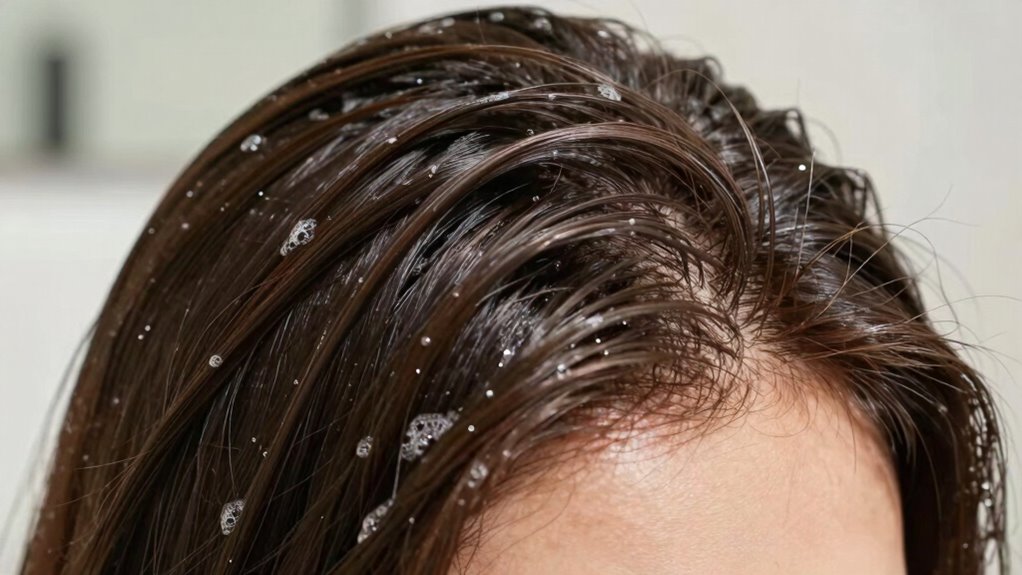
Even if your shampoo doesn’t produce a lot of foam, your hair can still be clean and healthy. One sign is how your hair feels—soft, smooth, and manageable, not greasy or weighed down. Pay attention to your hair’s porosity; healthy hair often shows balanced moisture levels and resists excessive dryness or oiliness. Additionally, consider your shampoo ingredients. Gentle, nourishing components like natural oils and minimal harsh chemicals help maintain a healthy scalp and hair structure. When your hair responds well to styling and feels resilient, it’s a good indication that your hair is clean and in good shape. Remember, the key isn’t foam but how your hair looks and feels over time.
How to Choose a Shampoo That Cleans Effectively
Choosing the right shampoo involves more than just looking for a product that produces a lot of foam. To clean effectively, focus on shampoos with natural ingredients that nourish your scalp and hair. Check for a pH-balanced formula—ideally between 4.5 and 5.5—to maintain your scalp’s health and prevent dryness or irritation. Avoid harsh chemicals that strip natural oils, which can cause damage over time. Here are key tips to think about:
- Prioritize shampoos with natural ingredients
- Ensure the pH balance suits your scalp
- Look for gentle, sulfate-free formulas
- Consider your hair type and specific needs
- Read labels to avoid unnecessary chemicals
Choosing wisely helps your hair stay clean, healthy, and vibrant without relying on foam alone.
Common Myths About Shampoo Foam: What’s True and What’s Not
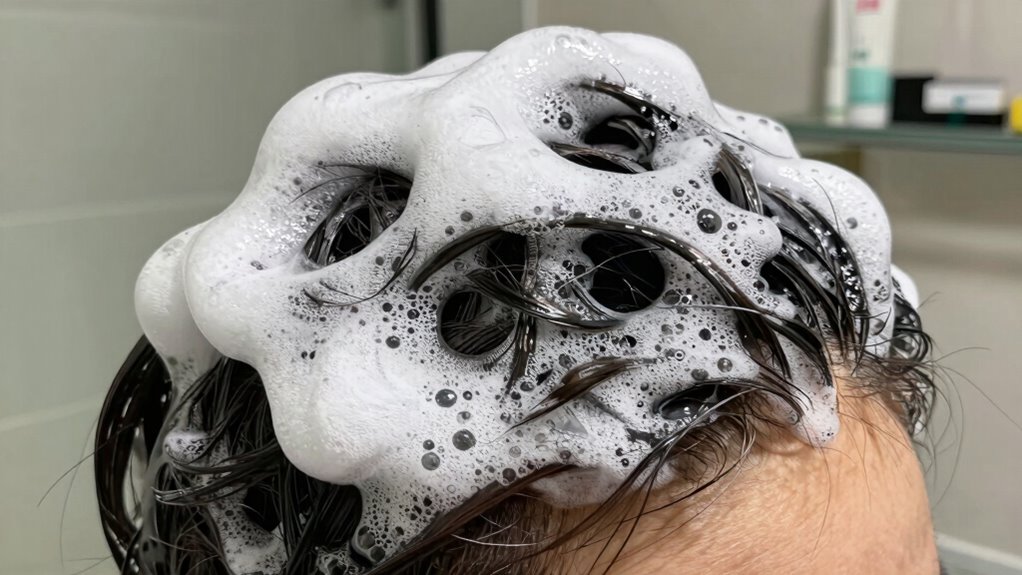
Have you ever wondered if a thick lather truly means your shampoo is doing its job? Many believe that more foam equals cleaner hair, but that’s a myth. The amount of foam doesn’t indicate how well your shampoo cleans or protects your hair dye. In fact, excessive foaming can sometimes strip color or cause scalp itch, especially if your scalp is sensitive. Foam is mainly a surfactant’s reaction with water and oils, not a sign of cleanliness. So, don’t judge your shampoo’s effectiveness by the lather. Instead, focus on how well it rinses out and whether it leaves your scalp comfortable. Remember, a balanced, gentle shampoo can clean effectively without unnecessary foam or irritation.
Tips for Shampooing Properly Without Damaging Your Hair
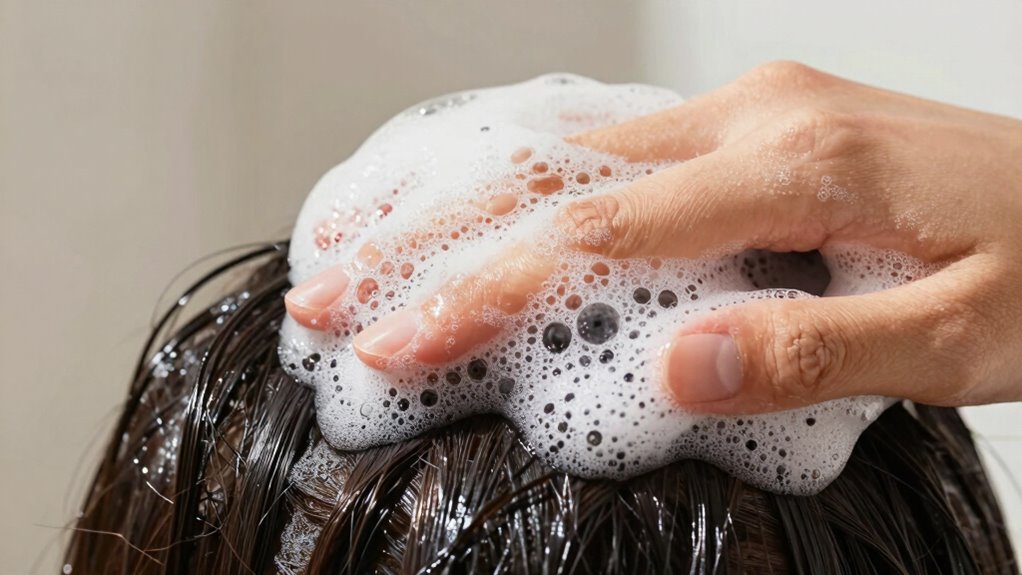
To shampoo your hair without causing damage, it’s important to follow proper techniques that protect your scalp and strands. Use lukewarm water to prevent scalp sensitivity and color fading. Gently massage your scalp with your fingertips, avoiding harsh scrubbing that can disrupt hair color and weaken strands. Focus on the roots, then rinse thoroughly to remove residue. Limit shampooing frequency to preserve natural oils and prevent dryness. When choosing a shampoo, consider formulas suited for your hair color and scalp sensitivity to avoid irritation or color fading.
- Use gentle, sulfate-free shampoos for color-treated hair
- Avoid aggressive scrubbing to prevent scalp irritation
- Rinse hair thoroughly to remove all product buildup
- Pat hair dry instead of rubbing to prevent breakage
- Adjust shampoo frequency based on scalp sensitivity
How to Read Shampoo Labels to Pick the Best Cleanser
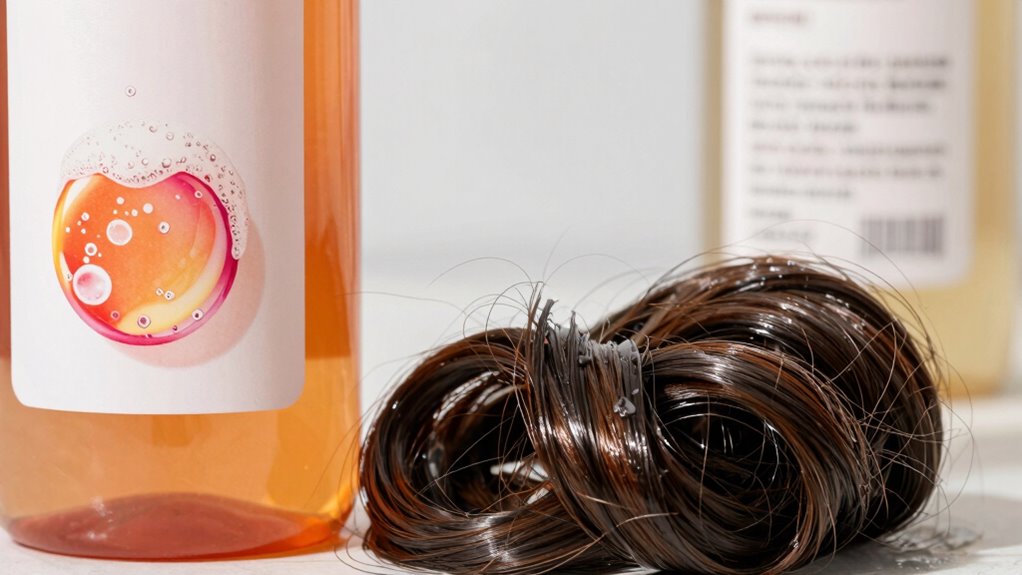
Reading shampoo labels carefully helps you select the right cleanser for your hair type and needs. Start by examining the ingredient lists; look for nourishing ingredients like natural oils or hydrating humectants, and avoid harsh sulfates if you have sensitive scalp. Pay attention to label symbols, such as allergy warnings or cruelty-free certifications, to guarantee the product aligns with your values and health concerns. Understanding common ingredients helps you identify whether a shampoo suits your hair—such as clarifying agents for oily hair or moisturizing components for dry hair. Also, check the label for any added fragrances or dyes if you’re sensitive. Clear labels and symbols guide you in making informed choices, ensuring your shampoo cleans effectively without compromising your scalp or hair health.
Frequently Asked Questions
Can Using Less Shampoo Still Effectively Clean My Hair?
Yes, using less shampoo can still effectively clean your hair. When you apply shampoo, focus on massaging your scalp to break down oils and dirt, rather than using a lot of product. Proper hair rinsing is essential to remove all residue, ensuring your hair feels clean without excess shampoo. Using just enough shampoo prevents over-drying and buildup, promoting healthier hair and scalp in the long run.
Does Shampoo Type Affect the Amount of Foam Produced?
Ever wonder if your shampoo’s type impacts the foam you get? It definitely does. Foam consistency hinges on the shampoo formulation—some create thick, luxurious foam, while others produce lighter bubbles. But don’t be fooled—more foam doesn’t mean cleaner hair. The key is choosing a formula suited for your hair type, not chasing a frothy head. Trust the formulation, not the foam, to get your hair genuinely clean.
Are Natural or Organic Shampoos Less Foamy but Equally Effective?
Natural or organic shampoos are often less foamy because they typically have lower sulfate content and different ingredient differences. Despite producing less foam, they can be just as effective at cleansing your hair. Sulfates create more lather but can strip natural oils, so choosing shampoos with gentler ingredients can still clean well without excessive foam. Trust the formulation and ingredient list over the amount of foam for healthy, clean hair.
How Often Should I Wash My Hair for Optimal Health?
You should wash your hair based on your scalp health and hair type, typically 2-3 times a week. Washing too often can strip natural oils, causing dryness, while infrequent washing may lead to buildup. Pay attention to your scalp’s condition; if it feels oily or itchy, increase hair washing frequency. Conversely, if your scalp feels dry or flaky, reduce washing to maintain ideal scalp health.
Is There a Link Between Shampoo Foam and Scalp Irritation?
Think of shampoo foam as a double-edged sword—you might want it to be thick, but it can cause scalp sensitivity and foam irritation. For those with scalp sensitivity, excessive foam can feel like a scratchy blanket, aggravating irritation and discomfort. Remember, the amount of foam doesn’t determine cleanliness; it’s the ingredients that matter. Choose gentle, sulfate-free shampoos to reduce foam irritation and keep your scalp healthy, like tending to a delicate garden.
Conclusion
Remember, foam isn’t the full story—sometimes, the quietest cleansers do the best job. Just like life’s most meaningful moments often come from subtle signals, your hair’s health isn’t about how much foam you see. Trust your senses and the signs of clean, healthy hair. In the end, what truly matters is how your hair feels and looks, not the bubbles that form. Sometimes, less foam reveals the real beauty beneath.