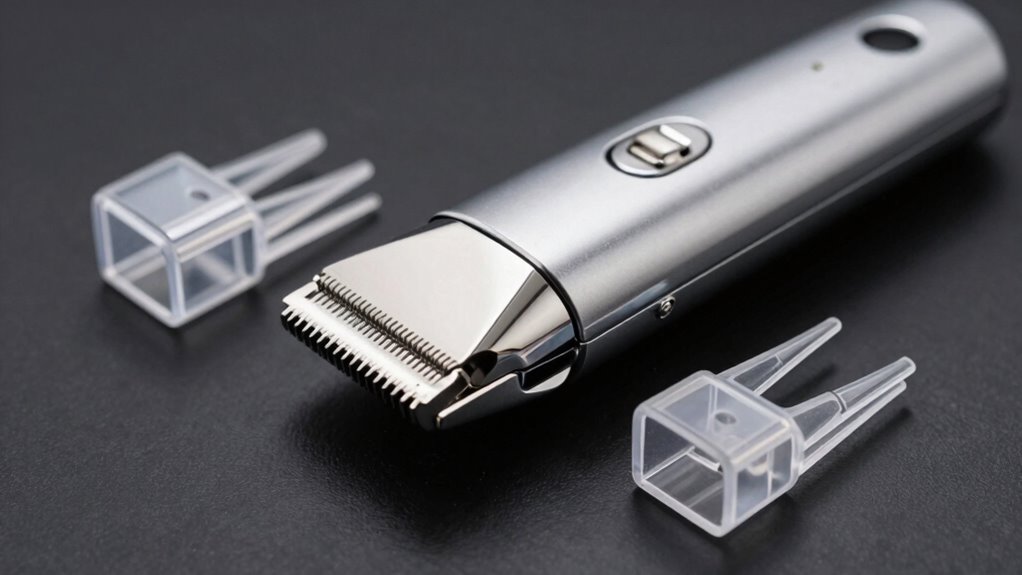

To avoid patchy lines with your beard trimmer, choose the right blade material—metal blades are durable and sharpen easily, while ceramic blades stay sharper longer and are gentler on sensitive skin. Use guards correctly by selecting the proper size for your desired length, ensuring they attach securely and moving the trimmer against hair growth in smooth, controlled strokes. Mastering these techniques and understanding your trimmer’s features help you achieve a clean, even beard; keep going to learn more.
Key Takeaways
- Choose high-quality blades like ceramic for longer sharpness and less irritation; maintain and clean them regularly.
- Select and securely attach the correct guard size to achieve uniform beard length and prevent patchiness.
- Use steady, controlled strokes and keep the trimmer moving against hair growth for even trimming.
- Outline the beard line with a razor or trimmer before shaping to ensure symmetry and neatness.
- Check in the mirror frequently to spot uneven areas and adjust guard or technique as needed.
What Are the Most Common Beard Trimming Problems and How Can You Fix Them

Even experienced groomers can encounter common beard trimming issues, but most are easily rectifiable with the right approach. One frequent problem is uneven lines, which can happen if you rush or don’t use proper tools. To fix this, carefully trim in small sections and check your progress frequently. If you want a bolder look, consider beard dyeing to enhance color consistency and hide patchy spots. Mustache grooming can also be tricky; uneven edges or over-trimming can spoil your style. Use a steady hand and the right trimmer guard to shape your mustache evenly. Remember, patience is key. Taking your time ensures a clean, symmetrical beard, and helps prevent common mistakes like patchiness or uneven coloration. Additionally, understanding blade materials and their impact on cutting precision can help you achieve a smoother, more even trim. Choosing the appropriate blade material can significantly influence the quality of your grooming results. Furthermore, selecting proper guards ensures consistent length and reduces the risk of uneven patches. Paying attention to grooming techniques can also make a big difference in achieving a professional-looking beard.
How to Use Guards Correctly for a Clean, Even Beard Trim
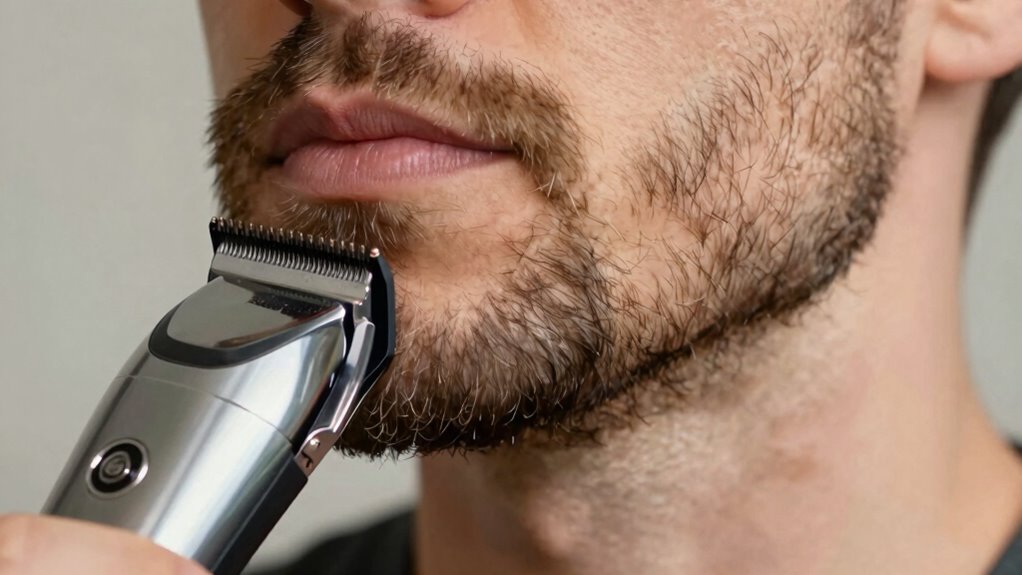
Using guards correctly is essential for achieving a precise, even beard trim. Always verify the guard is securely attached to prevent accidents and maintain guard safety. Before trimming, decide on the desired beard length and select the appropriate guard size. Keep the trimmer moving steadily against the direction of hair growth to promote beard symmetry and avoid uneven patches. Use light, consistent pressure—pressing too hard can cause uneven cuts and damage the guard. Regularly check your progress in the mirror to catch any uneven areas early. If you notice patchy spots, adjust your guard or technique as needed. Properly using guards helps you achieve a clean, uniform look while reducing the risk of accidental cuts or uneven trimming. Additionally, choosing high-quality blade materials can improve trimming precision and longevity. Being aware of regional flavor profiles may also influence your choice of grooming tools, especially if you prefer natural or artisanal products. Incorporating proper maintenance of your trimmer and guards ensures consistent performance and a smoother trim. Furthermore, understanding gadget features can help you select the best tools for your grooming routine.
How to Choose the Right Guard Lengths for Your Style
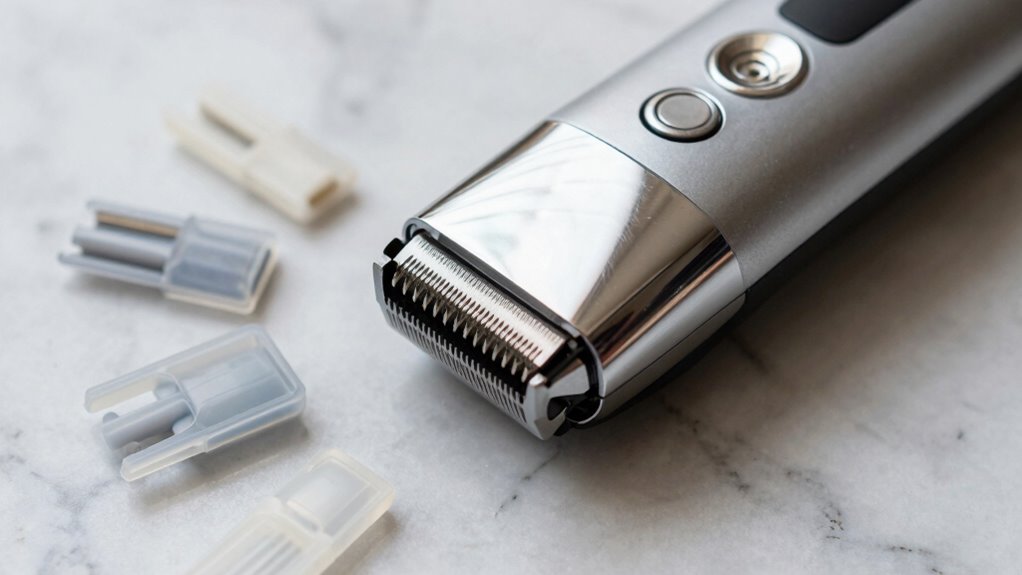
Choosing the right guard size is key to getting the look you want. You’ll want to match your guard to your desired length and guarantee consistency throughout your beard. With the right choices, you’ll achieve a neat, uniform style effortlessly. It’s also helpful to consider the guard length measurements to ensure precision in your grooming routine. Additionally, understanding the latest wall art trends can inspire you to incorporate modern decor that complements your grooming space. Notably, some electric trimmers offer adjustable guards, allowing for more versatile styling options to suit your specific needs. Being aware of home safety tips can also help you maintain a secure environment as you groom, especially when using electrical devices. Furthermore, familiarizing yourself with cybersecurity best practices can protect your personal information while researching grooming techniques online.
Matching Guard Sizes
Selecting the right guard size is essential for achieving your desired haircut style. Guard size matching ensures you trim evenly and maintain your preferred length. To do this, choose a guard that matches the length you want to achieve, whether it’s a close stubble or a fuller look. Consistency in trimming comes down to using the same guard size throughout your grooming session. Always double-check the guard’s measurement before starting, especially if switching between different guard sizes. Keep in mind that different trimmers may have slight variations in their guard lengths, so verify the size if you’re aiming for precise results. Proper guard matching helps you avoid uneven patches and ensures your style looks intentional and well-groomed. Additionally, understanding how blade materials impact cutting performance can contribute to a more even and consistent trim, especially when considering factors like hive health, which require precise maintenance. Recognizing the compatibility of guard sizes across different tools can also help prevent inconsistencies in your grooming routine, ensuring a reliable and uniform trim every time. Being aware of guard size standards can further improve your ability to select the right tools for specific styles and desired lengths.
Achieving Consistent Length
To achieve a consistent length throughout your grooming session, it’s important to understand how to pick the right guard lengths for your desired style. Start by selecting a guard that matches your target beard length, ensuring even coverage for better beard symmetry. When trimming, keep your trimming angles steady—maintaining the same angle helps prevent uneven patches. Use a comb to lift the hair and guide your trimmer, which promotes uniformity and helps you avoid patchy lines. Regularly check your work in the mirror to spot any inconsistencies early. If you’re aiming for a gradual fade, switch guards gradually, maintaining consistent angles to keep the progression smooth. Consistent guard selection and mindful trimming angles are key to achieving a balanced, symmetrical beard. Additionally, understanding the impact of trimming techniques on skin health can help prevent irritation and ingrown hairs, ensuring a comfortable grooming experience.
Step-by-Step Techniques for Achieving a Perfect Beard Line
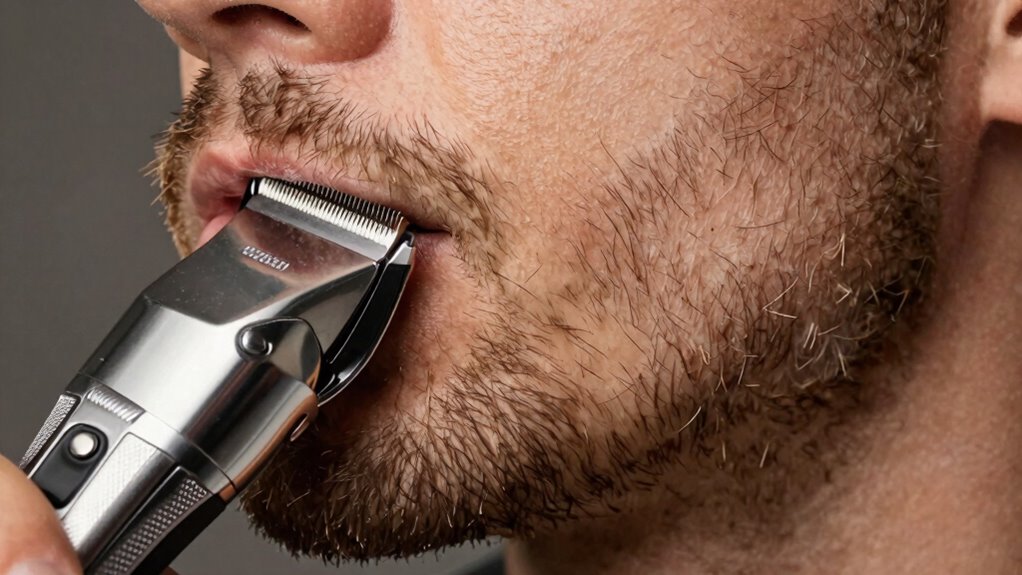
Achieving a sharp, clean beard line requires careful attention and steady hands. To master beard shaping, start by outlining your desired line with a trimmer or razor, focusing on line symmetry. Keep your hand steady and use short, controlled strokes to avoid unevenness. Visualize your beard as a canvas, and follow these key steps:
- Use a mirror to check line accuracy from different angles.
- Lightly sketch the outline before trimming to ensure symmetry.
- Trim gradually, refining the line until it matches your desired shape.
- Remember that understanding the different blade materials can help you choose the right tools for a smooth, precise cut.
This approach helps you create a crisp, professional-looking beard line. Remember, patience is key—take your time to perfect each side for balanced beard shaping and a polished appearance.
Which Beard Trimmer Blade Material Is Best for Your Needs?

Choosing the right blade material for your beard trimmer can profoundly impact your grooming results. If you prefer low maintenance, ceramic blades stay sharper longer and resist corrosion, reducing frequent blade sharpening. They’re ideal for those with sensitive skin, as they tend to heat less during use. Metal blades, usually stainless steel, are durable and easy to sharpen, making them suitable if you want a quick, on-the-go trim. Consider your power source too: corded trimmers often have consistent power, which helps maintain blade sharpness over time, while cordless models might require more frequent blade sharpening due to fluctuating power and usage. Additionally, selecting a blade material that minimizes irritation can help you achieve a more even and comfortable trim every time. Proper blade hygiene and maintenance can prevent bacteria buildup and skin irritation, contributing to healthier skin during grooming. Regular cleaning and oiling of blades extend their lifespan and ensure a smooth, irritation-free shave.
Metal vs. Ceramic Blades: Pros and Cons Explained

When choosing between metal and ceramic blades, you’ll want to consider cutting efficiency and how precise the trim will be. Metal blades tend to be more durable but may require more maintenance, while ceramic blades stay sharp longer but can be more fragile. Understanding these differences helps you pick the right blade for your grooming needs. Additionally, blade material can influence how well your beard trimmer performs over time, especially under frequent use.
Cutting Efficiency and Precision
Metal and ceramic blades each offer distinct advantages in cutting efficiency and precision for beard trimmers. Metal blades tend to be sharper initially, making beard shaping quick and clean. They also allow easier blade sharpening, ensuring consistent performance over time. Ceramic blades, on the other hand, provide steady, smooth cuts with less friction, reducing skin irritation. When considering blade sharpening, metal blades can be honed multiple times, maintaining sharpness for precise trimming. Visualize a sharp metal blade effortlessly gliding through thick hair, or a ceramic blade offering smooth, snag-free cuts for fine detail work.
- A metal blade slicing through dense beard hair with ease
- A ceramic blade gliding softly for detailed beard shaping
- Clean, precise lines with minimal tugging or pulling
Durability and Maintenance
While both metal and ceramic blades in beard trimmers have their own strengths, their durability and maintenance requirements vary considerably. Metal blades typically offer greater blade longevity, as they are more resistant to wear and can handle frequent use without dulling quickly. Ceramic blades, however, tend to stay sharper longer but are more brittle and prone to chipping or breaking if dropped. Proper cleaning techniques are essential for maintaining both blade types; regularly removing hair buildup and applying oil helps prevent rust and keeps blades running smoothly. Metal blades may require more frequent lubrication, while ceramic blades often need gentle handling to avoid damage. Overall, consistent maintenance ensures your trimmer performs reliably, regardless of blade material.
How to Maintain Your Beard Trimmer Blades for Longevity
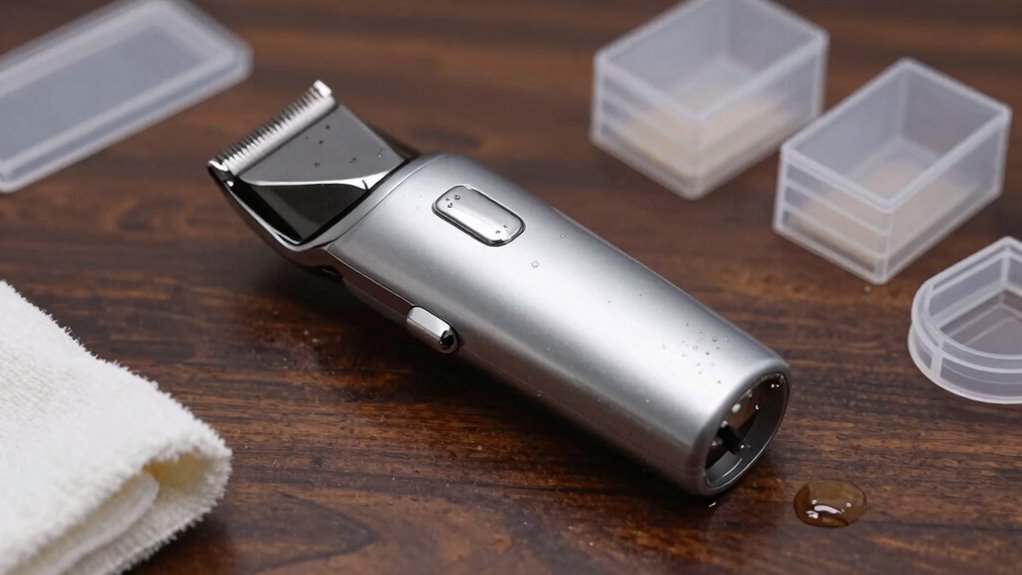
To keep your beard trimmer blades in top condition, regular maintenance is essential. Proper blade maintenance ensures your trimmer cuts smoothly and lasts longer. Start by cleaning the blades after each use to remove hair and debris. Use lubrication techniques—apply a few drops of clipper oil or specialized blade oil—to keep the blades moving effortlessly. This prevents rust and reduces wear. Visualize the blades gliding seamlessly over your skin, ensuring an even trim every time.
- Imagine tiny droplets of oil evenly coating each blade, reducing friction.
- Think of brushed steel blades shining with cleanliness, ready for their next use.
- Picture a slick, well-lubricated blade cutting through hair with ease, avoiding pull or snag.
Avoid These Common Mistakes That Lead to Patchy Beards
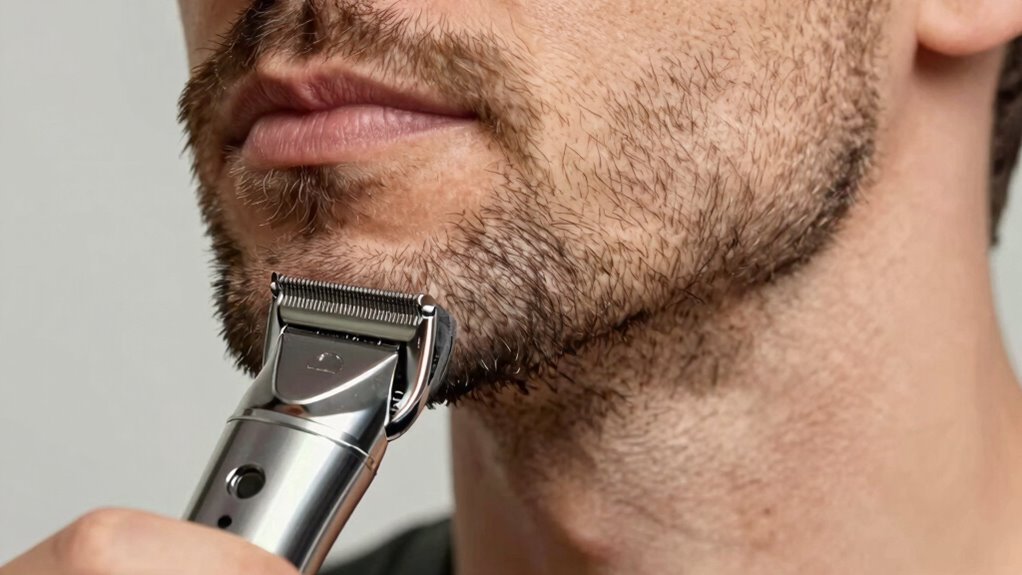
One common mistake that leads to patchy beards is trimming unevenly or too aggressively, which can create gaps and thin out certain areas. Many men believe beard growth myths that suggest trimming too short will encourage faster growth, but this isn’t true. Instead, it can make your beard look patchy and uneven. To avoid this, use proper grooming product tips, like maintaining a consistent trimming length with guards and trimming in smooth, controlled motions. Rushing your grooming routine increases the risk of uneven lines. Remember, patience and precision matter more than aggressive trimming. Keep your trimmer blades sharp and clean to ensure a clean cut, and always follow a structured grooming plan to promote healthy, even beard growth.
Final Tips for Achieving a Professional-Looking Beard at Home
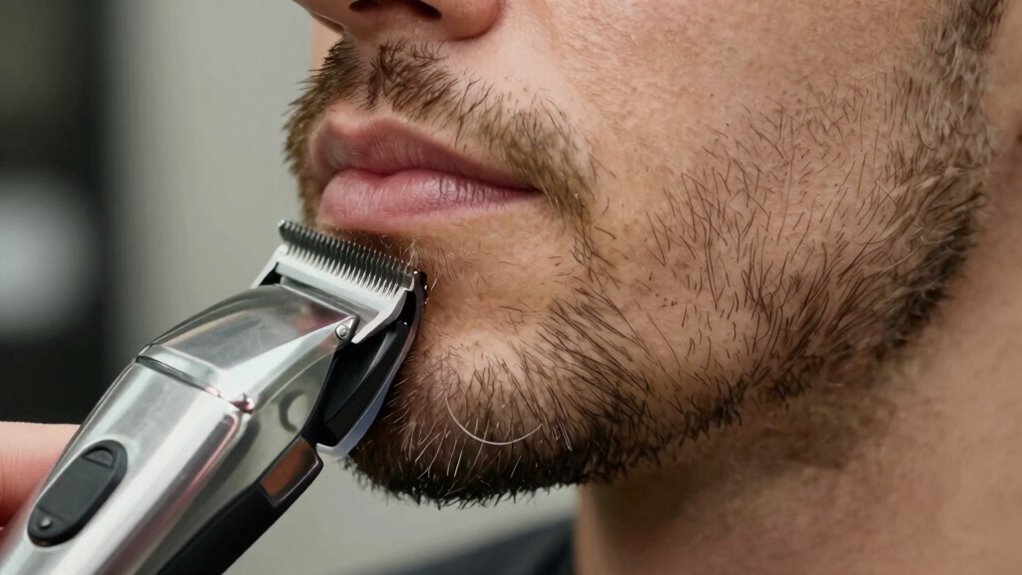
Achieving a professional-looking beard at home is entirely possible with the right techniques and attention to detail. Consistency in your grooming routines and precise beard styling are key. Use sharp, quality trimmers and set your guard lengths carefully to avoid uneven lines. Keep your tools clean to prevent skin irritation and ensure smooth cuts. Focus on defining your neckline and cheek lines for a polished look.
For a polished beard, use sharp trimmers, define lines, and keep tools clean.
Here are some final tips:
- Visualize your desired beard shape before trimming so you stay focused.
- Keep your skin taut while trimming to prevent uneven patches.
- Regularly moisturize and exfoliate your skin for a healthy foundation.
With patience and attention, you can master at-home beard grooming and achieve a professional finish.
Frequently Asked Questions
Can Beard Trimmers Be Used for Head Hair?
Yes, you can use beard trimmers for head hair trimming, but keep in mind that beard vs. head trimmers are designed differently. Beard trimmers are usually smaller and less powerful, which might make trimming your head hair less efficient. For a smooth, even cut, consider using a trimmer specifically made for head hair. If you choose to use your beard trimmer, go slowly and use appropriate guards to avoid patchy lines.
How Often Should I Replace My Trimmer Blades?
You should replace your trimmer blades every 12 to 18 months to guarantee ideal blade maintenance and a clean shave. Regular replacement prevents dull blades from causing uneven cuts or irritation. Keep an eye on how your trimmer performs; if it starts pulling hair or cutting unevenly despite cleaning, it’s time for a replacement. Proper maintenance extends blade life and keeps your grooming routine smooth and effective.
Are There Specific Trimmers for Sensitive Skin?
Yes, there are trimmers designed specifically for sensitive skin. Look for models with sensitive skin remedies, such as built-in soothing features or gentle motor settings. Opt for trimmers with hypoallergenic blades, which reduce irritation and prevent redness. These blades are ideal for delicate skin. Using a trimmer with these features helps you achieve a smooth shave without discomfort, making grooming easier and more comfortable every time.
What’s the Best Way to Clean Beard Trimmer Blades?
To clean your beard trimmer blades, you should regularly perform blade maintenance using proper cleaning techniques. Turn off and unplug your trimmer, then remove the blades if possible. Use a small brush to remove hair and debris, and rinse the blades with warm water or wipe them with a damp cloth. Apply a few drops of oil to keep blades sharp and lubricated, ensuring smooth operation and preventing rust.
Can Beard Trimmers Trim Stubble Effectively?
Think of your beard trimmer as a sculptor’s chisel shaping a masterpiece. Yes, it can trim stubble effectively when you use the right trimming techniques. Keep the trimmer at the right angle, go against the grain for a close cut, and use short, controlled strokes. This guarantees even removal of beard stubble, giving you a clean, well-groomed look without patchy lines or uneven patches.
Conclusion
With the right techniques and tools, your beard can look as sharp as a freshly cut diamond. Choosing the right blade material, using guards properly, and maintaining your trimmer are your secret weapons against patchy lines. Think of your beard as a garden—you’ll need to tend to it regularly to keep it lush and even. Keep practicing, stay patient, and soon you’ll have a beard that looks like it was crafted by a pro.