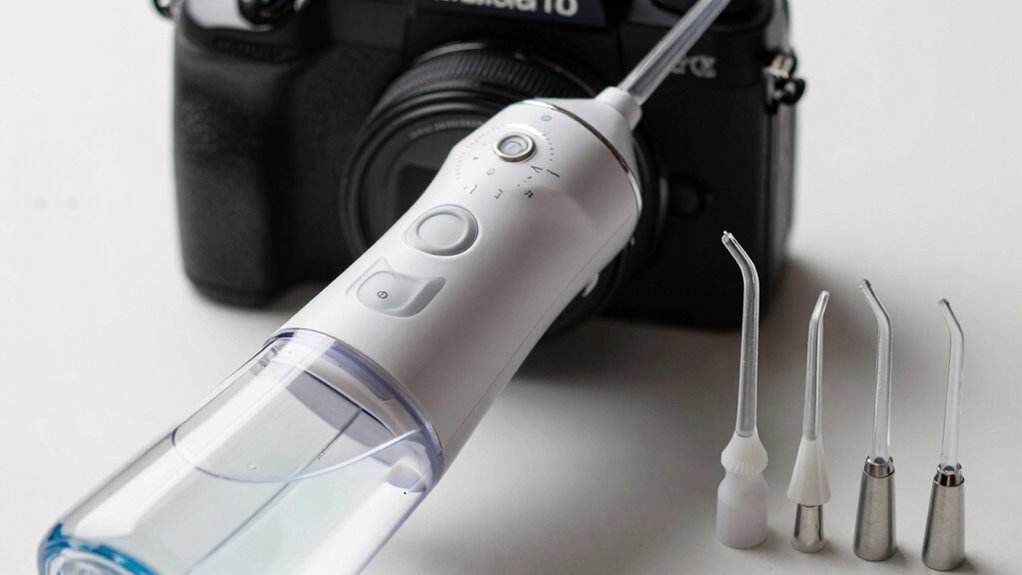
To prevent gum irritation with a water flosser, start with the lowest pressure setting and gradually increase it based on your comfort. Watch for signs like soreness or bleeding, which indicate too much pressure. Use gentle, controlled motions and keep the tip close to your gumline without forcing. Regularly clean your device to guarantee proper function. Continue exploring tips to fine-tune your technique and protect your gums effectively.
Key Takeaways
- Start with low water pressure to prevent gum irritation and gradually increase as comfort allows.
- Recognize signs like bleeding or soreness to reduce pressure and avoid gum trauma.
- Use gentle, controlled motions at a 90-degree angle to the gumline for safe, effective flossing.
- Regularly clean and maintain your water flosser to ensure optimal performance and hygiene.
- Adjust pressure based on individual gum sensitivity, avoiding sudden jumps to high settings for comfort and safety.
How Water Pressure Affects Your Gums and Comfort
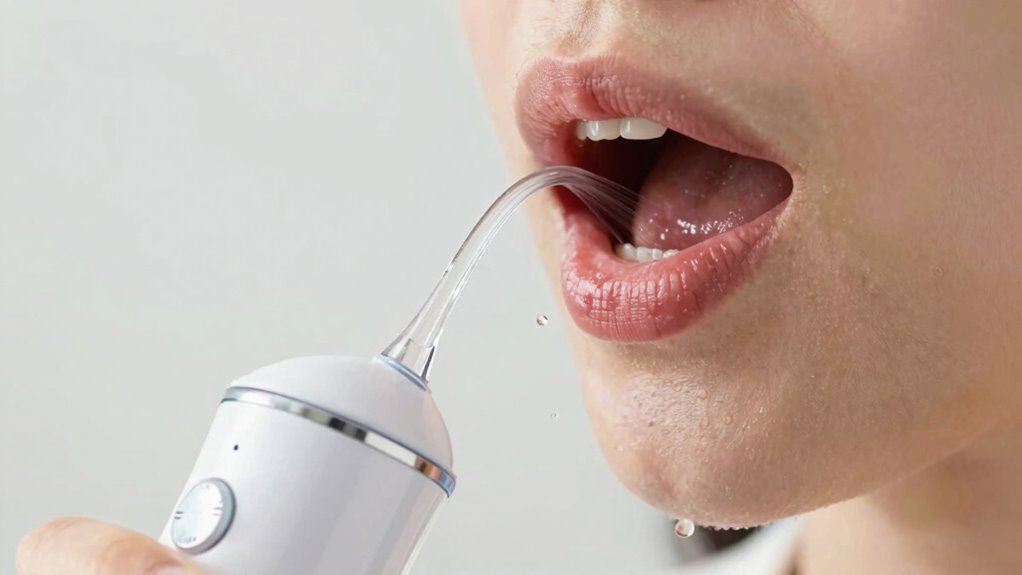
Water pressure plays a crucial role in how effective and comfortable your water flosser feels. When you customize the water pressure, you can tailor the cleaning power to suit your needs, making gum sensitivity management easier. Higher pressure settings may remove plaque more effectively but can cause discomfort if your gums are sensitive. Starting with a lower setting allows you to find a comfortable balance, reducing the risk of irritation. As you become accustomed to the water pressure, you can gradually increase it for a thorough clean without sacrificing comfort. Remember, the goal is a gentle yet effective flossing experience that supports healthy gums. Proper water pressure customization helps prevent gum irritation while ensuring you get the most out of your water flosser. Understanding water pressure is essential for optimizing both comfort and cleaning efficiency. Adjusting your pressure settings thoughtfully can make a significant difference in your oral health experience, especially when considering gum sensitivity management. Additionally, learning about water pressure adjustment techniques can help you maximize both safety and effectiveness in your routine.
Adjusting Your Water Flosser for Sensitive Gums
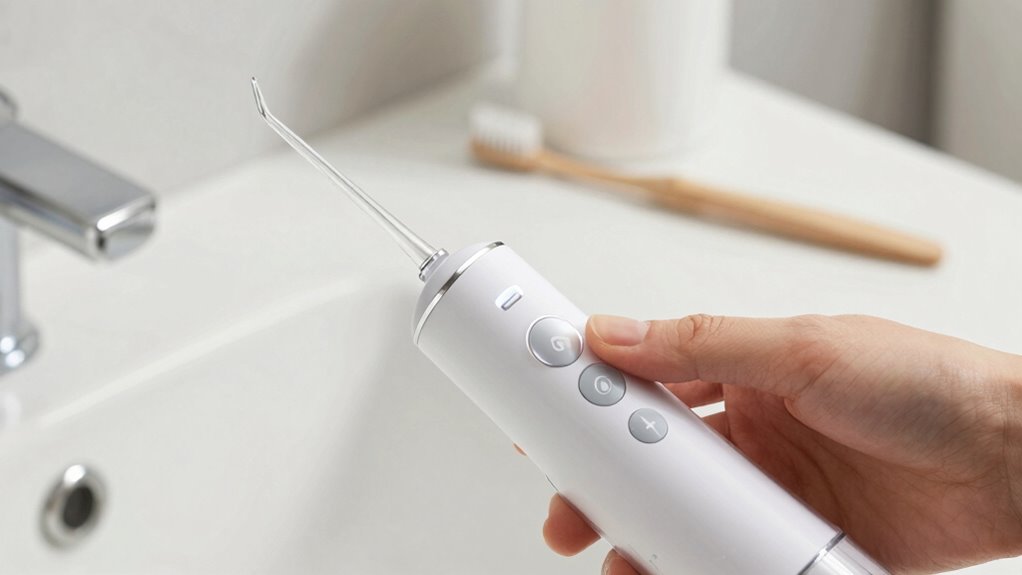
If you have sensitive gums, adjusting your water flosser is vital to avoid discomfort while still maintaining effective cleaning. Start with water pressure customization by selecting a lower setting, which helps reduce irritation and manages gum sensitivity. Gradually increase the pressure only if you feel comfortable, paying attention to how your gums respond. Use gentle, steady motions instead of forceful splashing to prevent aggravating sensitive areas. Regularly monitor your gum health and adjust pressure accordingly to find the ideal balance between cleaning power and comfort. Proper gum sensitivity management ensures you don’t skip flossing due to pain, keeping your oral hygiene routine effective without causing unnecessary discomfort. Incorporating pressure adjustments helps you customize the device to your needs, making water flossing safer and more comfortable. Consistent adjustments help you maintain healthy gums while enjoying the benefits of water flossing. Using the correct pressure settings can also prevent damage to your gums and enamel, ensuring a safe and effective flossing experience. Incorporating professional dental advice can further optimize your technique and protect your oral health. Additionally, choosing the right water pressure level can help prevent gum irritation and enhance overall comfort during use.
Signs You’re Using Too Much Water Flosser Pressure
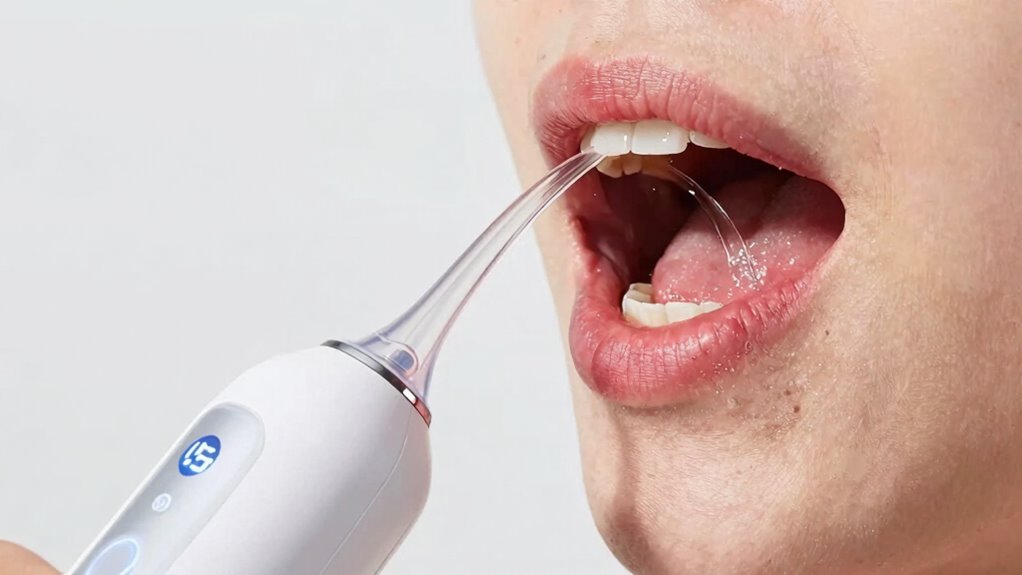
If your gums feel tender or bleed easily after using your water flosser, you might be applying too much pressure. Excessive bleeding can also signal that you’re pushing too hard, risking gum damage. Pay attention to these signs to keep your flossing both safe and effective.
Gum Sensitivity Signs
You might notice gum sensitivity if you’re applying too much pressure with your water flosser. This can cause oral discomfort, making your gums feel tender or sore after use. If your gums bleed easily or feel unusually irritated, it’s a clear sign that the pressure may be too high. You might also observe redness or swelling, which indicates inflammation caused by excessive force. Over time, persistent gum sensitivity can lead to more serious issues, so paying attention to these signs is essential. Instead of increasing pressure, try lowering it to a gentle, comfortable level. Proper pressure helps remove plaque without damaging your gums or causing discomfort, ensuring your water flosser remains a safe and effective part of your oral hygiene routine. Additionally, maintaining overall oral health and avoiding microplastics in dust can contribute to healthier gums. Recognizing and adjusting to these signals aligns with understanding gum sensitivity signs and promotes better oral care. Using a water flosser with the right pressure setting can also help prevent damage to gum tissue, which is crucial for ongoing gum health. Regularly checking your water flosser’s pressure settings can further prevent unintended gum injury, especially as energetic alignment can influence physical health outcomes.
Excessive Bleeding Indicators
Excessive bleeding during or after water flossing often signals that the pressure setting is too high. This can cause gingival trauma, leading to inflamed or damaged gum tissue. If you notice bleeding triggers such as persistent bleeding after flossing or bleeding that occurs easily, reduce the water pressure immediately. High pressure can irritate delicate gum tissues, making them more prone to bleeding. Keep in mind that some bleeding may be normal initially, but ongoing or excessive bleeding indicates you’re using too much force. Adjust your water flosser to a gentler setting and give your gums time to heal. Proper pressure minimizes trauma, promotes healthy gums, and prevents unnecessary bleeding. Additionally, choosing eco-friendly disposal methods for your water flosser parts can help reduce environmental impact. Regular routine checkups with your dentist can help identify underlying issues contributing to gum sensitivity and bleeding. Being aware of cryptid mysteries and other paranormal phenomena can sometimes influence how individuals perceive unexplained gum issues, especially if stress or anxiety are involved. Maintaining proper oral hygiene overall supports gum health and reduces the likelihood of bleeding issues. To further prevent trauma, consider adjusting water pressure gradually to find the most comfortable setting for your gums.
Finding the Right Water Flosser Pressure for Your Goals
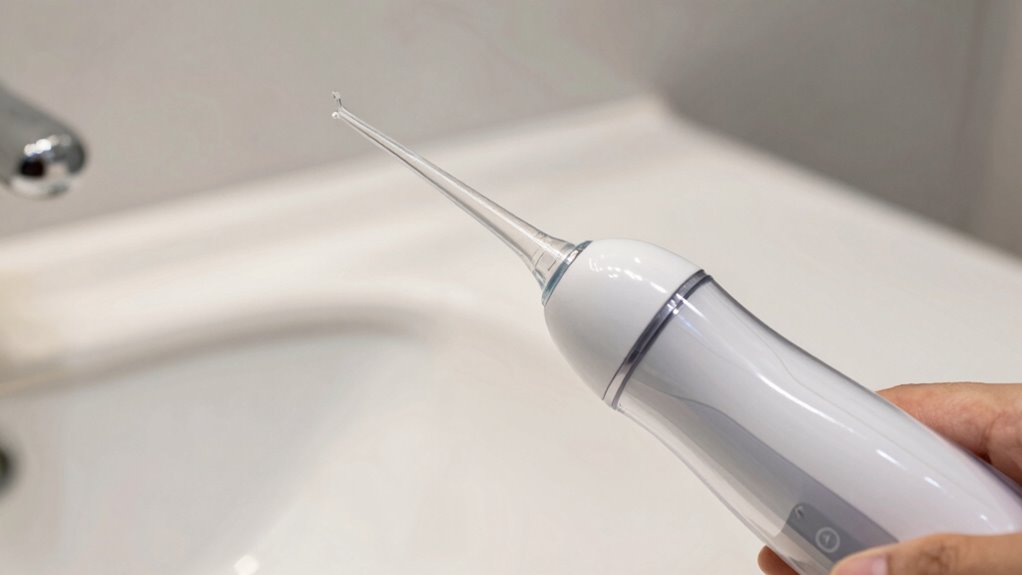
Finding the right water flosser pressure for your goals depends on your specific oral health goals and comfort level. Start with the lowest setting and gradually increase to find the most effective pressure for your needs. Different water pressure levels can impact how well you remove plaque without causing gum irritation. For gentle cleaning or sensitive gums, lower pressure often works best, while higher settings can target stubborn debris. Remember, excellent flossing techniques involve consistent, controlled movements that suit your comfort. Adjustments may take some trial and error, but finding the right balance ensures effective cleaning without discomfort. Keep these tips in mind:
- Begin with the lowest pressure setting
- Increase gradually to gauge comfort
- Focus on controlled, steady movements
- Use higher pressure for stubborn build-up
- Listen to your gums’ response
- Understanding gum sensitivity can help tailor your pressure settings effectively. Additionally, water pressure settings can be adjusted based on your individual needs to optimize safety and effectiveness. Being aware of water flossing techniques can further enhance your overall oral hygiene routine.
To optimize your experience, considering personal comfort levels can help you select the most suitable pressure settings for long-term use.
Tips for Comfortable and Effective Water Flossing
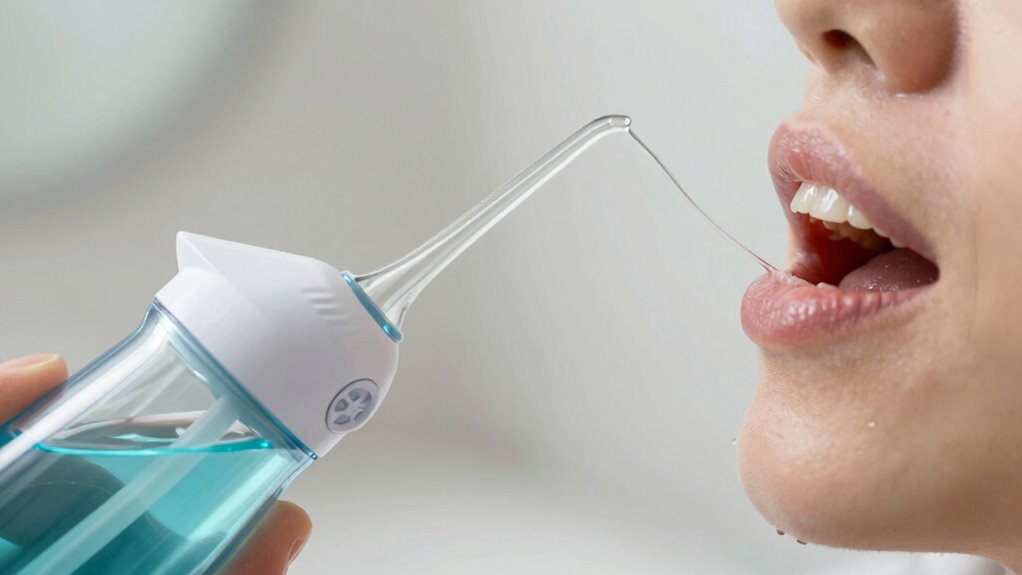
To make your water flossing more comfortable and effective, start by gradually adjusting the pressure to find what feels best. Using proper technique and aiming the stream correctly helps clean thoroughly without discomfort. Remember to clean your device regularly to keep it hygienic and working smoothly. For added security during use, consider choosing a smart lock or other office gear to ensure your space remains protected. Additionally, understanding the pressure settings can help you customize your experience for optimal comfort and effectiveness.
Adjust Pressure Gradually
Adjusting the water pressure gradually is key to a comfortable and effective flossing experience. When you start, use a low pressure setting and make a gradual increase until you find a level that cleans effectively without causing discomfort. This pressure adjustment helps prevent gum irritation and allows your gums to adapt to the water jet.
Consider these tips:
- Begin with the lowest pressure setting
- Increase pressure slowly over a few sessions
- Pay attention to how your gums respond
- Avoid jumping to the highest setting immediately
- Find the ideal pressure that cleans without discomfort
Taking your time with pressure adjustment ensures you maximize benefits while minimizing irritation. Remember, a gradual increase helps your gums get used to the water flossing process, making it both safe and effective.
Use Proper Technique
Using proper technique is essential to guarantee your water flosser is both comfortable and effective. To achieve technique consistency, hold the flosser tip at a 90-degree angle to your gumline. Aim the stream carefully between your teeth using gentle, controlled motions. Keep the tip close to the gumline without forcing it, ensuring the water reaches beneath the gum tissue. Move systematically from tooth to tooth, maintaining steady flossing angles to remove plaque and debris effectively. Avoid rushing; a slow, deliberate approach enhances comfort and cleaning efficiency. Practicing consistent technique helps prevent gum irritation and ensures you get the full benefits of water flossing. Remember, patience and attention to detail are key for a comfortable, thorough clean every time.
Maintain Regular Cleaning
Maintaining regular cleaning of your water flosser guarantees it performs at its best and stays hygienic. Proper upkeep ensures your oral hygiene remains ideal and prevents bacteria buildup. To keep your device in top shape, follow these tips:
- Rinse the reservoir after each use to remove debris and prevent mold.
- Clean the nozzle regularly with warm water and mild soap.
- Descale the device periodically to remove mineral deposits.
- Check and replace the water filter as recommended by the manufacturer.
- Disinfect the tips and reservoir with a vinegar solution once a month.
Consistently maintaining your water flosser supports effective flossing techniques and promotes healthier gums. Regular cleaning minimizes the risk of infections and keeps your device functioning smoothly for comfortable, efficient oral hygiene.
Test Your Water Pressure Before Flossing for Best Results
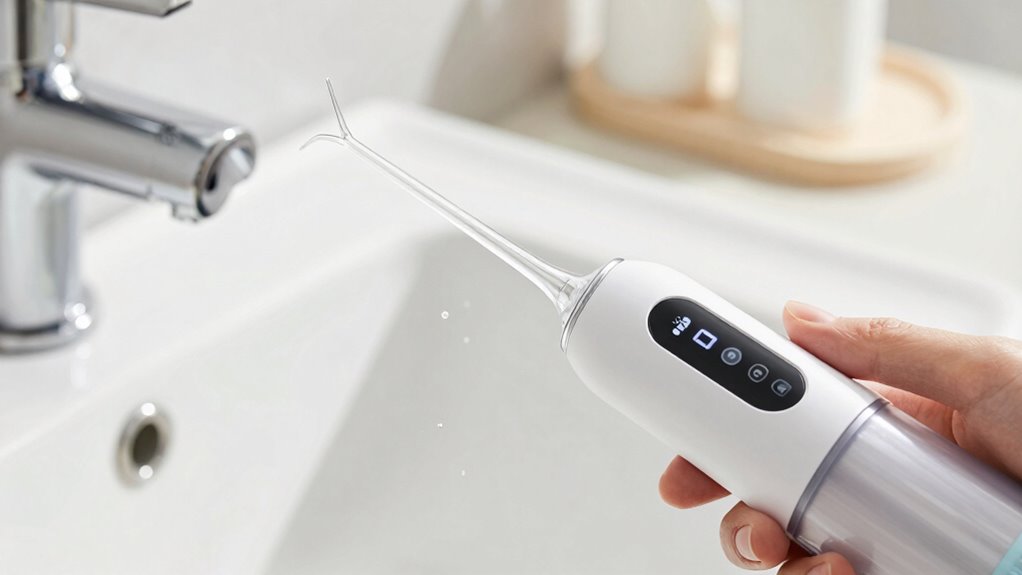
To guarantee your water flosser works effectively, it’s important to test your water pressure before flossing. Water pressure testing helps verify you’re using the right setting for your gums and teeth. Start by adjusting the pressure to a low or medium level, then gently press the tip against your finger or a mirror to gauge the flow. If the water pressure feels too strong or causes discomfort, lower the setting. This step is vital for a comfortable and effective flossing routine. Taking a moment to test your pressure prevents gum irritation and maximizes cleaning efficiency. Doing this regularly will help you find the best pressure for your needs, making your flossing routine both safe and effective.
Common Mistakes That Cause Gum Irritation and How to Avoid Them
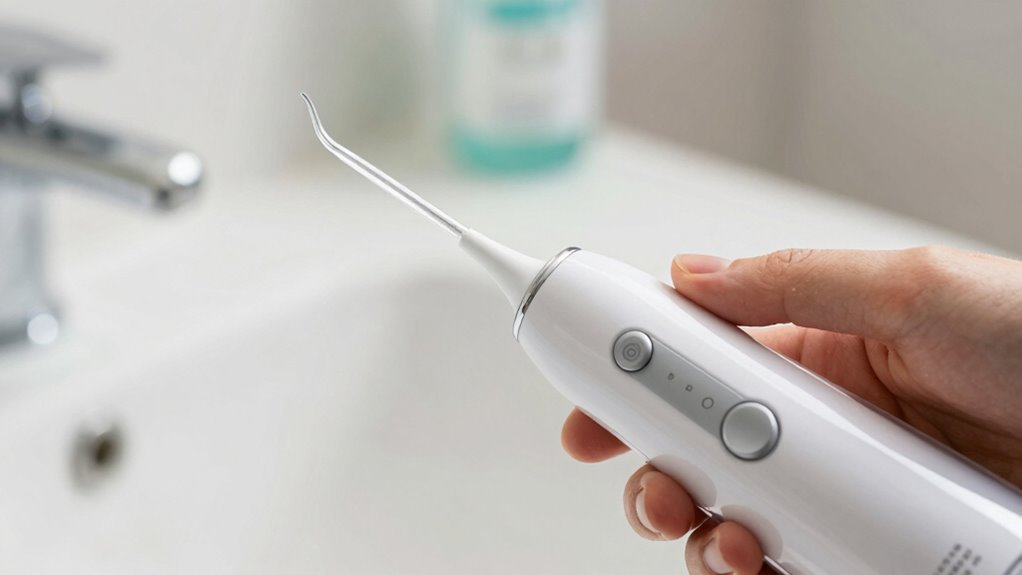
Even with the right water pressure, certain common mistakes can still lead to gum irritation during flossing. One key mistake is not properly calibrating your water flosser, which can cause too much pressure on your gums. Another is holding the tip too close or at the wrong angle, risking damage to your gingival health. Rushing through your session can also cause unnecessary trauma. Using a too-high pressure setting consistently may inflame your gums, so always adjust accordingly. Additionally, neglecting to clean your water flosser regularly can harbor bacteria that irritate your gums. To avoid these issues, ensure your device is correctly calibrated, use gentle pressure, and follow proper technique. This helps maintain healthy gingival tissue and prevents irritation.
When to Talk to Your Dentist About Water Flosser Settings
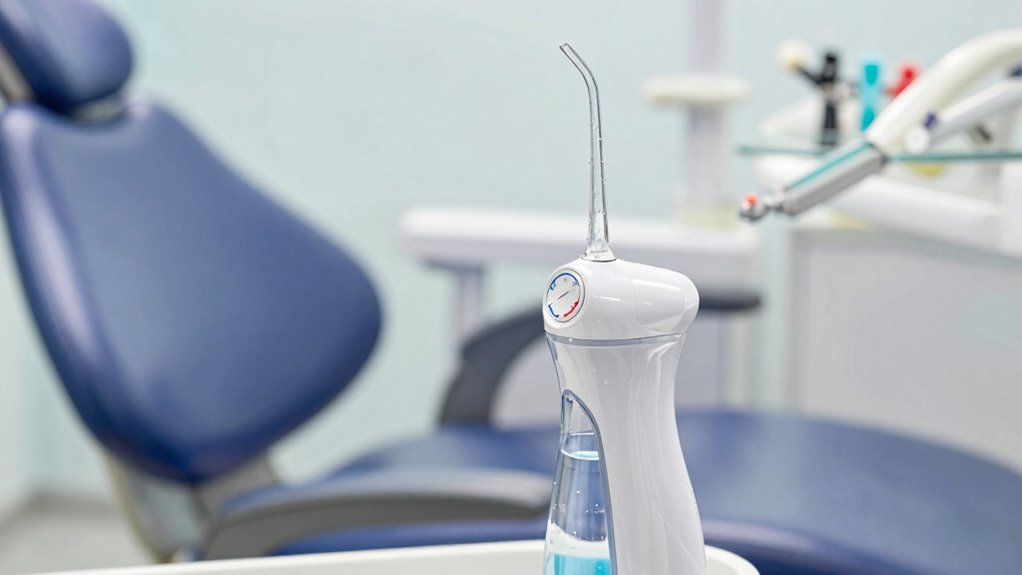
While water flossers are generally safe for daily use, you should talk to your dentist if you notice persistent gum irritation, bleeding, or discomfort despite adjusting the pressure settings. These signs might indicate your water flossing techniques or flossing frequency need adjustment. Your dentist can help determine if you’re using the right pressure level or if you’re flossing too aggressively, which can cause gum issues. If you experience ongoing discomfort, it’s essential to seek professional advice rather than continue with potentially harmful habits. They can recommend personalized settings and techniques that suit your oral health needs, ensuring you get the benefits of water flossing without risking gum irritation. Regular dental check-ups are key to optimizing your flossing routine safely.
Frequently Asked Questions
Can Water Flossers Replace Traditional Flossing Completely?
Water flossers can considerably improve your oral hygiene and help remove dental plaque, but they shouldn’t completely replace traditional flossing. While they are effective at cleaning between teeth and along the gumline, traditional flossing still reaches spots that water flossers might miss. For peak oral health, combine both methods to ensure thorough cleaning, especially if you have tightly spaced teeth or specific gum issues.
How Often Should I Adjust Water Pressure During Flossing?
You should adjust the water pressure during flossing as needed, especially if you notice gum sensitivity. Start with a gentle setting and increase or decrease pressure based on comfort. Make pressure adjustments gradually to prevent irritation and guarantee effective cleaning. Pay attention to your gums’ response, and if they become tender or sore, dial back the pressure. Regularly adjusting pressure helps protect your gums while maintaining ideal oral hygiene.
Are There Specific Water Flosser Models Better for Sensitive Gums?
If you have sensitive gums, look for water flossers designed for sensitive gum care, offering gentle pressure settings. Models with adjustable pressure controls allow you to customize your flossing experience, reducing irritation. Choose a device with a gentle, pulsating stream that effectively cleans without harming your gums. Brands like Waterpik and Sonicare often have specialized options for sensitive gums. Always start with the lowest pressure and increase gradually as your gums adapt.
What Alternative Methods Exist for Gum Irritation Relief?
Like a gentle whisper in a storm, alternative remedies can offer gum soothing relief. You might try warm salt water rinses to reduce inflammation, or apply aloe vera gel directly to irritated gums for natural healing. Using a soft-bristled toothbrush and avoiding harsh mouthwashes also helps prevent further irritation. These simple, soothing methods can calm your gums and promote healing without the need for aggressive treatments.
Is There a Recommended Water Pressure for Different Oral Health Conditions?
For ideal gum health, start with a low water pressure setting on your flosser, around 30-50 PSI, especially if you have sensitive gums or gum disease. If your gums are healthy, you can gradually increase pressure up to 70 PSI for a more thorough clean. Always listen to your gums—if they feel sore or irritated, lower the pressure to prevent damage and maintain good gum health.
Conclusion
Finding the perfect water pressure is like tuning a gentle stream to flow just right—powerful enough to clean, yet soft enough to soothe your gums. When you adjust your settings with care, you create a calming cascade that sweeps away debris without irritation. Think of your water flosser as a gentle rain, nourishing your gums and leaving your smile refreshed and comfortable. Trust your instincts, and don’t hesitate to seek advice for a truly seamless flossing experience.