To prevent wrinkles on camera, choose a high-quality, wrinkle-resistant green screen fabric made from durable, colorfast, and lightweight materials. Look for fabrics with tight, even textures that resist creases, and consider heavier fabrics that hang smoothly without bunching. Proper setup, such as stretching the fabric tight and securing the edges, also helps keep it wrinkle-free. Keep your fabric well-maintained and stored carefully—if you want to learn more, you’ll find tips to achieve a perfect, smooth backdrop every time.
Key Takeaways
- Choose wrinkle-resistant fabrics with tight, consistent textures to maintain a smooth surface on camera.
- Use heavier fabrics that resist shifting and creasing during setup and filming.
- Properly stretch and secure the fabric evenly to prevent wrinkles and uneven lighting.
- Store fabric rolled or hung in a climate-controlled, moisture-free environment to avoid creases.
- Regularly clean and handle fabric gently to preserve its wrinkle-resistant properties and appearance.
Why Wrinkle-Resistant Fabrics Make Green Screen Setup Easier
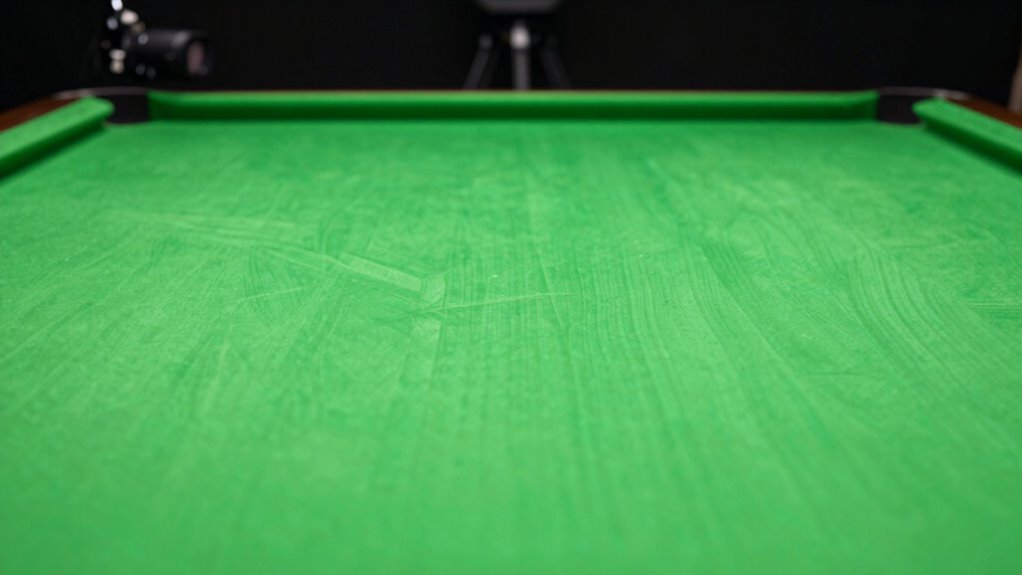
Wrinkle-resistant fabrics simplify green screen setup because they stay smooth and wrinkle-free without constant ironing or adjustments. This means your fabric maintains its integrity, ensuring an even surface that’s easier to work with. The fabric softness of wrinkle-resistant materials enhances comfort and handling, making it simpler to drape and position correctly. Additionally, these fabrics preserve vibrant color saturation, which is vital for a clean, seamless green screen. When the fabric remains smooth and free of creases, it prevents shadows and uneven lighting caused by wrinkles. As a result, your filming process becomes more efficient, and you achieve a professional look without the hassle of constantly fixing or adjusting the fabric. This consistency is key for high-quality green screen production. Understanding fabric properties helps in choosing the right material for optimal results. Moreover, selecting fabrics with high durability ensures long-lasting performance through repeated setups and takedowns. Incorporating wrinkle-resistant fibers can further enhance the fabric’s performance and longevity. Choosing fabrics with easy-care features can also make maintenance more straightforward and less time-consuming. Additionally, considering fiber composition can influence how well the fabric resists wrinkles and retains color vibrancy over time.
Choosing the Best Wrinkle-Resistant Fabric for Your Green Screen
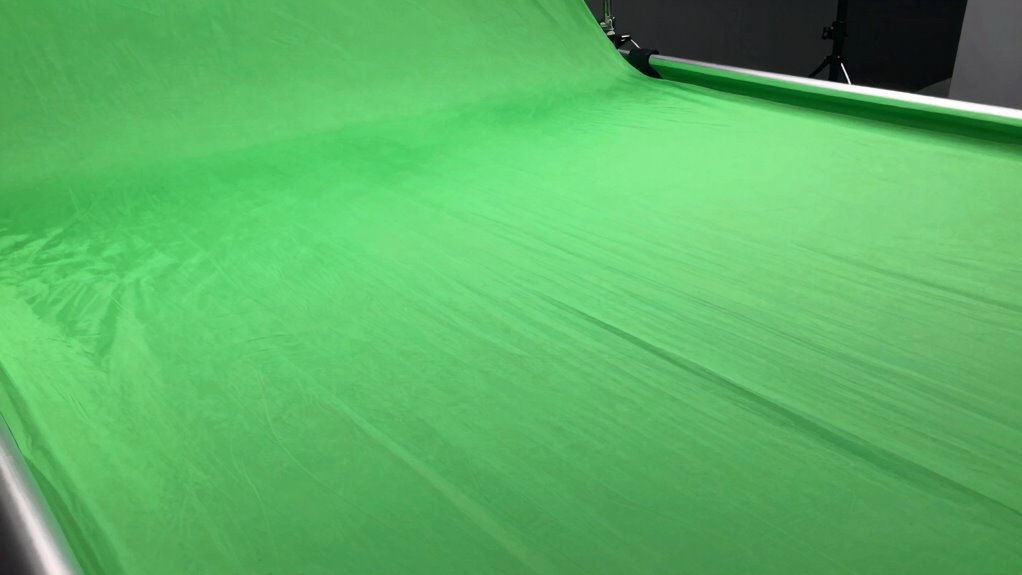
When selecting a wrinkle-resistant fabric for your green screen, consider how durable it is and how easy it is to care for over time. You’ll also want to guarantee the fabric maintains consistent color and brightness, so your background looks flawless on camera. Focusing on these points helps you choose a material that performs reliably in your setup. Additionally, choosing a fabric with cycling gear care tips can help ensure it stays in good condition through frequent use. Incorporating fabrics with wrinkle-resistant technology can further improve longevity and reduce maintenance efforts. Regularly inspecting and following proper fabric maintenance practices can also extend the life of your green screen fabric. Understanding molecular-level fabric treatments can provide insights into how advanced coatings enhance wrinkle resistance and durability over time. Recognizing fabric fiber composition can help you select materials that naturally resist wrinkling and are easier to clean.
Fabric Durability and Care
Choosing the right fabric for your green screen is essential to guarantee it stays in great shape over time. Proper fabric maintenance helps prevent unnecessary wear and tear, extending its lifespan. To keep your green screen durable and easy to care for, consider these tips:
- Follow manufacturer instructions for cleaning and washing.
- Avoid harsh chemicals that can damage the fabric.
- Store it properly, avoiding folding or creasing that lead to permanent wrinkles.
- Inspect regularly for signs of wear, such as fraying or thinning, and address issues early.
- Ensure the fabric’s material quality is suitable for long-term use and resistance to creasing. Selecting a fabric with high tensile strength can also enhance durability, especially for frequent use.
Color Consistency and Brightness
Ensuring your green screen maintains consistent color and brightness is essential for seamless chroma keying. To achieve this, choose fabrics with stable dye that resist fading and uneven coloration. Proper color calibration during setup helps you identify any inconsistencies early on. Use the table below to compare fabric qualities:
| Feature | Importance |
|---|---|
| Fabric dye stability | Prevents color shifts over time |
| Brightness uniformity | Ensures even illumination and easier editing |
Selecting fabric with reliable dye and consistent brightness minimizes post-production adjustments. A uniformly colored fabric simplifies keying, saving you time and effort. Prioritize fabrics designed for color consistency to keep your green screen looking flawless and professional.
Top Wrinkle-Resistant Fabrics for Green Screens
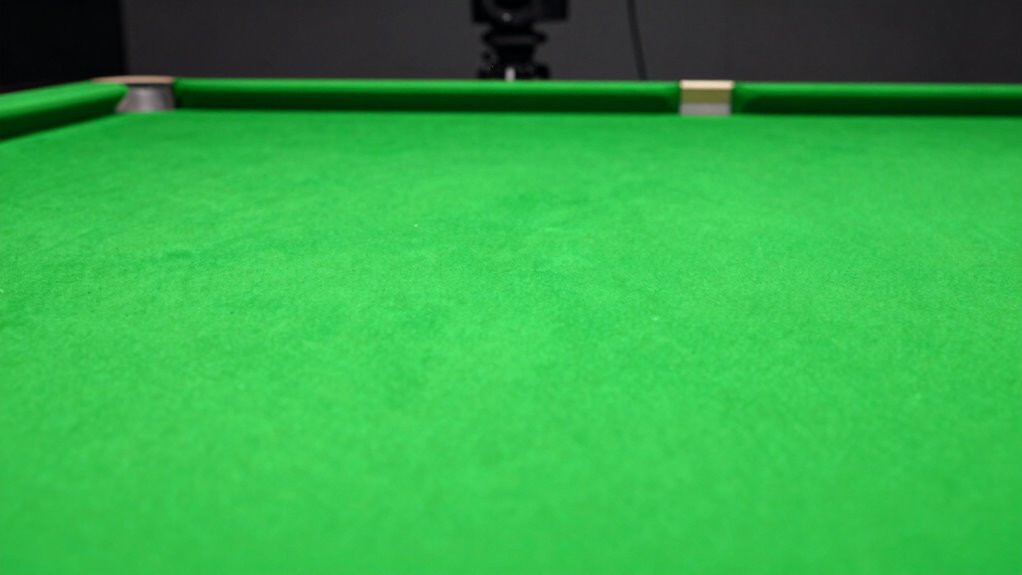
When choosing wrinkle-resistant fabrics for your green screen, you want materials that are both breathable and lightweight to keep you comfortable during shoots. Durability and colorfastness are essential so the fabric stays smooth and vibrant over time. Focusing on these qualities helps guarantee your green screen remains flawless and easy to work with. Additionally, selecting fabrics that are easy to clean and maintain ensures long-term usability and a professional appearance. Incorporating fabrics with environmentally friendly properties can also support sustainable production practices and reduce ecological impact.
Breathable and Light Materials
Breathable and light materials are essential for creating effective green screens, especially when you need wrinkle-resistant fabrics that maintain their smooth appearance during use. Their breathability benefits ensure airflow, reducing moisture buildup and preventing wrinkles caused by heat or sweat. The lightweight advantages make handling and setup easier, minimizing strain and making adjustments simpler. Consider these top options:
- Mesh fabrics that promote airflow and keep the fabric dry.
- Polyester blends designed for breathability and durability.
- Nylon fabrics offering lightweight support with wrinkle resistance.
- Technical fabrics engineered for moisture-wicking and comfort.
Using these fabrics helps you avoid creases and maintain a sleek, professional look on camera, making your green screen setup more efficient and comfortable.
Colorfast and Durable Fabrics
Choosing fabrics that are both colorfast and durable is essential for maintaining a professional look in your green screen setup. These fabrics resist color fading over time, reducing the need for frequent replacements and ensuring consistent chroma keying. When selecting top wrinkle-resistant fabrics, prioritize those with easy fabric maintenance—materials that withstand repeated washes without losing vibrancy or integrity. Durable fabrics maintain their structure, preventing sagging or stretching that can cause uneven backgrounds or shadows. Additionally, opting for high-quality fabrics can significantly extend the lifespan of your green screen. Ensuring proper fabric care and maintenance can further preserve their properties and appearance. Considering fabric weave can also influence wrinkle resistance and overall durability, making your setup more reliable. The choice of fabric composition plays a crucial role in achieving optimal performance and longevity. By investing in high-quality, colorfast, and durable materials, you ensure your green screen remains smooth, vibrant, and reliable throughout your filming or photography sessions. This saves you time and effort, keeping your focus on creating great content without worrying about fabric deterioration. Incorporating wrinkle-resistant fabrics is also beneficial for quick setup and teardown, especially in busy production environments.
How Wrinkle-Resistant Green Screens Enhance Video Quality
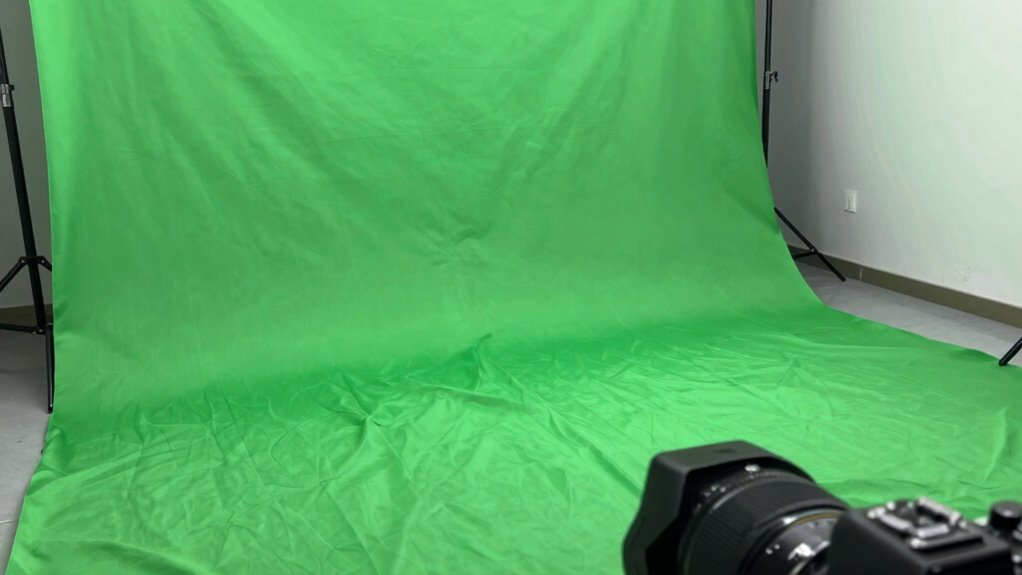
Wrinkle-resistant green screens markedly improve video quality by providing a smooth, even surface that minimizes visual distractions. With consistent fabric texture, you’ll avoid uneven shadows or creases that can ruin chroma key effects. Proper color matching is essential, and wrinkle-free fabrics ensure the green stays uniform, making it easier to replace backgrounds seamlessly. Additionally, these screens help you maintain professional-looking videos without the need for constant adjustments. Here are some benefits:
- Reduces shadows caused by fabric creases
- Ensures uniform green for accurate color matching
- Maintains a consistent fabric texture for clarity
- Simplifies post-production editing by preventing visual artifacts
Using high-quality fabrics also protects your investment by lasting longer and maintaining their appearance over time. Choosing wrinkle-resistant fabric helps you produce cleaner, sharper videos, elevating your overall production quality. Regular maintenance of fabric durability can further extend the lifespan of your green screen, and selecting fabrics with non-reflective surfaces can prevent unwanted glare or shine in your shots. Incorporating fabric care practices can help sustain the wrinkle-resistant properties and overall appearance of your green screen over time. Additionally, proper storage techniques can prevent creases and help maintain the fabric’s wrinkle resistance, ensuring consistent performance.
Features to Look for When Picking a Wrinkle-Free Green Screen Fabric

When choosing a wrinkle-free green screen fabric, you should consider its durability to guarantee it lasts through frequent use. Look for materials with strong wrinkle-resistant properties to keep your background smooth and professional. Additionally, stable color consistency is key to maintaining a uniform backdrop without unexpected shifts in hue. Incorporating fabrics that are heritage-inspired can also enhance the visual appeal by adding a timeless quality to your videos.
Fabric Material Durability
To guarantee your green screen remains smooth and reliable, focus on fabric durability. You want a fabric with high tensile strength to withstand stretching and handling without tearing. Material longevity ensures your investment lasts through repeated use. When selecting fabric, consider these key factors:
- Fabric tensile strength—strong fibers resist tears and deformation.
- Fiber quality—premium materials maintain integrity over time.
- Colorfastness—resists fading after multiple washes or exposure.
- Resistance to wear and tear—durable fabrics endure frequent setup and takedown.
Prioritizing these features helps ensure your green screen stays smooth, wrinkle-free, and ready for professional use, saving you time and money in the long run.
Wrinkle-Resistant Properties
Choosing a green screen fabric that stays smooth and professional-looking often depends on its wrinkle-resistant properties. Look for fabrics with a tight, consistent texture that resist creasing. Thinner fabric weight may wrinkle more easily, so opt for a moderate or heavier fabric to maintain a sleek appearance. The right fabric texture helps prevent folds, while suitable fabric weight ensures your backdrop remains flat during shoots.
| Fabric Texture | Fabric Weight |
|---|---|
| Tight weave | Moderate to heavy |
| Smooth finish | Less prone to wrinkles |
| Uniform surface | Maintains shape |
| Non-reflective | Easier to smooth out |
| Durable feel | Resists creases |
Color Consistency Stability
Ensuring color consistency stability is crucial for green screen fabrics, especially when you want a seamless background during shoots. You need fabric that maintains uniform color and texture throughout your project. Look for fabrics with excellent color uniformity, so there are no noticeable shifts or patches. The fabric texture should be smooth and even, preventing reflections that could affect keying. Here are four key features to consider:
- Dye stability to prevent fading over time
- Uniform color across the entire fabric surface
- Consistent fabric texture for even light reflection
- Resistance to environmental factors like humidity or sunlight
Choosing a fabric with these qualities ensures your green screen stays vibrant, consistent, and easy to work with, leading to better final results.
Setting Up Your Green Screen for a Smooth, Wrinkle-Free Surface
A smooth, wrinkle-free green screen is vital for clean, professional-looking backgrounds, so taking the time to set it up properly makes all the difference. Start by choosing fabric with a suitable texture—avoid overly shiny or rough surfaces that can cause reflections or creases. The fabric weight is also essential; heavier fabrics tend to hang straighter and resist wrinkling better than lighter ones. When setting up, make sure the fabric is stretched tight and secured evenly at the edges, avoiding slack that can lead to wrinkles. Use clips or weights to maintain tension and eliminate folds. Smooth out any creases by hand before attaching, and double-check the surface under good lighting. Proper setup ensures a sleek, even green screen ready for filming.
Fabric vs. Vinyl: Which Green Screen Material Is Better?
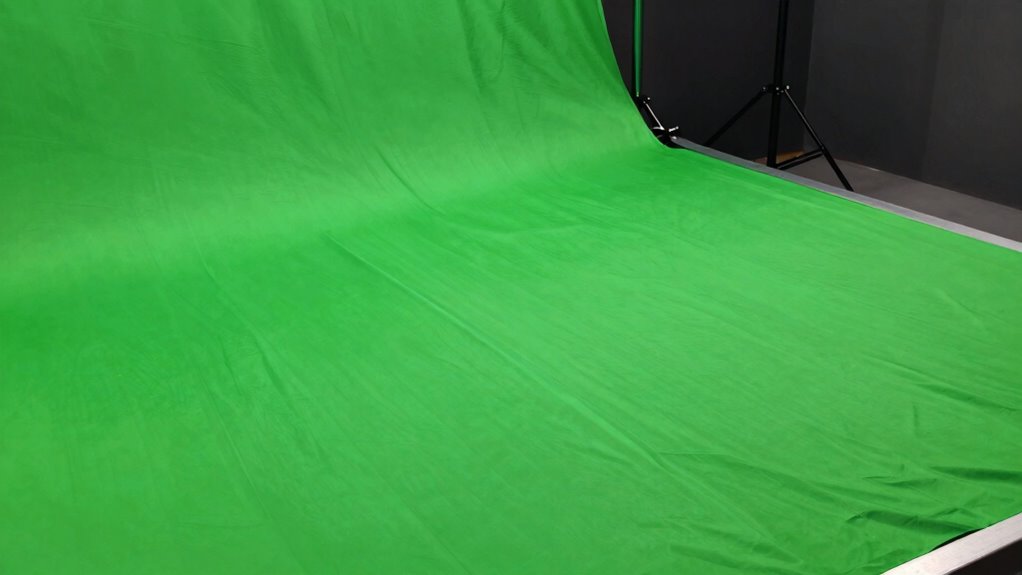
When selecting a green screen material, you’ll want to evaluate how fabric and vinyl compare regarding setup, durability, and image quality. Fabric offers a soft, matte fabric texture that minimizes reflections, helping achieve a more even shot. Vinyl, on the other hand, provides greater flexibility, making it easier to stretch tight and avoid wrinkles.
Consider these points:
- Fabric texture reduces glare and prevents shiny spots.
- Vinyl’s flexibility allows for smoother, taut surfaces.
- Fabric is generally more fragile but less prone to tearing.
- Vinyl resists moisture and is easier to clean, extending its lifespan.
Your choice depends on your needs: for a wrinkle-free, matte background, fabric is ideal; for durability and ease of setup, vinyl might be better.
Common Mistakes That Cause Wrinkles and How to Prevent Them
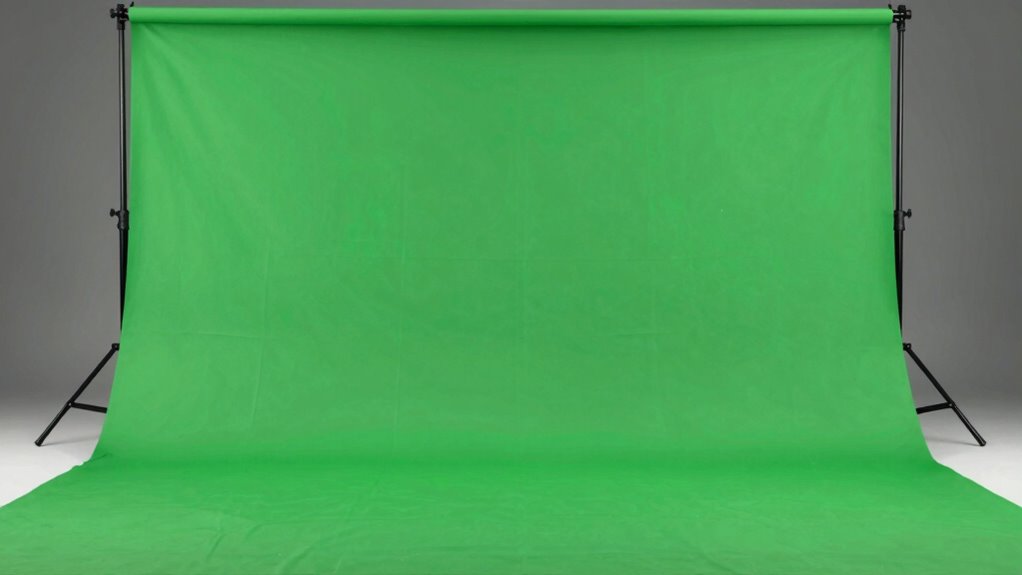
Wrinkles in your green screen often result from common mistakes during setup or handling. One major cause is improper fabric stretching, which allows slack that leads to wrinkle formation. When you don’t pull the fabric tight enough, it bunches and develops creases that are hard to smooth out. Conversely, overstretching can weaken fibers, making wrinkles more likely over time. Another mistake is not securing the fabric properly, causing it to shift and create uneven surfaces. Always ensure the fabric is evenly tensioned and firmly attached to your frame or support system. Avoid touching or adjusting the fabric frequently during shoots, as this can cause unnecessary stretching and wrinkle formation. Proper handling and tensioning are key to keeping your green screen smooth and wrinkle-free.
Cleaning and Caring for Your Wrinkle-Resistant Green Screen Fabric
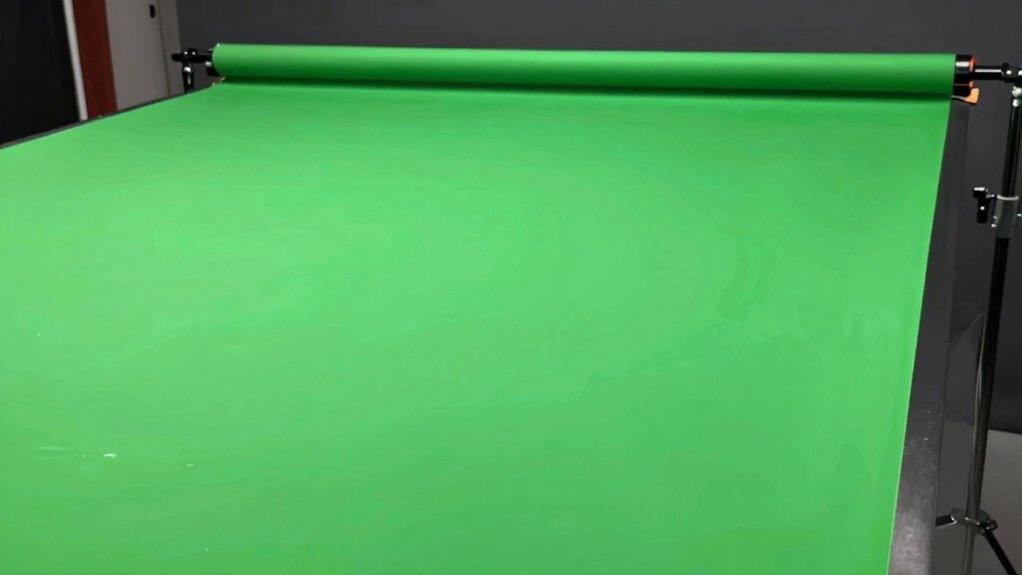
Proper cleaning and maintenance are key to keeping your wrinkle-resistant green screen fabric looking its best and performing reliably. To guarantee ideal fabric maintenance, follow these cleaning tips:
- Use a soft brush or vacuum to gently remove dust and debris.
- Spot clean stains with a mild detergent and soft cloth, avoiding harsh chemicals.
- Hand wash or machine wash on a gentle cycle with cold water if necessary—check manufacturer instructions first.
- Hang the fabric to air dry, avoiding direct sunlight to prevent color fading.
Transporting and Storing Fabric Green Screens Without Wrinkles

Transporting and storing your fabric green screen correctly is essential to prevent wrinkles and maintain its smooth appearance. Proper fabric storage and transportation tips help ensure your backdrop stays wrinkle-free and ready for use. When transporting, avoid folding the fabric tightly; instead, roll it loosely around a tube or in a large, breathable bag. Store your fabric in a cool, dry place away from direct sunlight. Use the following visual to picture the process:
| Storage Method | Transport Tip |
|---|---|
| Rolled on a tube | Keep in a breathable bag |
| Hanging in a closet | Avoid tight folds |
| Laid flat on a surface | Use padded covers |
| Stored in a climate-controlled space | Avoid moisture |
This approach preserves fabric integrity and prevents creases.
Frequently Asked Questions
How Long Does Wrinkle Resistance Last on Green Screen Fabrics?
The wrinkle resistance on green screen fabrics typically lasts for several months, depending on how well you maintain it. Regular wrinkle maintenance, like gentle cleaning and proper storage, can extend fabric longevity. You should expect to re-press or steam the fabric periodically, especially after repeated use. By taking good care, you guarantee your green screen stays smooth, minimizing wrinkles and keeping your shoots professional and seamless.
Can Wrinkle-Resistant Fabrics Be Painted or Customized?
You can definitely paint or customize wrinkle-resistant fabrics, but you should check their fabric durability and dye compatibility first. Some fabrics are more receptive to dyes and paints, making customization easier without compromising their wrinkle resistance. Always test a small area beforehand to confirm the coating adheres well and doesn’t weaken the fabric’s structural integrity. With proper preparation, your customized green screen will stay smooth and vibrant, ready for your creative projects.
Are There Eco-Friendly Wrinkle-Resistant Green Screen Options?
Yes, there are eco-friendly wrinkle-resistant green screen options. You can choose fabrics made from sustainable materials like organic cotton or hemp, which often use eco-friendly dyes. These options help reduce environmental impact while providing wrinkle resistance. By selecting such fabrics, you guarantee your green screen is both eco-conscious and functional, making your production more sustainable without sacrificing quality or ease of use on camera.
How Does Fabric Weight Affect Wrinkle Prevention?
Fabric weight, or density, plays a key role in wrinkle prevention. Heavier fabrics usually resist wrinkling better because their increased material durability helps maintain a smooth surface on camera. When choosing a green screen, opt for a fabric with higher density, as it’s less prone to creases and keeps your backdrop looking flawless. Lighter fabrics tend to wrinkle more easily, requiring more ironing or steaming to stay camera-ready.
Is Professional Installation Necessary for Wrinkle-Free Green Screens?
Think of your green screen like a canvas—stretched tight for a perfect picture. You don’t need professional installation for a wrinkle-free setup if you’re confident with DIY projects. With patience and proper tools, you can achieve a smooth, professional look yourself. However, if you want flawless results quickly and avoid frustration, opting for professional installation guarantees your green screen remains taut and wrinkle-free, saving you time and effort.
Conclusion
So, you’ve finally found the perfect wrinkle-resistant fabric for your green screen—only to forget that even the best fabric needs gentle handling. Irony’s sweet spot? Your flawless setup can turn wrinkled in seconds if you’re not careful. But hey, at least you’ll look good on camera, right? With the right fabric and a little attention, you’ll never have to worry about wrinkles stealing the spotlight again—unless, of course, they decide to show up.