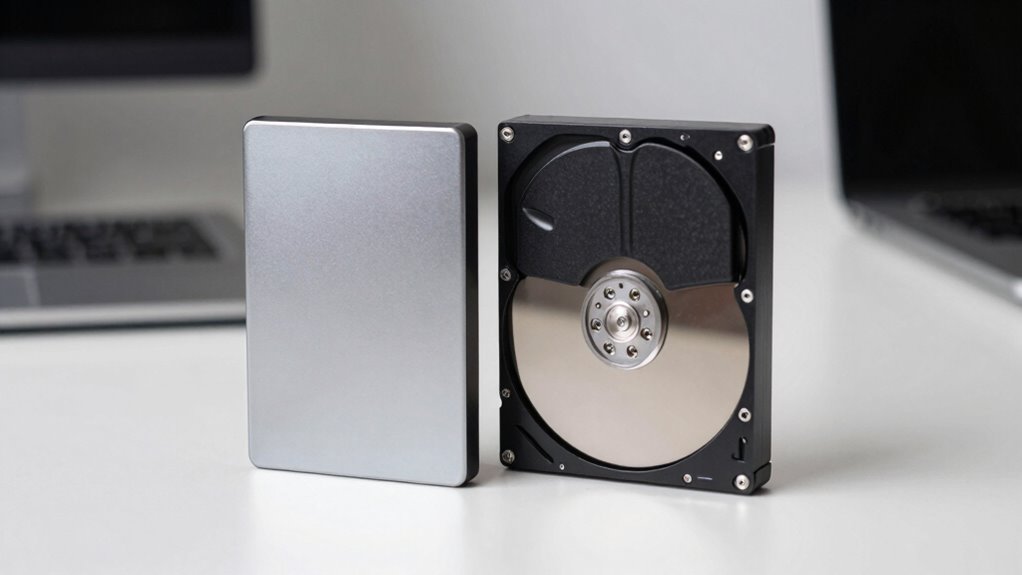

When comparing external SSDs to HDDs for backups, you’ll find that while SSDs cost 3-4 times more per TB upfront, they offer faster speeds and longer durability, reducing replacement costs over time. HDDs are cheaper initially but have higher failure risks, which can lead to costly data recovery. To make smart choices, consider the true long-term expenses beyond the sticker price—if you want to uncover how the real math works, keep going.
Key Takeaways
- HDDs offer a lower initial cost per TB but may incur higher long-term replacement and failure costs.
- SSDs, despite higher upfront costs, provide better durability and lower long-term expenses due to fewer failures.
- Performance differences impact backup speed, where SSDs reduce time and operational costs, influencing overall cost-efficiency.
- Total cost-per-TB should include purchase price, energy, and potential data recovery costs, not just initial expense.
- A comprehensive cost-per-TB analysis balances speed, reliability, and long-term expenses for smarter backup investment decisions.
What You Need to Know About External SSDs and HDDs for Backup
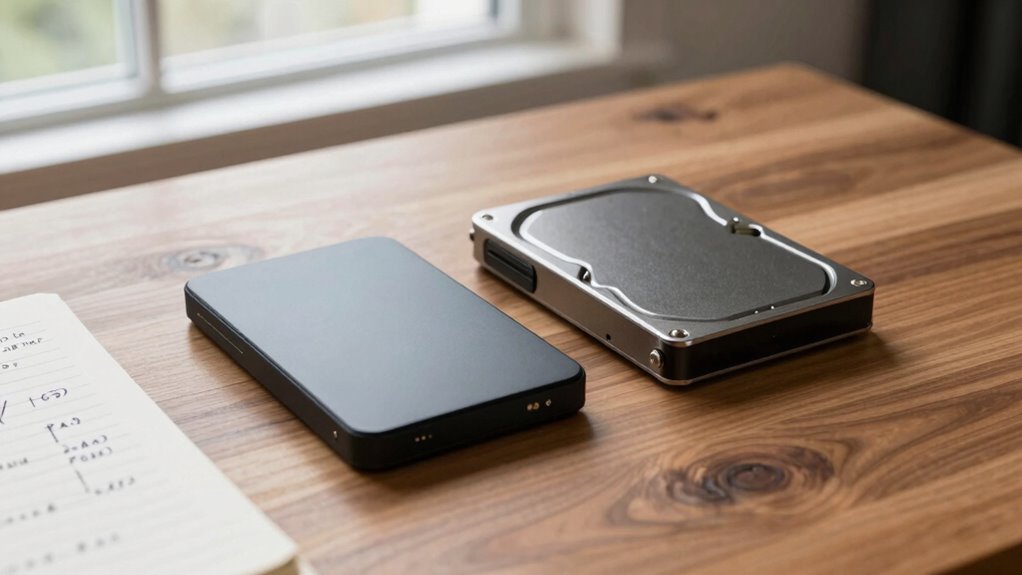
When choosing between external SSDs and HDDs for backups, understanding their key differences is essential. Data transfer speeds vary markedly, with SSDs offering faster read and write times, which means quicker backups and restores. HDDs, however, tend to be slower but often provide larger storage capacities at a lower cost per terabyte. Device compatibility is another critical factor; SSDs are typically more versatile, working seamlessly with most computers and gaming consoles. HDDs are widely compatible too but may require specific ports or adapters. Overall, if speed and portability matter most, an external SSD is your best bet. But if you need large storage at a budget-friendly price, HDDs still hold strong. Knowing these differences helps you choose the right backup device for your needs. Additionally, the contrast ratio of a display can impact how well you view your backed-up media on different monitors or projectors. Furthermore, understanding the cost‑per‑TB of each storage type can greatly influence your long-term backup strategy, especially when managing large volumes of data. Recognizing the reliability of each device type can also be crucial for ensuring data integrity over time, which aligns with the importance of device durability in data storage solutions.
How the Cost-Per-TB Differs Between SSDs and HDDs
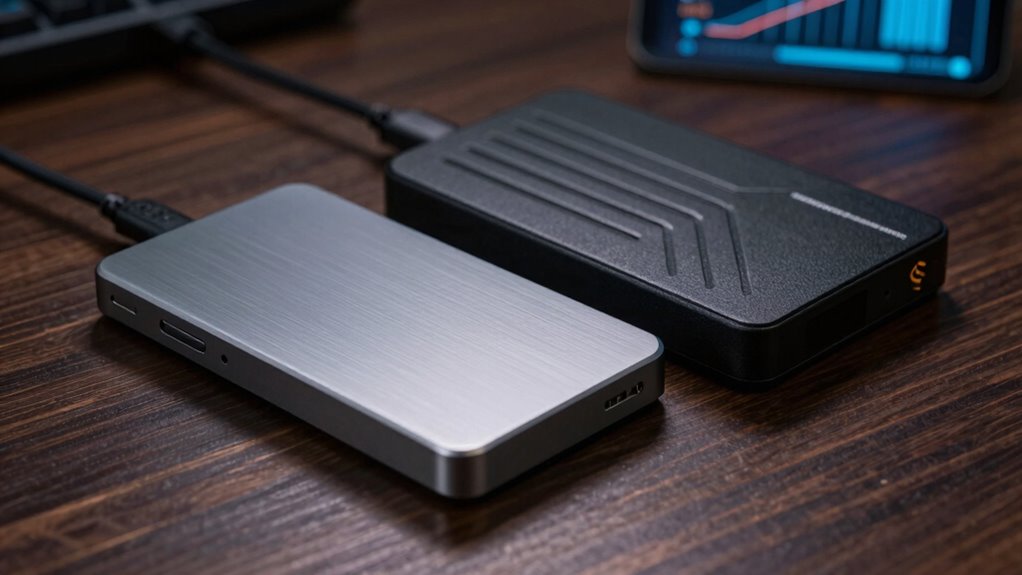
Understanding the cost-per-terabyte helps you decide which drive offers better value for your backup needs. SSDs generally have higher prices per TB but excel in speed and durability, while HDDs tend to be more affordable but may not last as long. Considering these factors guarantees you choose the right balance of cost, performance, and longevity.
Price Differences Per TB
The cost per terabyte for SSDs is generally higher than for HDDs, making them a more expensive choice for large-scale backups. This price difference impacts your overall storage affordability and influences your decision based on budget. When doing a price comparison, consider these factors:
- SSDs often cost 3-4 times more per TB than HDDs.
- HDDs provide more economical options for large volumes.
- The higher price of SSDs is driven by faster performance and newer technology.
- digital concepts and emerging storage technologies can further influence pricing trends over time.
- The availability of storage options can also affect your long-term cost considerations.
While SSDs may seem costly upfront, their speed can save you time during restores. However, if maximizing storage capacity at the lowest cost is your priority, HDDs remain the more affordable option. Understanding this price difference helps you choose the best backup solution for your needs.
Longevity and Durability
Since durability directly affects how long your backup drives last, it’s crucial to compare the longevity of SSDs and HDDs. SSDs generally offer a better durability comparison because they have no moving parts, making them less vulnerable to physical shocks and wear. In terms of hardware lifespan, SSDs typically last between 5 to 10 years, depending on usage, while HDDs often have a shorter lifespan due to mechanical components that wear out over time. HDDs are more susceptible to crashes from drops or vibrations, which can lead to data loss. If longevity is a priority for your backups, SSDs tend to provide a more reliable, longer-lasting option, although they come with a higher initial cost per TB. Understanding data durability is essential when choosing between these storage options for long-term backups. Additionally, manufacturing quality can influence the actual lifespan and reliability of both SSDs and HDDs, making it important to select reputable brands.
Performance and Speed
While SSDs typically cost more upfront per gigabyte, they deliver markedly faster read and write speeds compared to HDDs, which can greatly reduce backup and restore times. This improved performance stems from superior data transfer capabilities and higher read speeds, allowing you to access and save large files instantly. With an SSD, you’ll notice quicker initiation of backups and faster recovery if needed. Data transfer capabilities are a key factor in this performance difference, enabling more efficient backups.
Upfront Costs: How Much Do External Storage Devices Cost?
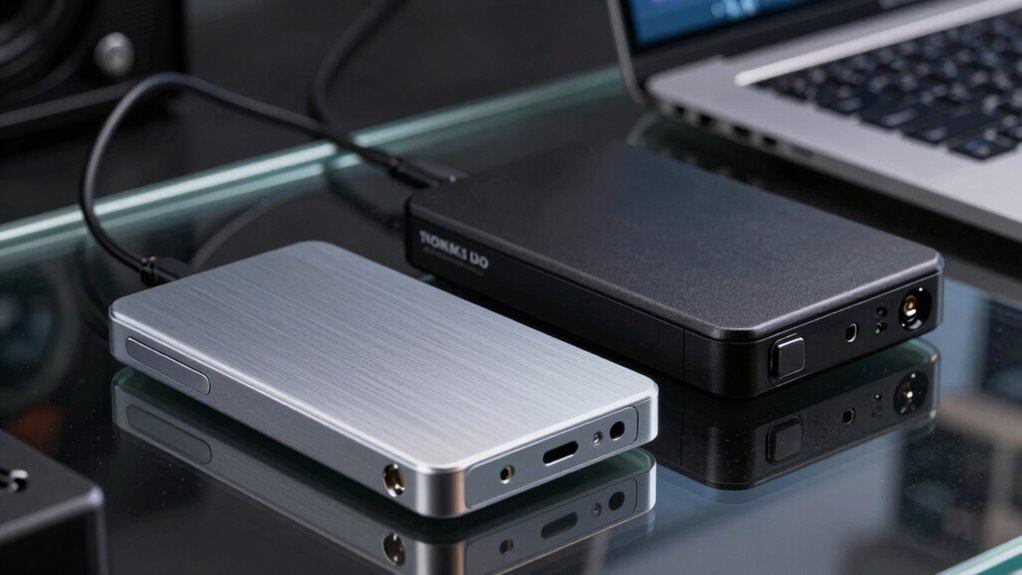
External storage devices vary widely in price, making upfront costs an important factor to contemplate. When you do a price comparison, you’ll notice that external HDDs typically cost less than SSDs upfront, especially at higher capacities. HDDs are more widely available and tend to have a broader market availability, which keeps prices competitive. SSDs, while more expensive initially, offer faster performance and durability, but their higher price per terabyte can be a barrier for budget-conscious users. If you’re planning a large backup setup, understanding these costs helps you choose the right device without overspending. Additionally, considering security in payment processing can be relevant when evaluating data safety measures for your backups. Ultimately, your decision hinges on balancing your initial investment with your storage needs and long-term goals.
Long-Term Expenses: Durability, Reliability, and Replacement
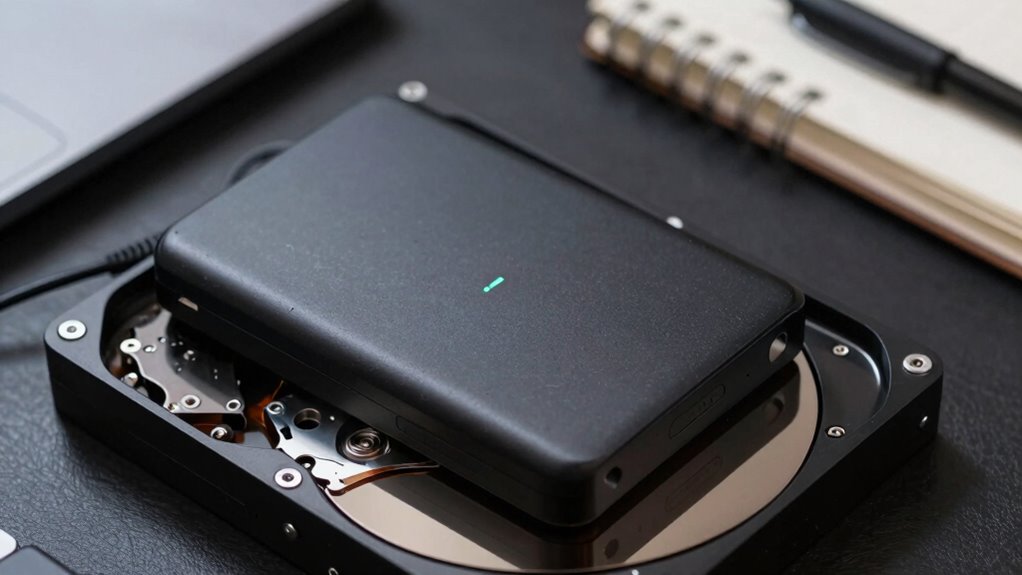
You need to contemplate how long your external drive will last and how often it might fail. SSDs generally have a longer lifespan but can still wear out over time, while HDDs are more prone to mechanical failure. Replacing drives adds to your overall costs, so understanding failure rates and expected durability helps you plan better for the future. Additionally, considering battery maintenance tips and proper care can extend the usable life of your storage devices. Regularly monitoring drive health using SMART attributes can help you anticipate failures before they occur, ensuring your backups remain secure. Being aware of cable failure patterns can also prevent unexpected data loss by allowing you to identify and replace faulty connections early. Moreover, understanding wear leveling techniques can improve the longevity of SSDs by evenly distributing write cycles. Incorporating predictive failure analysis into your maintenance routine can further reduce the risk of unexpected drive failures.
Hardware Lifespan Expectations
When considering the long-term expenses of storage devices, durability and reliability play crucial roles in determining how often you’ll need replacements. Your hardware’s lifespan depends on factors like build quality and usage patterns. External SSDs generally last longer than HDDs because they have no moving parts, reducing wear over time. To maximize lifespan, look for devices with solid warranty coverage, which can save costs on unexpected replacements. Keep in mind, you may need hardware upgrades eventually as technology advances or devices wear out. Regular backups and monitoring device health can extend your equipment’s usability. Consider:
- The expected lifespan based on manufacturer specs
- How warranty coverage minimizes replacement costs
- The potential need for hardware upgrades over time
Understanding hardware durability is essential for making informed, cost-effective storage decisions. Additionally, choosing high-quality components during manufacturing can significantly influence the overall durability and long-term performance of your storage devices. Proper maintenance and monitoring also contribute to extending the lifespan of storage hardware, and being aware of wear mechanisms helps in planning effective preventive measures. Incorporating predictive failure analysis can further aid in preemptively addressing potential issues before hardware failure occurs.
Failure Rates and Risks
While both SSDs and HDDs are designed to store data reliably, their failure rates can differ markedly over time, impacting your long-term expenses. SSDs generally offer lower failure rates due to no moving parts, reducing mechanical risks. HDDs, however, are more prone to mechanical failures, increasing long-term risk. Proper risk management involves understanding these differences to plan replacements proactively. Here’s a quick comparison:
| Storage Type | Failure Rate | Typical Lifespan | Main Risk Factor |
|---|---|---|---|
| SSD | Low | 5-10 years | Electronic failure |
| HDD | Moderate | 3-5 years | Mechanical wear |
| Both | Varies | Up to 10+ years | Data corruption |
Cost of Replacements
Since SSDs typically last longer and are less prone to mechanical failure, they often reduce the frequency and cost of replacements over time. This makes them more cost-effective in the long run, especially when considering hardware longevity. You’ll spend less on replacements and repairs, which impacts your overall cost comparison favorably. SSDs’ durability means fewer sudden failures, saving you time and money. Keep in mind:
- SSDs generally have a higher initial cost but lower replacement frequency
- HDDs are more susceptible to mechanical wear, increasing long-term replacement costs
- The lifespan of SSDs can extend beyond that of HDDs, reducing ongoing expenses
- Natural landscapes in regions like Saratoga Springs highlight the importance of durable storage solutions for preserving extensive photo and video backups.
- Investing in high-quality storage devices can also contribute to better data protection and peace of mind for your backups.
- Modern storage technology advancements continue to improve SSD reliability, further lowering total ownership costs.
- Regular backups and proper maintenance can further extend the lifespan of your storage devices, ensuring long-term reliability.
- Additionally, considering energy efficiency can result in lower operational costs for your backup systems over time.
Choosing an SSD can therefore lower your total replacement costs, making it a smarter investment for durable, reliable backups.
How Performance Affects Backup Speed and Cost
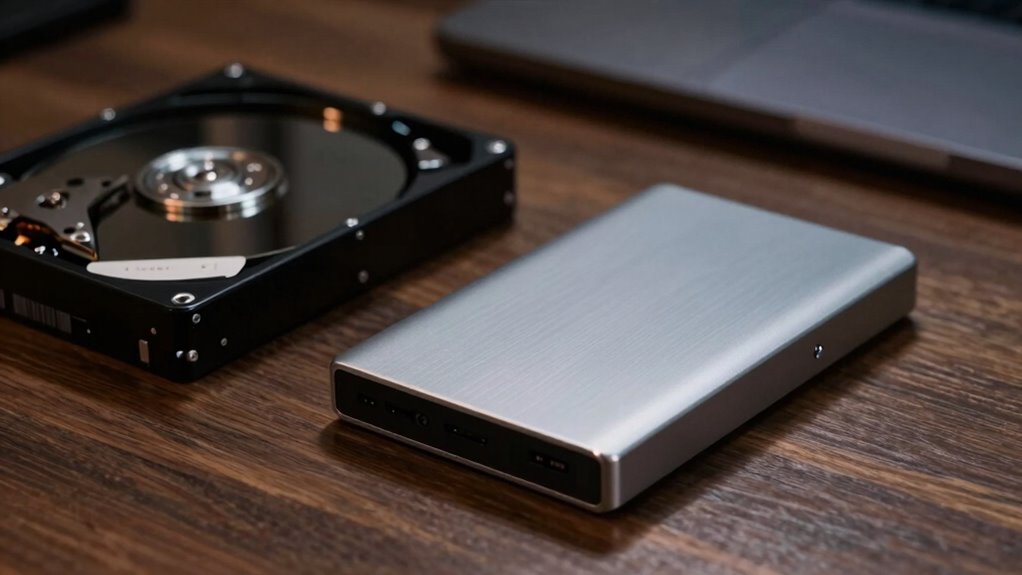
The performance of your storage device directly impacts how quickly your backups complete and how much they cost. Faster data transfer speeds mean shorter backup windows, saving you time and money. If your device has slow read/write speeds, you’ll need to extend backup scheduling or run backups during off-hours, increasing costs. To understand this better:
| Speed (MB/s) | Backup Duration | Cost Implication |
|---|---|---|
| High | Short | Lower energy, less downtime |
| Moderate | Moderate | Balanced costs and time |
| Low | Long | Increased operational costs |
| Very Low | Very long | Higher resource consumption |
Choosing a device with appropriate performance guarantees efficient backups, reducing both time and expenses.
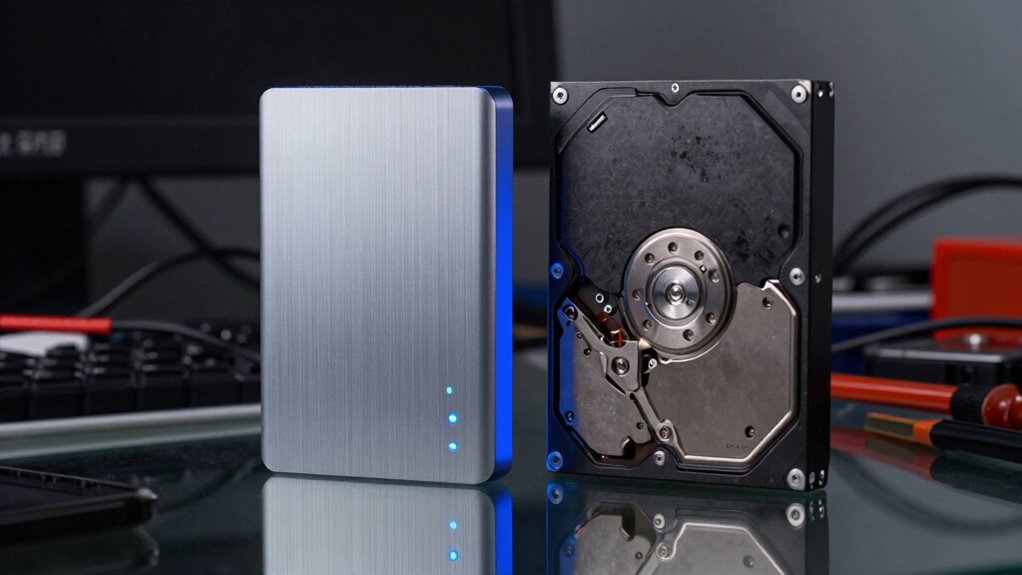
HDDs are prone to mechanical failures that can silently jeopardize your data, often without warning. When failure risks strike, your data recovery options become limited and costly. You might face extended downtimes or permanent data loss if the drive fails unexpectedly.
Consider these hidden costs:
- Expensive data recovery services that may cost hundreds or thousands of dollars
- Increased risk of total data loss due to mechanical failure
- Potential delays in restoring critical backups, affecting your workflow
Mechanical issues can happen suddenly, and the cost of recovering data from a failed HDD can surpass the drive’s initial price. Protecting your backups with more reliable storage options can save you money and stress in the long run.
Which Storage Solution Is Best for Your Backup Needs?
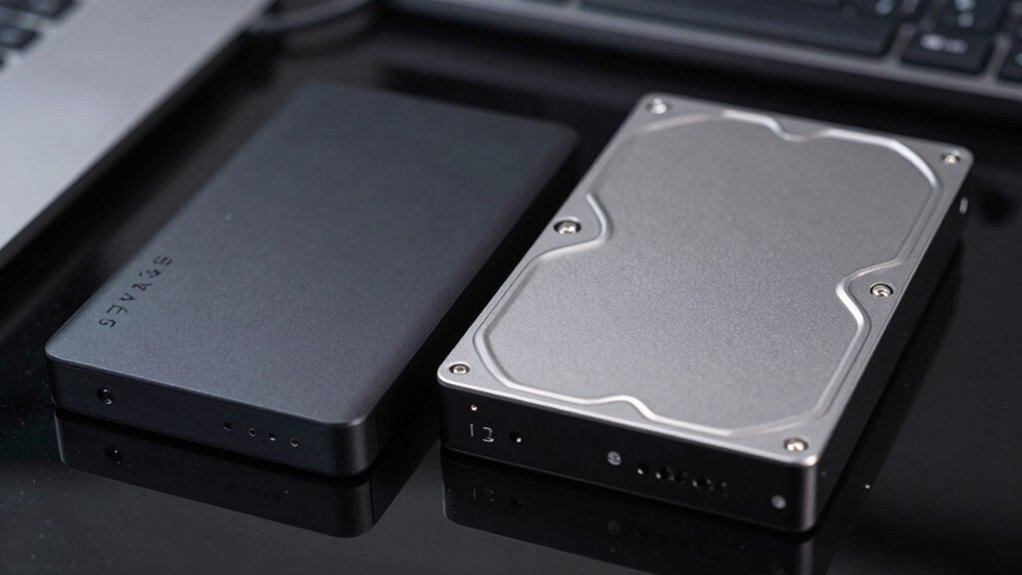
Choosing the right storage solution for your backups depends on your specific needs and priorities. If security is your concern, an external SSD offers faster encryption and data protection, reducing vulnerability. For energy-conscious users, HDDs consume more power, increasing long-term costs. Consider these options:
| Security Considerations | Energy Consumption |
|---|---|
| SSDs provide faster encryption | HDDs consume more power |
| External drives are easier to secure | SSDs are more energy-efficient |
| Data recovery is quicker with SSDs | HDDs have higher energy costs |
Decide based on whether you prioritize security and speed or energy savings. Your backup needs will determine whether an SSD or HDD best fits your goals.
How to Calculate Your Cost-Per-TB for Smarter Backup Investments
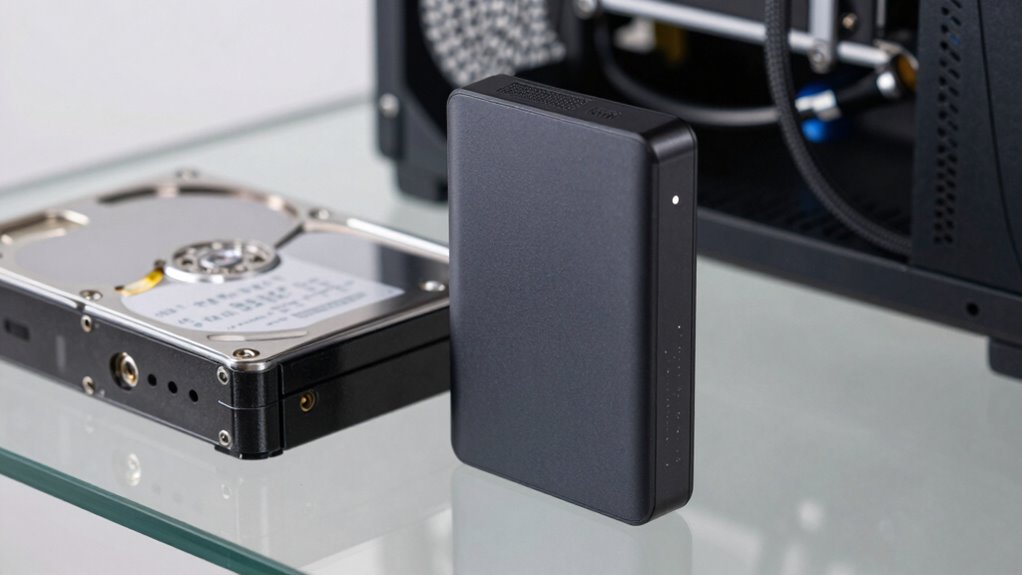
Understanding the cost-per-terabyte (TB) of your backup drives is essential for making smarter investment decisions. To accurately calculate it, consider all relevant expenses, including initial purchase price, energy consumption, and potential cloud integration costs. Keep in mind:
Calculating backup drive costs per TB ensures smarter, budget-friendly storage investments.
- Energy costs, especially for large HDDs or continuous cloud syncs
- Cloud integration fees if you’re syncing data online regularly
- Hardware lifespan and replacement frequency
Divide the total cost over the total TB stored to find your cost-per-TB. This helps you compare options like external SSDs versus HDDs more effectively. Lower energy consumption drives save money in the long run, and factoring in cloud costs guarantees you’re not overlooking ongoing expenses. A clear cost-per-TB analysis guides smarter backups aligned with your budget and needs.
Frequently Asked Questions
How Do Transfer Speeds Impact Overall Backup Time and Cost?
Transfer speeds directly impact your overall backup time and cost efficiency. Faster transfer speeds mean quicker backups, saving you time and reducing operational costs. If your drive has slower transfer time, you’ll spend more hours backing up, which can increase electricity and labor expenses. Choosing a device with higher transfer rates optimizes your backup process, making it more cost-effective and efficient, especially when handling large data volumes.
Can External SSDS Withstand Environmental Factors Better Than HDDS?
External SSDs generally withstand environmental factors better than HDDs because of their superior physical protection and environmental durability. Unlike HDDs, which have delicate moving parts prone to damage from shocks, vibrations, and temperature changes, SSDs are solid-state and more resilient. This makes them ideal for outdoor or rugged conditions, ensuring your backups stay safe even in challenging environments.
What Are the Security Considerations for SSDS Versus HDDS?
You should consider encryption standards and physical durability when choosing between SSDs and HDDs. SSDs often offer hardware encryption, making data more secure if stolen, while HDDs rely on software encryption, which can be less robust. Physically, SSDs are more durable because they have no moving parts, reducing risk from drops or shocks. Both types can be secure if you use strong passwords and encryption, but SSDs generally provide better resistance to environmental damage.
How Does Data Fragmentation Affect HDD Storage Lifespan?
When data fragments across your HDD, it hampers read/write efficiency, causing your drive to work harder. This fragmentation impact accelerates lifespan deterioration by increasing mechanical stress on the spinning disks and read/write heads. Over time, this wear and tear can shorten your HDD’s durability, making it more prone to failure. To minimize this, regularly defragment your drive, keeping data organized and your storage healthy longer.
Are There Eco-Friendly Options for External Backup Drives?
Yes, you can find eco-friendly options for external backup drives. Look for drives made with eco-friendly materials and supported by recycling programs that help reduce electronic waste. Brands that prioritize sustainability often use recyclable plastics or biodegradable components. Choosing such drives helps minimize your environmental impact, especially when combined with proper recycling at the end of their lifespan, making your backups both reliable and environmentally conscious.
Conclusion
When choosing between external SSDs and HDDs, remember you’re investing in a reliable vault for your memories. Picture your data safely stored behind a sturdy door, ready to be accessed in seconds or protected through years of wear. Don’t just chase the lowest price—consider the cost-per-TB that guarantees your backups stay fast, durable, and dependable. Make smarter choices today, so your digital world remains secure and accessible tomorrow.