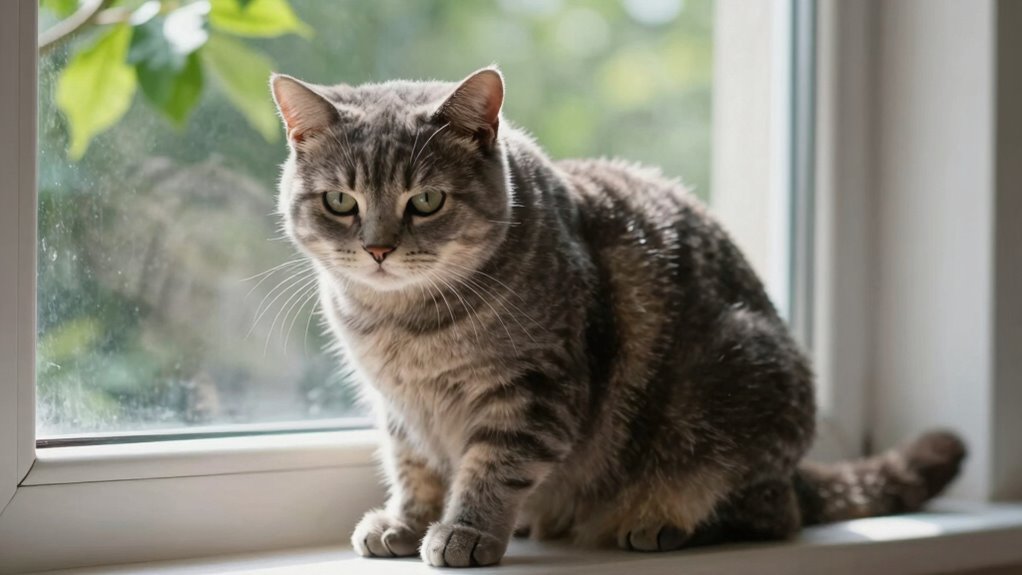

Many cat owners overlook subtle signs of stress, like changes in grooming, hiding for days, or altered eating habits. You might miss body language cues such as tense muscles, flattened ears, or avoiding eye contact. Behavioral signs like excessive grooming, aggression, or silence also signal problems. Environmental factors, noise, or unfamiliar scents can trigger hidden stress. Understanding these signs and creating a calm space can help, so explore these tips to better support your cat’s well-being.
Key Takeaways
- Watch for subtle behavioral changes like hiding, grooming excessively, or sudden aggression, which are early stress signs often overlooked.
- Pay attention to body language cues such as tense muscles, flattened ears, or hesitant blinking indicating discomfort.
- Recognize environmental stressors like loud noises, strong scents, or abrupt changes that can elevate your cat’s anxiety.
- Provide enrichment activities and maintain a consistent routine to reduce boredom and help your cat feel secure.
- Create a calm, safe space with cozy hiding spots, gentle lighting, and minimized household noise to ease stress.
How to Recognize Hidden Stress Signs in Cats
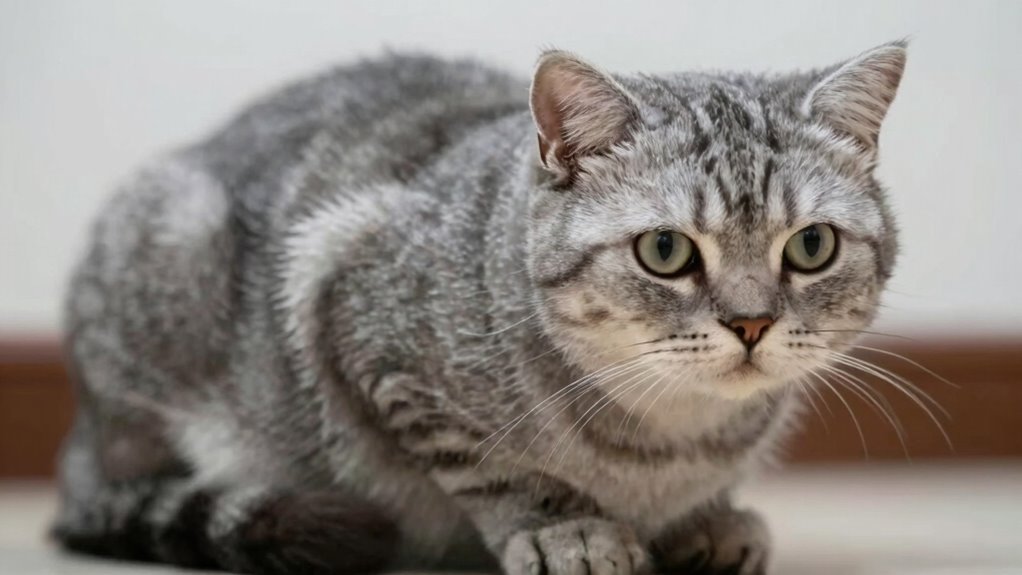
Sometimes, a stressed cat doesn’t show obvious signs like hiding or aggressive behavior. Instead, you might notice subtle changes in their feline nutrition, such as eating less or more than usual, or skipping meals altogether. Pay attention to their grooming habits; over-grooming can lead to bald patches, while neglecting grooming might cause a dull coat. These behaviors often hide underlying stress that isn’t immediately visible. Changes in how your cat eats or grooms can signal discomfort or anxiety, even if they seem outwardly calm. Monitoring these subtle cues allows you to intervene and create a more comfortable environment for your feline friend. Recognizing early stress indicators can help prevent more serious health issues later on. Additionally, behavioral cues like excessive scratching or chewing can be important indicators of stress that require attention. Understanding the emotional needs of your cat and providing a stable environment can help alleviate these hidden signs of stress, especially since some cats might also respond to essential oils for calming to reduce anxiety.
Subtle Body Language Signs That Indicate Stress
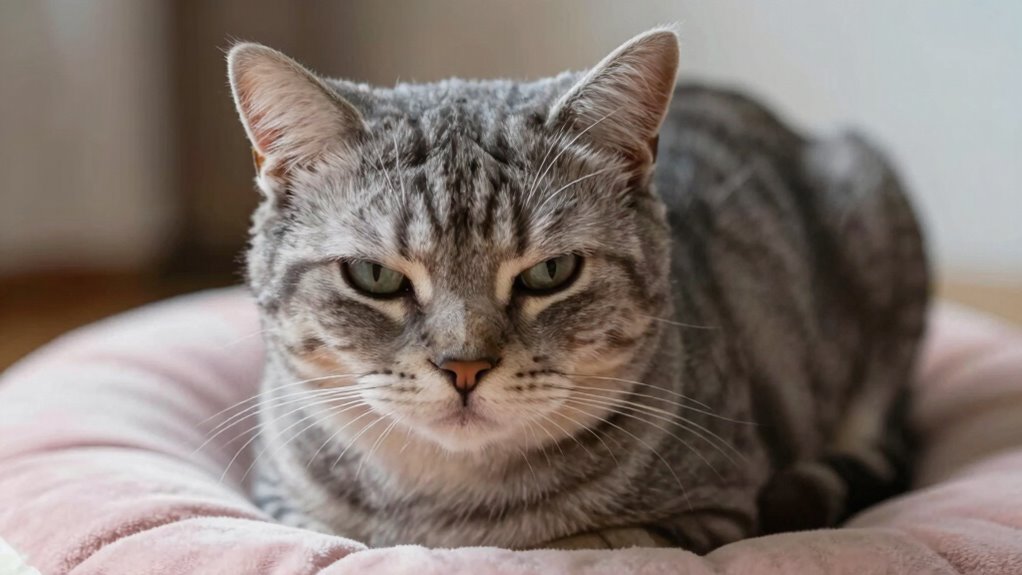
Recognizing subtle body language signs can be essential in identifying stress in your cat before it becomes obvious. Cats often communicate their discomfort through subtle cues in their body language. Look for slight tail flicks, tense muscles, or a lowered, cautious stance. Flattened ears or a slow, hesitant blink can also signal stress. You might notice a change in their eye contact—avoiding your gaze or dilated pupils. These small cues are easy to miss but critical for early detection. Pay attention to their overall posture—hunched shoulders or a stiff stance can indicate unease. Understanding these subtle body language signals helps you intervene sooner, reducing your cat’s stress and preventing escalation. Recognizing these signs ensures you respond with gentle, appropriate comfort, especially considering animal behavior cues that reveal emotional states. Additionally, being aware of stress indicators can help you differentiate between normal behaviors and signs of distress, enabling more effective support for your feline friend. Developing an understanding of body language interpretation can also improve your ability to provide a calm environment, fostering your cat’s well-being.
Behavioral Clues Cats Send When They’re Stressed
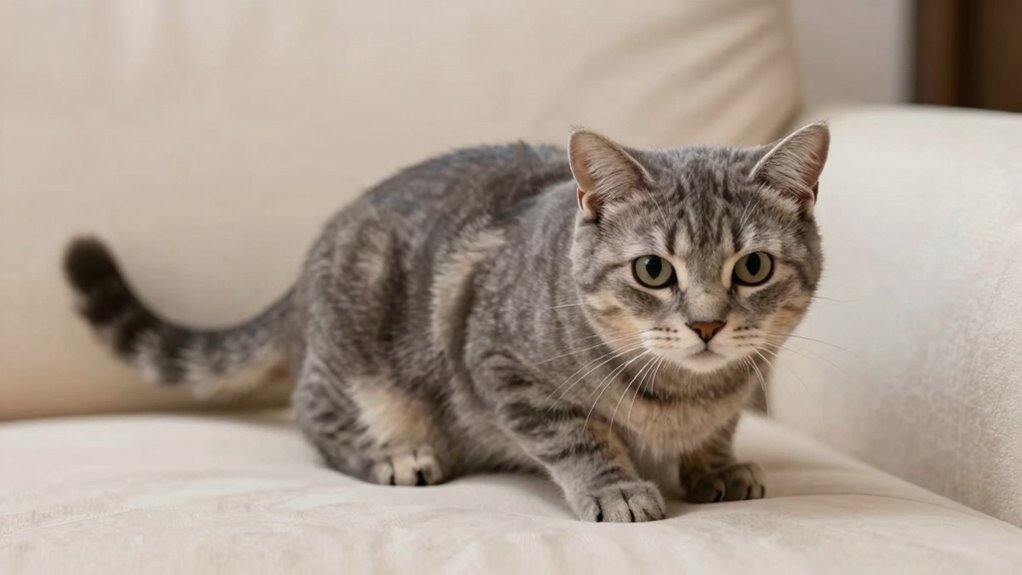
When your cat is stressed, you’ll notice behavioral changes like excessive grooming, sudden aggression, or withdrawal. They might also vocalize more than usual or become unusually quiet. Recognizing these clues helps you understand when your cat needs comfort or a break. Additionally, changes in environmental factors can significantly impact your cat’s stress levels, and creating an ergonomic space for your pet can promote relaxation and well-being. Being aware of stress signals and understanding cat body language can help you intervene early and reduce your cat’s anxiety.
Excessive Grooming Behaviors
Excessive grooming is a common sign that your cat is feeling stressed or anxious. When your cat overgrooms, it can disrupt their grooming rituals and lead to skin irritation. You might notice bald patches, red spots, or scabs where your cat has been licking or scratching excessively. This behavior often stems from stress rather than cleanliness or health issues. To help, observe for these signs:
- Repetitive licking or biting of specific areas
- Skin redness or raw patches
- Bald spots or hair loss
- Constant grooming despite skin problems
- Changes in grooming frequency or intensity
Excessive grooming isn’t just a habit; it’s a signal that your cat’s emotional well-being needs attention. Addressing underlying stressors can help restore healthy grooming behaviors and prevent skin irritation. Understanding cat stress signs can help you identify and alleviate the root causes before more serious issues develop. Recognizing behavioral cues related to stress can enable you to intervene early and provide the necessary comfort or environmental changes.
Aggression or Withdrawal
Cats communicate their stress through changes in behavior, often signaling discomfort with aggression or withdrawal. You might notice your cat becoming suddenly aggressive, hissing, or swatting when approached, or withdrawing completely by hiding and avoiding interaction. Stress can also alter their purring patterns; instead of the gentle, calming purrs you’re used to, they may produce irregular or tense vibrations. Similarly, a cat that usually enjoys lap sitting might refuse to settle on your lap or even avoid your presence altogether. These behavioral shifts serve as clear signals that your cat is overwhelmed. Recognizing these signs early helps you respond appropriately, offering a safe space or gentle reassurance to ease their stress and prevent escalation. Incorporating herbal remedies such as calming herbal baths or spices like turmeric and ginger can also help soothe stressed cats naturally.
Changes in Vocalization
Vocalizations are a key way cats communicate their stress, often changing noticeably when they feel overwhelmed. You might notice shifts in their vocal cues, such as increased meowing, yowling, or hissing, signaling discomfort or anxiety. Sometimes, a stressed cat’s voice becomes more high-pitched or persistent, making their communication signals clearer. Conversely, they may become silent or withdraw from vocal interaction altogether. Recognizing these behavioral clues helps you understand your cat’s emotional state better. In some cases, changes in vocalization patterns can also be linked to Gold IRA Markets, reflecting shifts in their environment or routine. Being attentive to these behavioral cues can prevent stress from escalating and help you provide a more calming environment for your feline companion. Additionally, understanding cat body language can further enhance your ability to interpret their stress signals accurately.
Environmental Triggers That Cause Hidden Stress in Cats
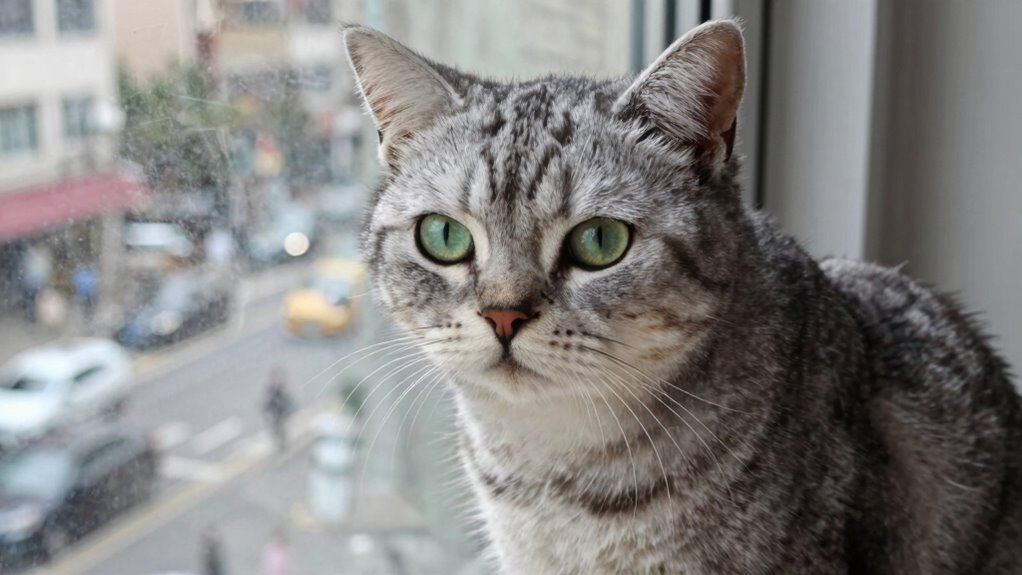
Environmental changes can quietly trigger stress in your cat, even if they seem minor to you. Indoor plants, while beautiful, can sometimes be a source of discomfort if they emit strong scents or if your cat scratches or eats them. indoor plant scents may also emit chemicals that are irritating or toxic, adding to your cat’s stress. Household noise, like television sounds, appliances, or conversations, can also create a constant background of stress that your cat perceives as unsettling. These triggers often go unnoticed because they’re ongoing and subtle, but your cat feels the impact. Sudden or persistent noise can cause anxiety, and unfamiliar plants may be perceived as threats. Recognizing these environmental factors, such as environmental stressors, helps you create a calmer space for your feline friend, reducing hidden stress and supporting their overall well-being. Being aware of cat sensory sensitivities allows you to better understand their reactions to different stimuli, fostering a more comfortable environment. Environmental triggers can subtly influence your cat’s behavior and health in ways you might not realize, especially when considering factors like indoor air quality.
Simple Ways to Calm Your Stressed Cat and Reduce Hidden Stress
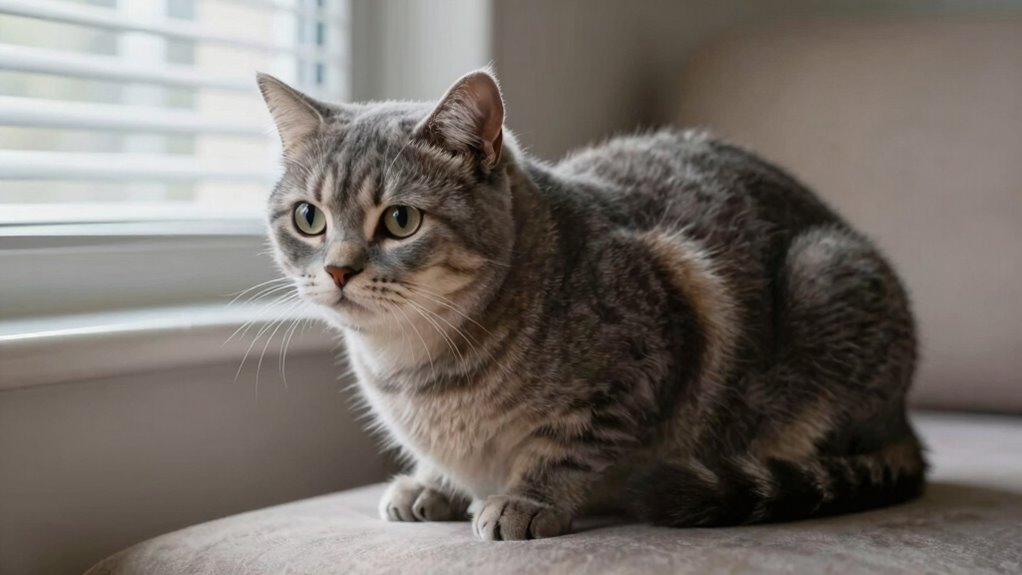
You can help ease your cat’s stress by creating a calm, cozy environment that feels safe. Incorporating enrichment activities and toys keeps them engaged and distracted from stressors. Keeping a consistent routine also provides stability, helping your cat feel more secure each day. Additionally, understanding essential safety tips for your home environment can prevent potential stress triggers and ensure your cat’s well-being. Recognizing home safety hazards and addressing them reduces sudden stressors that may upset your feline friend.
Create a Calm Environment
Creating a calm environment is essential for easing your cat’s stress and helping them feel secure. A quiet, predictable space reduces anxiety and encourages healthy behaviors like proper litter box habits and consistent grooming frequency. To achieve this, keep noise levels low and provide cozy hiding spots where your cat can retreat. Avoid sudden changes in furniture or routine that might unsettle them. Ensure their litter box is clean and accessible, which helps prevent stress-related issues. Regular grooming not only maintains their coat but also builds trust and reduces tension. Consider adding soft bedding and gentle lighting to promote relaxation. Creating a stable environment makes your cat feel safe, ultimately reducing hidden stress and encouraging healthier, happier behaviors.
- Keep noise levels low and consistent
- Provide cozy hiding spots
- Maintain clean, accessible litter box
- Stick to a regular grooming schedule
- Use gentle lighting and soft bedding
Use Enrichment Activities
In addition to maintaining a calm environment, introducing simple enrichment activities can considerably reduce your cat’s hidden stress. Providing interactive toys keeps your cat mentally stimulated and offers a healthy outlet for energy. Rotate these toys regularly to maintain their interest and prevent boredom. Creating hiding spots around your home gives your cat safe spaces to retreat when feeling overwhelmed, helping them feel secure. Cardboard boxes, covered beds, or cozy corners serve as perfect hideaways. These small additions encourage natural behaviors, reduce anxiety, and make your cat feel more in control of their environment. Incorporating enrichment activities is a straightforward way to promote relaxation and improve your cat’s overall well-being without overwhelming them.
Maintain Consistent Routine
Maintaining a consistent daily routine can substantially reduce your cat’s hidden stress by providing predictability and a sense of security. Cats thrive on stability, so sticking to regular feeding habits and grooming routines helps them feel safe. When your cat knows when to expect food or grooming, it minimizes anxiety caused by sudden changes. Keep your schedule steady, including meal times, play sessions, and quiet time. Consistency in these areas reassures your cat and reduces stress signs.
- Feed your cat at the same times each day
- Follow a regular grooming schedule
- Keep environment changes minimal
- Use the same toys and resting spots
- Maintain a predictable daily rhythm
When to See the Vet About Signs of Hidden Stress
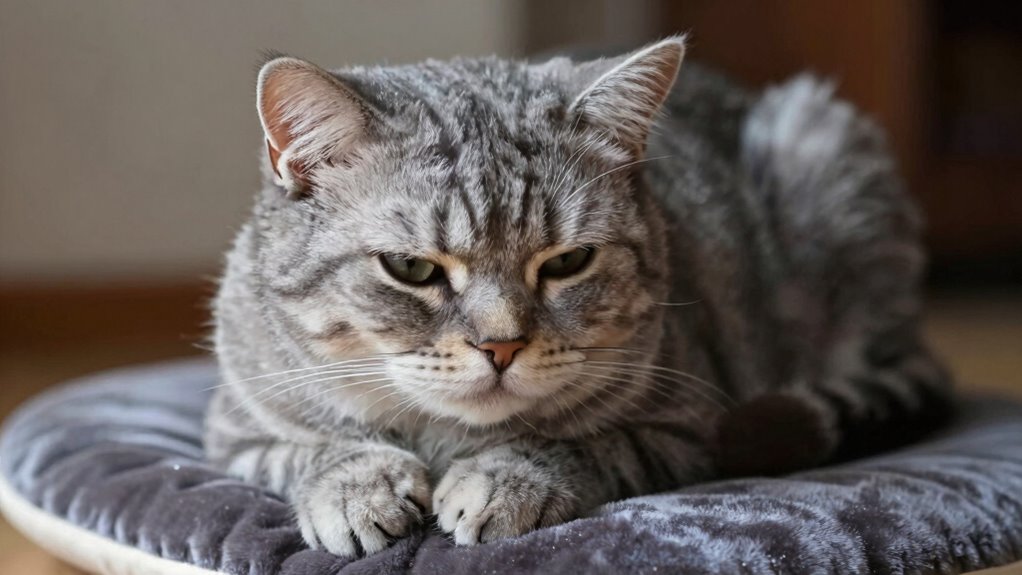
Hidden stress in cats can be tricky to detect, but recognizing when it’s time to see the vet is crucial for their health. If you notice persistent changes like hiding, aggression, or loss of appetite, don’t wait. These may signal hidden stress that needs professional attention. You should also consider consulting your vet if behavioral shifts don’t improve with dietary adjustments or grooming routines. Sometimes, underlying health issues cause stress signs. Keep track of these signs and seek vet guidance promptly to prevent worsening conditions. Early intervention can make a significant difference in your cat’s well-being.
| Stress Sign | When to Act | Possible Cause |
|---|---|---|
| Hiding or withdrawal | If it persists for several days | Anxiety, health issues |
| Loss of appetite | When it continues despite dietary tweaks | Illness, stress |
| Aggression | If it’s sudden or severe | Frustration, discomfort |
| Excessive grooming | Lasts beyond routine grooming | Skin issues, stress |
| Lethargy | When combined with other signs | Underlying health problem |
How to Create a Calm Environment for Your Cat’s Well-Being

Creating a calm environment is essential for reducing stress and promoting your cat’s overall well-being. To help your cat feel secure, provide a quiet, clutter-free space where they can relax without interruptions. Guarantee the litter box is clean and private, encouraging your cat to use it comfortably. Incorporate scratching posts to satisfy natural instincts and prevent furniture damage. Create cozy hiding spots where your cat can retreat when overwhelmed. Maintain a consistent routine to reduce anxiety and avoid sudden changes. Use calming scents or soft background noise to promote relaxation. Remember, a stress-free environment supports your cat’s mental and physical health, making them feel safe and secure in their home.
Frequently Asked Questions
Can Stress Cause Long-Term Health Issues in Cats?
Yes, stress can cause long-term health issues in cats. When your cat experiences dietary stress or lacks environmental enrichment, it may develop problems like a weakened immune system or digestive issues. Chronic stress impacts their overall health, so you should provide a stable environment and stimulate their mind and body. Addressing stress early helps prevent long-term complications and keeps your feline happy and healthy.
How Do I Differentiate Between Normal and Stressed Cat Behaviors?
Think of your cat like a vintage radio—sometimes their body language and vocal cues give clear signals. A normal cat purrs softly, relaxes, and engages with you. A stressed cat might hide, flatten its ears, or hiss. Watch for tense body language, dilated pupils, or sudden vocalizations. If behaviors change suddenly, it’s a sign they’re stressed. Respond calmly, give space, and observe closely to tell normal from stressed.
Are There Specific Breeds More Prone to Hidden Stress Signs?
Certain breeds, like Siamese and Burmese, show breed predispositions to stress sensitivity, making them more prone to hiding stress signs. You should watch closely for subtle cues, such as changes in behavior or grooming habits, especially if you own these breeds. Recognizing their unique stress responses helps you intervene early, reducing anxiety and promoting a happier, healthier environment for your feline friend.
How Does Age Affect a Cat’s Stress Signals?
As your cat ages, age-related behavior can influence how stress shows up, often making stress signals less obvious or different from younger cats. Stress in senior cats might manifest through increased hiding, vocalization, or changes in appetite. You should watch for subtle signs, as older cats may hide stress more effectively. Understanding these age-related behavior changes helps you better identify and reduce stress in your senior feline.
What Are Effective Long-Term Strategies to Prevent Stress in Cats?
Imagine your cat’s happiness as a garden that needs constant care. To prevent stress long-term, you should prioritize environmental enrichment—adding toys, perches, and hiding spots—and maintain routine consistency. These strategies create a stable, engaging environment that keeps your feline calm and content. Regular playtime and predictable schedules help your cat feel secure, reducing stress signs before they even appear. You’re building a sanctuary where your cat thrives.
Conclusion
So, next time your cat seems perfectly fine but hides or grooms excessively, remember—they might just be stressed. Ironically, the signs they hide are often the loudest cries for help. By paying close attention and creating a calm environment, you can help your feline friend relax. After all, isn’t it amusing how a tiny whisker twitch or a little tail flick can reveal a world of hidden stress? Stay vigilant—you know your cat best.