
To guarantee your home is truly safe, start by childproofing electrical outlets with covers and securing cords behind furniture. Anchor large furniture and cover sharp edges to prevent falls and injuries. Keep small choking hazards like coins and jewelry out of reach, and store cleaning supplies and chemicals in locked cabinets. Check windows, balconies, and structural areas for gaps or hazards. This overview highlights overlooked dangers—stay with us to discover how to protect your little one fully.
Key Takeaways
- Secure heavy furniture and appliances to prevent tipping and falling injuries.
- Install childproof window locks, guards, and balcony barriers to prevent falls.
- Keep small objects, jewelry, and choking hazards out of children’s reach and properly stored.
- Use safety covers on outlets and secure cords to prevent electrical injuries.
- Store chemicals, cleaning supplies, and medications in high, locked cabinets to prevent poisoning.
Childproof Electrical Outlets and Secure Cords
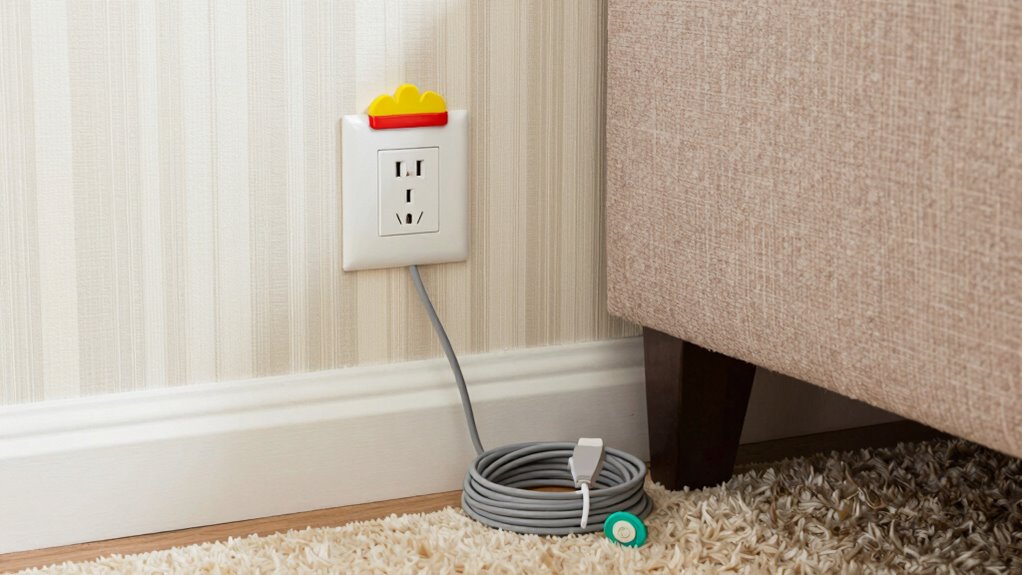
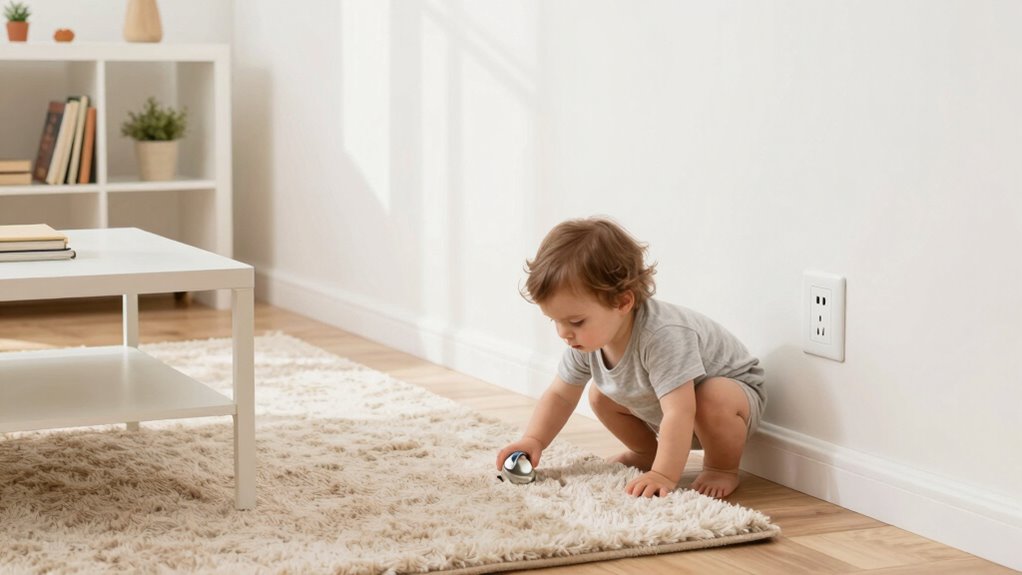
To keep your child safe from electrical hazards, it’s essential to childproof all outlets and secure loose cords. Start by childproofing electrical outlets with safety covers or outlet plugs to prevent curious hands from inserting objects. This simple step reduces the risk of electric shock and fire. Additionally, secure cords out of your child’s reach by organizing and tucking them away behind furniture or using cord clips. Loose cords can be tempting for children to pull or chew on, increasing the danger of electrical injury. Regularly check that outlets are properly covered and cords are secured. Implementing electrical safety measures can further reduce potential hazards related to electrical devices. Conducting home safety inspections periodically ensures that all safety precautions remain effective. Being aware of electrical hazards around your home helps you identify and address risks before accidents happen. By taking these precautions, you create a safer environment and minimize the chances of accidental electrical incidents in your home.
Secure Loose Furniture and Cover Sharp Edges

Secure loose furniture and cover sharp edges to prevent injuries as your child explores your home. Unstable furniture can tip over easily, so guarantee furniture stability by anchoring heavy pieces like dressers and bookshelves. Sharp edge covers are essential for protecting your little one from cuts and bruises on table corners, fireplace hearths, or other pointed surfaces. Additionally, using childproofing products designed for electric bikes can help safeguard your child during outdoor activities. Consider also using safety padding on furniture to further reduce injury risks from accidental bumps and falls.
Identify and Remove Small Choking Hazards

Small items like coins, buttons, and snack foods can pose serious choking risks for children. Make sure to keep these objects out of their reach and store them safely when not in use. Using secure storage tips helps prevent accidents and keeps your child safe. Incorporating luxury lifestyle products such as childproof storage solutions can add an extra layer of safety and style to your home. Additionally, understanding choking hazard prevention strategies can further ensure your child’s safety during play and mealtime. Regularly inspecting small object dangers and keeping play areas tidy can also reduce the likelihood of incidents. Being aware of secure storage solutions can help you choose the best options to protect your little ones effectively. Maintaining a childproof environment by eliminating potential hazards is essential for comprehensive safety.
Common Small Items
Have you ever considered how easily tiny objects can pose a choking risk for your child? Small item hazards are often overlooked but can be hidden in everyday clutter. To prevent accidents, focus on identifying and removing these dangers. Here are some common items to watch for:
- Coins and keys – easily swallowed and hard to spot among clutter.
- Buttons and jewelry – small parts that can break off and pose a choking risk.
- Pen caps and rubber bands – often left within reach and easily swallowed.
- Using a conversion tool can help you understand the size and risks associated with these small items. Additionally, understanding small object hazards can improve your home safety measures. Recognizing the history of pinball machines can also remind us of how toys and entertainment devices have evolved to meet safety standards. Being aware of choking prevention techniques can further enhance your child’s safety at home. Educating yourself about home safety standards can also help you implement effective safety practices.
Safe Storage Tips
To effectively reduce choking hazards, you should prioritize proper storage of small items. Use sturdy storage containers with secure lids to keep tiny objects out of your child’s reach. Clear containers help you quickly identify potential hazards and prevent accidental access. Always label hazards clearly, especially if these items are stored in separate areas, so others know what’s inside. Regularly check storage areas for small objects like coins, buttons, or jewelry that could pose a risk. Keep these items on high shelves or in locked cabinets to prevent curious little explorers from reaching them. Implementing childproof storage solutions is a crucial step in creating a secure home environment. Proper storage organization is essential for minimizing risks and maintaining a safe space for children. Staying aware of small object hazards can help prevent accidental ingestion and related injuries. Consistent storage practices are key to childproofing your home effectively, especially when it comes to hazardous household items. Additionally, training family members on safe storage practices can greatly improve overall safety.
Store Cleaning Supplies and Toxins Safely
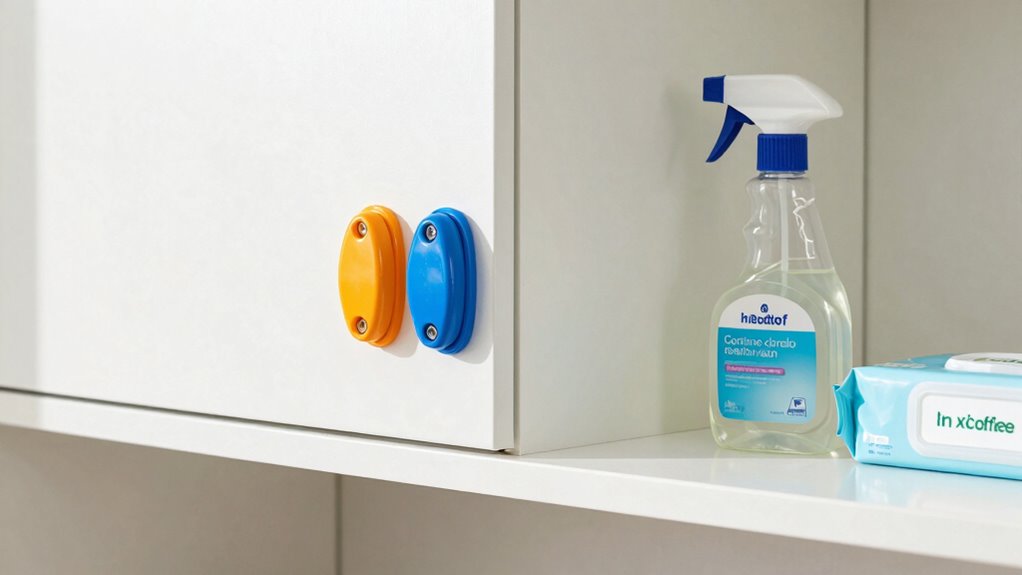
Make sure you store cleaning supplies and toxins out of your child’s reach in secure locations. Use childproof containers to prevent accidental spills or ingestion. Always handle these substances carefully and follow safety guidelines to keep your home safe. Additionally, consider regularly inspecting and maintaining your air purifier, including cleaning or replacing filters according to the manufacturer’s recommended schedule, to ensure optimal air quality and safety in your home. Air Purifier Maintenance and home safety are both essential components of a comprehensive safety plan. Maintaining a safe environment also involves understanding the importance of support vs. boundaries to promote your child’s healthy development.
Proper Storage Locations
Storing cleaning supplies and toxins safely is essential for keeping your home childproof. Proper storage locations help prevent accidental ingestion and simplify hazard identification. Choose high, out-of-reach spots to keep harmful items away from children. Consider these storage solutions:
- Use childproof, lockable cabinets specifically designated for chemicals and cleaning products.
- Store toxins in clearly labeled, sturdy containers separate from food or toys.
- Keep frequently used items in a dedicated, secure area to minimize risks during quick access.
- Proper storage practices are vital to maintaining a safe environment and preventing potential accidents.
Childproofing Containers
Using childproofing containers is essential for keeping cleaning supplies and toxins out of your child’s reach. Childproof containers are designed specifically to prevent accidental spills or access, making them an effective safety measure. Always opt for secure storage solutions that latch tightly and are made from durable, tamper-proof materials. Store all hazardous substances, including cleaning products, in high cabinets or locked closets, but using childproof containers adds an extra layer of protection. Label containers clearly to avoid confusion, and never transfer chemicals into unmarked or food-related bottles. Regularly inspect these containers to ensure they remain secure and undamaged. Proper use of childproof containers minimizes the risk of ingestion or exposure, giving you peace of mind that your little one is safer around potentially dangerous substances.
Safe Handling Practices
To guarantee your child’s safety, it’s essential to handle cleaning supplies and toxins with care and caution. Store all chemicals out of reach, preferably in childproof furniture or cabinets. Always read labels before using any cleaning product, and never mix chemicals that could produce dangerous fumes. When handling sharp objects, such as knives or scissors, keep them secured in locked drawers or containers to prevent accidental injuries. Additionally, wipe up spills immediately to avoid slips or exposure. Remember to keep toxins in their original containers to avoid confusion, and never transfer cleaning supplies into unlabeled bottles. Practicing these safe handling practices minimizes risks and ensures a safer environment for your little one to explore and grow.
Secure Windows and Prevent Balcony Access
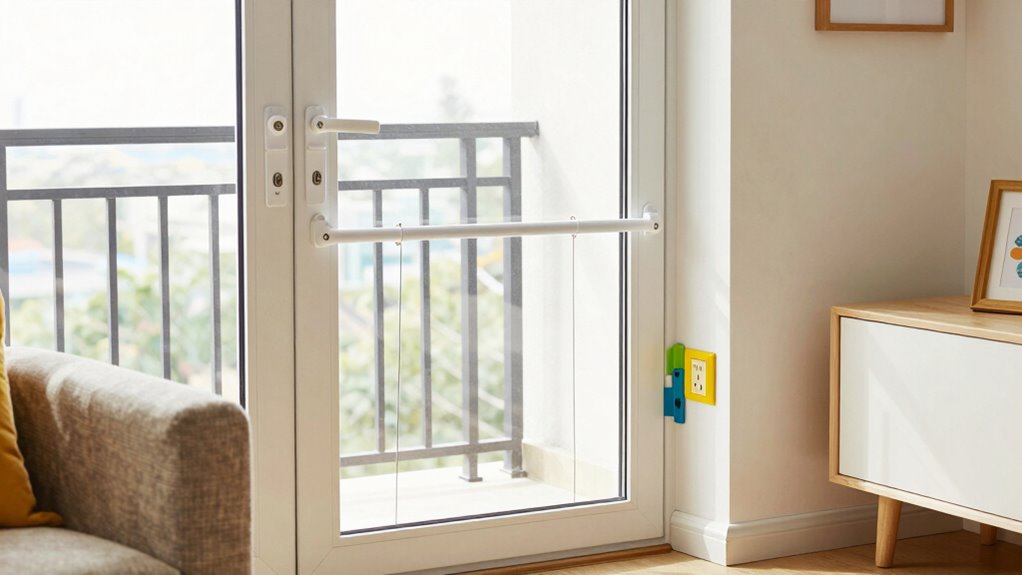
Securing windows and preventing balcony access are essential steps in keeping your child safe at home. Start by installing sturdy window locks to prevent accidental falls or openings that are too wide for little hands. Ensure these locks are child-proof and cannot be easily bypassed. For balconies, add reliable balcony barriers or safety netting that completely block access to the edge. Check that barriers are securely attached and high enough to prevent climbing over. Never rely solely on screens or lightweight barriers, as kids can push through or climb over them. Regularly inspect all window and balcony safety devices to guarantee they’re intact and functioning properly. Taking these precautions minimizes the risk of falls and keeps your child safe from potentially dangerous access points.
Stabilize Heavy Furniture and Unplug Unused Appliances
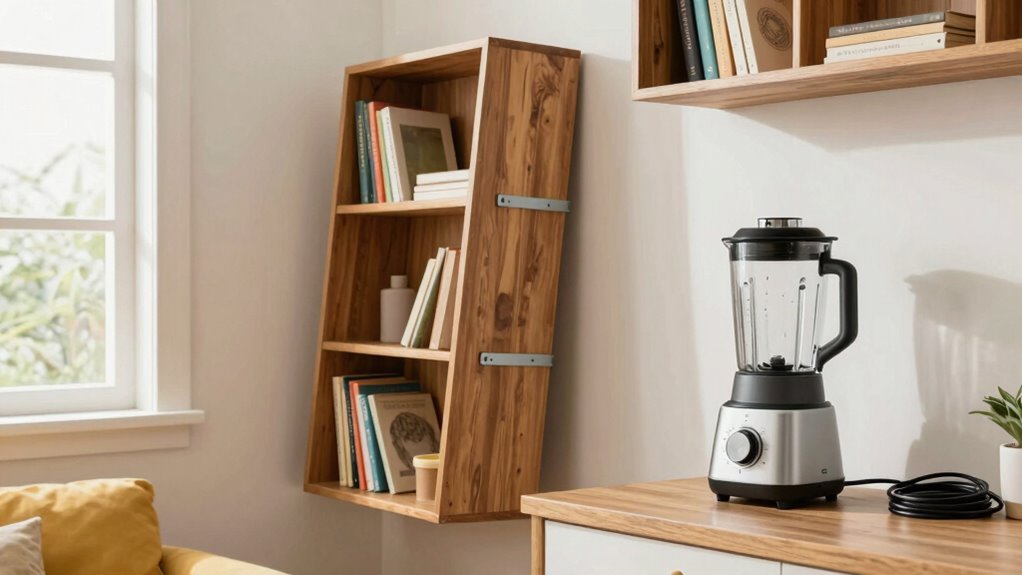
Make sure heavy furniture is securely anchored to the wall to prevent tipping. Unplug unused appliances to reduce fire hazards and save energy. Regularly check that everything stays stable and safe as your child grows and explores.
Secure Heavy Furniture Effectively
Heavy furniture and large appliances can pose a serious risk if they tip over or shift unexpectedly. To prevent accidents, you need to secure them properly. First, use wall anchors to attach tall dressers, bookshelves, or cabinets directly to the wall, preventing tip-overs. Second, employ furniture straps to stabilize heavy items that are difficult to anchor directly, ensuring they stay put during movement or earthquakes. Finally, check that all straps and anchors are tight and in good condition regularly. By taking these steps, you reduce the risk of injury from furniture falling or shifting. Remember, the key is to make sure every piece is firmly anchored or strapped, creating a safer environment for your little ones.
Unplug Unused Appliances Properly
Since unplugging unused appliances reduces fire hazards and saves energy, it’s a simple but important step in childproofing your home. Always unplug small appliances like toasters, coffee makers, and chargers when not in use to prevent electrical safety risks. Leaving devices plugged in can cause overheating or electrical fires, especially if appliance maintenance is neglected. Make it a habit to check outlets and unplug appliances that aren’t needed daily. Use outlet covers for added safety, and ensure cords are out of children’s reach. Properly unplugging appliances not only minimizes fire hazards but also conserves energy and prolongs appliance lifespan. This small step substantially improves your home’s safety and reduces potential electrical dangers for your little ones.
Regularly Check for Stability
Unplugging unused appliances reduces fire hazards, but making sure your home’s furniture and appliances are stable adds an extra layer of safety. Regularly checking furniture stability and structural integrity prevents tipping accidents. To do this:
- Secure heavy furniture like dressers and bookshelves to the wall using straps or brackets.
- Inspect the stability of appliances, making sure they are placed on level surfaces and not wobbly.
- Tighten loose screws or bolts on furniture and ensure that all items are firmly anchored.
Check for Gaps, Cracks, and Structural Hazards
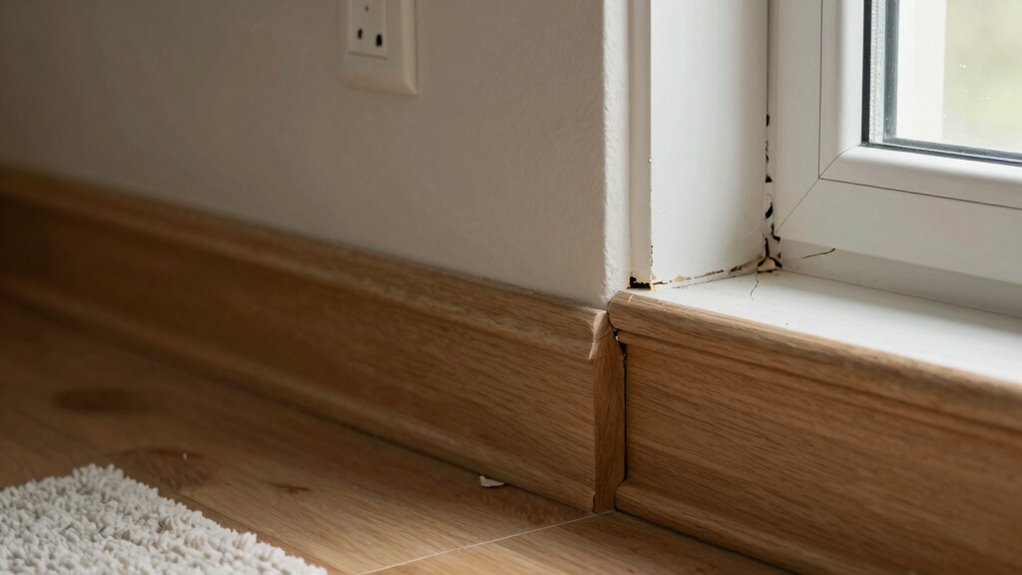
To guarantee your home is safe for children, it’s important to actively inspect for gaps, cracks, and structural hazards. These small openings can compromise your home’s structural integrity and threaten foundation stability. Check walls, windows, and doorframes for any cracks or gaps that could cause a child to get stuck or fall. Pay special attention to areas around utility pipes or vents where gaps may develop over time. Cracks in the foundation or basement walls can indicate serious issues that need professional assessment. Addressing these hazards promptly helps prevent accidents and maintains the overall safety of your home. Regular inspections ensure your house remains sturdy and secure, giving you peace of mind knowing your children are protected from hidden structural dangers.
Ensure Proper Ventilation and Fireplace Safety
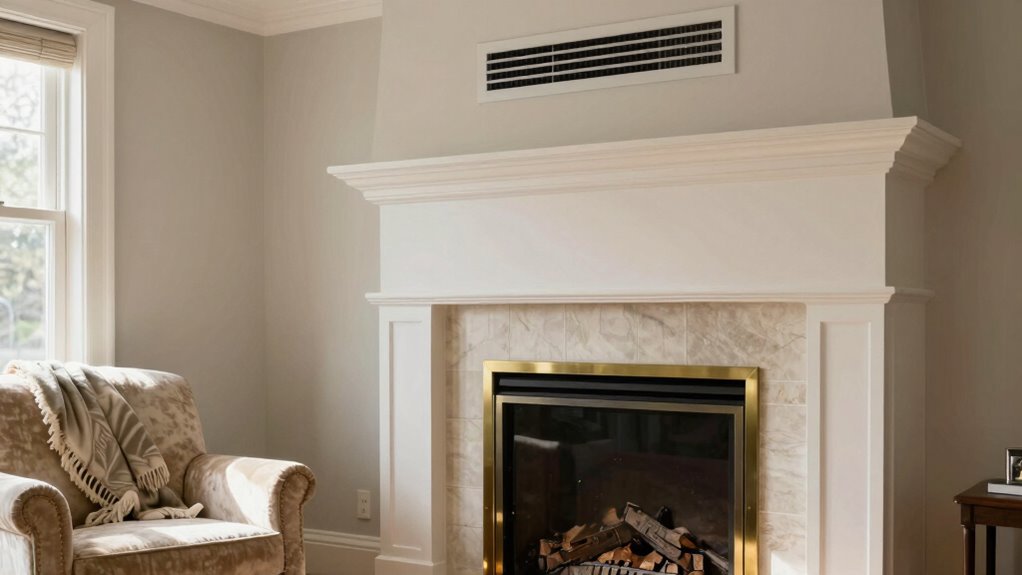
Proper ventilation is essential for maintaining indoor air quality and preventing buildup of harmful fumes, especially in homes with fireplaces. You should regularly perform an airflow assessment to identify any areas where air isn’t circulating properly. Ensuring your ventilation system maintenance is up-to-date helps keep harmful gases like carbon monoxide out of reach of children. Here are key steps:
Maintaining proper ventilation prevents harmful fumes buildup, ensuring indoor air quality and safety.
- Check that vents and exhaust fans are clean and unobstructed.
- Schedule annual inspections of your fireplace and chimney for safe operation.
- Consider installing carbon monoxide detectors near fireplaces and sleeping areas for added safety.
Create Safe Play Areas Free of Hidden Dangers
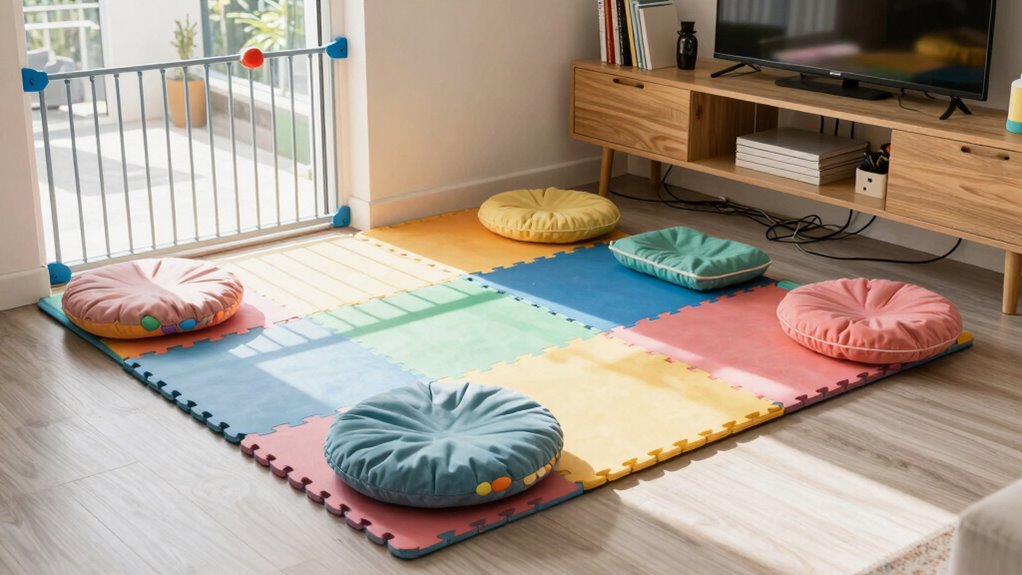
Creating a safe play area for your children involves actively identifying and removing hidden hazards that could cause harm. Focus on establishing safe outdoor play areas by inspecting the space for sharp objects, loose debris, or unstable surfaces. Childproof garden zones should be free of toxic plants, pesticides, or choking hazards like small stones or garden tools. Use soft ground coverings, such as mulch or rubber mats, to cushion falls. Secure fences or gates to prevent wandering, and ensure play equipment is in good condition, with no rust or broken parts. Regularly check for hidden dangers, like animal waste or insect nests, that could pose health risks. Creating a secure environment encourages your children to explore freely while minimizing the risk of injury.
Conduct Regular Home Safety Inspections
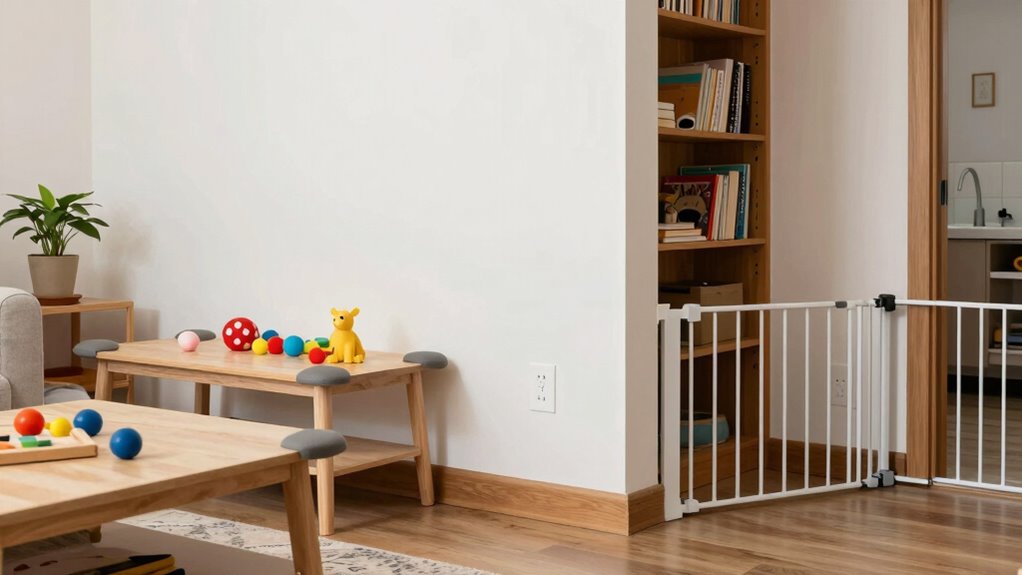
Regularly inspecting your home helps guarantee that the safe play areas you’ve set up remain secure and free of new hazards. Consistent hazard identification can reveal potential risks before accidents happen. To do this effectively:
Routine home inspections ensure safe play spaces and prevent unexpected hazards.
- Check childproofing remedies like outlet covers, cabinet locks, and safety gates for wear or damage.
- Examine furniture and appliances for stability, securing anything that could tip or fall.
- Inspect for new hazards, such as loose rugs, exposed cords, or clutter that could cause trips or falls.
Frequently Asked Questions
How Often Should I Re-Evaluate My Home for New Hazards?
You should re-evaluate your home for new hazards at least every three to six months. Regular hazard assessment helps maintain home safety by catching potential dangers early. As your child grows and explores, new risks can appear, so staying vigilant is key. Make it a routine to check for hazards after renovations, new furniture, or any changes in your home environment. Consistent reviews guarantee your home remains a safe space for your child.
Are There Specific Safety Products Recommended for Different Age Groups?
Imagine your child’s tiny hands reaching for safety gear—each piece tailored for their age. You should use age-specific gear like corner protectors for toddlers, and stair gates for active crawlers. As they grow, swap safety gear to match their new skills, ensuring constant protection. Always choose products designed for their age, because the right safety gear adapts with your child, keeping them safe at every stage.
How Can I Childproof Outdoor Areas Effectively?
You can childproof outdoor areas by identifying outdoor hazards like pools, sharp tools, or uneven surfaces, then addressing them. Installing childproof fencing around pools and yard boundaries creates a physical barrier, preventing unsupervised access. Regularly inspect the fencing and outdoor equipment for damage or wear. Keep hazardous items out of reach, and ensure play areas are smooth and safe, reducing risks and making outdoor spaces secure for your child.
What Are Common Mistakes Parents Make During Home Childproofing?
You often overlook clutter hazards and other dangers when childproofing, thinking you’ve covered everything. Common mistakes include not securing furniture properly, forgetting to cover electrical outlets, and ignoring small objects that can be choking hazards. Avoid rushing through the process; take your time to identify overlooked dangers. Regularly inspect your home for new hazards, and involve your child in the process to better understand their curiosity and risks.
How Do I Balance Childproofing With Maintaining a Home’s Aesthetic Appeal?
You can achieve a balance between childproofing and maintaining your home’s aesthetic appeal by embracing decorative integration and minimalist safety solutions. Opt for sleek, unobtrusive safety devices that blend seamlessly with your decor, like clear corner protectors or hidden outlet covers. Prioritize essential safety features first, then select stylish options that complement your design. This way, you guarantee your home remains beautiful while providing a safe environment for your child.
Conclusion
By neglecting these simple steps, you’re risking a disaster that could turn your home into a chaos of chaos! Imagine a tiny toy causing a trip, or a loose cord turning into a hazard that could change your child’s life forever. Don’t wait for a near-miss—take action now! Your home can be a fortress of safety, protecting your little explorer from dangers lurking around every corner. Act today before it’s too late!