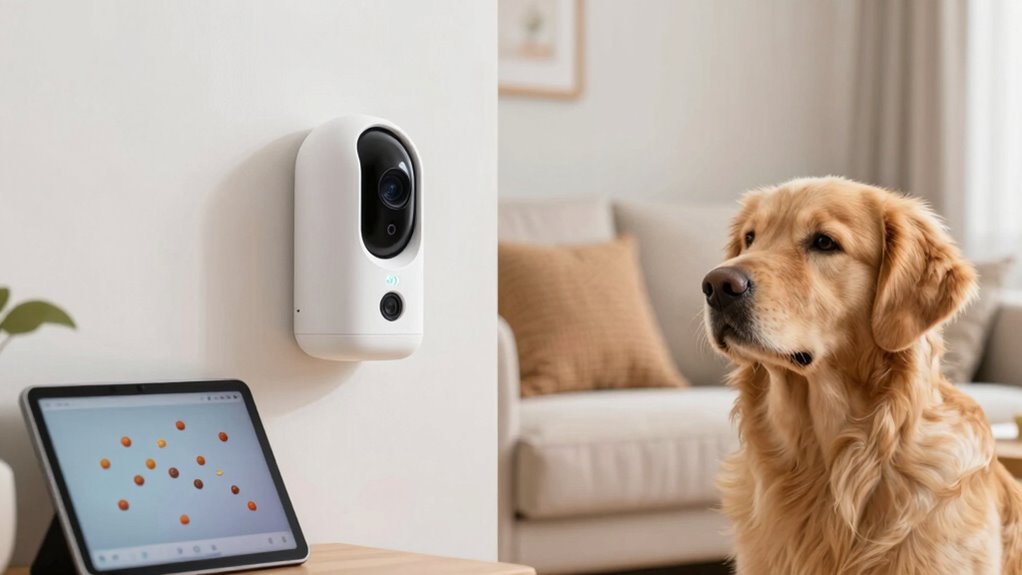
Pet cameras with treat tossers and two-way audio address separation anxiety differently. Treat tossers provide physical distraction and encourage activity, helping tire out nervous pets. Two-way audio offers emotional reassurance through your voice, making pets feel connected and calm. Combining both can be most effective, as they balance physical engagement with comfort. To learn how to choose the best options and use them effectively, keep exploring these strategies.
Key Takeaways
- Treat tossers provide physical distraction and positive reinforcement, helping tire out anxious pets and reduce stress.
- Two-way audio offers emotional reassurance by enabling owners to communicate and soothe pets remotely.
- Combining treat tossing and two-way audio addresses both physical engagement and emotional comfort effectively.
- Proper use of both tools reinforces routines, builds trust, and minimizes separation-related behaviors.
- The most effective approach integrates distraction with emotional reassurance tailored to the pet’s specific needs.
What Is Separation Anxiety and How Can Cameras Help?
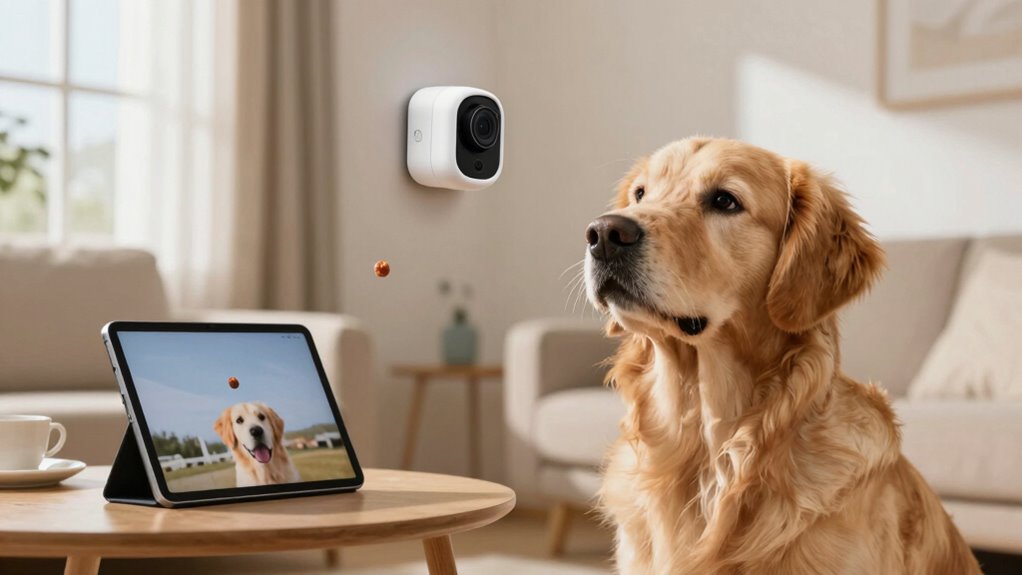
When pets experience separation anxiety, they often become distressed when left alone, displaying behaviors like barking, scratching, or even destructive tendencies. Cameras can help ease this anxiety by offering reassurance and monitoring their well-being. You might use calming scents or play calming music through the camera’s features to create a soothing environment. These tools can help your pet feel more relaxed, even when you’re not nearby. Seeing your face or hearing your voice through two-way audio can also provide comfort, reducing feelings of loneliness. While a camera alone won’t eliminate separation anxiety, it allows you to observe and respond to your pet’s needs, helping to create a calmer, more secure space when you’re apart. Incorporating mental stimulation activities can also help reduce boredom and anxiety during your absence. Additionally, understanding behavioral triggers can assist in developing more effective calming strategies for your pet. For example, some pets respond well to training techniques that gradually desensitize them to being alone, further alleviating anxiety. Recognizing the importance of consistent routines can also contribute to a sense of security for your pet when you’re away. Providing calming scents such as lavender or eucalyptus may enhance the calming environment, making your pet feel more at ease.
Do Treat Tossers Help Calm Anxious Pets?
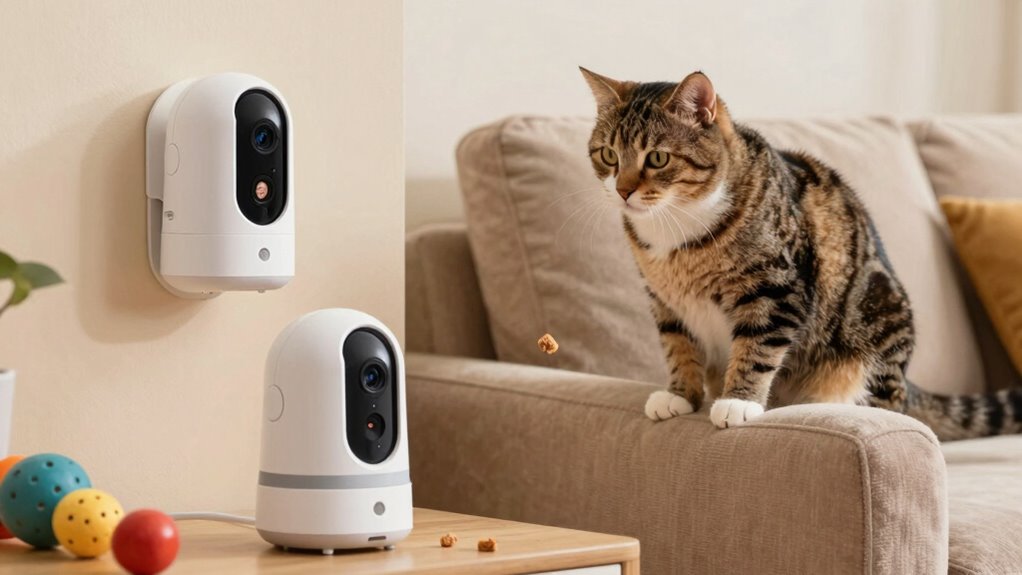
Treat tossers can be a fun way to distract and engage your pet, especially during stressful times. When used thoughtfully, they may help reduce anxiety by providing positive stimulation and a sense of play. Additionally, their effectiveness depends on your pet’s individual needs and routines, like pet diet and grooming routines. If your pet is well-fed and calm, treat tossers can serve as a rewarding distraction during your absence. But if they’re overly stressed or hungry, they might not respond well. It’s important to balance treat tossing with a holistic approach to managing separation anxiety. Incorporating positive reinforcement techniques can further enhance your pet’s confidence and reduce stress levels. Understanding behavioral training principles can help you develop a tailored strategy that best supports your pet’s emotional well-being. Being aware of natural behavior patterns can also help you choose the most appropriate calming strategies for your pet. Additionally, considering market options like different types of treat tossers and audio devices can optimize your approach. Using calming aids alongside treat tossers and audio devices may offer a more comprehensive solution for anxious pets.
Can Two-Way Audio Comfort Your Pet When You’re Away?
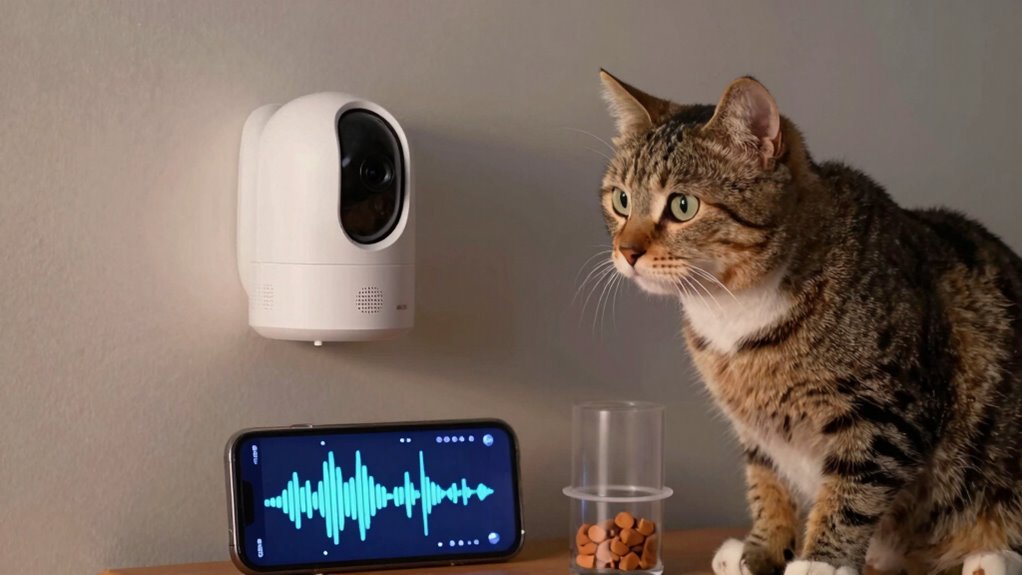
Two-way audio technology allows you to communicate directly with your pet even when you’re not home, offering a potential source of comfort. When your pet hears your voice, it can feel reassured, easing separation anxiety. This connection may also positively influence their pet diet and grooming routines, as a calmer pet is more receptive to regular care. For example, hearing you encourage them during meal times or grooming sessions can make these routines less stressful. Using two-way audio helps bridge the physical gap, providing a sense of presence that reduces feelings of loneliness. Additionally, Indonesian decor masks can serve as calming visual elements that create a serene environment, further soothing your pet. Incorporating calming visual stimuli such as soothing colors or familiar objects can enhance the overall effect of your pet camera. Moreover, understanding the significance of time perception in animals can help tailor interactions that reduce stress during your absence. Recognizing how animals interpret visual cues can also contribute to creating a more comforting environment. While it’s not a cure-all, incorporating this feature into your pet camera can make a noticeable difference in your pet’s overall well-being when you’re away.
Are Treat Tossers or Two-Way Audio More Effective for Reducing Anxiety?
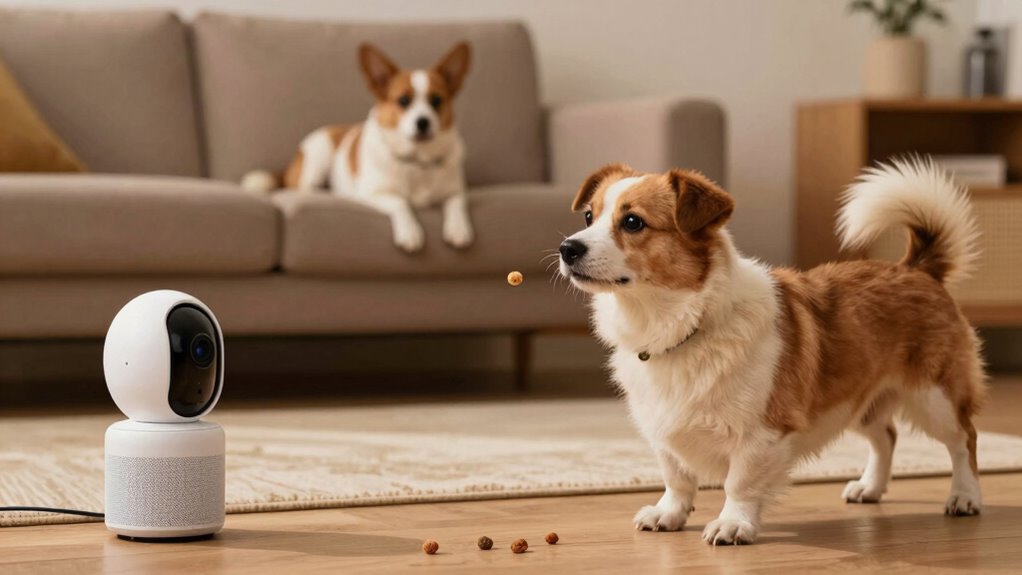
Both treat tossers and two-way audio aim to comfort pets from afar, but they approach reducing anxiety differently. Treat tossers can provide immediate distraction and create positive associations, helping your pet relax and improve their slumber comfort. They can also encourage healthy exercise routines, which tire out anxious pets and reduce stress. Two-way audio offers reassurance through your voice, calming pets with familiar sounds and presence, which is especially helpful during moments of separation. While treat tossers boost physical activity and reward good behavior, two-way audio addresses emotional needs by fostering connection. Incorporating these tools can enhance recovery and HRV by reducing stress levels and promoting relaxation. The most effective solution depends on your pet’s individual preferences—some respond better to physical engagement, others to vocal comfort. Combining both may provide a balanced approach to easing separation anxiety.
What Features Should You Look for in a Pet Camera to Ease Separation Anxiety?

When choosing a pet camera to ease separation anxiety, it is essential to prioritize features that promote comfort and reassurance for your pet. Proper pet camera placement is vital—position it at your pet’s eye level and in a familiar, quiet spot to help them feel secure. Look for cameras with a wide-angle lens to monitor your pet’s behavior effectively. Two-way audio allows you to speak calmly and provide reassurance, which can be very soothing. Privacy considerations are also important; guarantee the camera has secure Wi-Fi and encryption to protect your pet’s data. Avoid placing the camera where it might cause stress, like near loud appliances or in overly busy areas. Thoughtful placement and privacy features create a calming environment that helps reduce separation anxiety. Incorporating vintage audio elements into your home environment can also provide comforting background sounds that soothe your pet during your absence. Additionally, selecting equipment with reliable and accurate measurement tools ensures your home environment remains safe and comfortable for your pet. Proper camera positioning and features designed for pet comfort play a crucial role in easing your pet’s stress during times apart. Using calming sound options can further enhance their sense of security.
Tips for Using Treat Tossers and Two-Way Audio Effectively
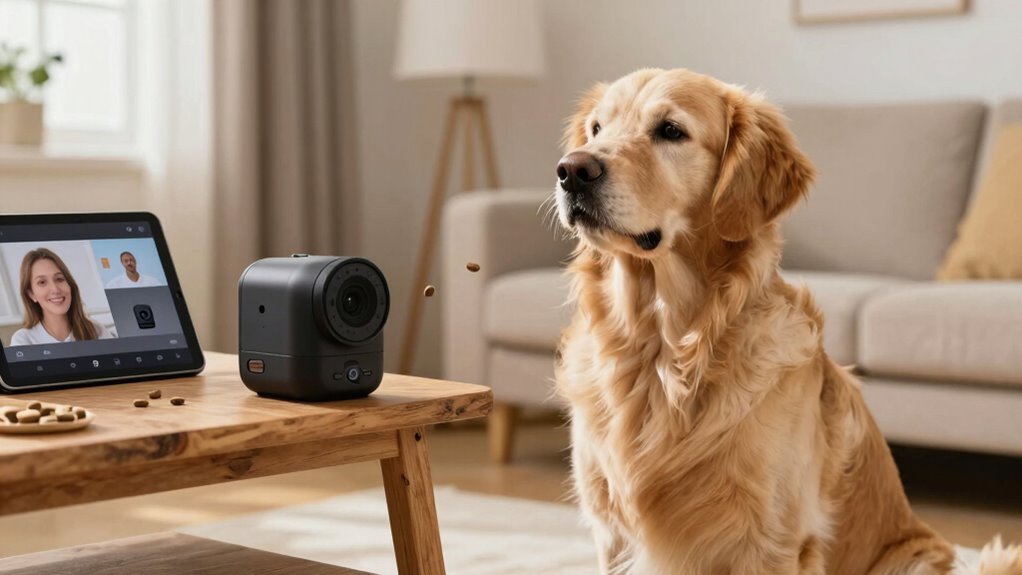
To get the most out of treat tossers and two-way audio, you need to master proper treat tossing techniques that keep your pet engaged without causing confusion. Clear, consistent communication through the two-way system helps your pet understand your cues and build trust. Additionally, using appropriate kitchen tools can enhance your overall interaction with your pet. Finally, sticking to regular usage strategies guarantees your pet remains comfortable and responsive over time.
Proper Treat Tossing Techniques
Using treat tossers effectively requires a clear understanding of timing and placement. To reinforce training techniques, toss treats when your pet exhibits calm behavior or responds to commands. Avoid random tossing, which can confuse your pet and undermine progress. Consistency is key; incorporate treat tossing into your pet’s feeding schedule to build positive associations. For example, toss treats during specific times of the day or after calm moments, reinforcing a routine. Aim for smooth, gentle throws that land within your pet’s reach without startling them. Keep sessions short and frequent to prevent overstimulation. Proper treat tossing techniques involve understanding how to position treats to maximize positive reinforcement. By maintaining proper timing and strategic placement, you help your pet associate treat rewards with calmness and good behavior, making treat tossing a valuable tool in managing separation anxiety.
Clear Two-Way Communication
Effective two-way communication with your pet involves more than just speaking or tossing treats; it requires active engagement through both audio and visual cues. When using pet cameras for remote monitoring, verify your voice is calm and clear to reassure your pet. Speak softly to avoid startling them and reinforce positive behavior during pet training. Use the two-way audio to listen and respond promptly, making your pet feel connected and secure. Incorporate treats strategically to reward calmness, but don’t rely solely on treats; verbal praise enhances communication. Consistency is key—regularly engaging with your pet through clear audio helps build trust and reduces separation anxiety. Clear, confident communication during remote monitoring creates a sense of presence, making your pet feel less alone. Additionally, understanding basic trucking terms like TONU can help you better manage unexpected situations when transporting your pet or equipment related to pet care.
Consistent Usage Strategies
Consistent usage is essential to get the most out of your pet camera, whether you’re tossing treats or using two-way audio. Establishing regular training routines helps your pet associate the camera with positive experiences, reducing separation anxiety. Use treats consistently at specific times to reinforce calm behavior, and incorporate dietary adjustments if needed, such as calming treats or supplements, to support your pet’s overall well-being. When using two-way audio, speak in a calm, reassuring tone daily to build familiarity and trust. Stick to these routines even when progress seems slow; consistency builds confidence and reduces stress. Over time, your pet will learn that the camera is a comforting presence, making your efforts more effective and less stressful for both of you.
How to Choose the Right Pet Camera for Your Anxious Pet
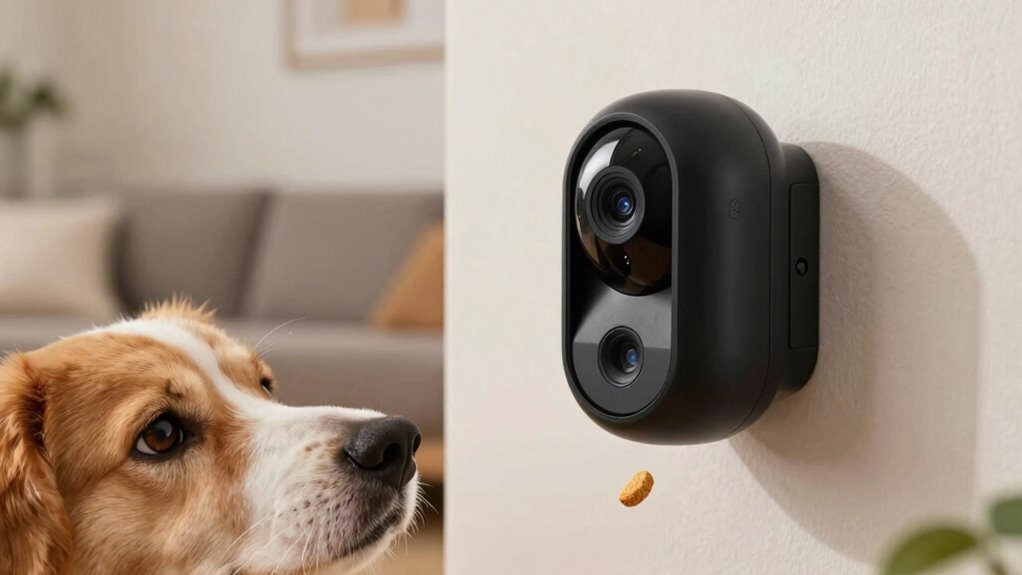
When selecting a pet camera for your anxious pet, focus on features that promote comfort and ease of use. Look for cameras with simple controls, clear video quality, and calming features like adjustable volume or soothing sounds. These elements help reduce your pet’s stress while making it easy for you to monitor and interact. Additionally, choosing a camera with smart automation features can enhance your pet’s environment by integrating with other smart home devices to create a more calming space. Incorporating sound masking techniques into your setup can further help diminish stressful noises and promote relaxation for your pet.
Camera Features for Comfort
Choosing the right pet camera for an anxious pet involves prioritizing features that promote comfort and reduce stress. Focus on pet camera placement to ensure your pet feels secure and can see familiar surroundings. A camera with adjustable angles helps you find the best view, reducing your pet’s anxiety when they notice movement or sounds. High camera resolution is essential for clear visuals, so you can easily monitor your pet’s behavior and spot signs of distress. Look for a camera with smooth streaming to prevent lag, which can startle your pet. Features like a quiet operation and gentle night vision also contribute to a calming environment. The goal is to create a setup that makes your pet feel safe and less alone when you’re away.
Ease of Use
Selecting a pet camera that’s easy to operate is essential, especially if your pet experiences anxiety. Look for models with simple setup processes and intuitive controls so you can check in quickly without frustration. Cameras that integrate features like feeding puzzles or interactive toys make engagement straightforward, helping your pet stay occupied and calm when you’re away. Choose a device with user-friendly apps or remote controls, so you can easily adjust settings or dispense treats without hassle. Clear video and audio quality also streamline communication, reducing confusion for your anxious pet. Avoid overly complicated features that might add stress or require frequent troubleshooting. The right pet camera should empower you to connect effortlessly and keep your pet comforted, even if you’re not physically present.
Frequently Asked Questions
Can Pet Cameras Monitor Pets’ Behavior Beyond Separation Anxiety?
Yes, pet cameras can monitor your pet’s activity beyond separation anxiety. They give you real-time insights into your pet’s behavior, helping you spot signs of stress or boredom. You can observe playtime, rest patterns, and overall activity, which aids in training and understanding their needs. By reviewing footage, you gain valuable training insights to improve your pet’s well-being and guarantee they’re happy and healthy even when you’re not around.
Are There Any Risks Associated With Using Treat Tossers Regularly?
Using treat tossers regularly can pose health concerns if overused, leading to obesity or dental issues from excessive treats. Behavioral impacts might include your pet becoming overly reliant on treats for comfort or attention, which could hinder natural problem-solving or independence. It is crucial to use treat tossers in moderation and balance them with other engaging activities to promote your pet’s overall well-being and avoid negative health or behavioral effects.
How Do Different Dog Breeds Respond to Treat Tossers Versus Two-Way Audio?
Like a chameleon shifting colors, your dog’s breed shapes its response to treat tossers and two-way audio. Some breeds thrive on the rewarding surprise of treats, making treat tossers a helpful training method. Others prefer the gentle reassurance of voice, aligning better with two-way audio. Understanding breed-specific responses helps you tailor your approach, ensuring your training method compatibility fosters trust and eases separation anxiety effectively.
What Is the Recommended Duration for Using Treat Tossers to Reduce Anxiety?
You should use treat tossers for about 10-15 minutes per session, once or twice daily, to help reduce separation anxiety. Stick to consistent training schedules and maintain treat frequency to reinforce positive associations. Keep sessions short and positive, gradually increasing duration as your dog becomes more comfortable. Always observe your pet’s response and adjust timing accordingly, ensuring treats are used as a comforting tool rather than causing overstimulation.
Can Combining Treat Tossers and Two-Way Audio Provide Better Results Than Using One?
Yes, combining treat tossers and two-way audio offers better results by enhancing interactive play and promoting behavioral consistency. You can reward your pet with treats while speaking to them, creating a calming routine that reduces separation anxiety. This approach engages your pet actively, reinforcing positive behavior, and helps them associate your voice and treats with comfort, leading to a more effective and holistic anxiety management strategy.
Conclusion
Ultimately, both treat tossers and two-way audio can soothe separation anxiety, but research suggests combining them might be your best bet. Think of it like a comforting chat plus a reward — together, they tap into your pet’s natural instincts to seek reassurance. So, don’t rely on just one feature; instead, choose a camera that offers both. When used thoughtfully, you can turn your pet’s alone time into a calmer, happier experience.