
TL;DR

Get health and wellness essentials delivered free with Prime
- Fast, free delivery on millions of items
- Prime Video, Amazon Music and more included
- Member-only deals all year
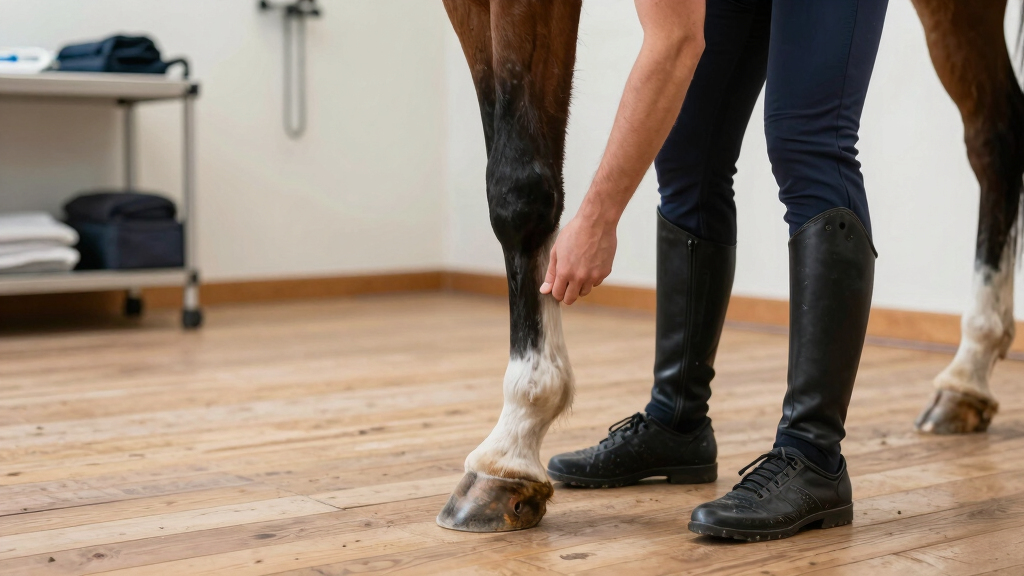
Scientists have confirmed that horses lack muscles in their lower legs; instead, their hooves function as a hydraulic pump to circulate blood. This discovery emphasizes the critical role of hoof health in equine circulation and overall well-being.
Recent scientific insights confirm that horses have no muscles in their lower legs, and their hooves serve as a hydraulic pump to aid blood circulation, a discovery that underscores the importance of hoof health for equine well-being.
According to research shared on Reddit and attributed to experts like Craig Wood of the University of Kentucky, horses’ lower legs lack muscles that assist in returning blood to the heart. Instead, the hoof contains an extensive network of veins called a venous plexus, which, along with the hoof’s structure, functions as a hydraulic pump. When the horse bears weight, pressure compresses these veins, pushing blood upward. When the hoof is lifted, the veins open, allowing blood to flow back toward the heart, aided by arterial pulse and gravity.
This mechanism, often described as the horse’s ‘second heart,’ is vital for maintaining proper circulation. The compression and decompression of these venous structures also create a hydraulic cushion that helps dissipate concussion and protect the fragile coffin bone within the hoof. The absence of muscular tissue in the lower leg makes this hydraulic system essential for blood flow, highlighting the importance of hoof health and proper shoeing and trimming practices.
Why It Matters
This discovery emphasizes that hoof health is directly linked to circulatory efficiency in horses. Poor hoof condition or injury could impair this hydraulic pumping mechanism, potentially leading to circulation problems and associated health issues. It also shifts some focus from muscular to structural and vascular factors in equine health management, impacting veterinary care and hoof maintenance practices.
As an affiliate, we earn on qualifying purchases.
Background
Prior to this, it was generally understood that blood circulation in horses relied on the heart and muscular activity in the limbs. The new findings clarify that the hoof’s structure plays a central role in blood return, with no muscular aid in the lower leg. This insight builds on existing knowledge of the hoof’s anatomy and function, emphasizing the hydraulic nature of blood movement in the horse’s leg.
“The hoof acts as a hydraulic pump, with no muscles in the lower leg aiding blood return, making hoof health crucial for circulation.”
— Craig Wood, University of Kentucky
As an affiliate, we earn on qualifying purchases.
What Remains Unclear
While the hydraulic pumping mechanism is now better understood, details remain unclear about how variations in hoof health or injuries might disrupt this system. Further research is needed to quantify how different conditions affect blood flow and to develop strategies for prevention and treatment.
horse hoof boots for circulation
As an affiliate, we earn on qualifying purchases.
As an affiliate, we earn on qualifying purchases.
What’s Next
Future research will likely focus on how hoof health impacts circulation under various conditions, and veterinary practices may adapt to prioritize maintaining the hydraulic function of the hoof. Additional studies could explore how to optimize hoof care to support this blood-pumping mechanism.
As an affiliate, we earn on qualifying purchases.
Key Questions
Why do horses need their hooves to pump blood?
Because horses lack muscles in their lower legs to assist blood return, their hooves act as a hydraulic pump to move blood back to the heart, which is vital for circulation and overall health.
Does hoof health affect circulation in horses?
Yes, poor hoof health can impair the hydraulic pumping mechanism, potentially leading to circulation problems and related health issues.
Are there any implications for horse care based on this discovery?
Yes, maintaining healthy hooves is now understood to be even more critical for proper blood circulation, emphasizing the importance of regular hoof trimming and disease prevention.
What remains unknown about this mechanism?
It is still unclear how specific hoof injuries or conditions might disrupt the hydraulic system and what the long-term effects on circulation are. Further research is needed to explore these aspects.
Source: reddit
Fall Picks
fall essentials
As an affiliate, we earn on qualifying purchases.