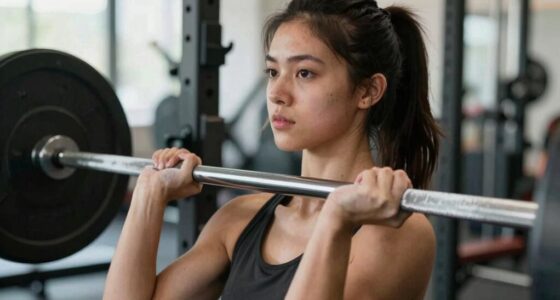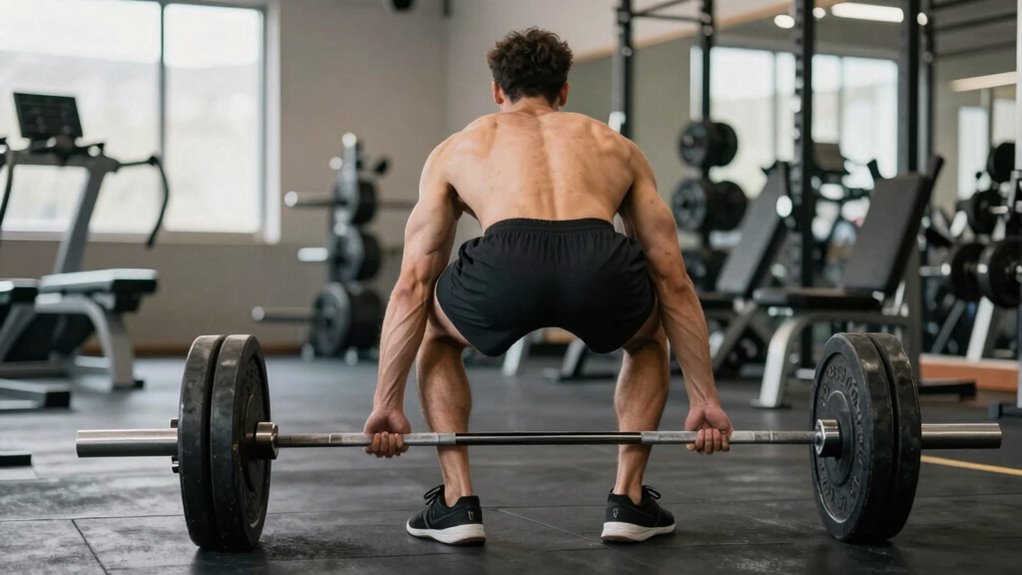

Prioritizing proper form over heavier weights guarantees you lift safely and target muscles effectively. Sacrificing technique risks injuries, joint stress, and imbalanced muscles, which can slow your progress or cause setbacks. Maintaining good form keeps your movements controlled and efficient, reducing strain and preventing long-term damage. While pushing for heavier weights can be tempting, remember that proper technique is the foundation of safe, effective training— continue exploring to learn how to balance both for ideal gains.

Get health and wellness essentials delivered free with Prime
- Fast, free delivery on millions of items
- Prime Video, Amazon Music and more included
- Member-only deals all year
Key Takeaways
- Proper form ensures targeted muscle engagement and reduces injury risk, making technique more important than lifting heavier weights.
- Sacrificing technique for weight can lead to balance issues, joint strain, and long-term injuries.
- Maintaining correct form enhances training effectiveness and promotes sustainable progress over simply lifting heavier.
- Prioritizing proper technique prevents muscle imbalances and stabilizes the body during lifts.
- Combining correct form with appropriate weight maximizes safety, efficiency, and long-term fitness gains.
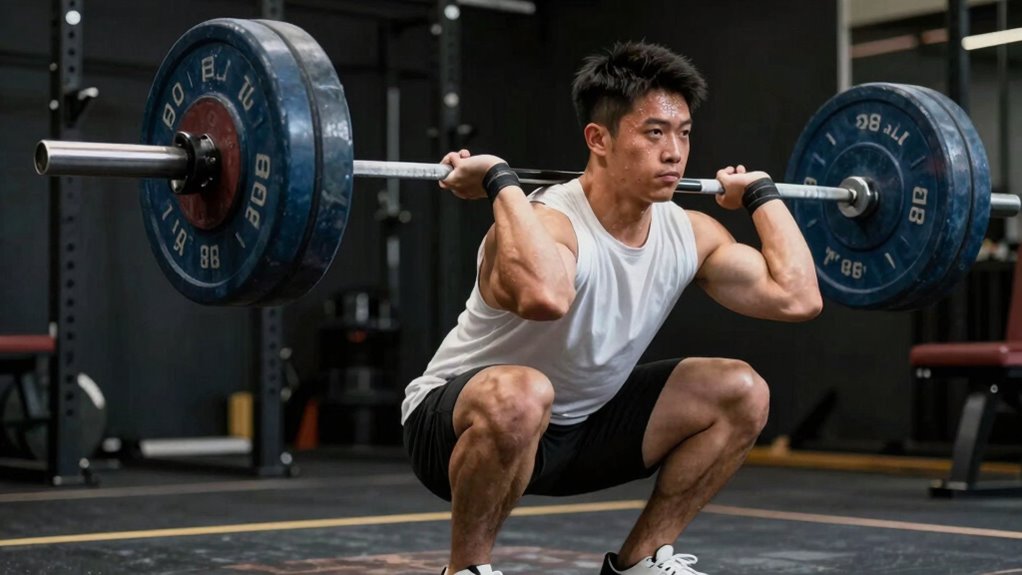
When it comes to strength training, many people focus solely on lifting heavier weights, but paying attention to form is equally important. Proper technique isn’t just about looking good; it’s about guaranteeing you lift safely and effectively. If you ignore your form, you risk developing balance issues that can compromise your stability and make your workouts less effective. More importantly, poor form greatly increases your injury risk, which can sideline your progress for weeks or even months.
Maintaining proper form helps you target the right muscle groups and avoid overcompensating with others. For example, when performing a squat, if your knees cave inward or your back rounds, you’re putting unnecessary strain on your joints and spine. These misalignments not only diminish the exercise’s benefits but also create dangerous stress points that can lead to injuries. Good form ensures that your muscles do the work they’re supposed to do, reducing the chance of strains, tears, or joint damage.
While lifting heavier weights might give you a sense of achievement, it’s tempting to sacrifice technique to push more reps or lift bigger loads. However, this often backfires. When you prioritize weight over form, you tend to compromise your stability, which can cause balance issues during lifts. These issues make it harder to control the movement, increasing the likelihood of sudden slips or falls, especially during complex lifts like deadlifts or overhead presses. Over time, these slip-ups can accumulate and result in chronic injuries or acute accidents.
Focusing on form also helps you develop a better mind-muscle connection. This connection is vital for activating the right muscles and ensuring you’re not compensating with secondary ones. When your muscles work as they should, your movements become more efficient, and your progress accelerates. Conversely, lifting with poor form often means you’re not engaging the right muscles, which stalls progress and can lead to muscle imbalances. Such imbalances can further contribute to balance issues, making you more prone to falls or injuries outside the gym.
Additionally, heat buffering techniques in your training can help prevent muscle fatigue and reduce injury risk by optimizing your warm-up and recovery processes. Ultimately, balancing weight with proper form isn’t just a safety measure; it’s fundamental to long-term gains. You might lift lighter today, but with impeccable technique, you’ll build a stronger, more resilient body over time. Never underestimate the importance of mastering the basics. Always prioritize quality over quantity, and remember that the safest, most effective way to train is by focusing on your form. Your body will thank you with fewer injuries, better stability, and consistent progress.
As an affiliate, we earn on qualifying purchases.
Frequently Asked Questions
How Do I Determine My Ideal Lifting Form?
To determine your ideal lifting form, focus on proper muscle activation and injury prevention. Start with lighter weights to master the correct technique, ensuring your muscles engage properly without strain. Use mirrors or record yourself to observe your movements and make adjustments. Listening to your body helps identify discomfort or instability, guiding you toward a form that maximizes effectiveness while minimizing injury risk. Consistent practice enhances your technique over time.
Can Focusing Solely on Weight Improve My Overall Strength?
Focusing solely on weight can boost your strength, but it risks neglecting proper muscle activation and injury prevention. If you prioritize heavier lifts without maintaining good form, you might strain muscles or cause injuries. To improve overall strength safely, balance increasing weight with proper technique, ensuring your muscles activate correctly and reducing injury risk. This approach helps you progress effectively while keeping your body healthy.
What Role Does Flexibility Play in Proper Technique?
Ironically, flexibility isn’t just about touching your toes; it’s essential for proper technique. You need to incorporate stretching routines to improve joint mobility, which helps prevent injuries and enhances your movement efficiency. Without good flexibility, you might lift heavier but lose control or risk strain. So, prioritize your joint mobility to build a solid foundation, making your lifts safer and more effective—because perfect technique isn’t just about strength, it’s about mobility too.
How Do I Correct Form Errors Safely?
To correct form errors safely, focus on spotting safety and equipment adjustments. Always use a spotter when lifting heavy weights to prevent injuries and provide guidance. Pay attention to your body’s signals, and don’t push through pain. Adjust the equipment—like grip or stance—if something feels off. Slow down your reps to maintain control, and consider consulting a trainer for personalized tips to improve your technique safely.
Is It Better to Lift Lighter Weights With Perfect Form?
Lifting lighter weights with perfect form is generally better, especially when focusing on exercise variation and muscle engagement. It allows you to master proper technique, reduce injury risk, and guarantee you’re effectively targeting the right muscles. When you prioritize control and precision over heavy loads, you build a solid foundation for progress. So, yes, lighter weights with perfect form often lead to better long-term strength and performance gains.
As an affiliate, we earn on qualifying purchases.
Conclusion
Remember, mastering perfect form isn’t about chasing a mirage of perfection; it’s about building a sturdy foundation that keeps your progress grounded. Think of your technique as the compass guiding your ship through turbulent seas—staying true guarantees you reach your destination safely. Don’t let the weight tempt you into sacrificing form, like a siren’s song pulling you off course. Keep your focus sharp, and let proper technique be the beacon that lights your path to strength.
As an affiliate, we earn on qualifying purchases.
injury prevention in strength training
As an affiliate, we earn on qualifying purchases.
As an affiliate, we earn on qualifying purchases.
Evergreen bestsellers Picks
bestsellers
As an affiliate, we earn on qualifying purchases.