
TL;DR

Get health and wellness essentials delivered free with Prime
- Fast, free delivery on millions of items
- Prime Video, Amazon Music and more included
- Member-only deals all year
A Fit&Well report featuring trainer Kylie Hansen highlights muscle power—the ability to produce force quickly—as an often-overlooked fitness skill for women in midlife. Hansen recommends brief, rested sets of adjustable exercises; the source does not provide research data quantifying the benefits or a specific longevity effect.
Muscle power—the ability to produce force quickly—is an often-overlooked part of fitness for women in midlife, according to a Fit&Well report featuring trainer Kylie Hansen. Hansen outlines three exercises that emphasize quick, coordinated movement, plus a stability exercise, arguing that this capacity can help with everyday actions such as recovering balance after a trip; the report does not quantify any effect on longevity.
Hansen, identified by Fit&Well as a NASM-certified personal trainer and coach at Busy Bariatrics, distinguishes power from strength alone. Power involves using strength at speed, she says. That can matter when someone needs to move quickly or regain balance. Hansen also says muscle fibers involved in rapid, forceful movement can decline with age and inactivity.
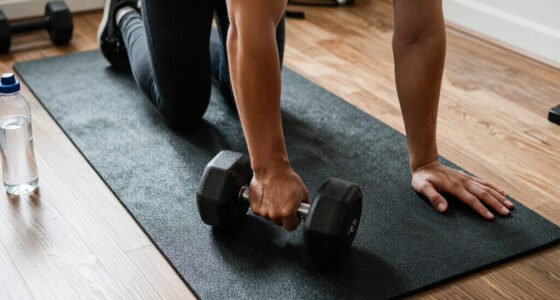
The suggested session has four movements: a burpee, squat jump, squat to upright row, and plank dumbbell pull-through. The first three train forceful movement and coordination; the pull-through is intended to challenge core stability as the person shifts weight between arms. The report recommends two or three sets of five to six repetitions for each of the first three exercises, and five to six repetitions per side for the pull-through, with 60–90 seconds of rest between sets.
Hansen advises prioritizing controlled, high-quality repetitions rather than working to exhaustion. She says fatigue can reduce power, so the aim is to perform a small number of purposeful repetitions, rest, and repeat them well. The report offers lower-impact options, including stepping rather than jumping during a burpee, rising onto the toes rather than jumping for the squat movement, and doing the plank pull-through from the knees.
Why Rapid Strength Matters in Daily Movement
Power relates to actions that require a quick response, not just the ability to lift or carry something. Hansen points to catching oneself after a trip and moving rapidly to regain balance as examples. The practical distinction is that a person may have strength but still need to practice applying it quickly and with coordination.
The report frames power training as relevant to maintaining physical capability with age, particularly because Hansen says the muscle fibers that support fast movements can decline with age and inactivity. That rationale is presented through the trainer’s explanation; the supplied material does not include clinical findings, a study, or outcome data showing that this exact workout prevents falls, extends life, or changes longevity. Its direct takeaway is narrower: power can be trained through adapted movements, and it need not require advanced lifts or large jumps.
As an affiliate, we earn on qualifying purchases.
How the Four-Move Session Is Structured
Advice on strength training for aging adults is common, but the Fit&Well report argues that power development receives less attention. It does not set out a new trial or formal health guideline. Instead, it presents Hansen’s coaching advice and a sample routine that applies the idea to familiar exercises.
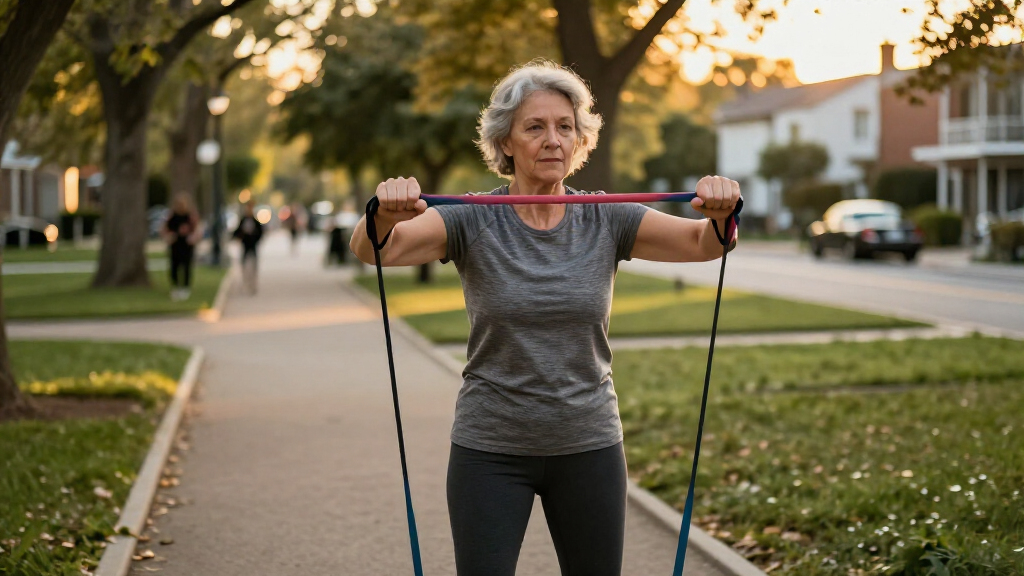
The moves offer different ways to practice the goal. A burpee can be slowed down by stepping back and forward; a squat jump can be changed to a rise onto the toes. For the squat to upright row, a person stands from a squat and uses the movement’s momentum to draw dumbbells or kettlebells toward the chest. The plank pull-through adds a different challenge: keeping the hips steady while moving a weight across the floor. Hansen presents these variations as ways to adjust movement, rather than requiring beginners to start with jumps or complicated lifts.
For every exercise, the report emphasizes rest between sets and purposeful repetitions. It does not give a weekly schedule or say how often to repeat the workout. Nor does it describe equipment-free alternatives for the weighted row and pull-through.
“Power drops as fatigue builds.”
— Kylie Hansen, quoted by Fit&Well
As an affiliate, we earn on qualifying purchases.
What the Report Does Not Establish
The supplied report offers a trainer’s explanation and workout, but does not cite specific studies, quantify how much power changes in midlife, or establish that this routine improves longevity. It also does not provide results from a clinical or population study comparing people who train power with those who do not. The connection to long-term health is therefore presented as context, not as a measured outcome of the four exercises.
The report does not specify a recommended training frequency, how to progress the weights or difficulty, or how the routine should be adapted for people with injuries, balance concerns, or other health conditions. Its modifications make some movements lower impact, but the source does not claim that every exercise is suitable for every person. Readers with health concerns should seek guidance from a qualified health or exercise professional before changing their training.
As an affiliate, we earn on qualifying purchases.
How Readers Can Apply the Guidance
The Fit&Well report provides a sample session rather than announcing a continuing program or a research follow-up. Its immediate guidance is to select appropriate modifications, perform two or three short sets, and allow 60–90 seconds of rest. The approach described by Hansen places movement quality ahead of exhaustion.
For any broader conclusion about longevity, readers would need evidence beyond the source’s coaching advice, including research that measures outcomes over time. The report gives no date for additional guidance or further results. Its practical next step is limited to the routine and adjustments it describes; people unsure whether jumping, lifting, or plank positions are appropriate can consult a qualified professional.
stability ball for balance training
As an affiliate, we earn on qualifying purchases.
As an affiliate, we earn on qualifying purchases.
Key Questions
What does muscle power mean?
In Hansen’s definition, power is the ability to produce force quickly. It involves applying strength at speed, such as when moving quickly to recover balance.
Which exercises does the report recommend?
The suggested workout includes a burpee, squat jump, squat to upright row, and plank dumbbell pull-through. The first three emphasize rapid movement; the pull-through challenges stability as the body shifts weight.
How many sets and repetitions are suggested?
The report recommends two or three sets, generally five to six repetitions per exercise, with five to six repetitions per side for the pull-through. It suggests resting 60–90 seconds between sets.
Can the exercises be modified to reduce impact?
Yes. The report suggests stepping instead of jumping during a burpee, rising onto the toes instead of jumping for the squat movement, and performing the plank pull-through from the knees. It does not say these options are appropriate for everyone.
Does this workout prove power training extends longevity?
No. The supplied report presents Hansen’s explanation and exercise suggestions, but it provides no study results or measured longevity outcomes for this routine.
Source: rss
Fall Picks
fall essentials
As an affiliate, we earn on qualifying purchases.