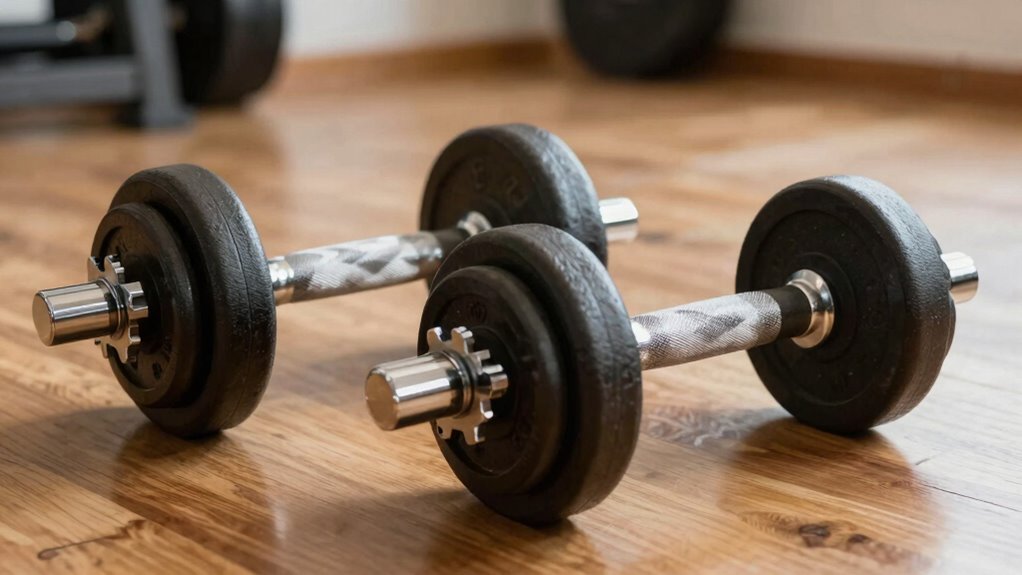
When choosing adjustable dumbbells, focus on handles that feel smooth, comfortable, and easy to grip, with textured surfaces and the right size to prevent fatigue. Make sure plates stay secure with reliable locking mechanisms to avoid rattling during workouts, which can affect performance and safety. Check for signs of poor construction like rough finishes or loose parts, and test stability and adjustment ease upfront. Keep these tips in mind to find durable, safe options that suit your needs.
Key Takeaways
- Check handle ergonomics, grip texture, and size for comfort and secure control during workouts.
- Ensure plates fit snugly with minimal rattle, and locking mechanisms are secure to prevent noise and shifting.
- Inspect material quality, finish, and construction for signs of durability and resistance to wear or damage.
- Test locking systems like spin-locks or quick-release pins for reliable, wobble-free operation.
- Perform on-site handling tests: verify handle comfort, plate stability, noise levels, and ease of adjustment.
How to Choose Adjustable Dumbbells That Fit Your Needs
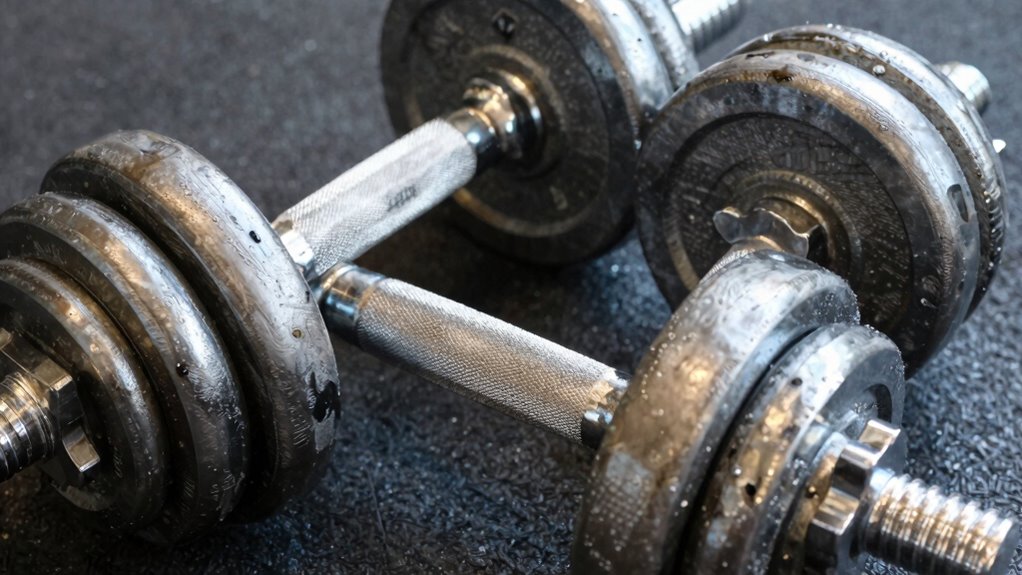
Choosing the right adjustable dumbbells begins with understanding your fitness goals and workout habits. Consider how much space you have, especially your workout space, to make sure the dumbbells fit comfortably without clutter. Think about dumbbell storage, as some models come with compact cases or easy-to-stack plates, making organization simple. If you’re aiming for versatility and frequent use, opt for adjustable dumbbells that can quickly change weights without disrupting your workout flow. Evaluate the weight range you need now and in the future, ensuring they can grow with your training. Also, choose models with sturdy construction and safe locking mechanisms to prevent accidents. By focusing on your space, storage options, and workout intensity, you’ll select adjustable dumbbells that support your fitness journey efficiently. Exploring new content formats can help you find innovative ways to incorporate your dumbbells into diverse workout routines. Additionally, selecting durable materials ensures your investment withstands regular use and maintains safety over time. Incorporating ergonomic handle design can also enhance comfort during extended workouts, reducing fatigue. Moreover, considering the quality of the handle feel and how it impacts grip can make your workouts more effective and comfortable. To further ensure safety and performance, look for adjustable dumbbells with precise weight adjustment features, which contribute to smoother transitions between weights and a more seamless workout experience.
What Makes Handle Feel Comfortable and Easy to Grip
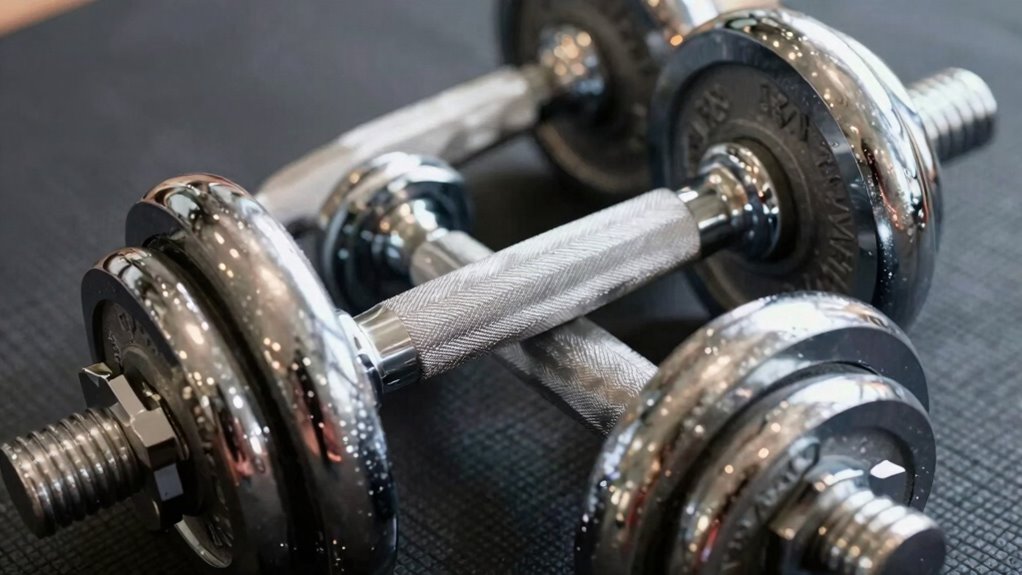
A comfortable, easy-to-grip handle is vital for safe and effective workouts with adjustable dumbbells. Handle ergonomics ensure your hand fits naturally, reducing fatigue. Grip texture plays a key role, providing slip resistance even when your hands are sweaty. To find the right handle feel, consider these factors:
A comfortable, secure grip with ergonomic handles and textured surfaces enhances safety and effectiveness during workouts.
- Ergonomic Design – Contoured handles that match your hand shape enhance comfort.
- Textured Surface – Knurled or rubberized grip texture improves control.
- Diameter – A size that fits your hand comfortably prevents strain.
- Material Quality – Durable, non-slip materials maintain grip over time. Selecting handles with proper grip texture helps prevent slipping during intense workouts. Incorporating ergonomic considerations can further enhance overall comfort and safety. Additionally, choosing high-quality materials ensures longevity and resistance to wear. Proper maintenance and selection of durable grip materials contribute to sustained performance. Prioritizing handle ergonomics and grip texture ensures a secure, comfortable grip, making your workouts safer and more effective. Paying attention to handle design standards can also help you select the most suitable and comfortable dumbbells.
How Plate Rattle Can Affect Your Workout and How to Avoid It
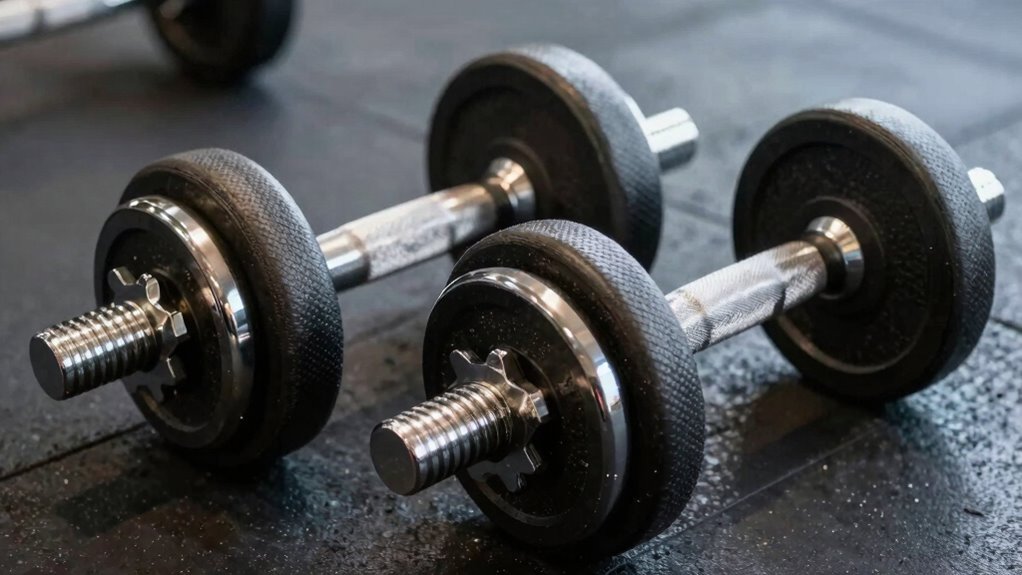
Plate rattle might seem like a minor annoyance, but it can considerably disrupt your workout by causing noise, distractions, and instability. When your dumbbells rattle, it shifts your focus away from proper form and effort, reducing workout effectiveness. The constant noise can also be distracting, making it harder to stay concentrated during sets. Additionally, excessive plate rattle can compromise balance, increasing the risk of injury or dropping the weights. To avoid this, choose adjustable dumbbells with secure locking mechanisms or thicker, well-fitted plates. Regularly check that plates are tightly fastened before starting your session. Proper maintenance and equipment safety are essential for preventing issues like plate rattle. Ensuring that your adjustable dumbbells are designed with quality materials and secure fittings can significantly reduce rattling problems. Using dumbbells with anti-slip grips can also help maintain better control and stability during exercises. Opting for dumbbells with durable construction can further minimize the likelihood of parts loosening over time. Incorporating proper storage and handling practices can help preserve the integrity of your weights and prevent unnecessary rattling. Minimizing plate rattle not only enhances your workout experience but also ensures safety, allowing you to focus fully on your strength goals without unnecessary interruptions.
Durability Tests: How to Tell If Dumbbells Will Last Over Time
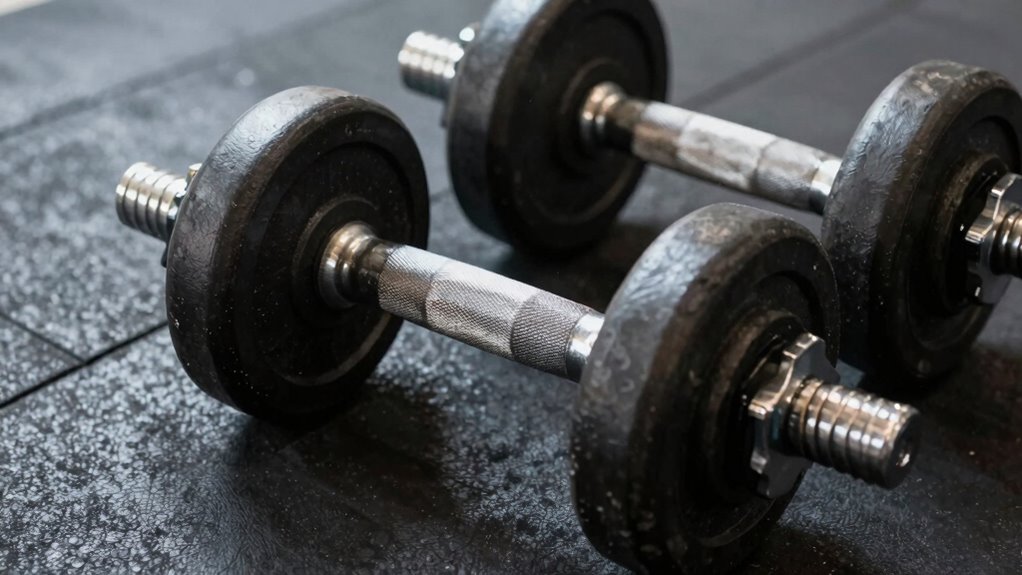
To guarantee your dumbbells stand the test of time, check the quality of their materials and finish. Strong, corrosion-resistant surfaces indicate durability, while smooth mechanical components suggest reliable performance. Paying attention to these details helps you choose equipment that lasts through heavy use and years of workouts. Additionally, inspecting smart lock security features can provide insights into the overall quality and reliability of the design. Ensuring that the jewelry materials used are high-quality and suitable for the equipment’s purpose can further extend longevity and maintain appearance over time. Recognizing material integrity in the construction can help prevent early wear and tear, contributing to longer-lasting equipment.
Material Quality and Finish
When evaluating adjustable dumbbells, paying close attention to material quality and finish can reveal how well they’ll withstand regular use. First, examine the material composition; high-quality metals or durable plastics ensure longevity. Second, check the surface finishing—smooth, well-applied coatings prevent chipping and corrosion. Third, look for uniformity in the finish, indicating precise manufacturing and fewer weak points. Fourth, consider the construction of moving parts; robust metal or reinforced joints resist wear. These factors influence durability, as strong materials and quality surface finishing resist rust, dents, and cracking over time. By prioritizing material quality and finish, you’re investing in dumbbells that will maintain their integrity through consistent workouts, reducing replacement costs and ensuring long-term performance.
Mechanical Component Reliability
Evaluating the reliability of a dumbbell’s mechanical components is essential for ensuring long-term durability. Focus on the core mechanism, which connects plates and handles, and assess how well it withstands repeated use. Look for signs of wear, such as looseness or difficulty adjusting weights, indicating poor design aesthetics. To visualize this, consider the following:
| Mechanical Aspect | What to Check |
|---|---|
| Core mechanism | Smooth operation, no wobbling |
| Locking system | Secure fit, no slipping after multiple uses |
| Handle attachment | Firm connection, no rattling |
| Adjustment mechanism | Ease of use over time, no sticking |
| Overall durability | No cracks or deformities after testing |
These checks help predict if your dumbbells will last, ensuring safety and performance over time.
What Signs Indicate Poor Construction or Low-Quality Materials
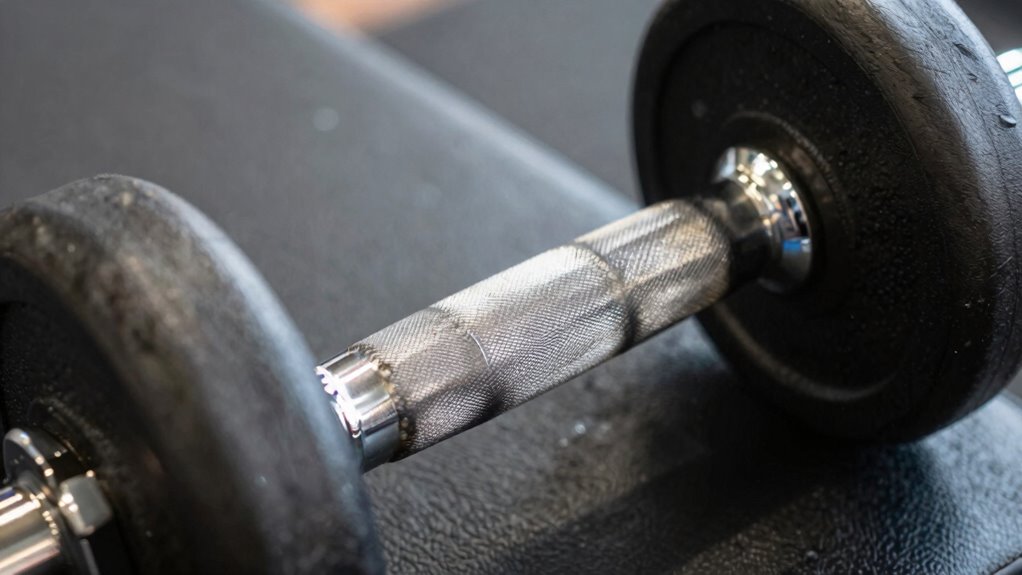
Poor construction or low-quality materials often reveal themselves through visible flaws and inconsistencies. Look closely at your adjustable dumbbells for signs of material flaws or manufacturing defects.
- Uneven or rough surfaces – This indicates poor finishing or inferior materials.
- Loose or poorly fitted parts – Manufacturing defects may cause instability or rattling.
- Cracks or chips in the metal or plastic – These flaws suggest low-quality materials that won’t hold up over time.
- Inconsistent paint or coating – Poorly applied finishes can signal rushed manufacturing or subpar materials.
These signs highlight weak points that could lead to durability issues or safety concerns. Always inspect carefully before purchasing or using adjustable dumbbells, as material flaws and manufacturing defects compromise performance and longevity.
Which Locking Mechanisms Are Safer and Keep Dumbbells Stable
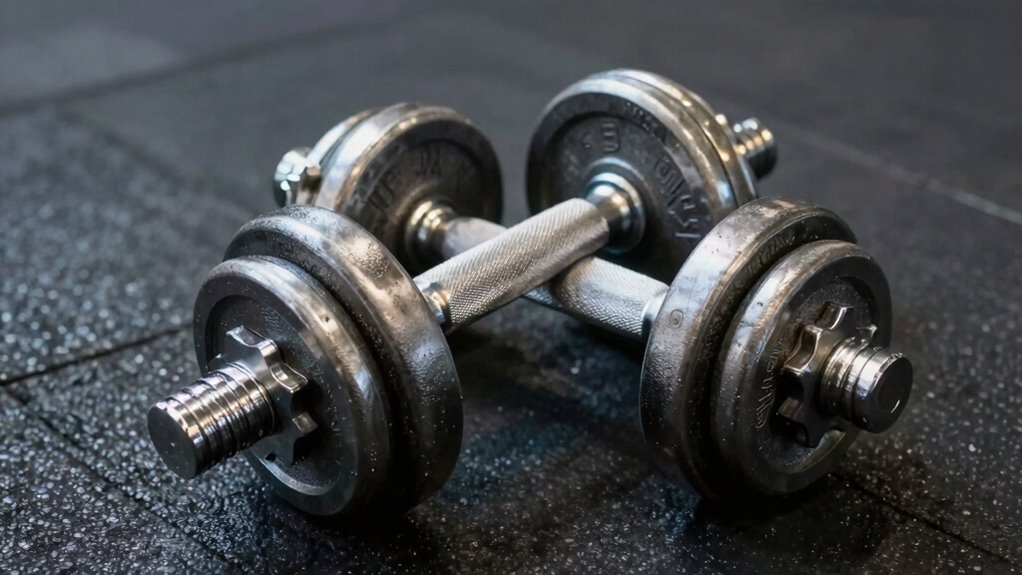
Choosing the right locking mechanism is essential for ensuring your adjustable dumbbells stay secure during workouts. The best locking mechanisms incorporate safety features that prevent plates from slipping or rattling loose, even during vigorous movements. Spin-lock collars are popular because they tighten firmly and are easy to secure by hand. Quick-release pins offer convenience and reliable locking, reducing the chance of accidental plate movement. Clamp locks and twist-lock mechanisms also provide strong, stable holds, especially when designed with durable materials. Safety features like textured grips, secure latches, and reinforced locking parts help prevent accidents. Additionally, modern fashion trends influence the design of some locking mechanisms, emphasizing both safety and style for a more cohesive workout experience. Incorporating durable construction ensures that locking mechanisms can withstand repeated use without failure. Ultimately, select locking mechanisms that combine ease of use with proven stability to keep your dumbbells safe and secure throughout every workout.
How to Test Adjustable Dumbbells in Store or at Home Before Buying
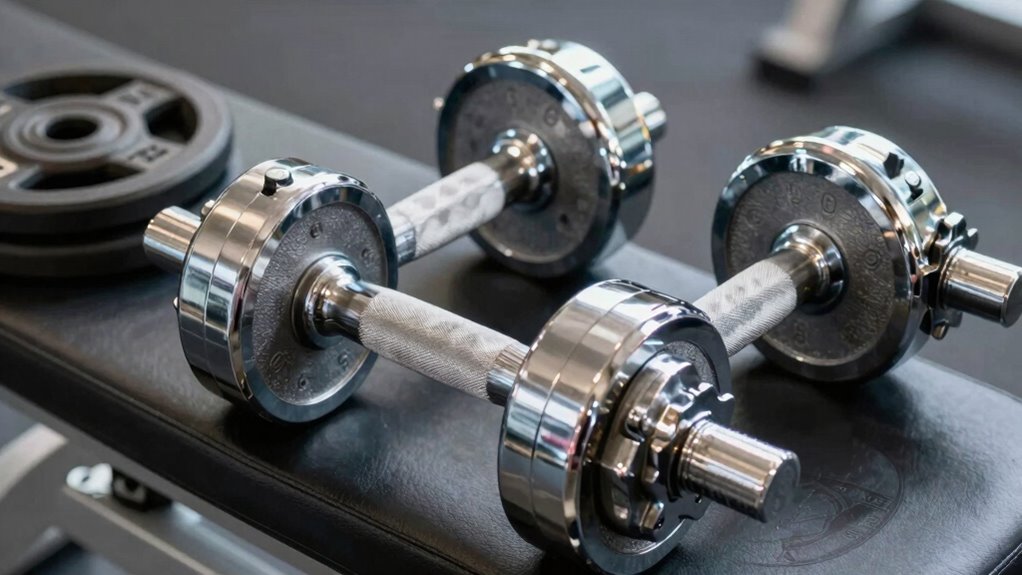
When testing adjustable dumbbells, focus on how comfortable the handle feels and whether you can grip it securely during exercises. Check if the plates stay stable when you move the dumbbells and listen for any unusual noise that might indicate loose parts. These quick checks help make certain you select a pair that’s safe, comfortable, and dependable for your workouts. Additionally, consider drone safety guidelines to ensure your workout space remains secure and free of hazards.
Handle Comfort and Grip
Before buying adjustable dumbbells, it’s essential to evaluate the handle comfort and grip to guarantee they feel secure during workouts. A comfortable handle reduces fatigue and prevents slips. To test this, consider these points:
- Hold the dumbbell and see if the handle feels smooth and comfortable, avoiding rough or sharp edges.
- Check the grip texture—a knurled or rubberized surface provides better control.
- Test the handle size to ensure it fits comfortably in your hand, especially if you have larger or smaller hands.
- Look for color options and brand reputation, which often indicate quality and durability.
- Assess the handle’s material and design, as these factors directly impact handle feel and overall durability during use. Additionally, understanding the durability tests can help you select a model that withstands regular workouts without failure. Knowing about material quality can also give you insight into the longevity of the dumbbells.
Familiarity with these aspects helps you choose a model that offers both comfort and confidence during your workouts.
Plate Stability and Noise
Making certain that plate stability and minimizing noise are crucial steps when testing adjustable dumbbells, whether you’re in a store or at home. Start by checking if the plates stay securely in place when you lift or move the dumbbells; loose plates indicate poor locking mechanisms. An ergonomic design should facilitate easy adjustments without wobbling, which helps maintain stability during workouts. Listen carefully for rattling sounds, as excessive noise suggests loose fittings or inferior materials. Additionally, consider the aesthetic appeal—dumbbells with a sleek, well-finished look often feature better engineering for stability. Properly stable plates ensure safety and consistent performance, while quiet operation enhances your workout experience. These tests help you select a durable, reliable set that combines ergonomic comfort with visual appeal. Understanding product quality can also help you identify durable, well-made adjustable dumbbells that will stand the test of time.
Frequently Asked Questions
Are Adjustable Dumbbells Suitable for Beginners or Advanced Users?
Adjustable dumbbells are suitable for both beginners and advanced users. If you’re starting out, look for beginner-friendly options with manageable weight ranges and easy adjustments. As you progress, you’ll appreciate their advanced training versatility, allowing you to challenge yourself with heavier weights and varied exercises. They save space and offer a customizable workout, making them a smart choice regardless of your fitness level.
How Much Do Adjustable Dumbbells Typically Weigh?
Adjustable dumbbells typically weigh between 5 to 50 pounds each, depending on the model. They offer flexible weight capacities, often up to 100 or 200 pounds per set, making them suitable for various fitness levels. Look for options with manageable weight increments, like 2.5 or 5 pounds, so you can gradually increase resistance as you progress. This versatility helps you tailor your workouts to your strength and goals.
Can Adjustable Dumbbells Be Used for Different Workout Styles?
Yes, adjustable dumbbells are incredibly versatile for different workout styles. You can easily switch weights to target various muscle groups or adapt for strength, endurance, or cardio routines. Their space-saving design allows you to perform a full range of exercises without cluttering your area. Imagine seamlessly shifting from bicep curls to shoulder presses—these dumbbells help you customize your workout, making them perfect for any fitness level or style.
Are There Any Safety Precautions When Adjusting the Weights?
When adjusting the weights, always wear safety gear like gloves to prevent pinches and guarantee a firm grip. Use proper technique by securely locking the plates before lifting to avoid accidents. Check that all parts are tightly in place and never rush the process. Taking these precautions helps prevent injury and keeps your workout safe and effective. Remember, patience and attention to detail make all the difference.
How Long Do Adjustable Dumbbells Usually Last With Regular Use?
Imagine your adjustable dumbbells standing the test of time, their handles firm and plates secure after years of regular use. With proper dumbbell maintenance, they can last five to ten years or more, even with daily workouts. Regularly checking for wear and tear, tightening components, and avoiding overloading help prevent damage. Keep them clean and well-maintained, and your dumbbells will serve you reliably through countless training sessions.
Conclusion
In the end, choosing adjustable dumbbells is like dating—you want someone sturdy, reliable, and who doesn’t rattle your nerves. Test the handle’s grip, shake those plates like maracas, and inspect for flimsy parts. If they wobble more than a bobblehead on a rollercoaster, better to walk away. Remember, you’re investing in your gains, not a rickety carnival ride. Pick wisely, and your home gym will stay solid—no clown acts included.