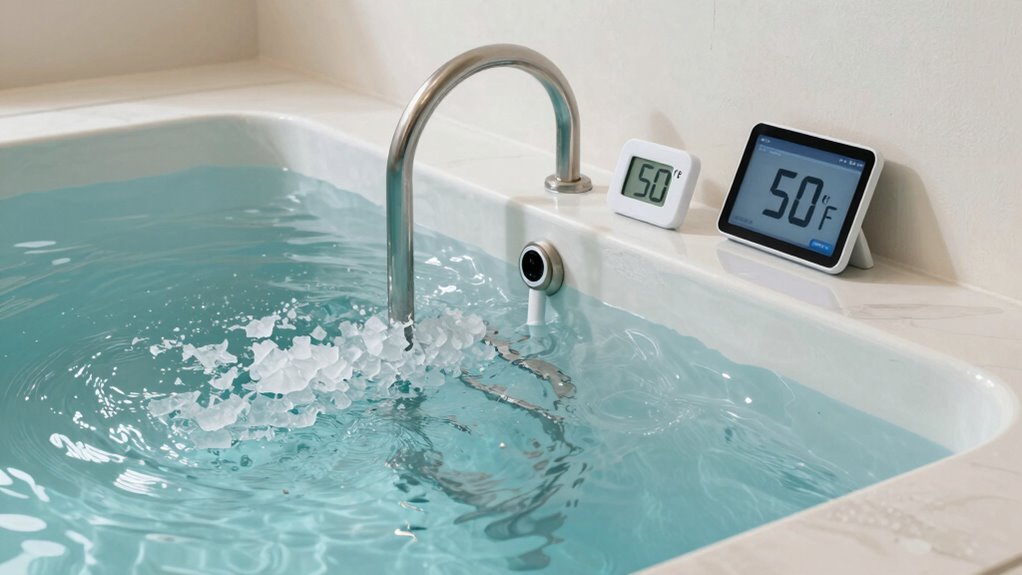

To set up a safe cold plunge at home, keep the water temperature between 50-59°F (10-15°C) using a reliable thermometer or digital controller. Limit your immersion to 1-5 minutes and focus on deep, controlled breathing to stay relaxed. Always monitor how your body reacts and avoid plunging alone. Proper safety measures, equipment, and water maintenance are key to maximizing benefits while minimizing risks—discover more tips to optimize your cold plunge experience.
Key Takeaways
- Maintain water temperature between 50-59°F (10-15°C) using accurate thermometers and thermostats for safety and effectiveness.
- Limit cold plunges to 1-5 minutes, monitoring for signs of discomfort or hypothermia, and exit immediately if symptoms occur.
- Regularly test and sanitize water to prevent contamination, using filtered water and proper cleaning routines.
- Use insulated containers and reliable temperature control devices to keep water consistent and safe during each session.
- Never cold plunge alone; inform someone, keep a phone nearby, and have emergency procedures in place for safety.
What Is a Cold Plunge and Why Use It?
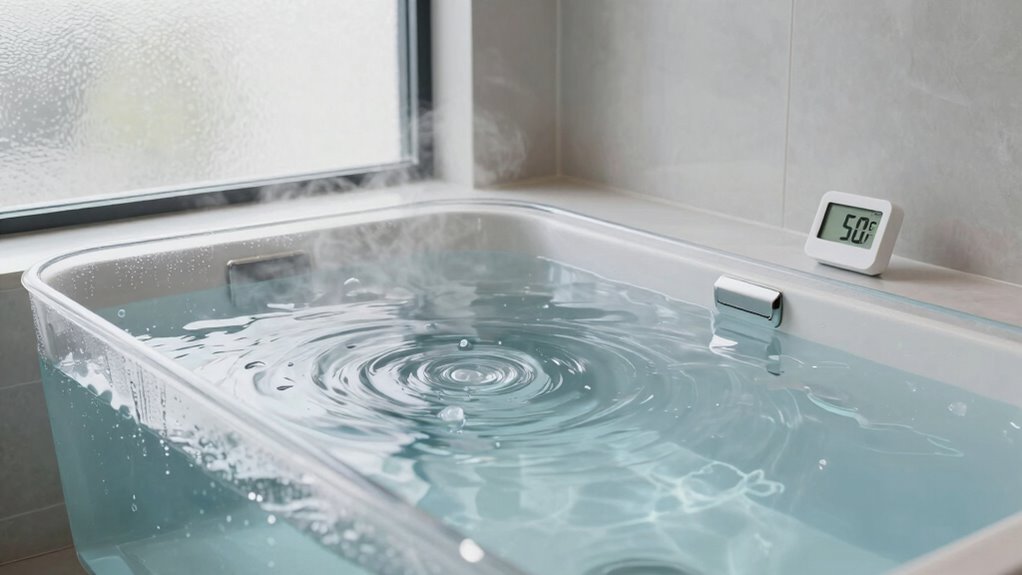
Have you ever wondered what a cold plunge is and why so many people swear by it? A cold plunge involves immersing your body in cold water, typically between 50-59°F (10-15°C), to promote recovery and wellness. When you take a cold plunge, you’ll notice your breathing techniques become essential; controlling your breath helps manage the initial shock and keeps you calm. As you focus on your mental clarity, staying centered allows you to endure the cold longer and gain the benefits. Many use cold plunges to reduce inflammation, boost circulation, and improve mental focus. It’s not just about the physical effects — it’s about training your mind to stay present and resilient under stress. This combination of breath and focus makes cold plunges a powerful wellness tool. Additionally, understanding the temperature range helps optimize the experience for safety and effectiveness. Properly managing cold exposure can help prevent adverse reactions and enhance your overall results.
How to Set the Right Temperature for Your Cold Plunge
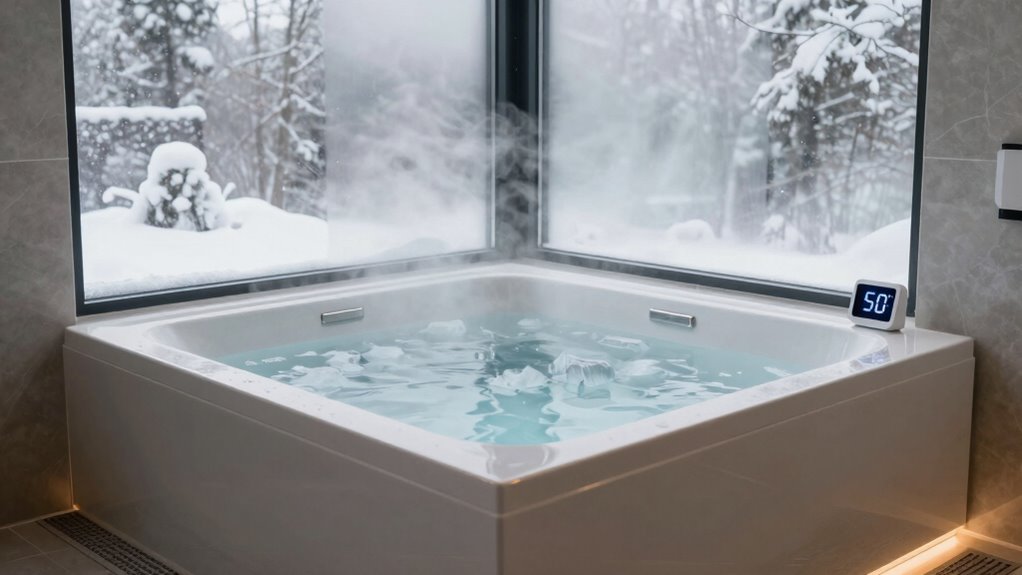
Choosing the right temperature for your cold plunge is essential to maximize its benefits while guaranteeing safety and comfort. Start by calibrating your thermometer accurately to measure water temperature precisely. Proper calibration prevents errors that could lead to water being too cold or too warm. Using insulated containers or a dedicated cold plunge tub helps maintain a stable temperature, reducing heat exchange with the environment. Aim for a water temperature between 50°F and 59°F (10°C-15°C) for most experiences, but adjust based on your comfort and experience level. Always monitor the temperature regularly, especially if you’re using a DIY setup. Smart home safety devices, such as connected temperature sensors, can assist in maintaining consistent water temperature. Ensuring your setup includes proper insulation can help prevent temperature fluctuations and improve safety. Keeping the water within a safe range ensures you enjoy the benefits without risking hypothermia or discomfort. Incorporating gear maintenance practices can help ensure your setup remains efficient and safe over time.
How Long Should You Stay in the Cold Water?
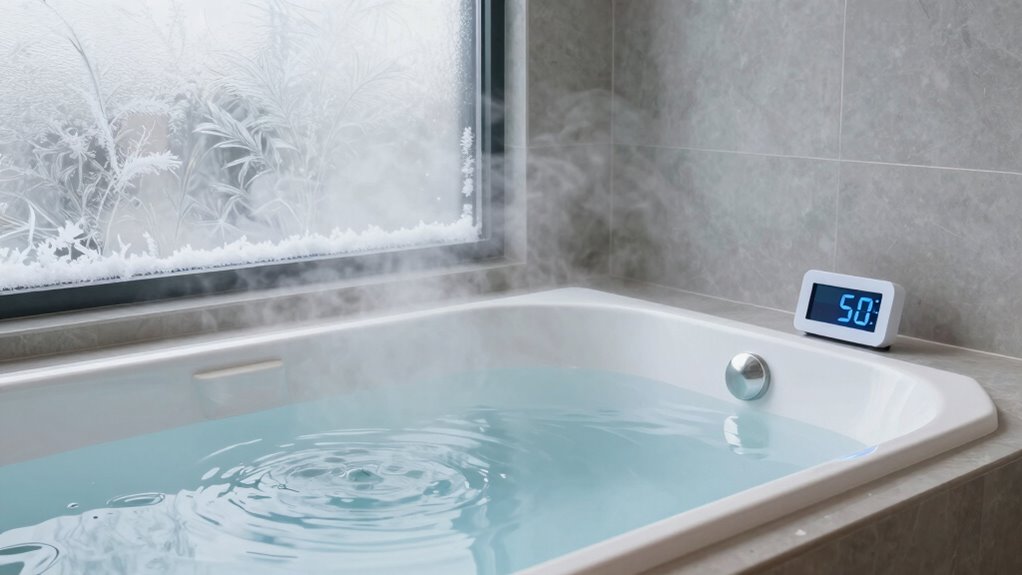
The ideal duration for your cold plunge depends on your experience level and comfort, but generally, staying in the water for 1 to 5 minutes is sufficient to reap its benefits. During your plunge, focus on controlled breathing techniques to help manage the shock and stay relaxed. Maintaining steady, deep breaths can improve your mental focus and reduce the urge to exit early. As you become more accustomed to cold water, you may gradually extend your time, but always listen to your body. The key is to stay calm and mindful, using breathing techniques to stay centered. Incorporating mindfulness practices can enhance your cold plunge experience and help you better manage the physical and mental challenges involved. Additionally, being aware of proper safety guidelines is essential to prevent hypothermia and other risks. Understanding cold water physiology can also help you recognize how your body responds and adapt safely. Being familiar with your body’s thermoregulatory response can further support safe and effective cold water exposure.
What Safety Precautions Should You Take Before Cold Plunging?
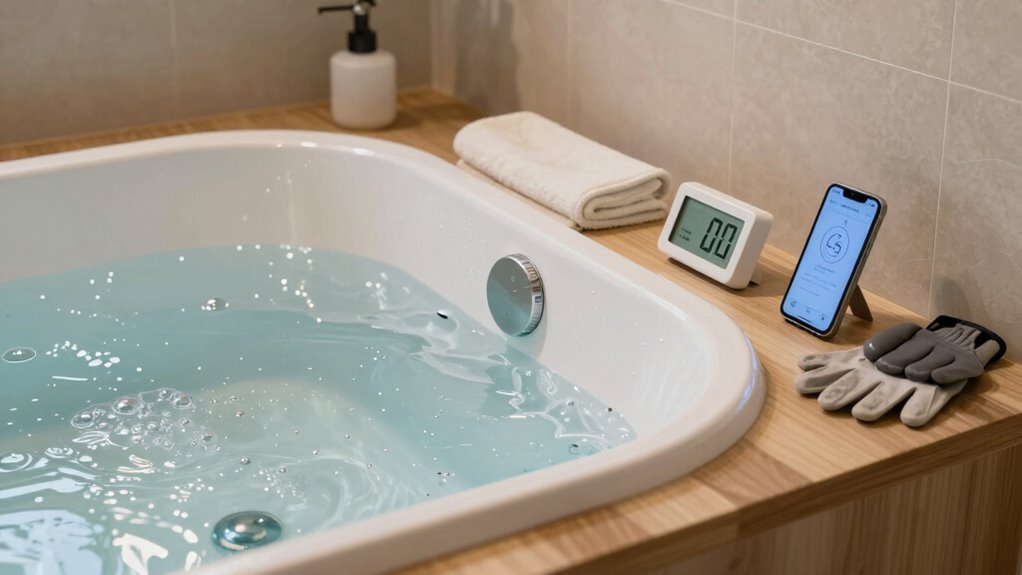
Before you start cold plunging, it’s crucial to evaluate your medical conditions and any risks they pose. Make sure the water is properly prepared to avoid shock or injury, and always have monitoring and emergency plans in place. Taking these precautions helps ensure your safety during each cold water session. Additionally, familiarize yourself with essential home safety tips for caregivers to create a secure environment. Remember to stay aware of personal safety, and avoid cold plunging alone whenever possible. Being aware of toxin-free spaces can also help you maintain a healthy environment around your practice. Understanding the benefits of high-pressure water applications can further inform your safety practices around water-based activities. Incorporating outdoor transformation essentials, such as creating safe seating areas and using landscaping wisely, can also contribute to a more secure and enjoyable cold plunging experience.
Medical Conditions and Risks
If you have existing medical conditions, it’s essential to consult your healthcare provider before attempting cold plunging. Certain medical contraindications, such as cardiovascular issues or respiratory problems, can be worsened by sudden cold exposure. People with chronic illness considerations should be especially cautious, as cold water can trigger adverse reactions or exacerbate symptoms. If you have a history of high blood pressure, arrhythmias, or nerve conditions, speak with your doctor to determine if cold plunging is safe for you. Ignoring these precautions may lead to complications like fainting, rapid heartbeat, or other health emergencies. Always prioritize your safety by understanding your personal health risks and seeking professional advice before integrating cold water immersion into your routine. Additionally, understanding cold water safety tips can help reduce the risk of accidents or health issues during cold plunging. Conducting a personal health assessment can further help identify whether cold plunging is appropriate for your specific condition. Being aware of the effects of cold exposure on the body can also inform your decision and preparation process, especially concerning heart rate and blood pressure responses.
Proper Cold Water Preparation
To guarantee your safety during cold plunges, taking proper precautions with the water preparation is essential. First, ensure the water quality is clean and free of contaminants; use filtered or sanitized water to minimize health risks. Check that your container is well-insulated to maintain a consistent temperature and prevent unwanted heat transfer, which helps you control the cold exposure. Avoid using dirty or stagnant water, as it can harbor bacteria or mold. Regularly clean and disinfect your container to keep water safe. If using tap water, let it run for a few minutes to flush out any impurities. Proper water preparation helps create a safe, controlled environment for your cold plunge, reducing potential hazards and enhancing your overall experience. Additionally, understanding water filtration techniques can further improve water quality and safety. Incorporating proper water testing methods ensures that water parameters remain within safe limits, providing added peace of mind. Being aware of microplastics in dust is also beneficial, as dust can settle in water containers and introduce unwanted particles, so covering your setup can help maintain water purity. Regularly inspecting your setup for potential contamination sources can further prevent health issues.
Monitoring and Emergency Readiness
Ensuring your safety during cold plunges requires careful monitoring and emergency preparedness. Before plunging, verify that your temperature sensors are properly calibrated to guarantee accurate readings. This helps prevent exposing yourself to dangerously cold water. Keep a close eye on the water temperature throughout your session, using reliable sensors to detect rapid drops or unsafe levels. Additionally, have emergency preparedness measures in place: keep a phone nearby, and know how to quickly exit and warm up if needed. Never plunge alone, and inform someone of your plans. Familiarize yourself with signs of hypothermia and cold shock. Proper safety protocols can significantly reduce risks during your cold plunge experience. By maintaining vigilant monitoring and preparing for emergencies, you minimize risks and ensure a safe, controlled cold plunge experience.
Choosing Equipment for a Consistent Cold Water Temperature
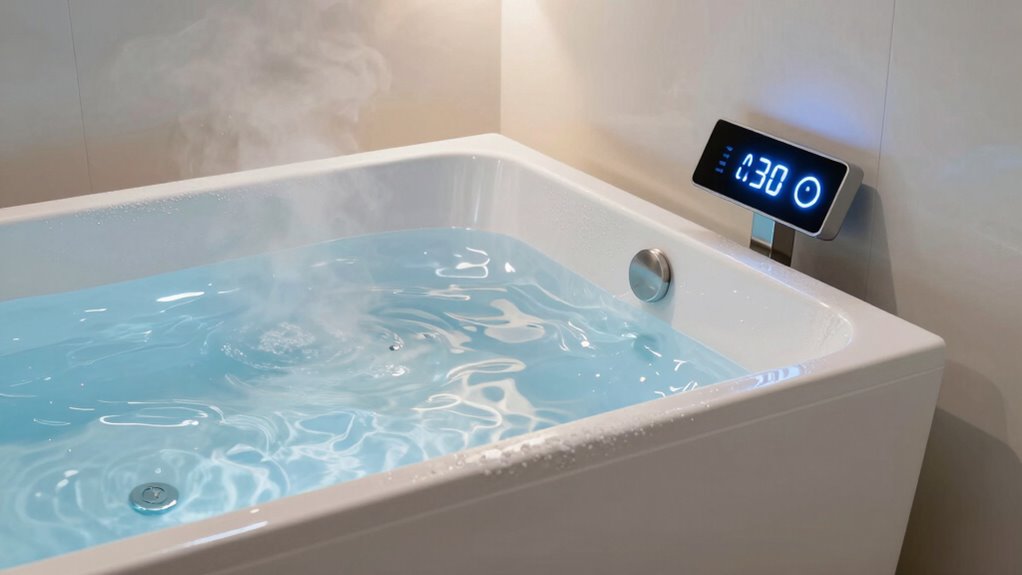
When selecting equipment for your cold plunge, you need reliable temperature control options to maintain consistent water temperatures. Consider how durable the equipment is, especially if you’ll be using it frequently. Choosing the right setup guarantees safe, effective, and long-lasting cold plunging experiences.
Temperature Control Options
Maintaining a consistent cold water temperature is essential for maximizing the benefits of your at-home cold plunge. To do this, you’ll need reliable temperature control options. Device options vary from simple thermostats to advanced electronic controllers that monitor and adjust water temperature automatically. Basic thermostats are affordable and easy to use but may require manual adjustments. Digital controllers offer precise temperature control and can be programmed for different sessions, ensuring your water stays within your desired range. Some systems even connect to mobile apps for remote adjustments. When choosing your equipment, consider your budget and how much automation you want. Proper temperature control devices help you maintain steady, safe water temperatures, making your cold plunge both effective and enjoyable.
Equipment Durability Factors
Choosing equipment that can withstand constant exposure to cold water is crucial for maintaining consistent temperatures over time. Material resilience ensures your equipment won’t crack or degrade, even after repeated use. Corrosion resistance is essential, especially if you use chemicals or if the water is slightly salty. Durable materials like stainless steel, high-quality plastics, or coated metals provide longevity and reliability. When selecting your equipment, consider how well it resists rust and corrosion, which can compromise safety and performance. Properly durable equipment minimizes maintenance and replacements, saving you time and money. Guaranteeing your cold plunge setup uses resilient, corrosion-resistant materials guarantees consistent performance and safe, enjoyable cold water therapy. Investing in quality equipment pays off with reliability and peace of mind.
How to Monitor and Respond to Your Body During Cold Plunge Sessions
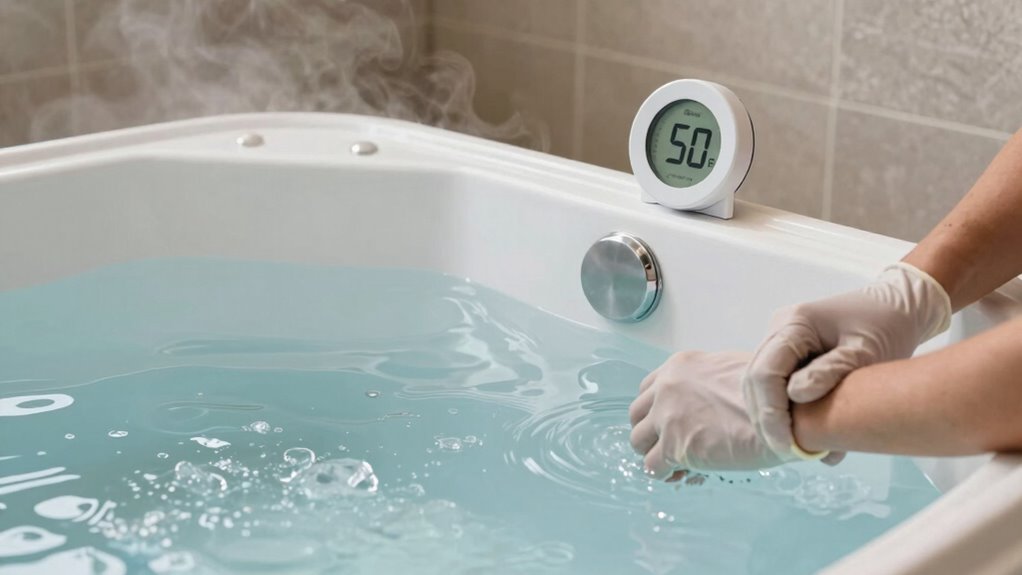
Monitoring your body’s responses during a cold plunge is essential to guarantee safety and maximize benefits. Pay close attention to your body response, especially signs of discomfort or numbness. Use temperature monitoring to track how your skin and core temperature change during the session. If you notice your skin becoming excessively cold, or if you start feeling dizzy, tingling, or numb, it’s important to respond immediately. Exit the plunge calmly and warm up gradually. Remember, everyone’s tolerance varies, so listen to your body and avoid pushing too hard. Staying aware of these cues helps prevent hypothermia and ensures you get the most out of your cold plunge safely. Consistent monitoring is key to a safe, effective experience.
Frequently Asked Questions
How Often Should I Cold Plunge for Optimal Benefits?
For ideal benefits, you should cold plunge 2 to 3 times a week, following recommended frequency guidelines. This allows your body to recover and adapt without overdoing it. Listen to your recovery considerations; if you feel fatigued or sore, extend the interval between sessions. Consistency is key, but avoid daily plunges to prevent potential negative effects. Adjust based on your response and consult a professional if needed.
Can I Add Ice or Cold Packs to Adjust Temperature?
Adding ice or cold packs to your cold plunge is like turning up the chill factor on a snowstorm. You can safely add ice to lower the temperature, but do so gradually to avoid shock. Cold pack safety is essential; never place frozen packs directly on your skin or in the water without a barrier. Adjust slowly, check the temperature regularly, and always prioritize safety for a invigorating, safe experience.
What Are Signs of Hypothermia During Cold Plunging?
If you experience cold shock or shivering symptoms during your cold plunge, it’s a sign you may be developing hypothermia. You might feel intense shivering, numbness, confusion, or dizziness. Your skin could turn pale or blue, and you might feel unusually tired or disoriented. If you notice these signs, get out of the water immediately, warm up gradually, and seek medical help to prevent serious health risks.
Is It Safe to Cold Plunge Alone at Home?
You shouldn’t cold plunge alone at home because solo safety is vital, especially if you’re not emotionally ready. Always have someone nearby who can help if you feel dizzy, disoriented, or experience any signs of hypothermia. Listening to your body and evaluating your emotional readiness before each plunge helps prevent accidents. Prioritize safety, and never underestimate the importance of having a partner or emergency contact during cold immersion.
How Do I Gradually Increase Cold Exposure Over Time?
To gradually increase your cold exposure, start by lowering the temperature or extending your plunge time slowly each session. This promotes gradual adaptation, helping your body adjust without overwhelming discomfort. Focus on discomfort management by listening to your body, taking breaks if needed, and not pushing too hard too fast. Over time, your tolerance will improve, making cold plunges more comfortable and effective.
Conclusion
Think of your cold plunge journey as steering a river’s gentle current. With the right temperature, timing, and safety measures, you’ll flow smoothly through this invigorating experience. Respect the water’s power and listen to your body’s signals, just as a seasoned kayaker reads the river. Embrace each plunge as a new bend in your adventure—steady, mindful, and ready to discover the revitalizing clarity that awaits on the other side.