
TL;DR

Get health and wellness essentials delivered free with Prime
- Fast, free delivery on millions of items
- Prime Video, Amazon Music and more included
- Member-only deals all year
Fit&Well’s report outlines four stretches after longer walks: a standing calf stretch, cat-cow, a figure-four stretch and a standing hamstring stretch. Physical therapist Dr. Margaret Tsai says to ease into each movement, stop short of pain and adjust hold times to comfort and ability.
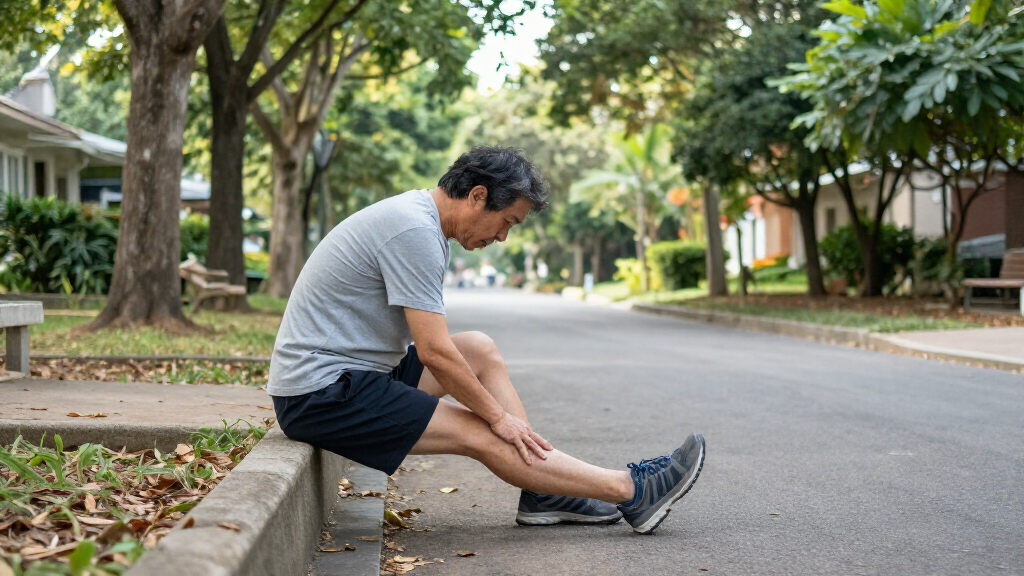
Fit&Well has published a guide to four stretches after walking, citing physical therapist Dr. Margaret Tsai of Sutter Health, who says the movements target muscles used during walking and may help reduce muscle tension and joint stiffness. The advice is aimed particularly at people whose longer walks leave them feeling tight; it is general guidance, not a treatment plan for an injury.
The four moves are a standing calf stretch, cat-cow, a supine figure-four stretch for the hip and glute area, and a standing hamstring stretch. Tsai says the stretches target the core, back, hips and glutes, hamstrings, and calves. Fit&Well’s report says a short stroll may not cause stiffness, while a longer walk or hike can put strain on those areas.
For the three static stretches, the guide gives a hold range of 10 to 60 seconds, adjusted to the person and the movement. Tsai recommends 10 to 30 seconds as a general starting range and says older adults may benefit from holds of 30 to 60 seconds. Cat-cow is different: the report suggests moving between the two positions for about one minute, coordinated with breathing rather than held in one position.
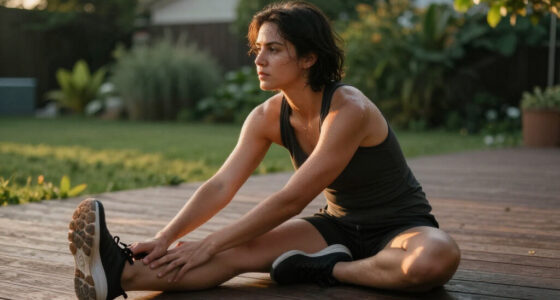
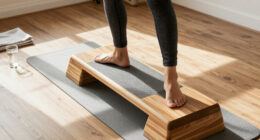
The instructions emphasize gradual movement and modifications. In the calf stretch, place the toes against a wall while keeping the heel down, then lean forward only until a comfortable stretch is felt. For cat-cow, alternate gentle rounding and arching on hands and knees. The figure-four is done lying on the back, crossing one ankle over the opposite knee and bringing that leg toward the chest only as comfortable. For the hamstring stretch, extend one leg with its heel on the floor and hinge at the hips; a wall or chair can provide balance support.
How the Stretches Fit After a Walk
The guide offers walkers a short routine aimed at calves, hamstrings, hips and the back—areas that can feel tight after a longer session. Its practical value lies in giving readers specific movements and ways to scale them, rather than prescribing one hold time or intensity for everyone.
The advice also draws a boundary between ordinary stretching and pain. Tsai cautions readers to build up to a comfortable degree of tension, never pain, and advises people with injuries or reservations to consult a doctor before trying the movements. That makes the routine general mobility guidance, not evidence that stretching prevents all soreness or treats a specific condition.
Products Worth Considering

Garmin Forerunner 265S 42 mm GPS Running Watch, Light Pink and Powder Gray

LEVOIT Vital 200S-P Smart Air Purifier for Large Rooms up to 1875 ft², Quiet 27 dB Operation, AHAM VERIFIDE Certified, Air Quality Monitor,

Hyperice Normatec Elite Wireless Compression Boots
As an affiliate, we earn on qualifying purchases.
What the Source Says About Frequency
Fit&Well’s report frames the stretches as a post-walk option, especially after a hike or other longer outing. Tsai says to begin with two or three sessions a week and gradually build toward daily stretching. The source does not provide research results or a clinical trial comparing this routine with other recovery approaches.
The report also distinguishes cat-cow from the other movements: it is a flowing sequence linked to breathing, not a conventional static hold. Tsai’s cues are to exhale while rounding the back into cat and inhale while arching into cow. For the other stretches, she advises keeping the back neutral rather than rounded.
“These stretches target the major muscle groups that are utilized [during walking], specifically the core, back, hip/glutes, hamstrings, and calves.”
— Dr. Margaret Tsai, physical therapist with Sutter Health, as quoted by Fit&Well
Limits of the Stretching Guidance
The source presents expert guidance but does not cite a study measuring whether these four stretches reduce stiffness, preserve mobility, or work better than other routines. The amount of benefit for an individual is not established in the report, and the suggested hold times and frequency are guidance rather than a personalized prescription.
It is also unclear how the routine would need to change for people with particular medical conditions, balance limitations or existing injuries. Fit&Well advises readers with injuries or concerns to check with a doctor; the report does not offer condition-specific alternatives or explain how long any effect might last.
How Readers Can Apply the Routine
Readers who choose to try the sequence can start with a gentle version of each movement, use support for standing stretches if balance is a concern, and stop if a stretch causes pain. Tsai’s guidance is to begin two to three times weekly and build gradually, rather than treating daily practice as a requirement from the outset.
The source does not announce further research or a follow-up from Sutter Health. People with injuries or uncertainty about whether a movement is appropriate should seek advice from a qualified health professional before adding it to their routine.
Key Questions
What four stretches does the report recommend after walking?
The routine includes a standing calf stretch, cat-cow, a supine figure-four stretch and a standing hamstring stretch.
How long should each stretch be held?
Fit&Well gives a general range of 10 to 60 seconds for the static stretches. Tsai suggests 10 to 30 seconds generally and says older adults may benefit from 30 to 60 seconds. Cat-cow is done as a flowing sequence for about one minute.
How often does Tsai suggest stretching?
Tsai recommends starting with two or three sessions per week and gradually increasing toward daily stretching. The report does not say that everyone needs to stretch every day.
Should a stretch hurt?
No. Tsai advises easing into a comfortable tension and not stretching into pain. Anyone with an injury or concerns is advised by the report to check with a doctor before trying the movements.
Source: fitandwell.com