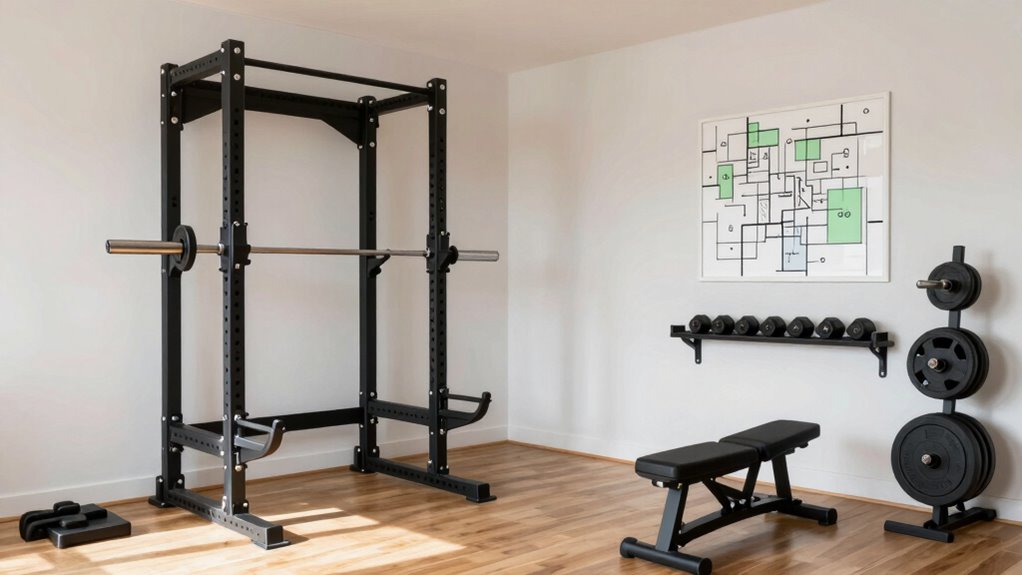

To fit a rack, bench, and weights in your home gym, measure your space carefully, noting any obstacles. Organize equipment strategically to maximize room, leaving enough clearance for workouts and stretching. Use wall-mounted storage and multi-purpose furniture to save space, and keep walkways clear for safety. Incorporate good lighting and ventilation for comfort. For detailed tips on creating an efficient layout, continue exploring ways to design a functional gym that works for you.
Key Takeaways
- Measure available space accurately, accounting for windows, doors, and obstructions to plan effective layout zones.
- Prioritize placement of the rack, bench, and weights for safety and accessibility, leaving enough clearance for movement.
- Use digital planning tools or layout tables to experiment with arrangements that optimize space and flow.
- Incorporate wall-mounted storage solutions for weights and accessories to maximize floor space and reduce clutter.
- Ensure proper lighting, ventilation, and safety measures like clear walkways and non-slip mats during layout planning.
How to Assess Your Space and Equipment Needs for Your Home Gym
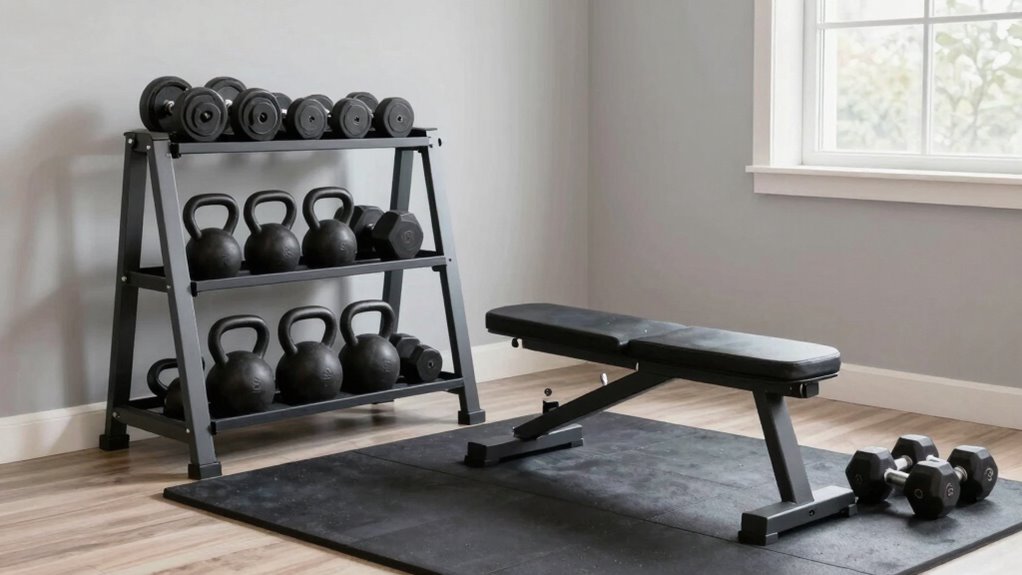
Before you start selecting equipment, conducting a thorough evaluation of your available space is essential. You need to understand the size and layout of your area to optimize space and make effective equipment selection. Measure the dimensions carefully, noting any obstructions like windows, doors, or vents that could impact placement. Consider your workout routines and how much space each activity requires. Think about the types of equipment you need most, such as a rack, bench, or weights, and guarantee there’s enough clearance for safe movement. Space optimization isn’t just about fitting equipment; it’s about creating a functional flow that encourages consistent workouts. By accurately assessing your space and needs, you’ll set a solid foundation for designing an efficient, comfortable home gym tailored to your goals. Incorporating principles of ergonomics and layout can help ensure your workout area promotes good posture and easy movement throughout your routines. Additionally, understanding space planning can help maximize your available area and prevent overcrowding. Recognizing the importance of spatial awareness can further assist in arranging your equipment for both safety and convenience.
Creating an Effective Layout for Your Home Gym

Designing an effective layout for your home gym begins with organizing your equipment to maximize space and safety. Position your rack, bench, and weights strategically, leaving enough room for movement and stretching. Consider lighting options that brighten the area and enhance focus, such as adjustable fixtures or natural light. Adding decorative accents like mirrors or plants can make the space inviting without cluttering it. Use the table below to plan your layout:
| Area | Features |
|---|---|
| Power zone | Rack, weights, and bench placement |
| Warm-up zone | Clear space for stretching |
| Lighting | Overhead and task lighting options |
| Decor | Mirrors, artwork, or accents to motivate |
This setup keeps your gym functional and inspiring. Incorporating ergonomic spacing not only improves comfort but also reduces the risk of injury during workouts. Additionally, paying attention to proper airflow is essential for maintaining a fresh and comfortable environment, which can be achieved through proper ventilation systems or air circulation strategies. A well-designed layout can also incorporate natural light, further enhancing the ambiance and motivation in your workout space.
Smart Storage Solutions to Maximize Your Home Gym Space
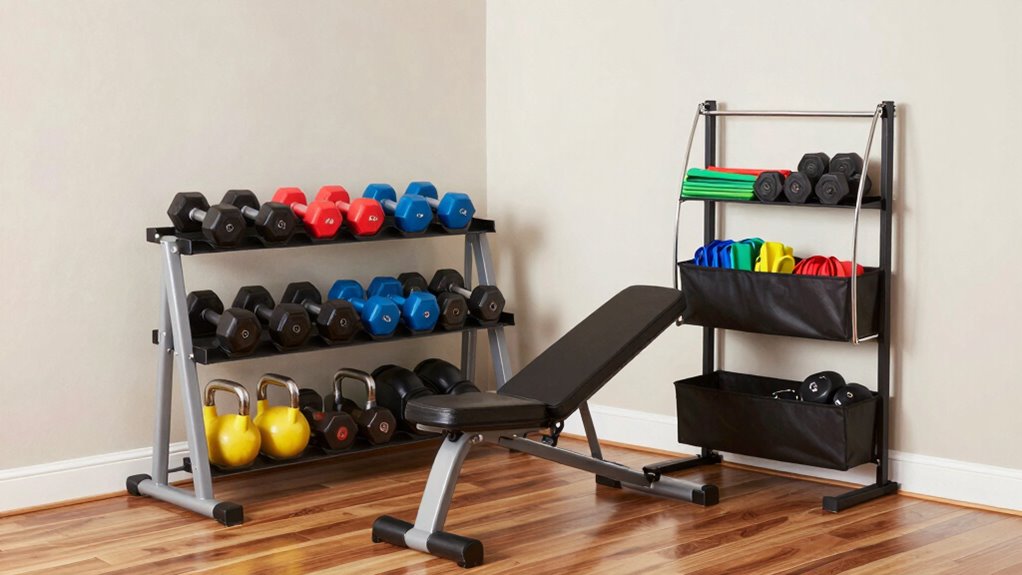
Maximizing your home gym space requires smart storage solutions that keep your equipment organized and easily accessible. Focus on effective storage organization by using wall-mounted racks, shelves, and vertical space to save floor area. Proper equipment placement is essential—store heavier items like dumbbells and weights on sturdy, low shelves for stability and safety. Use hooks or pegs for resistance bands and jump ropes, freeing up bench space. Consider multi-purpose furniture with built-in storage to hide smaller accessories. Label containers and bins to quickly find what you need, reducing clutter. Additionally, employing free floating storage options can help optimize space flexibility. Incorporating media literacy into your organization strategy ensures you select reliable storage solutions that suit your needs. Research into sound healing science highlights the importance of a calming environment, which can be supported by organized and thoughtfully arranged space. Understanding the contrast ratio of your storage furniture can also influence how well your items are visible and accessible, enhancing overall organization. Being aware of safety standards when choosing storage solutions is crucial to prevent accidents and ensure a secure workout environment. By thoughtfully arranging your equipment and leveraging vertical storage, you create a clean, efficient workout environment that maximizes space and keeps your gym setup functional.
Safety and Comfort Tips for Your Home Gym Setup
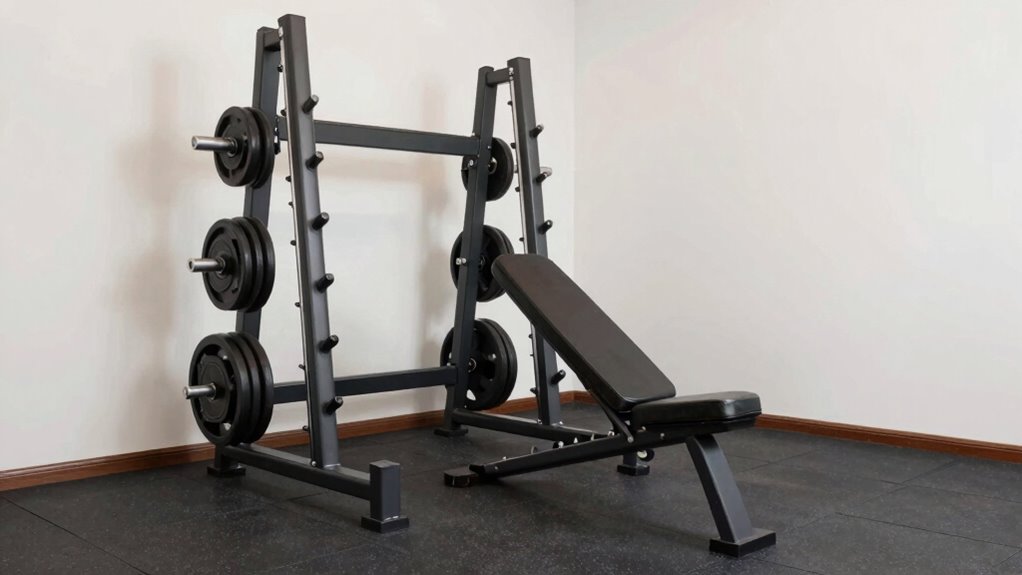
Ensuring safety and comfort in your home gym starts with creating a well-organized and hazard-free environment. Regular equipment maintenance is key; check for loose bolts, worn cables, or damaged padding to prevent accidents. Keep walkways clear and ensure proper lighting for workout safety. Use the table below for quick tips:
| Tip | Why it Matters | Example |
|---|---|---|
| Regular equipment checks | Prevents malfunctions | Tighten bolts monthly |
| Clear workout space | Avoids tripping hazards | Move weights aside when not in use |
| Adequate ventilation | Keeps the space comfortable | Install a fan or open windows |
| Proper mat placement | Reduces impact injuries | Use mats under weights |
| Temperature control | Supports workout safety and comfort | Use space heaters or fans |
Additionally, consider caring for your gear to extend its lifespan and maintain safety standards. Regularly inspecting your equipment and understanding equipment safety can further help prevent injuries. Incorporating knowledge about proper storage techniques can also help keep your space tidy and safe. Being aware of air quality factors, such as dust and microplastics, can contribute to a healthier workout environment. Paying attention to regular cleaning routines can significantly reduce dust and allergens in your space. Prioritize equipment maintenance, keep your space safe, and enjoy your workouts comfortably.
Using Planning Tools to Map and Design Your Home Gym
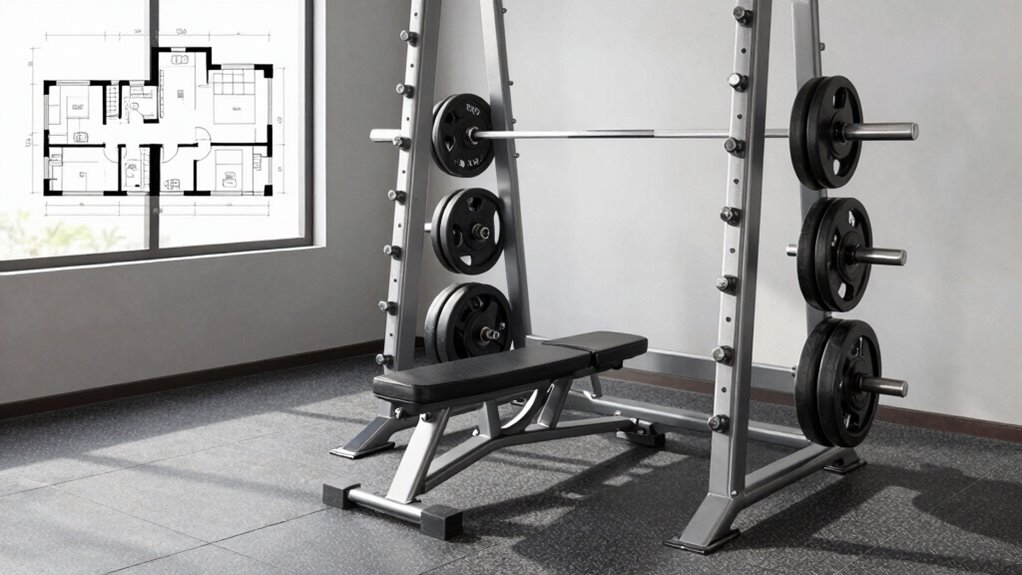
Using planning tools can make designing your home gym much easier and more efficient. Digital tools like space planners and virtual workout apps help you visualize layout options and optimize your space. With these tools, you can:
- Experiment with different arrangements for your rack, bench, and weights to maximize space.
- Incorporate gym decor ideas that motivate you and enhance the ambiance.
- Use virtual workout simulations to test movement flow and safety.
- Adjust measurements easily, ensuring your gym fits comfortably without feeling cramped.
Frequently Asked Questions
How Can I Incorporate Multimedia or Entertainment in My Home Gym?
You can incorporate multimedia by installing a sound system for music integration, making your workout more energizing. Add a large video display or a smart TV to stream workout videos, motivational content, or your favorite shows. Mount speakers around your gym for balanced sound, and use wireless devices for easy control. This setup keeps you entertained and motivated, transforming your home gym into an engaging, dynamic space.
What Are the Best Lighting Options for Motivation and Visibility?
Lighting in your home gym should be like a lighthouse guiding your workout. Use bright, adjustable ambient lighting to energize the space and create a motivating atmosphere. Combine this with focused task lighting over your weights and bench to guarantee visibility and safety. Opt for LED fixtures with dimming options, so you can customize brightness levels, boosting both motivation and clarity during every session.
How Do I Plan for Ventilation and Airflow?
To optimize airflow and ventilation in your home gym, start by choosing ventilation solutions like exhaust fans or air purifiers to improve air quality. Incorporate airflow optimization by adding ceiling or oscillating fans to circulate air effectively. Keep windows open when possible, and use vent openings or intake vents to promote fresh air exchange. These steps help maintain a comfortable, well-ventilated space that keeps you motivated and safe during workouts.
Can I Include a Mirror Without Sacrificing Space or Storage?
A mirror can be your gym’s silent motivator, reflecting progress without sacrificing space. You can include a mirror using space-saving solutions like wall-mounted options or lean-to designs. Thoughtful mirror placement, such as above your rack or along an empty wall, maximizes utility while keeping your workout area open. With clever choices, you’ll achieve both functional storage and a motivating space that feels larger and more inviting.
How Should I Organize Accessories Like Mats, Ropes, or Smaller Weights?
You should implement smart storage solutions to keep your accessories organized. Use wall-mounted hooks or pegboards for ropes and smaller weights, saving floor space. Stack mats neatly in a dedicated corner or use a storage bin to keep them accessible yet out of the way. Consider multi-purpose furniture with built-in storage to maximize space, making accessory organization easy and efficient without cluttering your home gym.
Conclusion
With a clear plan, your home gym becomes a well-orchestrated symphony of space and equipment, transforming chaos into harmony. By evaluating your needs, designing smart layouts, and utilizing planning tools, you create a workout oasis that fits like a glove. Remember, a thoughtfully arranged gym is your ticket to consistent, enjoyable workouts—turning your space into a personal fitness sanctuary where every piece plays its part perfectly.