
When choosing a massage gun, don’t fall for hype around amplitude and stall force alone. High amplitude delivers deeper tissue penetration, great for trigger points, while high stall force handles dense muscles without stalling. The key is balancing these features with your specific needs, like soreness level and muscle density. Understanding what truly impacts performance helps you pick a device that works for you. Keep exploring to get the real facts behind these specs.
Key Takeaways
- Higher amplitude provides deeper tissue penetration, but isn’t always better; match it to your muscle needs.
- Stall force indicates pressure capacity on dense tissues; higher stall force helps target stubborn knots effectively.
- Don’t assume higher specs mean better performance; consider your specific recovery goals and comfort preferences.
- Balance adjustable force and speed with device ergonomics to prevent discomfort during use.
- Focus on overall features like motor quality and attachments rather than hype-driven specifications.
What Are Amplitude and Stall Force in Massage Guns?
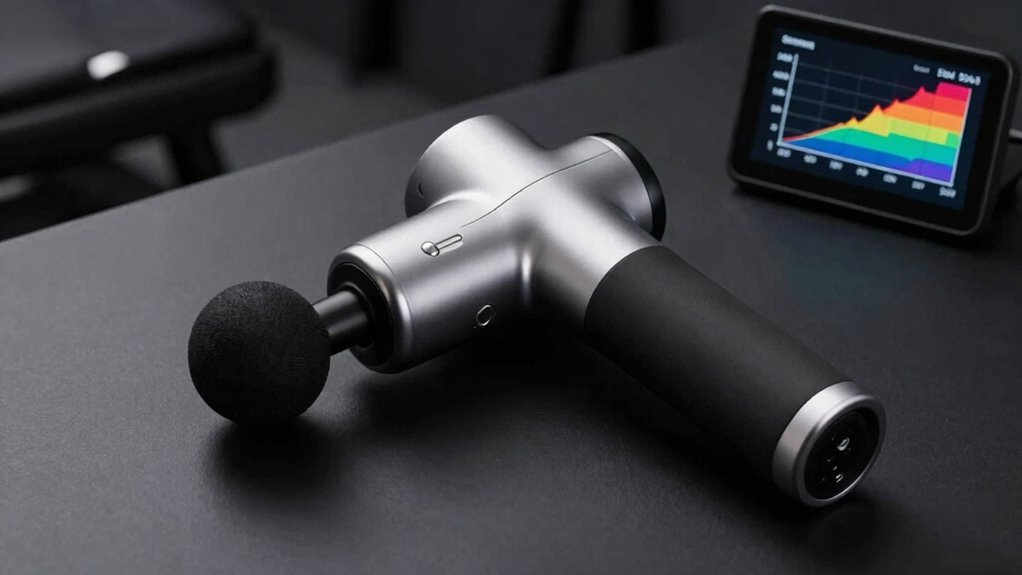
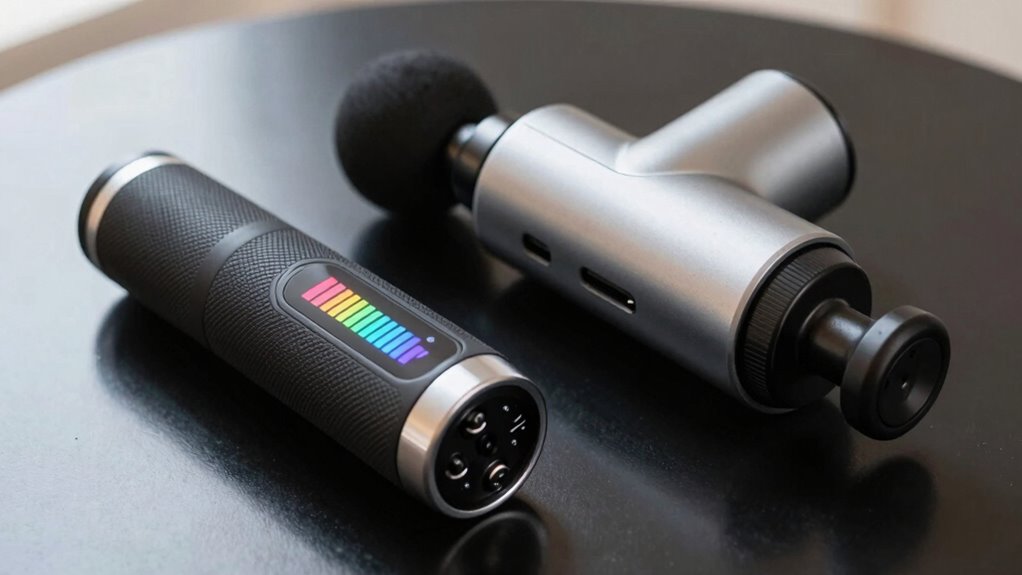
Understanding the terms amplitude and stall force is essential when choosing a massage gun. Amplitude refers to how deep the device’s head moves into your muscles, which impacts muscle recovery and helps prevent injuries by addressing tightness. Higher amplitude delivers more intense relief, making it ideal for larger muscle groups. Stall force measures the maximum pressure the gun can apply before it stalls or stops moving, indicating its capacity to handle tough, dense tissues. If you need a device for injury prevention and deep tissue work, look for a massage gun with a higher stall force. Both features influence how effectively the massage gun can target specific muscles, supporting your recovery process and reducing the risk of strain or injury. Understanding these key features can help you make a more informed decision when selecting a massage gun. Additionally, knowing how these features interact can guide you toward choosing the right model for your specific needs. Recognizing the performance parameters of a massage gun ensures you select a device that aligns with your recovery goals and tissue types. Being aware of device capabilities allows users to optimize their massage sessions and avoid potential underperformance or overexertion. Incorporating an understanding of creative storytelling can also enhance your overall experience by connecting your recovery routine with motivating narratives that inspire consistency.
How Do Amplitude and Stall Force Affect Muscle Relief?
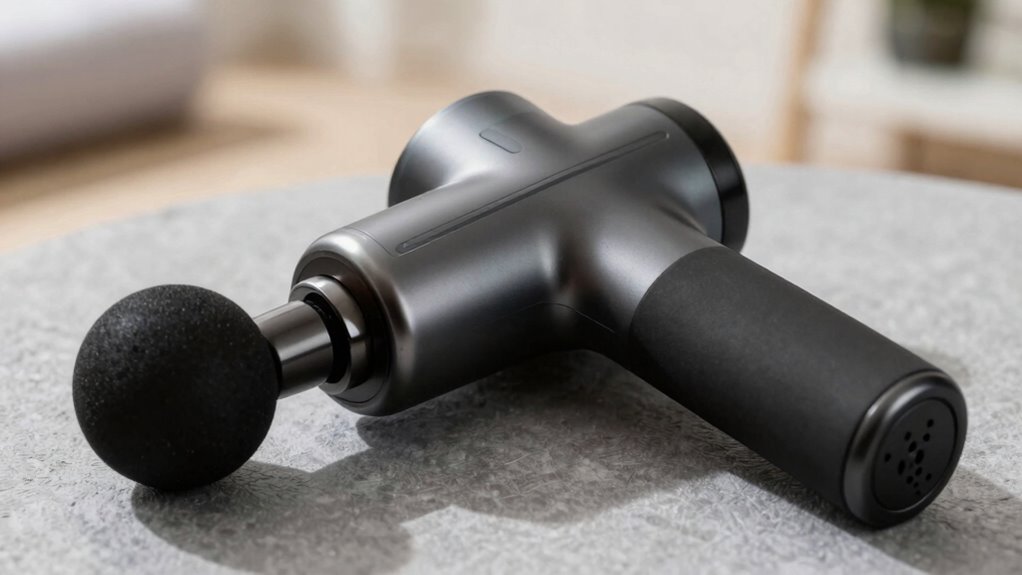
Amplitude and stall force directly influence how effectively a massage gun relieves muscle tension. Higher amplitude delivers deeper percussions, which can target stubborn trigger points and break up muscle knots. This makes them especially useful for commercial kitchen equipment and other professional-grade gear that demands reliable performance. Stall force determines how much pressure the device can apply without stalling, ensuring consistent relief on dense, tight areas. A massage gun with sufficient stall force prevents the tool from losing contact or stalling, maximizing its effectiveness on tough spots. Together, these features help relax tight muscles, improve blood flow, and accelerate recovery. If you want to efficiently address trigger points and speed up muscle recovery, choosing a device with the right amplitude and stall force is vital.
Which Features Matter Most for Your Soreness?
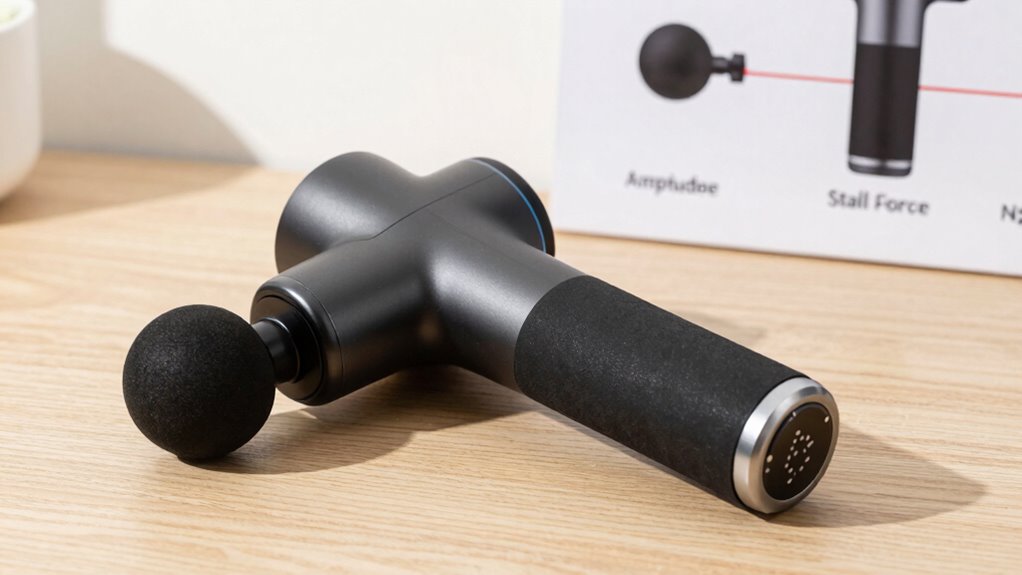
When choosing a massage gun for soreness, the features that matter most depend on the type and intensity of your discomfort. If you’re targeting trigger points or deep muscle knots, look for a device with adjustable intensity and sufficient amplitude to reach those tight spots. For general recovery strategies, consider a gun with multiple speed settings to customize your massage. Think about the following features:
- Percussion depth to effectively target deep tissue or surface muscles
- Adjustable speed and force for personalized relief
- Interchangeable attachments to adapt to different muscle groups and soreness levels
- The compatibility with high-performance panels can also influence the longevity and efficiency of your recovery devices, ensuring consistent power supply for long-term use. Additionally, consider the amplitude range to ensure the device can accommodate various muscle depths and soreness levels effectively. The motor quality plays a crucial role in maintaining consistent performance and reducing noise during use.
Focusing on these features helps you optimize recovery, relieve trigger points, and prevent soreness from worsening. The right features make your recovery more effective and tailored to your specific needs.
Comparing High-Amplitude and High-Stall Force Massage Guns: Which Is Right for You?
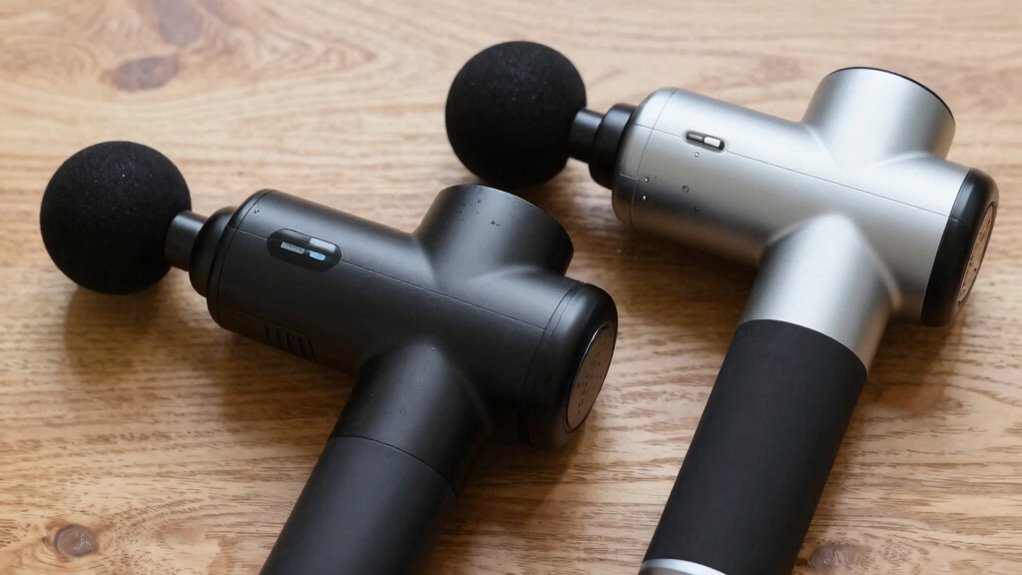
Choosing the right massage gun depends heavily on your specific recovery needs. If you frequently target trigger points or deep muscle knots, a high-stall force gun offers the power to break up stubborn tension. These guns excel at providing consistent pressure without stalling, making them suitable for muscle recovery in dense areas. On the other hand, high-amplitude models deliver deeper percussions, reaching into tissues more effectively for trigger point release and overall soreness relief. Consider if you need sustained pressure or deep tissue engagement. If your goal is extensive muscle recovery and relief from intense knots, a high-stall force device might suit you best. However, if you prefer a more penetrating massage for deep trigger points, opt for a high-amplitude gun. Your choice depends on balancing power and depth for your recovery routine.
How to Choose the Best Massage Gun for Your Needs
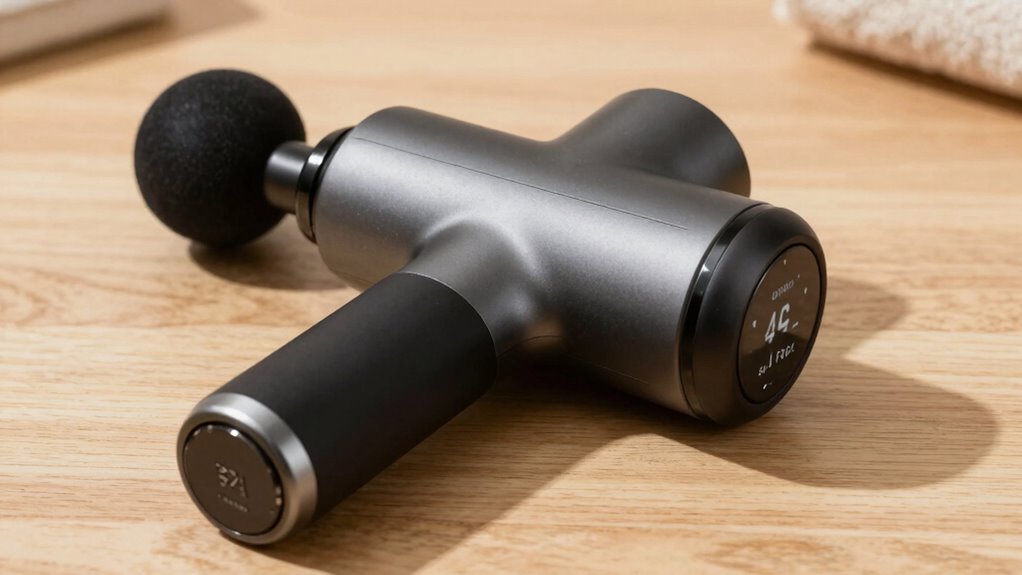
To select the appropriate massage gun, consider your particular muscle requirements and which regions demand focused relief. You’ll also want to balance power and comfort to make certain it feels good without causing discomfort. Additionally, assessing vehicle protection features can help ensure your device remains durable and reliable over time. For instance, choosing a model with a durable build can extend its lifespan and maintain performance. Moreover, understanding ergonomic design principles can enhance user comfort during prolonged use. Incorporating adjustable intensity settings allows you to customize the massage experience to suit different muscle groups and sensitivity levels. Finally, compare features and prices to find a device that fits your budget and offers the functions you need most. Understanding dream symbolism related to clocks and time can also give you insights into your personal rhythms and stress levels, helping you choose a device that aligns with your lifestyle.
Consider Your Muscle Needs
Understanding your muscle needs is essential to selecting the right massage gun. If you’re focused on muscle recovery or injury prevention, consider how different features align with those goals. For instance, if you need deep tissue work, look for a device with higher amplitude; for gentler relief, a lower amplitude might suffice. Think about the areas you’ll target—large muscle groups or smaller, sensitive spots. Visualize yourself applying the massage:
- Relying on a gun that penetrates deeply for stubborn knots
- Using a softer setting for sensitive or injured areas
- Choosing a lightweight, easy-to-hold device for extended sessions
Matching your needs guarantees you get the most benefit, whether it’s speeding recovery or preventing injuries. Selecting wisely helps you work smarter, not harder, in maintaining muscle health. Keep in mind that Free Floating techniques can also enhance muscle relaxation and recovery when integrated into your routine. Moreover, understanding the Amplitude and Stall Force of your massage gun can help tailor the treatment intensity to your specific needs. Additionally, recognizing the importance of passive voice detection can improve your overall writing clarity and engagement. To optimize your selection process, consider researching muscle group targeting to ensure the device’s features align with your specific recovery goals. Incorporating personalized therapy options can further enhance your treatment effectiveness and comfort.
Balance Power and Comfort
Finding the right balance between power and comfort is key to selecting a massage gun that effectively relieves muscle tension without causing discomfort. If the device is too powerful, it may trigger painful trigger points or create tissue penetration that’s too intense, leading to soreness. Conversely, a machine that’s too gentle might not penetrate deeply enough to loosen tight muscles. Consider your sensitivity and target areas when choosing a massage gun. Look for adjustable speed settings to customize tissue penetration and avoid overstimulation. Prioritize a design that allows you to control the force, so you can target trigger points precisely without sacrificing comfort. Understanding tissue penetration depths can help you make informed choices about the device’s power levels. Choosing a device with proper airflow and a balanced force ensures you get effective relief while minimizing discomfort, making your massage sessions both safe and beneficial.
Evaluate Features and Budget
How do you determine which massage gun offers the best value for your money? Start by evaluating features that support muscle recovery and injury prevention within your budget. Consider the following:
- Adjustable speed and intensity: Allows personalized treatment for sore muscles or deep tissue work.
- Battery life and portability: Ensures you can use it consistently without frequent recharging, perfect for on-the-go recovery.
- Attachments and accessories: Versatile heads target different muscle groups, enhancing injury prevention and recovery.
Prioritize these features based on your needs. If you’re recovering from workouts or preventing injuries, investing in a device with multiple settings and attachments provides better overall value. Staying within your budget while focusing on essential features ensures you get the most effective massage gun for your goals. Understanding amplitude and stall force can help you choose a device that matches your recovery needs more accurately. Additionally, understanding motor performance can guide you toward a more durable and effective device.
Myths About Amplitude and Stall Force: Debunked
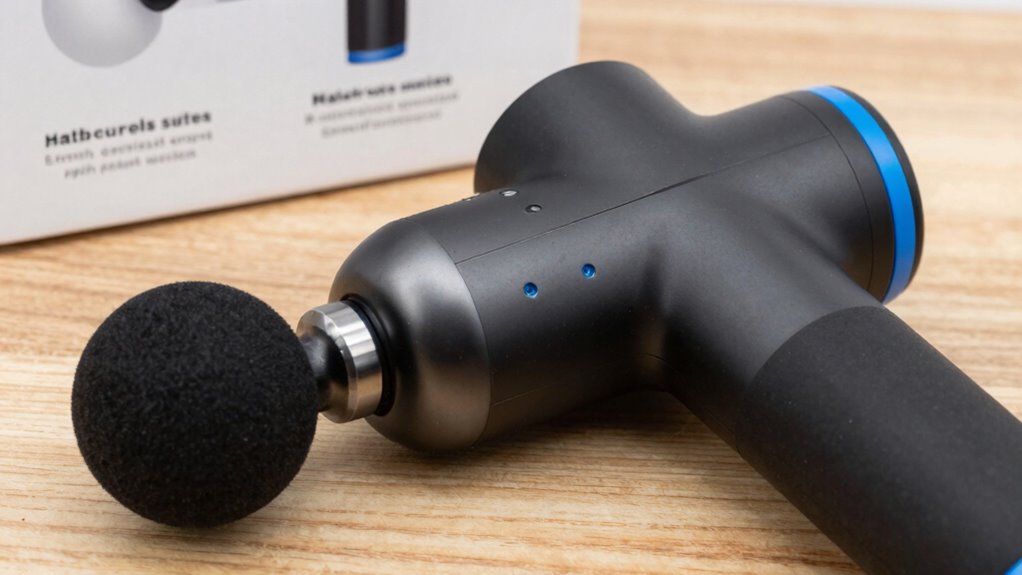
Many people believe that higher amplitude always means a more effective massage, but that’s not necessarily true. Stall force isn’t the only factor to consider, and focusing too much on it can be misleading. Hype around these specs often oversimplifies how well a massage gun will actually work for you. Additionally, understanding the vintage audio revival can help clarify how popular trends sometimes distort the real value of features like amplitude and stall force. Recognizing the specifications that truly impact performance can lead to better purchasing decisions.
Amplitude Doesn’t Equate Effectiveness
Although higher amplitude might seem like a sign of better massage guns, it doesn’t necessarily mean they’re more effective. A greater amplitude doesn’t automatically improve muscle recovery or athletic performance. In fact, excessive amplitude can sometimes cause discomfort or even damage tissues if misused. Instead, focus on how a massage gun’s overall design and features suit your needs. Imagine:
- Targeted relief that reaches deep without causing pain
- Improved circulation helping muscles recover faster
- Ease of use during recovery sessions
These factors often matter more than just raw amplitude numbers. A well-balanced device with appropriate amplitude can optimize muscle recovery without sacrificing comfort, making it more effective for enhancing athletic performance. Remember, effectiveness depends on proper use, not just the amplitude specification.
Stall Force Is Not Always Critical
While stall force is often highlighted as a key feature of massage guns, it isn’t always the most important factor to consider. A higher stall force doesn’t necessarily mean better relief or faster recovery. If you’re dealing with muscle fatigue, focusing solely on stall force may lead you to overlook other crucial aspects like amplitude or technique. Additionally, injury prevention relies more on proper use than raw force. Overusing a device with excessive stall force can cause tissue damage rather than aid recovery. Instead, prioritize a massage gun that offers a balance, ensuring effective treatment without risking harm. Remember, the goal is to reduce fatigue and prevent injury, not just to push harder with higher stall force.
Hype Oversimplifies Performance
It’s a common misconception that higher amplitude and stall force automatically mean better massage gun performance. In reality, hype oversimplifies what these features actually do. You might imagine a device with extreme specs as a miracle for personal training or sports recovery, but that’s not always true.
Think of it like:
- Using a powerful tool on a small, sensitive area and causing discomfort instead of relief
- Relying solely on amplitude to target deep tissue without considering technique
- Believing that more stall force equals faster recovery, when correct usage matters more
Understanding that performance depends on your specific needs helps you avoid falling for hype. For effective sports recovery or personal training, focus on how the massage gun’s features match your goals—not just the numbers.
When to Prioritize Amplitude or Stall Force in Your Massage Gun
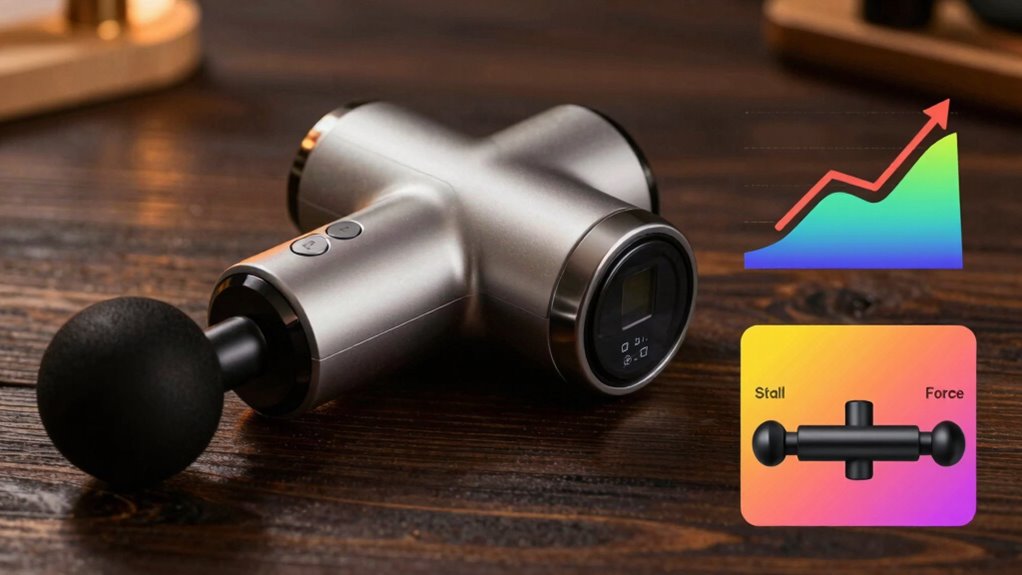
Knowing when to prioritize amplitude or stall force depends on your specific recovery needs and muscle targets. If you’re focusing on muscle recovery and reducing soreness, higher amplitude delivers deeper, broader tissue penetration, making it ideal for loosening tight muscles. Athletes seeking to enhance performance benefit from increased amplitude to improve flexibility and circulation. Conversely, stall force becomes vital when targeting stubborn knots or dense tissue that require more pressure without excessive movement. If you have deep, trigger-point pain, a massage gun with higher stall force can provide the necessary pressure without sacrificing comfort. Ultimately, choosing between amplitude and stall force depends on whether you need gentle, broad stimulation or intense, localized pressure to optimize muscle recovery and athletic performance.
Tips for Getting the Most Out of Your Massage Gun
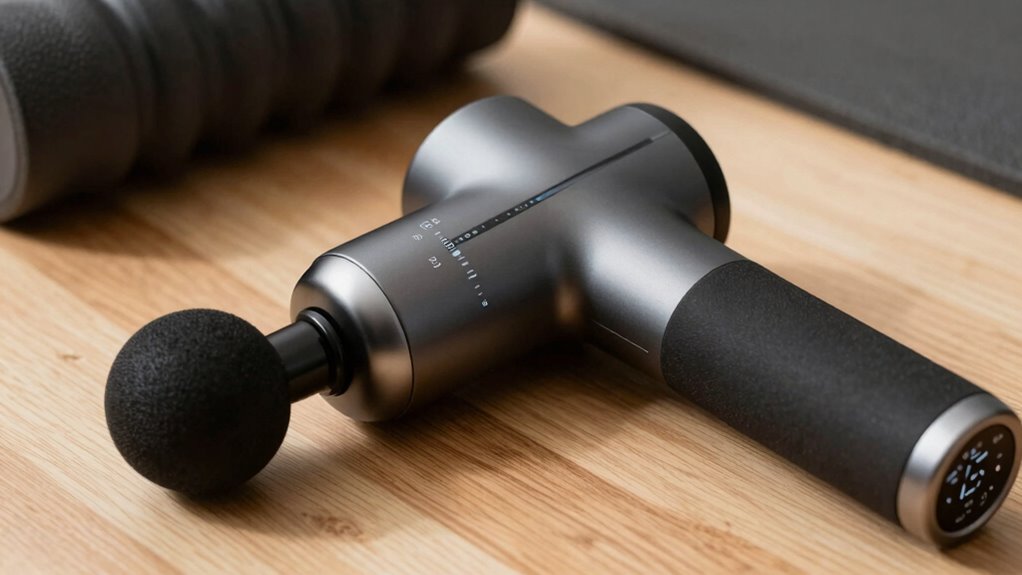
To get the most out of your massage gun, start by targeting specific areas with the appropriate attachment and settings. Focus on trigger points to relieve knots and muscle tension, applying gentle pressure and slow movements. For fascia release, use a higher amplitude setting to break up tight fascia layers and improve flexibility. Keep your movements steady, spending around 30 seconds on each spot to maximize relief. Remember, consistency is key—regular use enhances recovery and reduces soreness. Adjust speed and intensity based on your comfort level and the muscle area you’re targeting. Don’t rush; let the massage gun work deep into muscles and fascia. With proper technique, you’ll experience better results and avoid overstimulation or discomfort.
Frequently Asked Questions
Are Higher Amplitude Models Always Better for Muscle Recovery?
Higher amplitude models aren’t always better for muscle recovery. While they can penetrate deeper, they might cause more discomfort or even increase muscle fatigue if used improperly. For injury prevention, choose a device that balances amplitude with stall force, ensuring effective relief without overstimulation. Focus on your body’s response, and don’t assume bigger is automatically better—select a massage gun suited to your specific needs for safe, effective recovery.
Can a Massage Gun With High Stall Force Cause Muscle Damage?
A massage gun with high stall force can be a double-edged sword, like a hammer that risks breaking delicate glass. If you push too hard, it can exacerbate muscle tension or trigger points, risking muscle damage instead of relief. Use it mindfully, especially on sensitive areas. Let the tool work in harmony with your muscles rather than forcing it—less is often more when it comes to recovery.
How Does User Body Weight Influence Optimal Amplitude and Stall Force?
Your body weight directly influences your ideal massage intensity, amplitude, and stall force. If you’re heavier, you’ll likely need a massage gun with higher stall force to penetrate muscles effectively, but be cautious to avoid discomfort. Lighter individuals should opt for lower stall force and amplitude to prevent overstimulation. Adjust the pressure based on your body weight to achieve effective relief without risking muscle damage.
Is There an Ideal Combination of Amplitude and Stall Force for Athletes?
Think of your ideal massage gun combo as a tailored suit—precise and comfortable. For athletes, a moderate amplitude with higher stall force often hits the sweet spot, offering effective deep tissue relief without excess noise. Personalization options let you tweak settings to match your needs, ensuring you get the most suitable combo that suits your body and activity level. Focus on balance, and you’ll enhance recovery without unnecessary noise or discomfort.
Do Different Muscle Groups Require Different Massage Gun Settings?
Yes, different muscle groups benefit from tailored massage gun settings. For muscle fatigue and deep tissue work, you should use higher amplitude and stall force on larger, deeper muscles like quads or calves. For smaller, more sensitive muscles, lower intensity prevents overstimulation. Adjusting settings guarantees effective relief without discomfort, helping you recover faster and maintain ideal performance across all muscle groups.
Conclusion
Don’t fall for the hype—your perfect massage gun isn’t a magic wand, but understanding amplitude and stall force assists you in choosing wisely. Whether you need deep muscle relief or gentler care, picking the right features ensures you get maximum benefits without wasting your hard-earned cash. Think of it like finding the ultimate tool in your wellness arsenal—armed with knowledge, you’ll conquer soreness like a superhero. So, choose smart and enjoy a pain-free life!