
TL;DR

Get health and wellness essentials delivered free with Prime
- Fast, free delivery on millions of items
- Prime Video, Amazon Music and more included
- Member-only deals all year
Massage guns, also called percussive massage devices, use a rapidly moving attachment to apply repeated pressure to soft tissue. Research suggests they may temporarily ease perceived tightness or soreness and improve range of motion, but evidence that they speed healing or reliably improve performance remains limited. Use light pressure, keep the device moving, and stop if it causes pain, tingling, numbness, or bruising.
Your legs can feel like overfilled sandbags the morning after a long run, and a massage gun’s low buzz can seem like an easy fix. These handheld devices are popular for post-workout tightness, but a soothing sensation does not prove that a muscle has healed faster.
This guide explains what massage guns for muscle recovery may help with, what research has not established, and how to try one without turning a comfort tool into another source of soreness. You’ll also get practical safety tips and features to compare before buying.
Massage guns may temporarily ease perceived tightness or soreness and may improve range of motion, but faster tissue healing is not established.
Start on a low setting with light pressure and keep the attachment moving; roughly 30 seconds to two minutes per muscle group is a cautious trial, not a proven…
Avoid bones, joints, the head, the neck, wounds, bruises, and areas with significant swelling or sharp pain.
Ask a clinician first if you have a bleeding or clotting disorder, reduced sensation, fragile skin, recent surgery or injury, or a possible blood clot.
Compare comfort, grip, weight, noise, battery, and ease of cleaning; extra speed settings and attachments do not guarantee better results.
What a Massage Gun Can Do for Tight, Tired Muscles
A massage gun is a handheld device that taps soft tissue with a small, rapidly moving head; that repeated pressure is also called percussive massage. It may temporarily make a tight muscle feel looser or make a joint easier to move, but current research does not show that it reliably speeds tissue repair. Think of it like warming cold hands near a mug: the comfort can be real, even if it does not fix the reason you got cold.
Small studies suggest percussive massage can briefly improve range of motion, sometimes without the immediate strength drop associated with prolonged static stretching. For example, a recreational runner who feels stiff before an easy jog might find it more comfortable to squat or take a long stride after a short, gentle session. That feeling can help with movement, but it is not a sign that an injury has disappeared.
Evidence for soreness relief is also limited. Some people report less tightness or discomfort for a while, while others feel little difference. Research uses different devices, settings, and session lengths, often with small groups and short follow-up, so one person’s good result does not guarantee the same result for you.
Practical takeaway: Use the sensation as a comfort check, not a measure of healing. If pain is sharp, worsening, or tied to a significant injury, skip the device and ask a qualified health professional.
Products Worth Considering

Therabody Theragun Mini 3rd Generation Massage Gun, Black

BowFlex Results Series 552 SelectTech Adjustable Dumbbell

Oral-B iO5 Rechargeable Electric Toothbrush with 5 Cleaning Modes and Travel Case, White
As an affiliate, we earn on qualifying purchases.
Why Feeling Better Doesn’t Mean You’ve Recovered Faster
Massage guns for muscle recovery may change how tight or sore you feel for a short time, but there is not strong evidence that they repair damaged tissue faster, prevent injuries, remove lactic acid, or reliably boost athletic performance. That distinction matters: comfort is useful, yet it is different from healing. If your calf feels softer after a session, you still need to pay attention to how it responds when you walk, climb stairs, or run.
It helps to think of recovery as a kitchen timer and a tidy counter. A massage gun can make the counter feel less cluttered, but it does not cook the meal for you. Sleep, adequate food and fluids, gradual training, and rest remain the ordinary ingredients your body relies on after exercise. No vibrating attachment can make up for several nights of poor sleep and a sudden jump from five to fifteen miles of running.
The common claim that a massage gun “flushes out lactic acid” also misses the timing. Lactic acid is cleared quickly after exercise; it is not the cause of soreness that appears a day or two later. If you feel better after using a device, that is a valid personal response, but it does not prove that a chemical buildup has been removed or that you can safely train through pain.
For example, after a hard set of squats, you might use a gentle session because your quads feel tense. Keep your next workout’s load sensible anyway. Comfort can guide how you feel; it cannot diagnose a strain or guarantee that your muscles are ready for maximal effort.
How to Use a Massage Gun Without Overdoing It
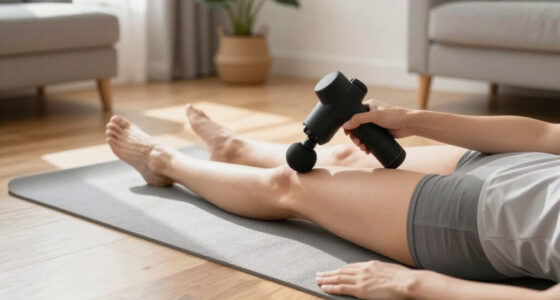
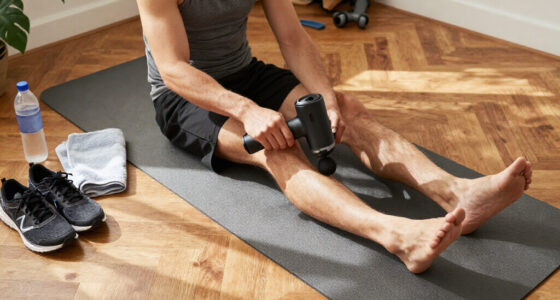
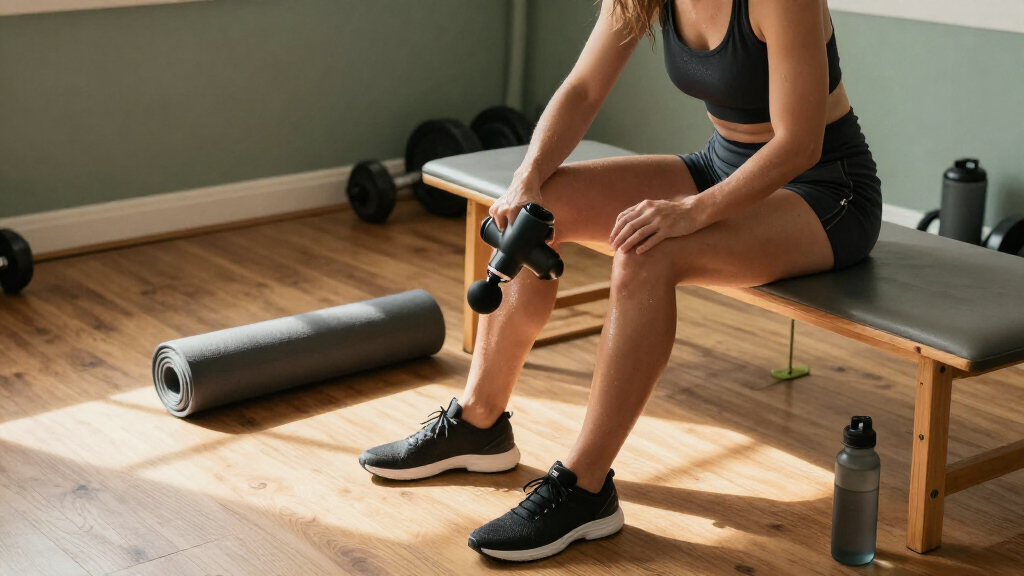
To try a massage gun, start on a low setting, use light pressure, and keep the attachment moving slowly across the muscle. A brief session—often around 30 seconds to two minutes per muscle group—is a reasonable way to see how it feels; no single duration has been proven best for everyone. Use the device like a slow paintbrush, not a stamp: glide over the broad muscle rather than hammering one sore point.
- Choose a broad muscle area. A thigh or calf is easier to reach than a small, bony spot. Sit comfortably and relax the muscle.
- Begin gently. Set the speed low and let the head touch the skin without leaning your body weight into it.
- Move at an unhurried pace. Sweep across the muscle, pause only briefly where it feels comfortable, and avoid pressing hard into one location.
- Check your response. Stop for sharp pain, numbness, tingling, bruising, or worsening discomfort. Don’t use the device to push through symptoms.
Before a workout, a short session may help you feel looser, but it does not replace a gradual, activity-specific warm-up. If you’re about to play tennis, for instance, follow any brief device use with easy movement, practice swings, and progressively quicker footwork. After a workout, use it for comfort rather than assuming that a longer session will speed repair. More pressure and more minutes do not automatically mean better results.
Where to Use It—and When to Leave It in the Drawer
Use a massage gun only on comfortable soft-tissue areas, and avoid bones, joints, the head, the front or side of the neck, wounds, and areas with significant swelling. Do not press into a bruise or a spot that feels sharply painful. The device’s small head can deliver a lot of sensation in a compact area, so a spot that seems “knotted” is not automatically a safe target.
Picture a desk worker with a mildly tight shoulder after hours at a laptop. Gentle movement over the fleshy upper-back muscles may feel pleasant, but the neck itself is a poor place to experiment. If the shoulder pain comes with numbness, tingling, weakness, or worsening symptoms, skip the massage gun and seek medical advice rather than trying different attachments.
Some people should ask a clinician before trying percussive massage. That includes people with bleeding or clotting disorders, reduced sensation, fragile skin, recent surgery or injury, or a suspected blood clot. Avoid using the device over a possible fracture, infection, suspected deep vein thrombosis, or unexplained swelling; a massage gun cannot diagnose or treat the cause.
Stop and get advice if you develop severe or persistent pain, major swelling, new weakness or numbness, or pain after a significant injury. For personal medical decisions, consult a qualified professional.
Even without a known condition, your skin and comfort give useful feedback. If a session leaves a tender red patch or makes the area feel worse later that day, give it a rest. A recovery routine should leave you feeling at ease, not bruised like you lost an argument with a stapler.
Which Features Matter When You Buy a Massage Gun
The most useful massage gun is one you can control comfortably, clean easily, and reach for without fuss. Compare weight, grip, noise, battery life, adjustable speeds, and attachment options before chasing maximum power. More settings or a box full of heads do not automatically translate into better recovery; research has not established a best attachment or speed for everyone.
| Feature | Why it matters in real use |
|---|---|
| Weight and grip | A lighter, balanced handle may be easier to hold against your thigh after a run, especially if your hands tire quickly. |
| Noise | A quieter motor is easier to use in a shared apartment or while someone else is sleeping. |
| Speed controls | Adjustable settings let you start gently and find a comfortable feel; no setting is proven to heal muscle faster. |
| Battery and cleaning | Longer battery life helps if you travel, while wipeable surfaces make routine care simpler. |
Imagine choosing between a heavy model with six attachments and a lighter one with a comfortable handle and clear speed buttons. If you mostly want a quick calf session after cycling, the second device may suit your routine better. If you cannot easily reach your back with either option, ask whether the handle shape helps before buying.
Set a budget around the features you will actually use. Hold the device if you can, check how it feels when you reach toward a thigh or shoulder, and see whether the controls make sense without staring at a manual. A simple model that is easy to steer can be more practical than a feature-heavy device you leave in a drawer.
How to Fit It Into a Recovery Routine That Works
Use a massage gun as an optional comfort tool alongside sleep, food, gradual training, and rest—not as the center of your recovery plan. If your hamstrings feel tight after a weekend hike, you might try a short, gentle pass, then take an easy walk and notice how you feel the next morning. That small check is more useful than assuming one session erased the load from a long climb.
Before exercise, a brief massage gun session can be one part of feeling ready, but your warm-up still needs to match what you are about to do. A swimmer might follow gentle shoulder work with easy laps and controlled strokes; a basketball player might move from a walk to light jogging, side steps, and a few practice jumps. The device does not prepare every muscle and movement on its own.
After exercise, choose the tool that feels comfortable and fits the problem. Some people prefer a massage gun, some like a foam roller, and others find an easy stroll or rest works best. A massage gun can overlap with stretching or massage for comfort and mobility, but it does not replace an individualized assessment when you need one.
Try changing one thing at a time. For instance, use a low setting on your calves for a minute after one easy run, then note whether your comfort or movement changes later. If symptoms worsen, stop. That simple approach helps you learn your own response without confusing a pleasant buzz with proof that you can safely increase your training load.
Frequently Asked Questions
Do massage guns actually help muscle recovery?
They may temporarily ease the feeling of tightness or soreness and may improve range of motion. Evidence that they speed tissue repair or reliably improve performance remains limited, so treat them as a comfort tool.
Can I use a massage gun every day?
Some people tolerate brief, gentle use, but there is no universally proven frequency. Pay attention to your response and stop if discomfort gets worse, or if you notice bruising, tingling, or numbness.
How long should I use a massage gun on each muscle?
Start with a short session, such as about 30 seconds to two minutes per muscle group, and use light pressure. That range is a practical starting point, not a proven ideal duration; longer sessions are not automatically more helpful.
Should I use a massage gun before or after exercise?
Either timing may feel helpful. Before exercise, keep it brief and follow it with a gradual warm-up; after exercise, use it for comfort rather than assuming it speeds muscle repair.
Can a massage gun prevent injuries or remove lactic acid?
There is no good evidence that massage guns reliably prevent injuries or remove lactic acid. Lactic acid clears quickly after exercise and does not cause the soreness that can appear a day or two later.
Where should I avoid using a massage gun?
Avoid bones, joints, the head, the front or side of the neck, wounds, bruises, and areas that are significantly swollen, numb, or sharply painful. Do not use one over a suspected clot, fracture, or infection.
Are massage guns safe for everyone?
No. If you have a bleeding or clotting disorder, reduced sensation, fragile skin, recent surgery or injury, or a possible blood clot, ask a qualified clinician before use. A massage gun cannot diagnose or treat an underlying condition.
Conclusion
Use a massage gun if a brief, gentle session makes a tight muscle feel more comfortable, and judge it by that modest purpose. Keep your warm-up gradual, give your body sleep and rest, and stop if the device brings pain, tingling, numbness, bruising, or worsening symptoms.
Let the soft buzz be one small note in your recovery routine—not the whole song.