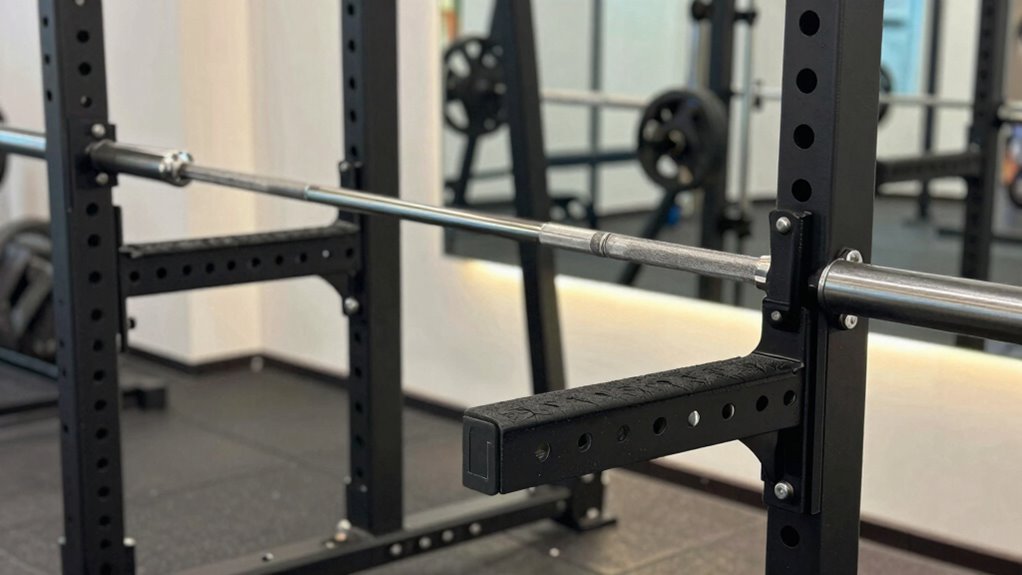

To keep safe with your power rack, focus on proper spotter arm placement—just below the sticking point—and secure them with lockable pins. Check that pin heights match your workout goals, like chest level for bench presses. In reviews, look for racks that have sturdy construction, reliable safety features, and easy adjustments, as these often indicate better safety and durability. Keep these tips in mind to make sure you lift confidently; explore further to ensure you choose the best setup.
Key Takeaways
- Ensure spotter arms are adjustable, securely locked, and positioned just below the sticking point for optimal safety during heavy lifts.
- Verify pin height settings are appropriate for your exercises, set at chest level for bench presses and below the bar for squats.
- Look for sturdy construction with reinforced joints, high-quality steel, and reliable locking mechanisms in safety features.
- Check customer reviews for feedback on the rack’s stability, durability, and effectiveness of safety components during intense workouts.
- Regularly inspect safety features, spotter arms, and pins for wear, proper adjustment, and secure locking to maintain safety over time.
How Power Racks Keep You Safe During Heavy Lifts
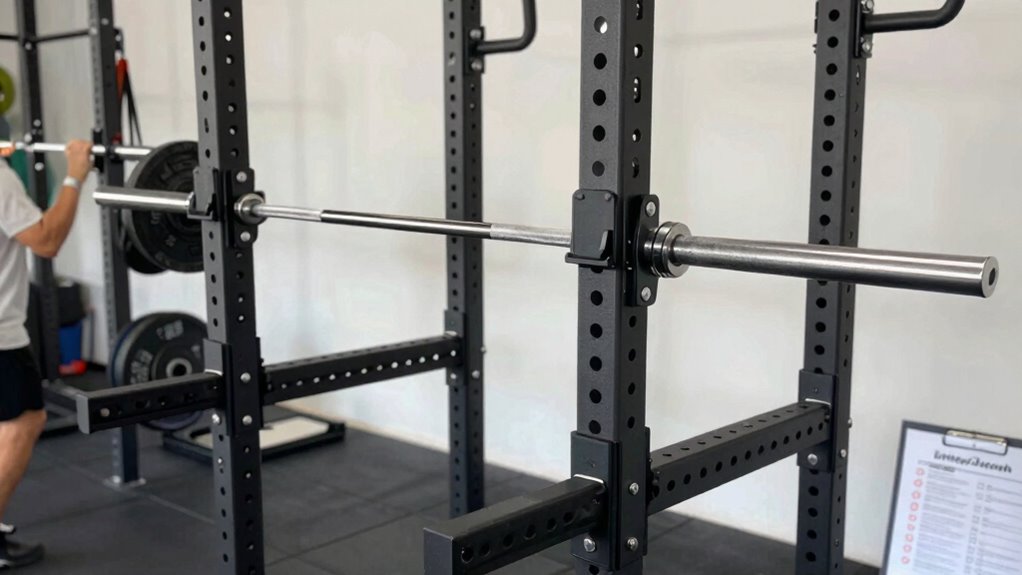
Power racks are essential safety tools that protect you during heavy lifts. Proper spotter arm placement is vital; position the arms just above your chest or shoulders so they catch the bar if you falter. This prevents injuries without interfering with your lift. Adjust the pin height to match your target reps or weight; set it low enough to catch the bar if you fail mid-lift, but high enough to allow full range of motion. These adjustments ensure safety without limiting your movement. When you set the spotter arms and pin heights correctly, you create a secure environment that encourages pushing your limits confidently. Always double-check the positioning before lifting heavy to avoid accidents, and remember that well-placed safety features make heavy lifting safer and more effective. Understanding safety features in power racks is crucial for effective and secure training. Additionally, regularly inspecting the quality of reviews can help you identify reliable equipment that maintains safety standards over time. Consistent safety checks further enhance your workout safety and confidence. Ensuring your equipment has durable safety components can prevent unexpected failures during lifts.
Essential Safety Features to Look for in a Power Rack
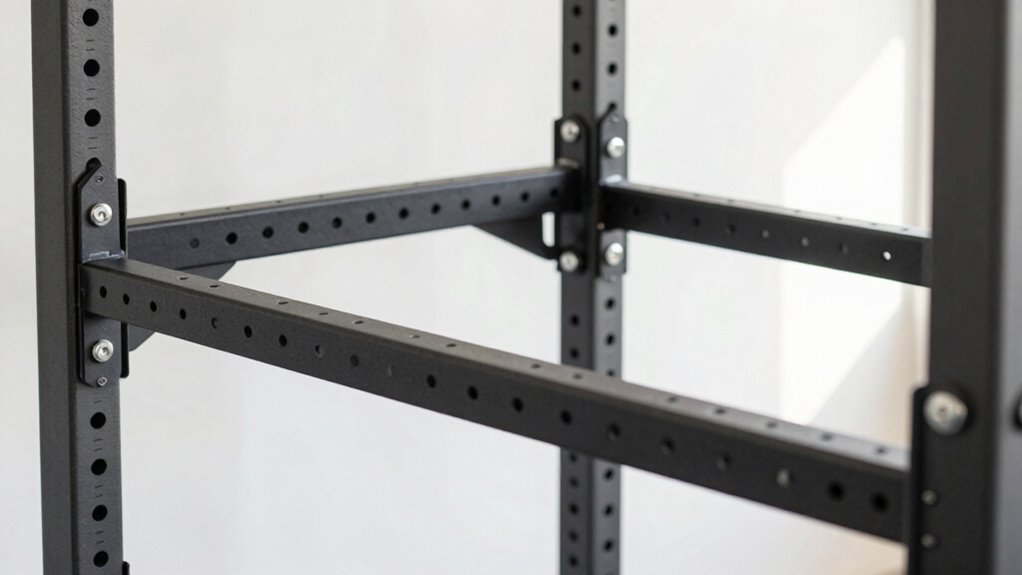
When choosing a power rack, it’s essential to prioritize its safety features to guarantee a secure lifting environment. Look for sturdy construction with high-quality steel to withstand your workout routines and regular equipment maintenance. Adjustable safety bars or spotter arms are critical for preventing accidents during heavy lifts, especially when training alone. Ensure the rack has multiple pin height options, so you can customize safety features to your exercises. A durable, non-slip footing provides stability, preventing slips or tipping. Additionally, check for welded joints and secure connections that won’t loosen over time. These safety features not only protect you during intense lifts but also make it easier to perform routine workouts safely and efficiently. Proper safety measures are indispensable for long-term training success. Maintaining your gear properly can also extend its lifespan and ensure consistent safety performance over time. Regular inspections and safety feature checks are vital components of a comprehensive safety routine, supported by advanced safety technology that enhances overall protection. For optimal safety, understanding the importance of structural integrity can help you identify racks that are built to last and withstand rigorous use. Incorporating safety standards into your selection process ensures your equipment meets established safety benchmarks and provides peace of mind during every workout.
How Spotter Arms Protect You and How to Use Them Effectively
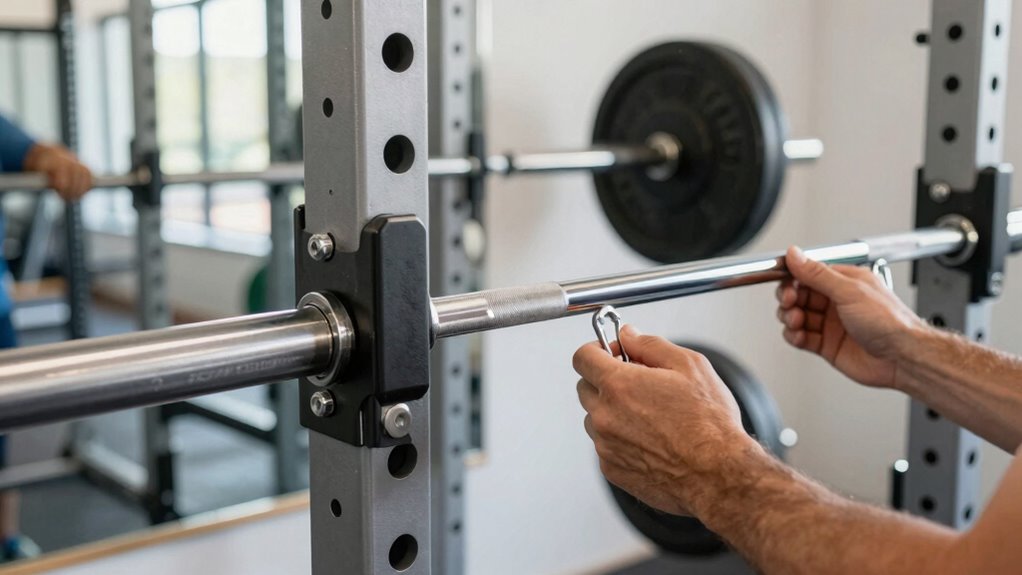
Spotter arms are essential for keeping you safe during heavy lifts, but only if they’re positioned correctly. Knowing when to use them and how to set them up properly can prevent injuries and save you from accidents. Let’s explore best practices for placement, timing, and safety tips to get the most protection from your spotter arms. Proper setup protocols ensure that the spotters effectively protect you during all lifts. Additionally, understanding Free Floating principles can help you optimize your equipment placement to prevent unintended movement or instability. Regularly inspecting your equipment and understanding safety standards can further enhance your training safety and confidence. Being aware of equipment durability and maintaining your gear can also significantly reduce the risk of failure during lifts. Implementing correct positioning techniques can further enhance the effectiveness of your safety measures and reduce the likelihood of accidents.
Proper Spotter Arm Placement
Proper spotter arm placement is essential for maximizing safety during your lifts. Correctly positioning your spotter arms ensures they act as reliable safety equipment, ready to catch the bar if you can’t complete a lift. You should set the spotter arms just below the lowest point of your planned range of motion, typically a few inches below your maximum lift height. This placement prevents the bar from dropping onto your chest or neck while giving you enough room to complete reps comfortably. Always double-check that the arms are securely locked into place and evenly aligned on both sides. Proper spotter arm placement provides peace of mind, allowing you to push your limits safely while reducing the risk of injury.
Recognizing When to Use
Knowing the right moments to use spotter arms can make a significant difference in your safety during lifts. Use spotter arms when attempting max lifts, heavy sets, or lifts you’re still mastering to prevent injury if you lose control. Recognize when to engage them—if you’re tired, fatigued, or pushing beyond your usual limits, they provide essential support. Check your power rack’s spotter arm material to ensure durability and stability, especially during intense lifts. Also, consider the power rack’s color options, which can help you quickly identify safety features or customize your setup. Using spotter arms proactively keeps you safe without waiting for a mishap. Always assess your lift’s difficulty and your comfort level to determine when spotter arms are necessary. Additionally, selecting a power rack with integrated smart lock features can enhance overall safety and security during your workouts. Being familiar with power rack safety features can also help you operate your equipment more confidently and reduce risks. Regularly inspecting your safety equipment and understanding how each component contributes to your overall safety ensures a safe lifting environment, and being aware of equipment durability is crucial for maintaining reliable protection over time. Furthermore, understanding the material quality of your spotter arms can prevent unexpected failures and ensure ongoing safety.
Safety Tips for Use
Using spotter arms correctly can substantially enhance your safety during heavy lifts by providing immediate support if you lose control or struggle with the weight. Always verify your equipment maintenance is up to date—check that spotter arms are securely attached and in good condition before each use. Proper workout etiquette includes not overloading the rack beyond its capacity and communicating clearly with a spotter if you have one. When using spotter arms, position them at the appropriate height to catch the bar safely without interfering with your lift. Avoid rushing your setup; take time to double-check the placement. Staying attentive and maintaining good equipment maintenance habits helps prevent accidents and ensures spotter arms function effectively when needed most. Additionally, being aware of family photoshoot fails can remind you to stay focused and prepared during your workouts to avoid distractions. Remember that cable failures can also compromise safety, so inspecting your equipment regularly is crucial. Regularly reviewing equipment safety features can further help you identify potential issues before they lead to accidents. Incorporating routine preventive maintenance checks will also extend the lifespan of your safety equipment and reduce unexpected issues. For optimal safety, consider consulting manufacturer guidelines to understand the specific spotter arm weight capacity and limitations.
Setting the Right Pin Heights for Your Workout Goals
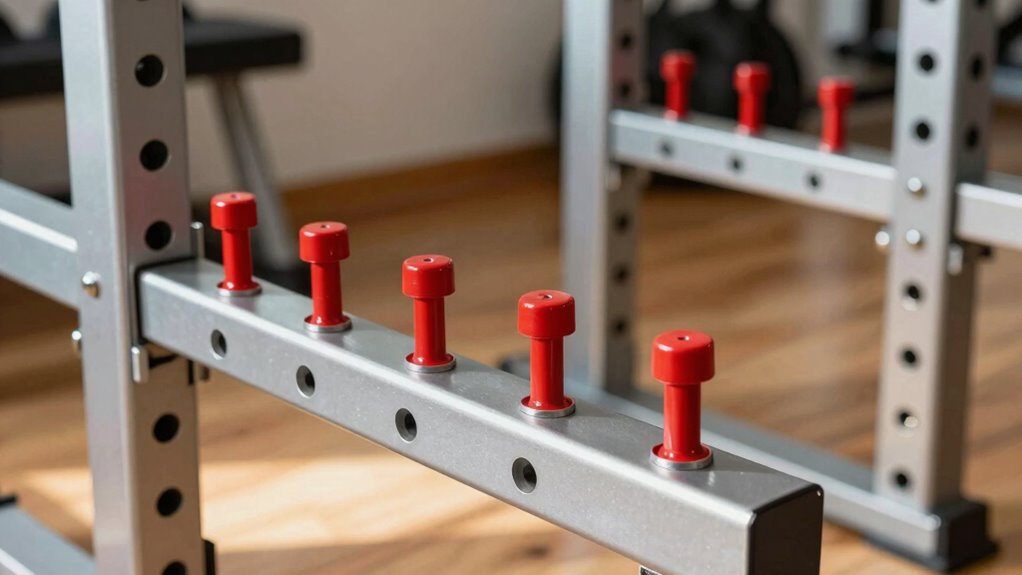
Adjusting the pin height on your power rack is crucial for safety and effective training. Proper pin placement ensures you can perform exercises like squats and bench presses safely, without risking injury. To maintain your equipment’s safety, check the pins regularly during equipment maintenance, ensuring they’re secure and free of damage. Your workout routines influence where you set the pins; for example, setting pins at chest level for bench presses or just below the bar for squats helps target muscles correctly. Correct pin height also prevents unnecessary strain on your joints and reduces the risk of accidents. Take the time to adjust and double-check pin positions before each session, aligning them with your specific workout goals for safer, more efficient training. Additionally, understanding equipment safety checks can help prolong the lifespan of your power rack and ensure consistent performance.
Tips for Properly Adjusting and Using Spotter Arms and Pins
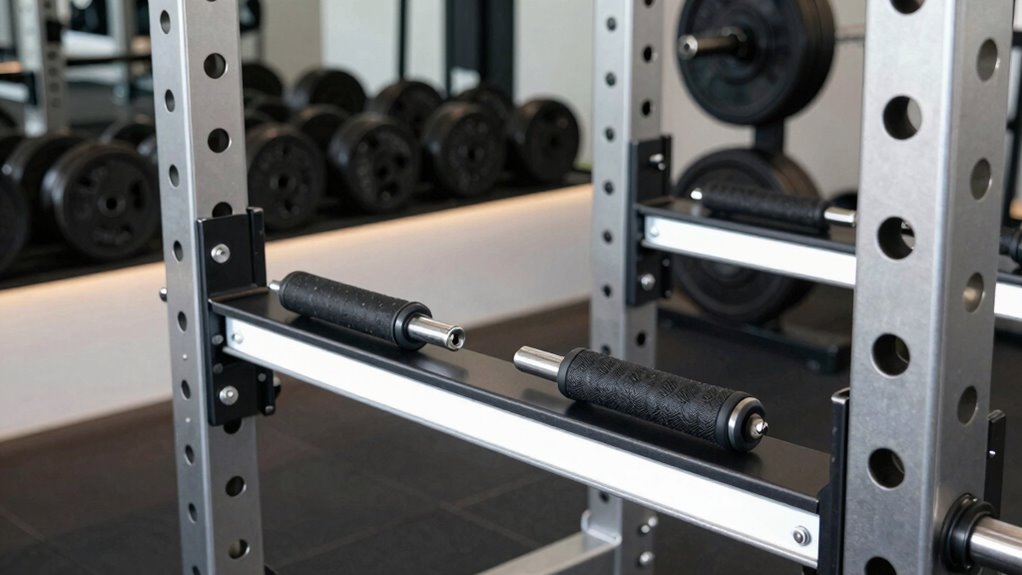
To stay safe during your lifts, you need to ensure your spotter arms and pins are positioned correctly. Proper placement of spotter arms provides reliable support, and adjusting pin heights to match your workout goals is vital. Always double-check that everything is secure before starting your set to prevent accidents.
Proper Spotter Arm Placement
Proper spotter arm placement is essential for ensuring safety during heavy lifts. You want the spotter arms positioned so they catch the bar quickly if you struggle, preventing injury. To do this effectively, focus on correct safety pin positioning, ensuring the pins are set just below your sticking point.
| Tip | Explanation |
|---|---|
| Match arm height | Place spotter arms at a height where they can catch the bar comfortably without forcing you to lower it excessively. |
| Check clearance | Ensure there’s enough space for the bar to pass through smoothly without obstruction. |
| Secure placement | Confirm the spotter arms are locked tightly into the rack to prevent shifting during lifts. |
| Test the setup | Lightly lift the bar to verify the spotter arms engage properly. |
Proper spotter arm placement minimizes risks and boosts confidence during heavy lifts.
Adjusting Pin Heights Safely
Ensuring the spotter arms and pins are set at the correct height is essential for safe lifting. To do this, regularly check your power rack’s pin lock mechanisms to ensure they securely hold the pins in place. Proper spotter arm maintenance involves adjusting the pins to your chest or just below your sticking point, preventing accidents if you fail a lift. When adjusting, always loosen the pin lock mechanisms, move the pins to the desired height, and tighten the locks firmly. Double-check that the pins are stable and won’t shift during your workout. Properly adjusted pins reduce the risk of injury and ensure a safe lifting environment. Regular inspections and adjustments keep your power rack reliable and safe for every session.
Signs of a High-Quality Power Rack That Ensures Safety and Durability
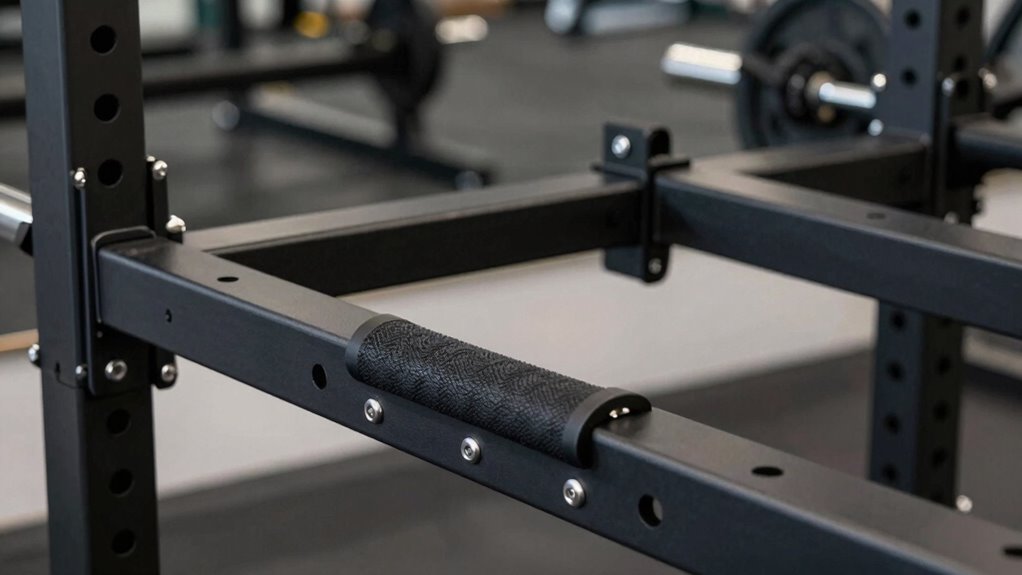
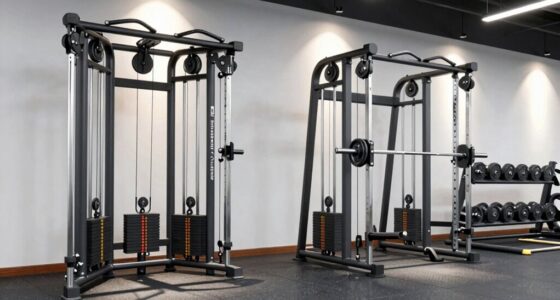
A high-quality power rack exhibits several key features that prioritize safety and durability. First, look for sturdy rack construction made from thick steel with welded joints, ensuring stability during intense lifts. Well-designed safety accessories, like adjustable spotter arms and safety bars, should lock securely into place and support heavy loads without wobbling. Check for smooth, easy-to-adjust pin mechanisms that won’t slip or bend over time. The overall frame should have a solid finish to prevent rust and corrosion, extending the rack’s lifespan. A durable power rack also includes reinforced J-hooks and safety catches that can withstand repeated use. These features collectively ensure your safety during lifts and guarantee the rack’s longevity, making it a reliable addition to your home gym.
What Customer Reviews Say About Power Rack Safety and Reliability
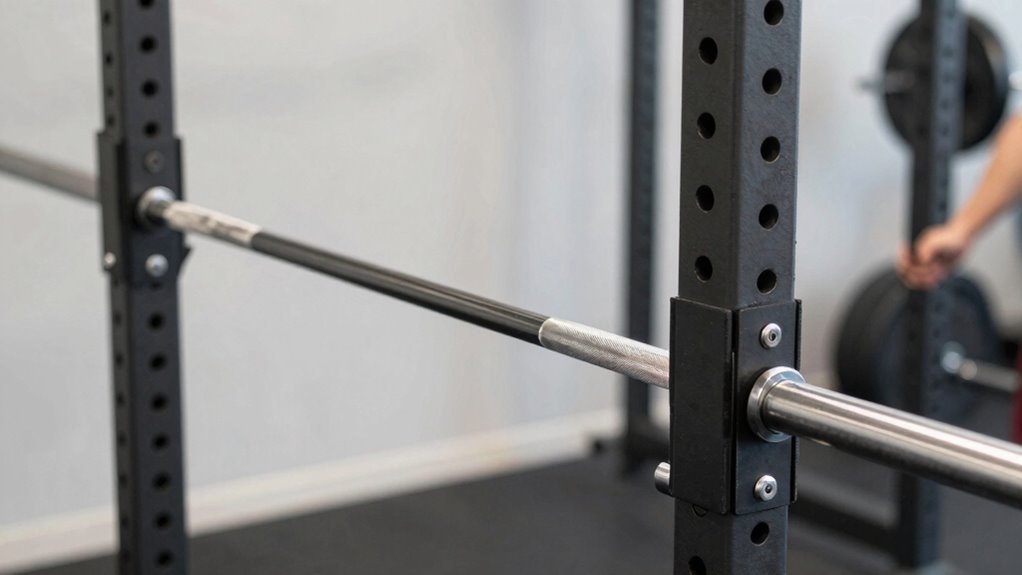
Customer reviews often highlight how a power rack’s safety features perform in real-world conditions. Many users emphasize that well-designed spotter arms and adjustable pin heights enhance user safety during heavy lifts, reducing the risk of accidents. Reviewers also praise equipment durability, noting that sturdy construction withstands intense workouts without wobbling or bending. Some mention that easy-to-adjust safety bars give peace of mind, especially for solo lifting sessions. Overall, positive reviews focus on reliable safety features that protect you and ensure long-lasting performance. Conversely, negative feedback often points to flimsy components or poor build quality that compromise safety and durability. By paying attention to these reviews, you can choose a power rack that prioritizes user safety and stands up to frequent use.
Common Safety Mistakes When Using Power Racks: And How to Avoid Them
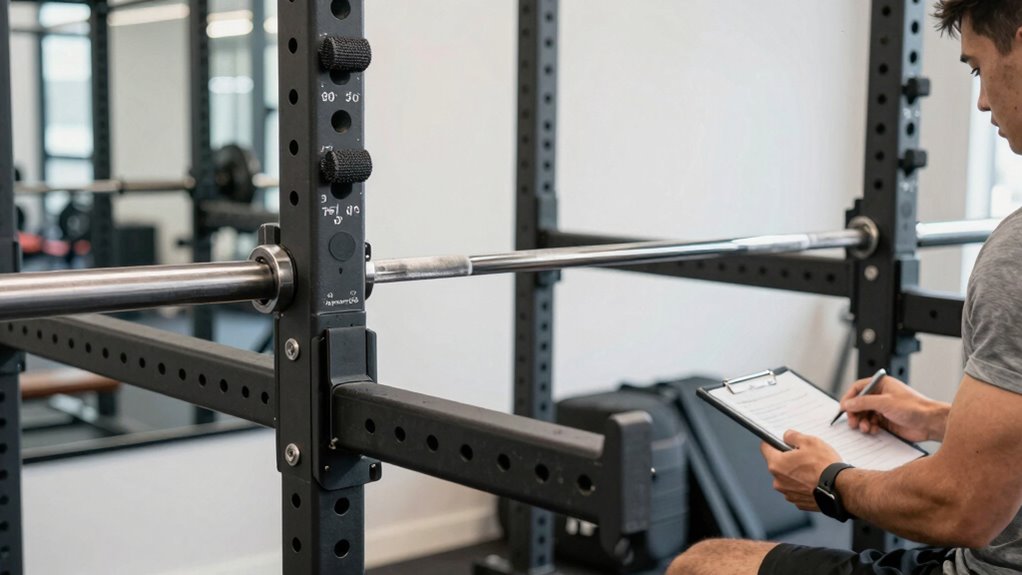
One common mistake is not using the spotter arms correctly, which can lead to dangerous accidents. Another is setting the safety pins at the wrong height, making them ineffective when you need them most. To stay safe, always guarantee your spotter arms are properly positioned and your pin heights are adjusted to support your lifts.
Improper Spotter Arm Usage
Improper spotter arm usage is a common safety mistake that can lead to serious injuries during power rack exercises. Many neglect proper setup, risking spotter arm misuse or failing to engage safety equipment correctly. Always ascertain the spotter arms are securely positioned at the right height before lifting. Misaligned or loosely attached arms can shift during a lift, increasing injury risk.
| Correct Usage | Common Mistakes |
|---|---|
| Set arms at appropriate height | Setting arms too low or high |
| Lock arms securely | Loose or unstable arms |
| Use safety bars for heavy lifts | Relying solely on spotters or neglecting safety equipment |
| Double-check placement | Forgetting to verify before lifting |
| Replace damaged arms | Using defective safety equipment |
Avoid safety equipment neglect and always double-check spotter arm placement to prevent accidents.
Incorrect Pin Height Settings
Setting the pin height correctly is vital for safe and effective power rack workouts. If your safety settings are too high or too low, you risk injury or compromised support during lifts. Incorrect pin height can cause the barbell to land in unsafe positions or make it difficult to re-rack safely. Always adjust the safety pins to match your height and the specific exercise, ensuring they are just below your lowest rep position. Double-check that the pins are securely locked into place before starting. Avoid rushing through this step, as improper pin height can lead to accidents. Proper safety settings help you lift confidently, knowing that your rack will catch the weight if you falter. Taking the time to set the right pin height is essential for a safe workout.
How to Evaluate Power Rack Reviews to Find a Safe, Reliable Model
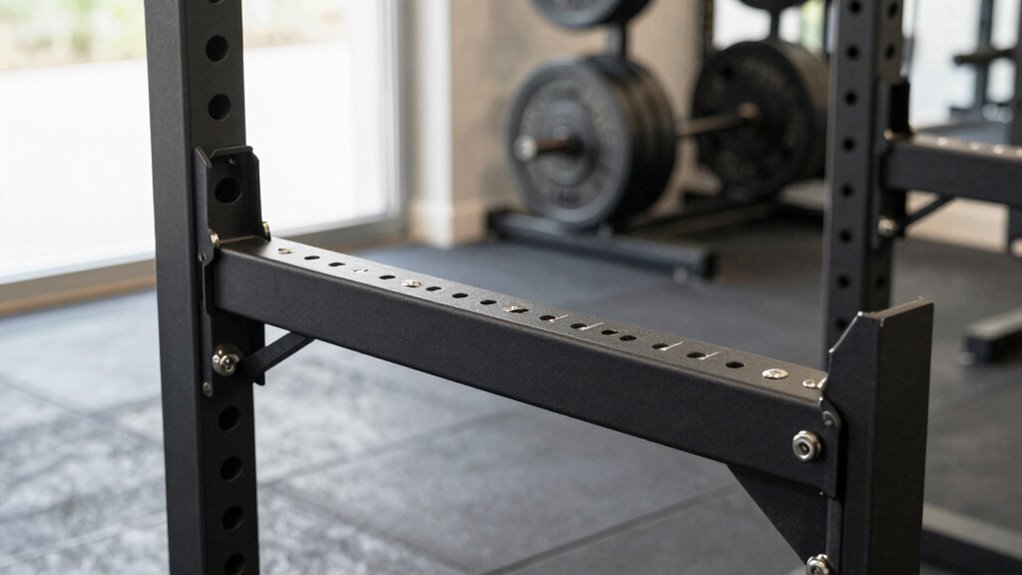
When evaluating power rack reviews, it’s essential to look beyond marketing claims and focus on detailed, real-user feedback. Pay attention to comments about equipment maintenance, as issues like rust or worn parts can compromise safety over time. User experience insights reveal how the rack holds up during regular workouts, including stability, ease of adjusting spotter arms, and pin heights. Reviews that mention consistent performance and minimal setup problems indicate a reliable model. Watch for recurring concerns about manufacturing quality or design flaws. Genuine user feedback helps you distinguish between hype and real-world safety features. By analyzing these reviews carefully, you can identify power racks that offer both durability and safe operation, ensuring your workouts remain secure and effective.
Final Checklist: Choosing the Best Power Rack for Your Safety and Needs
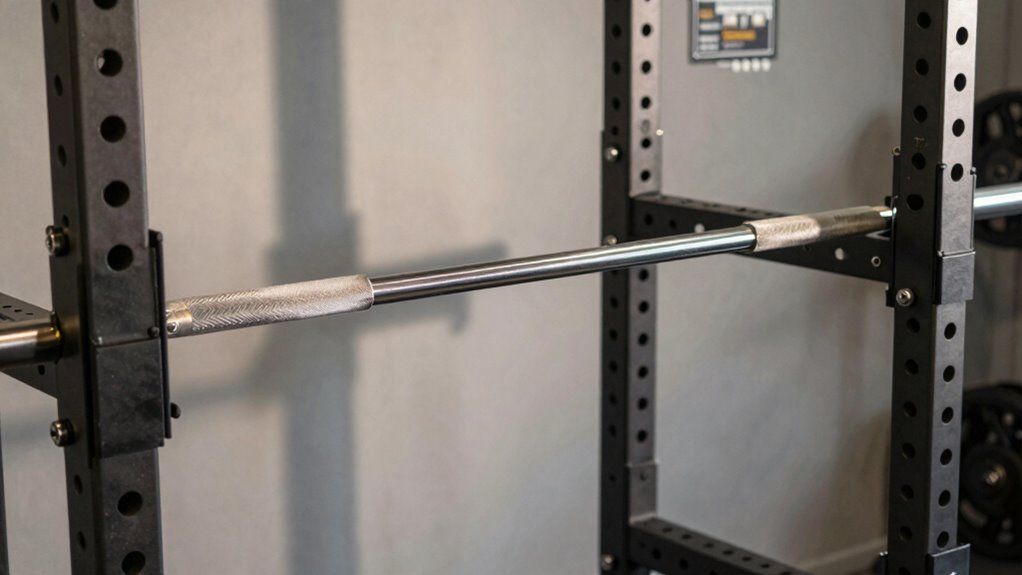
Choosing the right power rack involves evaluating your safety priorities and workout needs carefully. Start by considering the power rack materials—look for sturdy steel frames that can withstand heavy lifts and provide stability. Check for quality welds and reinforced joints to ensure durability. Don’t overlook the aesthetic design; a well-designed rack that fits your space and style can boost motivation and safety. Ensure the spotter arms and pin heights are adjustable for your specific exercises and comfort. Examine user reviews for insights on ease of assembly and long-term reliability. Ultimately, your ideal power rack combines solid materials, thoughtful design, and features tailored to your workout routine, helping you stay safe while maximizing your training potential.
Frequently Asked Questions
How Do I Identify a Power Rack’s Weight Capacity Limits?
You can identify a power rack’s weight capacity limits by checking the weight limit labels usually found on the frame or near the safety spotter arms. Additionally, review the structural ratings provided by the manufacturer, which indicate the maximum weight the rack can safely support. Always verify these details in the product specifications or user manual to make certain you’re not exceeding the recommended limits and maintaining safety during your workouts.
What Maintenance Checks Are Essential for Power Rack Safety?
You should regularly perform preventive maintenance checks on your power rack, inspecting all components for wear or damage. Confirm the spotter arms and safety pins are secure and undamaged, and test the pin heights for proper alignment. Follow safety protocols by tightening bolts and checking welds. Make it a habit to review your rack’s condition weekly, preventing accidents and ensuring safe lifting every time.
Are There Specific Safety Certifications to Look For?
Think of safety certifications as the guiding stars in the fitness universe. When choosing a power rack, look for safety certifications that meet industry standards like ANSI or ISO, ensuring the equipment’s reliability. These certifications act as proof that the rack has passed rigorous safety tests. By prioritizing certified racks, you’re making a smart move to keep your workouts safe and effective, like a captain trusting his compass.
How Often Should I Inspect Spotter Arms and Pins?
You should inspect your spotter arms and pins weekly as part of your maintenance schedule. Regular inspections help catch signs of wear, damage, or looseness early. Look for cracks, rust, or bent components, and make certain pins and arms are securely in place. Staying consistent with this inspection frequency keeps your power rack safe, prevents accidents, and extends the lifespan of your equipment. Always address issues promptly to maintain safety during your workouts.
Can Modifications Improve the Safety of an Existing Power Rack?
Like Da Vinci refining his masterpieces, you can enhance your power rack with modifications that boost safety. These upgrades bring clear benefits, such as sturdier spotter arms or adjustable pin heights, providing better safety enhancements during lifts. Custom modifications allow you to tailor the rack to your needs, reducing risks and increasing confidence. Just verify you choose quality parts and follow proper installation to maximize safety benefits and make your workouts safer.
Conclusion
Think of your power rack as a fortress guarding your strength. By choosing the right spotter arms, setting proper pin heights, and heeding reviews, you build a shield that protects your progress and safety. Each detail, like a brick in this fortress, contributes to your resilience. When you prioritize these safety measures, you forge a path where confidence and strength stand tall—your unwavering foundation in every lift.