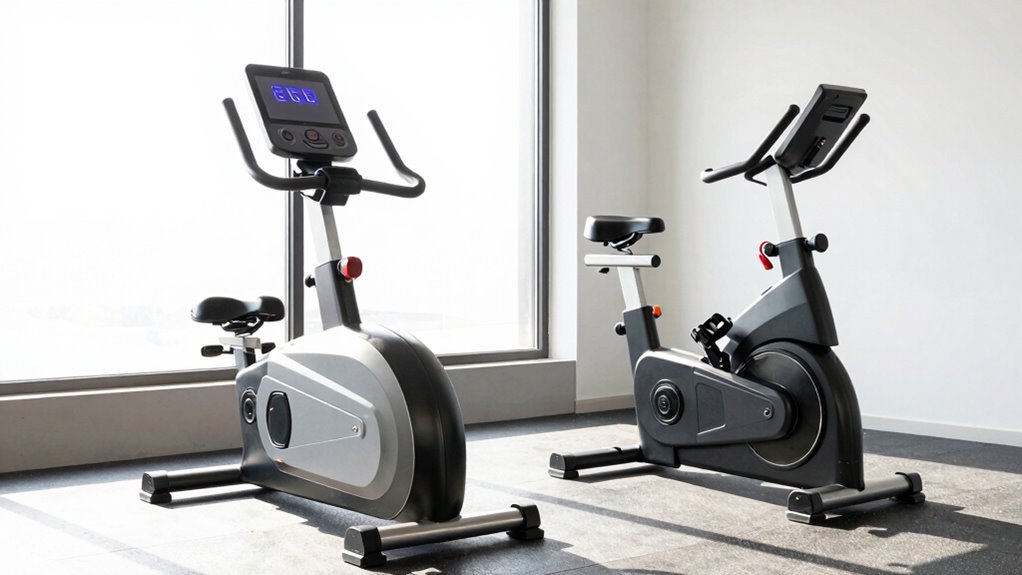

If you want to burn more calories and challenge yourself with vigorous workouts, an upright bike is your best bet because it supports higher intensity efforts and engages more muscles. Recumbent bikes offer comfort and are great for low-impact, longer sessions, but typically burn fewer calories during high-intensity efforts. Your choice depends on your fitness goals, comfort needs, and motivation—stick with it, and you’ll discover which bike fits you best over time.
Key Takeaways
- Upright bikes generally support higher-intensity workouts, leading to greater calorie burn during vigorous exercise sessions.
- Recumbent bikes prioritize comfort and low impact, making them suitable for longer, sustained workouts with moderate calorie expenditure.
- The total calories burned depends on workout intensity; both bike types can be effective with proper resistance and effort.
- Upright bikes often encourage more vigorous efforts, but recumbents can be used longer comfortably, balancing burn potential and usability.
- Consistent use and workout effort are more crucial for calorie burn than bike type alone, so user preference influences long-term engagement.
How Do Recumbent and Upright Bikes Differ in Design and Comfort?
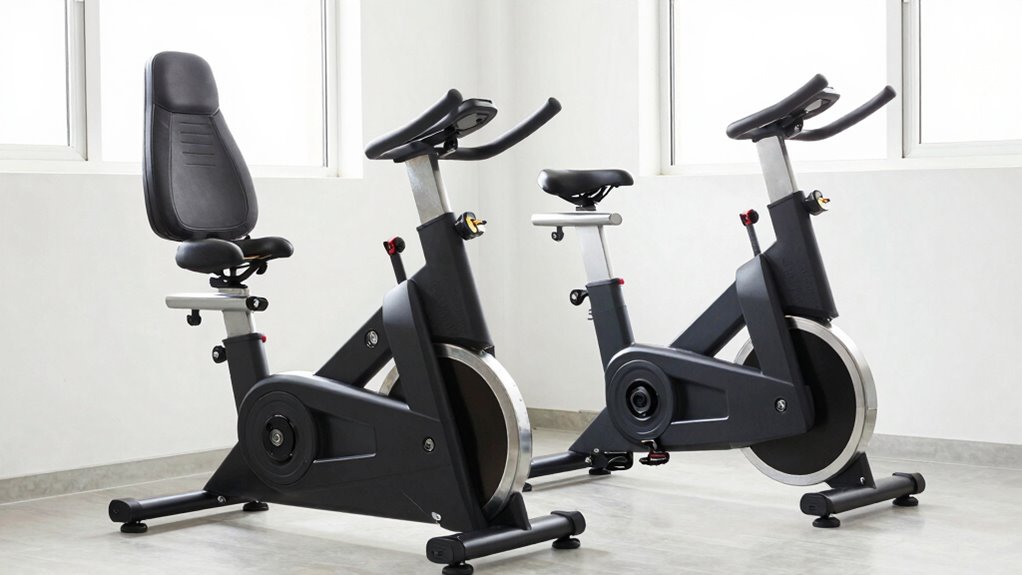
Recumbent and upright bikes differ markedly in their design, which directly impacts comfort during use. With a recumbent bike, you sit in a reclined position, providing excellent ergonomic posture that reduces strain on your back and joints. This setup promotes user comfort, especially during longer workouts, as your weight is supported by a larger seat and backrest. Conversely, upright bikes mimic a traditional bike stance, requiring you to sit upright without much back support. While this can engage your core muscles more actively, it may cause discomfort over time, particularly if you have back issues. Overall, the recumbent design prioritizes comfort and ergonomic posture, making it ideal for users seeking a low-impact, relaxed workout experience. Additionally, ergonomic posture can help prevent common injuries associated with improper positioning during exercise. Proper bike selection based on user comfort can significantly influence your motivation and consistency. Moreover, understanding the design differences can help you choose the most suitable bike for your fitness goals and physical needs. Selecting a bike that aligns with your home space and aesthetic preferences can also enhance your workout environment, encouraging regular use. Incorporating adjustable features such as seat height and handlebar positioning can further customize the bike for optimal comfort and effectiveness.
Which Exercise Bike Burns More Calories: Recumbent or Upright?
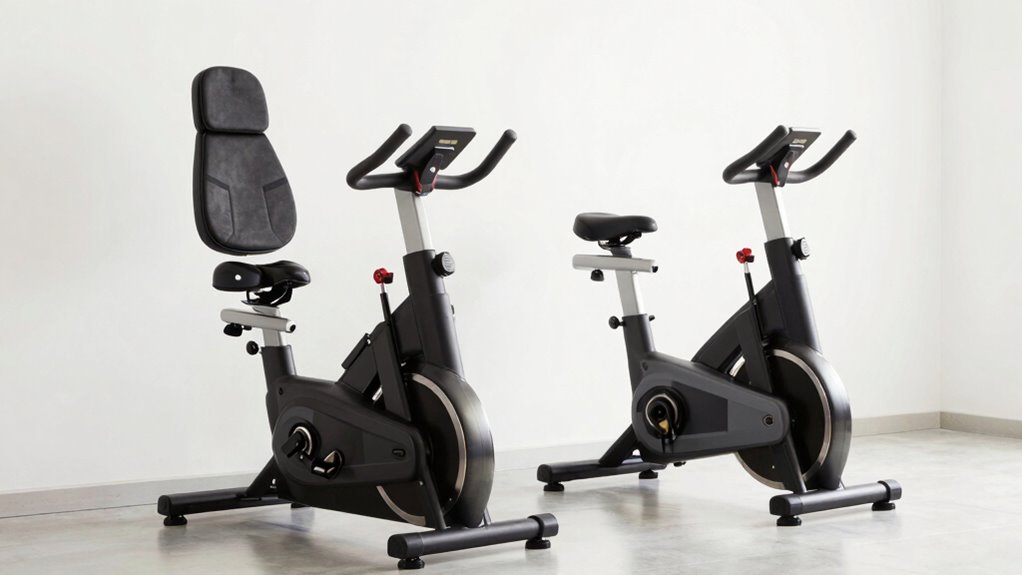
When comparing calorie burn, upright bikes often let you push harder and increase intensity more easily. Your effort level and engagement play big roles in how many calories you burn on either bike. Understanding these factors helps you choose the one that maximizes your workout results. Incorporating proper form and technique can further enhance your calorie expenditure and reduce the risk of injury during your workout. Additionally, personal motivation can influence how consistently you use the bike, ultimately impacting your calorie burn over time. Recognizing the training environment and how it affects your performance can also help you stay consistent and motivated. Being aware of sauna safety tips, such as avoiding dehydration, can also support your overall health and fitness goals.
Calorie Burn Rates
Have you ever wondered which type of exercise bike helps you burn more calories? The answer depends on several factors, including heart rate and muscle engagement. Generally, upright bikes may burn more calories because they engage more muscle groups and elevate your heart rate more effectively. To understand the differences better:
- Upright bikes often allow for higher intensity workouts.
- Recumbent bikes tend to be more comfortable but may limit heart rate elevation.
- Muscle engagement on upright bikes involves core, legs, and stabilizers, which can lead to higher calorie expenditure.
- Heart rate responses vary based on workout style and bike type.
- Proper body positioning can influence muscle activation and calorie burn during your workout, and understanding the role of muscle engagement can help optimize your exercise routine. Additionally, workout intensity plays a crucial role in determining calorie expenditure on either bike type.
- The ergonomics of the bike also impact comfort and sustainment during longer workouts, affecting overall calorie burn.
Ultimately, the bike that burns more calories is the one you’ll use consistently. Both can be effective, but your choice influences how much energy you’ll expend during each session.
Exercise Intensity Levels
Since workout intensity directly impacts calorie burn, understanding how each bike type supports high-intensity efforts can help you maximize your results. Both recumbent and upright bikes offer adjustable resistance settings, allowing you to increase effort levels as you improve. Upright bikes often enable a faster pace and more vigorous workouts, which can lead to higher calorie expenditure during intense sessions. Recumbent bikes, while typically offering smoother rides, still let you dial up resistance for challenging workouts, but they might limit the maximum intensity compared to upright models. Incorporating workout variety—alternating resistance levels and workout styles—can push your limits further, ensuring you burn more calories regardless of bike type. Adjusting resistance allows for customizing workout intensity and can optimize calorie burn based on your fitness level. Selecting an exercise bike that matches your comfort and fitness needs can enhance your overall workout effectiveness. Additionally, understanding the impact on joints can help you choose a bike that minimizes discomfort while maximizing calorie burn. The ergonomic design of certain models can influence your ability to sustain high-intensity efforts comfortably, thereby affecting overall calorie expenditure. For example, the seat position on upright bikes often promotes a more aggressive riding posture, which can contribute to higher calorie burn during vigorous workouts. Ultimately, the best bike for intensity depends on your fitness level and goals.
User Engagement Factors
Choosing between a recumbent and an upright exercise bike depends largely on your engagement level and motivation to burn calories. Your comfort and focus influence how consistently you’ll ride. Ergonomic support affects your posture, preventing fatigue and encouraging longer sessions. Visual engagement, like watching a screen or scenery, can motivate longer sessions. Here are key factors:
- Comfort level influences regular use, with recumbents offering better ergonomic support.
- Visual engagement through screens or scenery can motivate longer sessions.
- Personal preference for sitting position impacts your willingness to exercise.
- Consistency depends on how enjoyable and engaging you find your workout environment.
- Proper kitchen gear care and eco-friendly disposal practices can extend the lifespan of your exercise equipment, ensuring sustainable use.
- Additionally, understanding the mechanical differences between bike types can help optimize your workout efficiency and longevity.
- Recognizing ergonomic support and how it affects posture can also influence your overall comfort and commitment during workouts. Incorporating ergonomic design considerations can further enhance your experience and promote regular exercise.
- Paying attention to adjustability features can help customize your bike to better fit your body and improve comfort during workouts.
How Does Your Fitness Goal Influence Your Choice?
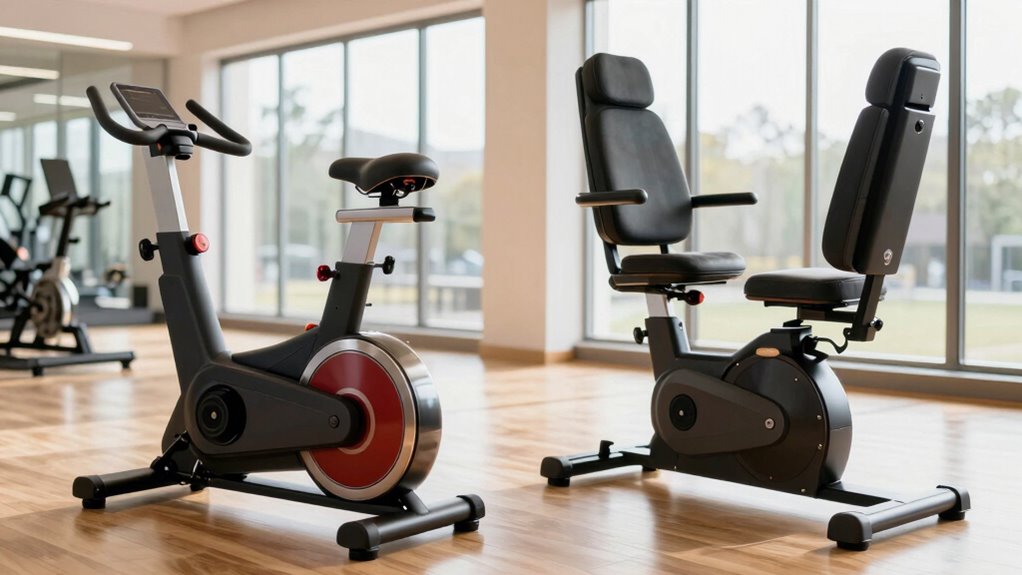
Your fitness goals play a crucial role in determining which type of exercise bike is right for you. If you’re aiming for weight loss, focus on a bike that encourages consistent, calorie-burning workouts, like an upright bike with adjustable resistance. For endurance or stamina building, consider a bike with advanced fitness tracking features to monitor progress over time. If your goal is low-impact recovery or joint comfort, a recumbent bike might be better, providing support during longer sessions. Nutritional advice can complement your workout plan, ensuring you’re fueling your body appropriately for your goals. By aligning your choice of bike with your specific objectives, you’ll stay motivated and see better results, making your workouts more effective and enjoyable.
Is a Recumbent or Upright Bike Better for Beginners?
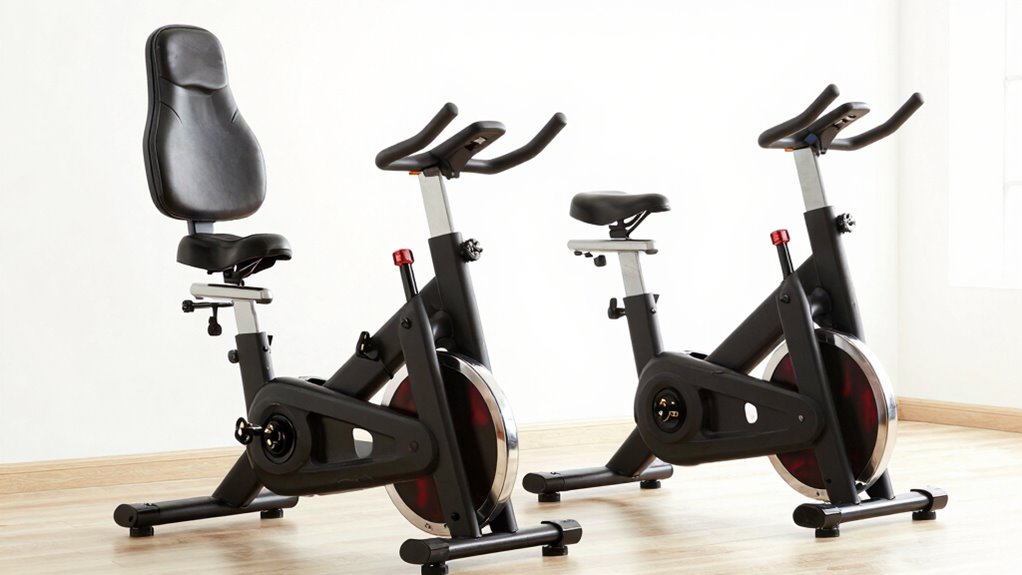
When starting out, comfort and accessibility are key factors to consider in choosing a bike. A recumbent bike offers a more relaxed seating position, making it easier to get on and off. Meanwhile, upright bikes are generally simpler to set up and use, which can help beginners get started quickly. Additionally, solar-powered options are emerging for some fitness equipment, offering eco-friendly energy solutions for home gyms. For those concerned about long-term motivation, the availability of variety of sounds and features in some models can also enhance the workout experience.
Comfort and Accessibility
For beginners, the comfort and accessibility of a bike can make a big difference in sticking with a workout routine. Recumbent bikes often excel here, offering ergonomic considerations like reclined seating and lower step-through height, making them easier to get on and off. Upright bikes, however, may appeal more for their aesthetic appeal and upright posture, which mimics real cycling. To help you decide, consider these factors:
- Comfort level based on seating and posture
- Ease of access due to step-through height
- Ergonomic support for back and joints
- Visual appeal and motivation
Choosing the right bike depends on what feels accessible and inviting, encouraging consistent use and long-term commitment.
Ease of Use and Setup
Choosing between a recumbent and upright bike often comes down to ease of use and setup, especially for beginners. Recumbent bikes typically feature an ergonomic design that provides better support and comfort, making them easier to get on and off. They usually have straightforward controls and intuitive interfaces, simplifying operation. In contrast, upright bikes may require a bit more adjustment, especially for beginners unfamiliar with their features. When it comes to ease of assembly, recumbent bikes often come with clear instructions and fewer parts, which helps you get started faster. Overall, if you’re new to exercise bikes, a recumbent bike’s ergonomic design and simpler ease of assembly can make the setup process smoother and more manageable.
Can You Reach the Same Fitness Goals on Both Bike Types?
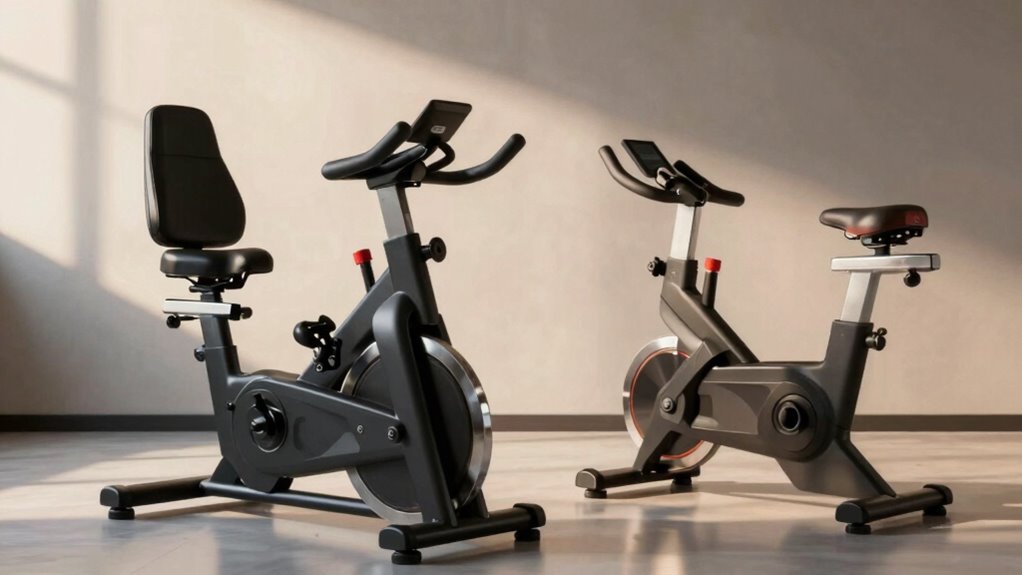
Both recumbent and upright exercise bikes can help you achieve your fitness goals, but the path you take depends on your individual needs and preferences. While both bikes promote cardiovascular health and weight loss, your ability to reach the same goals varies based on factors like cycling efficiency and ergonomic design.
Both recumbent and upright bikes support your fitness goals, depending on your needs and preferences.
Consider these points:
- The upright bike may allow higher intensity workouts, boosting calorie burn.
- The recumbent bike’s ergonomic design reduces strain, making longer sessions easier.
- Both bikes can improve endurance if used consistently.
- Achieving similar fitness goals depends on your commitment and workout intensity, not just bike type.
Ultimately, both bikes can be effective, but selecting one that matches your fitness level and comfort ensures you’ll stick with your routine and reach your goals.
Recumbent vs. Upright: Cost and Space Differences
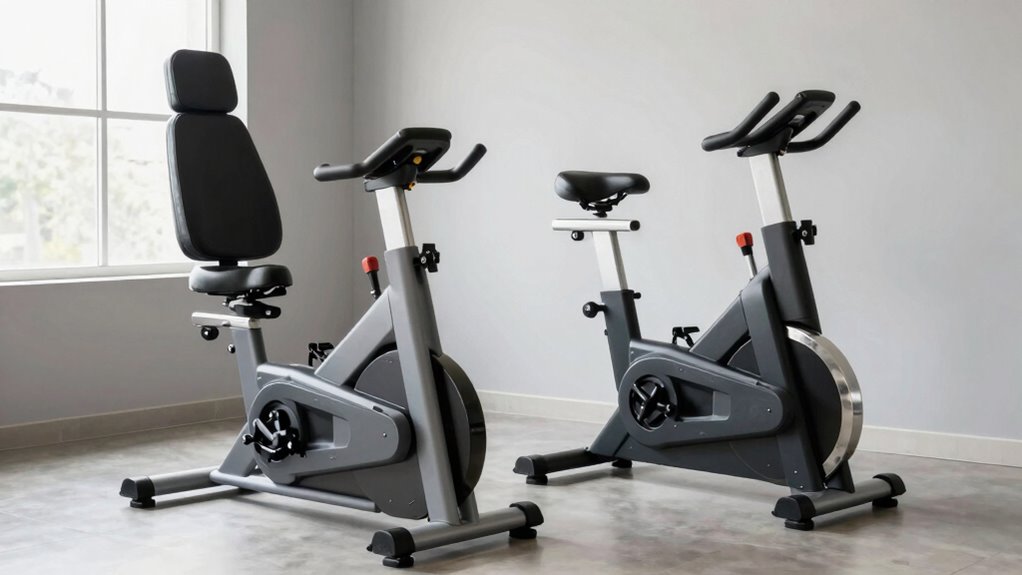
When comparing recumbent and upright bikes, cost and space are important factors to consider. In terms of cost comparison, recumbent bikes tend to be more expensive due to their larger frames and added comfort features. Upright bikes are generally more affordable and come in a wider price range, making them accessible for most budgets. Space requirements also differ: recumbent bikes are bulkier and need more room to accommodate the reclining seat and extended frame. Upright bikes are more compact, fitting easily into smaller spaces. If you have limited room, an upright bike might be the better choice. However, if space isn’t a concern and you’re willing to invest more upfront, a recumbent bike offers additional comfort and features.
Pros and Cons of Recumbent and Upright Exercise Bikes
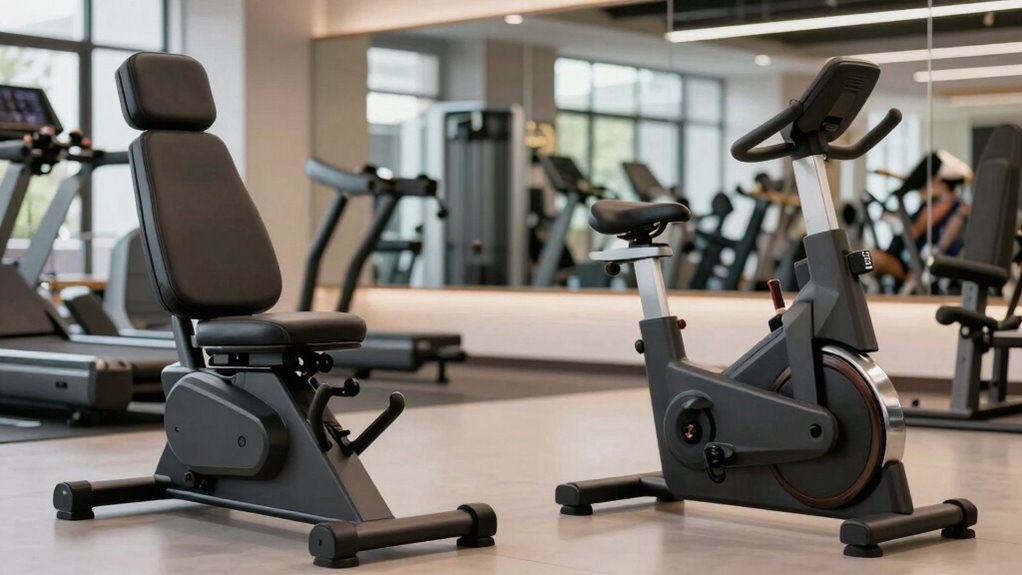
Recumbent and upright exercise bikes each have distinct advantages and disadvantages that can influence your workout experience. Recumbent bikes offer an ergonomic design that reduces strain on your back and joints, making them ideal for comfort and longer sessions. Upright bikes, meanwhile, mimic outdoor cycling, providing a more engaging ride with higher aesthetic appeal.
Consider these points:
- Comfort vs. engagement: Recumbent bikes prioritize comfort, while upright bikes encourage a more vigorous workout.
- Space and storage: Upright bikes are typically more compact, fitting into smaller spaces.
- User safety: Recumbent bikes provide better stability, reducing fall risks.
- Motivation: Aesthetic appeal can motivate you to use the bike regularly, depending on your style preferences.
How Motivation and Consistency Impact Your Bike Choice?
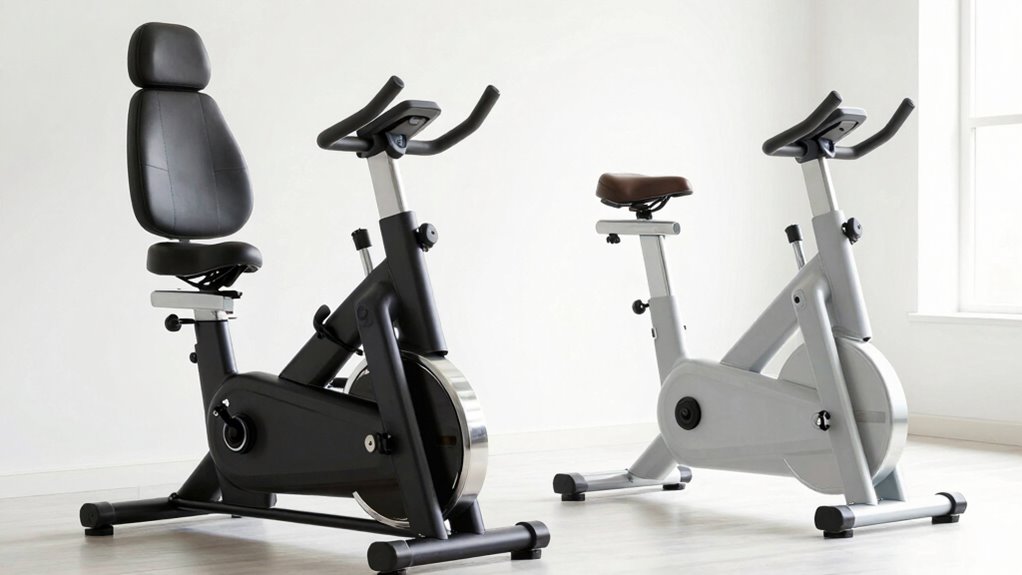
Your motivation and consistency play essential roles in choosing the right exercise bike because they directly influence how often and how long you’ll use it. Implementing motivation strategies, like setting achievable goals or tracking progress, helps keep you engaged. When you’re motivated, you’re more likely to stick with your routine, which enhances the consistency benefits that lead to better fitness results. A bike that aligns with your interests and daily schedule increases your chances of maintaining regular workouts. Remember, even the best bike won’t help if you’re not motivated to use it consistently. Prioritizing motivation strategies and understanding the importance of consistency ensures you select a bike that fits your commitment level and keeps you moving toward your fitness goals.
Which Bike Is Better for Long-Term Use and Staying Motivated?
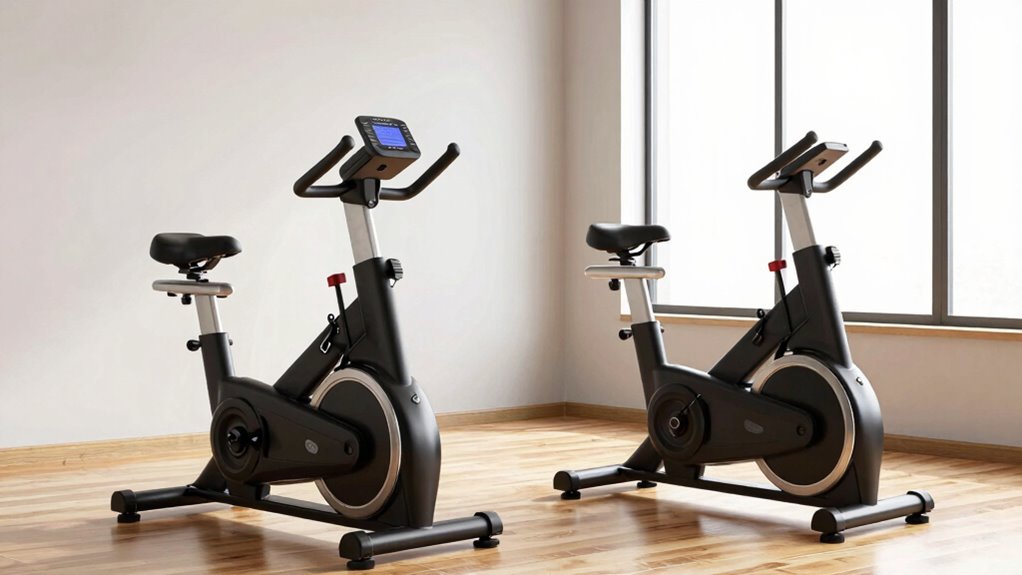
Choosing the right exercise bike for long-term use and sustained motivation depends heavily on how well it fits your lifestyle and keeps you engaged. An ergonomic design guarantees comfort during extended sessions, reducing fatigue and discouragement. To stay motivated, seek a bike that offers workout variety, preventing boredom and encouraging consistency. Consider these key factors:
Choose an ergonomic bike with adjustable settings and diverse programs for lasting motivation and comfort.
- Ergonomic design for comfort and injury prevention
- Adjustable settings to match your fitness level
- Built-in programs for diverse workout options
- Connectivity features for tracking progress and adding motivation
These elements help you remain committed over time. The bike that suits these needs will be easier to incorporate into your routine, making long-term use sustainable and enjoyable.
Frequently Asked Questions
Which Bike Type Reduces Joint Stress More Effectively?
A recumbent bike reduces joint stress more effectively because of its ergonomic benefits, providing a more reclined seat and back support. This design minimizes pressure on your knees, hips, and lower back, lowering injury risk. If you’re prone to joint pain or injury prevention is a priority, a recumbent bike offers a gentler workout while still delivering effective cardiovascular exercise. It’s ideal for comfortable, low-impact workouts.
How Do Bike Features Influence Workout Variety?
Bike features like adjustable resistance levels and heart rate monitors greatly enhance your workout variety. Resistance levels allow you to challenge yourself with different intensities, targeting various muscle groups and boosting endurance. Heart rate monitors help you stay in the ideal training zone, making your workouts more efficient. By customizing these features, you keep your routines fresh and engaging, ensuring consistent progress and preventing plateaus.
Are There Specific Health Conditions That Favor One Bike Type?
If you have serious mobility restrictions or specific medical considerations, a recumbent bike is your superhero, offering unparalleled comfort and support. Its design minimizes strain on your joints and back, making it ideal for arthritis or back pain. Conversely, upright bikes may challenge your balance or worsen certain conditions. Always consult your healthcare provider to choose the best option, ensuring safe, effective workouts tailored to your health needs.
Can You Upgrade or Modify Either Bike for Better Performance?
You can definitely upgrade or modify either bike for better performance through bike customization and performance upgrades. Adding higher quality pedals, adjusting resistance levels, or installing better seats can enhance comfort and efficiency. For upright bikes, consider adding a heart rate monitor or a more advanced console. Recumbent bikes can often be upgraded with improved seating or custom handlebars. These modifications make your workout more enjoyable and effective.
Which Bike Type Offers More Effective Interval Training Options?
You’ll find upright bikes excel at interval training, allowing quick shifts that spike your heart rate and maximize calorie burn. Imagine pushing hard on sprints, then recovering—this intensity variation boosts fitness faster. Recumbent bikes offer steadier, lower-impact sessions but aren’t as effective for rapid interval changes. So, if you want intense, heart-pumping workouts, upright bikes give you more effective interval training options, helping you burn more calories efficiently.
Conclusion
Ultimately, choosing between a recumbent and upright bike is like picking the right pair of shoes—you need comfort, purpose, and motivation to keep going. Both can help you reach your fitness goals, but the best choice depends on your preferences and lifestyle. Whichever you pick, remember that consistency fuels progress, turning your workouts into a steady river rather than a fleeting splash. Stick with it, and you’ll find your rhythm flowing smoothly toward better health.