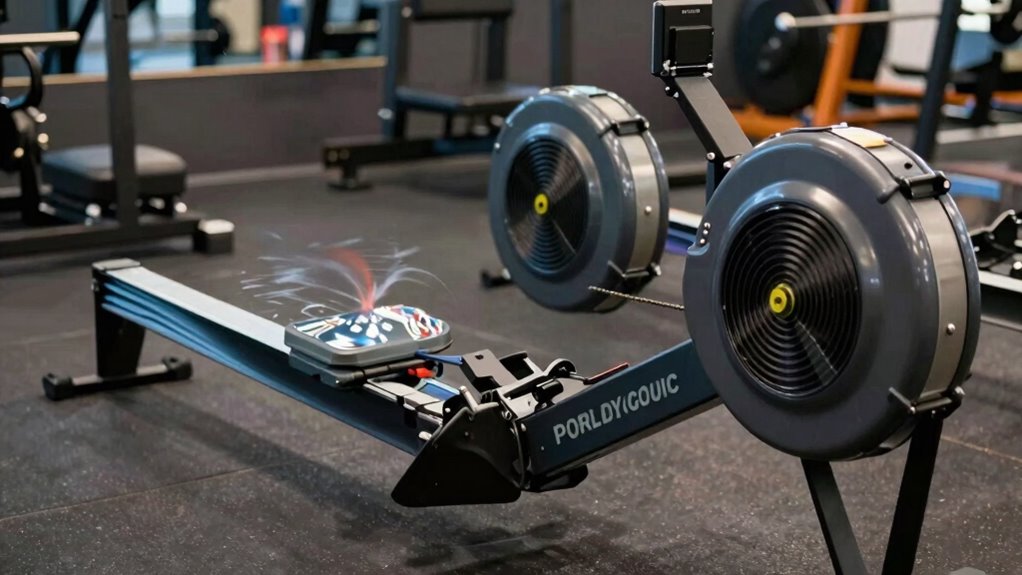

When choosing between water, air, and magnetic resistance rowing machines, consider the feel and experience you want. Water rowers offer a smooth, realistic glide with soothing splashes, ideal for immersive workouts. Air rowers increase resistance as you row faster, making them perfect for high-intensity sessions. Magnetic rowers are quiet and provide consistent resistance with minimal maintenance, suited for steady, controlled training. Keep exploring to discover which type matches your fitness goals and preferences best.
Key Takeaways
- Water rowers offer a smooth, natural resistance with a calming splash, mimicking real rowing feel.
- Air rowers provide dynamic resistance that intensifies with effort, ideal for high-intensity workouts.
- Magnetic rowers deliver quiet, consistent resistance suitable for controlled, low-noise environments.
- Resistance type affects workout sound, maintenance needs, and the authenticity of the rowing experience.
- Choose based on preferred feel: natural and immersive (water), dynamic and vigorous (air), or quiet and steady (magnetic).
Amazon Product B093HKN7TW
As an affiliate, we earn on qualifying purchases.
What Does Water, Air, and Magnetic Resistance Feel Like When Rowing?
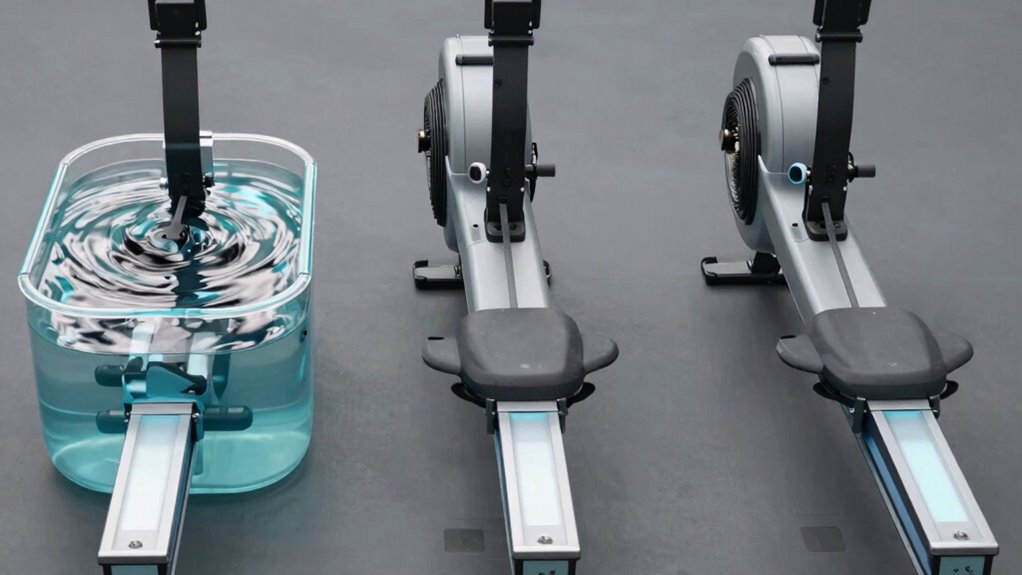
When you start rowing on machines with water, air, or magnetic resistance, you’ll notice distinct sensations that can affect your workout experience. Water rowers deliver a smooth, natural resistance that mimics real rowing, providing a consistent but fluid resistance feel as water splashes with each stroke. Air rowers create a dynamic resistance that increases with your effort, making the resistance feel more intense as you row faster. Magnetic rowers, on the other hand, offer a quieter, adjustable resistance feel, often with preset levels that provide a smooth, controlled experience. Each type influences how you perceive effort, so your choice affects not just workouts but how you experience the resistance feel during every stroke. Additionally, the type of resistance impacts the overall performance quality, shaping your workout’s effectiveness and enjoyment. Understanding the resistance mechanisms can help you select the best machine for your fitness goals and personal preferences. Recognizing the feel of resistance can also help you better adapt your technique and maximize your training benefits.
Amazon Product B09W2QN26D
As an affiliate, we earn on qualifying purchases.
How Do Water, Air, and Magnetic Rowing Machines Perform and How Much Do They Cost to Maintain?
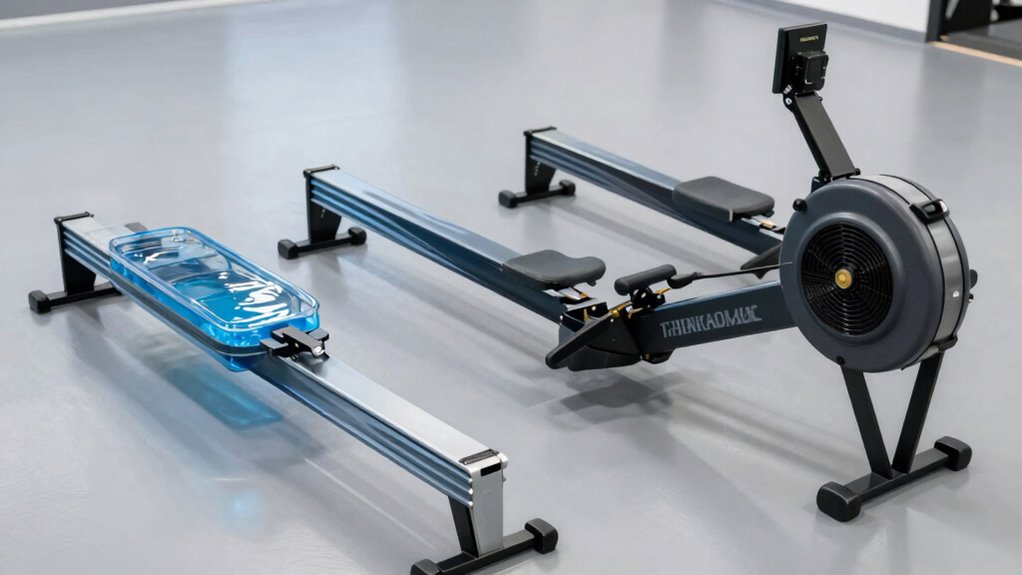
Water, air, and magnetic rowing machines each deliver different performance levels and maintenance costs, influencing your long-term investment. Water rowers are highly durable, often lasting decades, but require occasional tank cleaning and fluid replacement, which adds to maintenance costs. Noise levels are moderate, providing a soothing sound, but can be loud during intense use. Water resistance also offers a natural, smooth rowing feel that many users prefer. Additionally, water rowers tend to be more cost-effective over time due to their durability and low maintenance requirements. Air rowers excel in performance, offering smooth resistance that adjusts with your effort, but their durability can vary depending on build quality. They tend to be noisier, producing a loud swooshing sound. Magnetic rowers are the quietest, with minimal noise and low maintenance needs, as they use electromagnetic resistance with fewer moving parts, ensuring longevity. However, their performance feels less natural compared to water or air models. Maintenance requirements for each type can vary, impacting how often you need to perform upkeep. The overall performance and maintenance of each type can significantly impact your satisfaction and the value of your fitness equipment over time.
Amazon Product B072Q63BDD
As an affiliate, we earn on qualifying purchases.
Which Resistance Type Is Best for Your Fitness Goals?
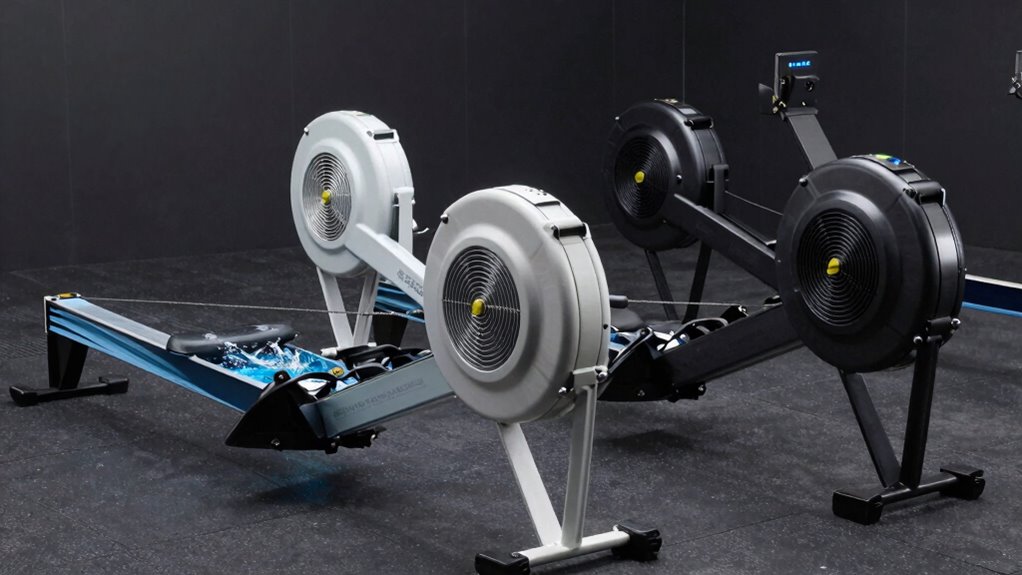
Choosing the right resistance type depends on your specific fitness goals and preferences. If you want a challenging, smooth feel, magnetic resistance offers quiet operation and customizable levels, ideal for consistent workouts. Air resistance provides a more dynamic experience, increasing in intensity as you row harder, perfect for high-intensity interval training and improving endurance. Water resistance mimics actual rowing, delivering natural feedback and a calming sound, great for those seeking a realistic feel. Your resistance setup influences workout variety—water and air machines typically allow quick adjustments, helping you switch intensities easily, while magnetic systems often feature multiple resistance levels. Consider what feels best for your style and goals—whether it’s steady, controlled progress or dynamic, varied sessions—to choose the best resistance type. Additionally, understanding how resistance mechanisms work can help you make a more informed decision aligned with your fitness aspirations, especially since certain types may better support training diversity and motivation. Exploring how the sound vibrations produced by different resistance types influence your focus and relaxation can also enhance your overall exercise experience. Moreover, paying attention to the maintenance requirements of each resistance type can ensure your rowing machine remains in optimal condition and prolongs its lifespan.
Amazon Product B0DYDND45H
As an affiliate, we earn on qualifying purchases.
What Factors Should You Consider When Choosing Your Rowing Machine Resistance?
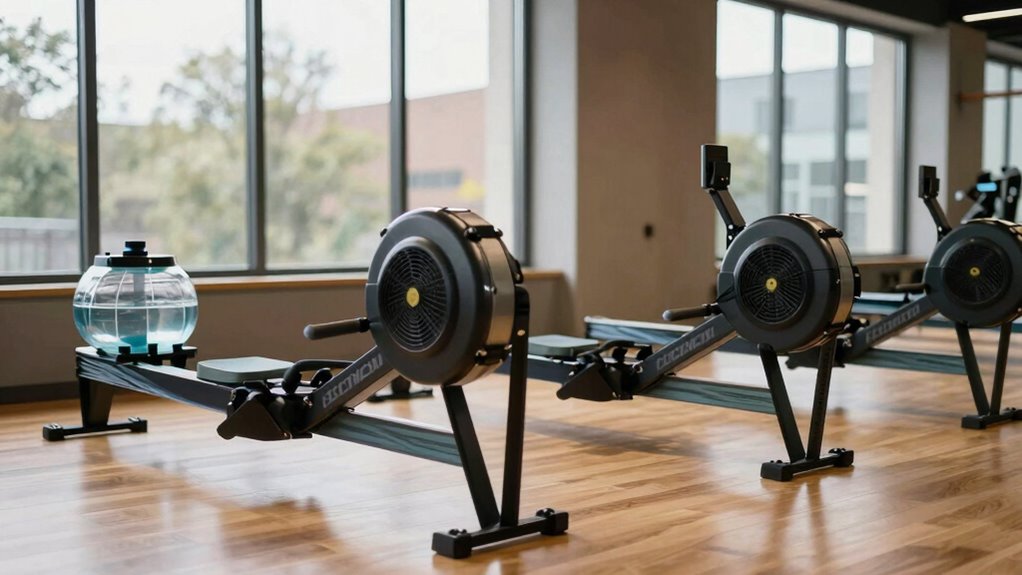
Selecting the right resistance for your rowing machine involves evaluating several key factors that align with your workout preferences and goals. First, consider user comfort—choose a resistance that feels natural and easy to maintain without causing strain. Second, think about noise levels; some types, like water and air, produce more sound, which might be a concern in shared spaces. Third, assess the adjustability of resistance; easily customizable options can help you progress steadily. Fourth, evaluate maintenance requirements, as certain resistance types demand more upkeep. Additionally, understanding how floating on water impacts the feel and sound of water resistance can help you decide if it matches your desired workout environment. For example, water resistance provides a more authentic rowing experience, which can enhance motivation. Moreover, considering resistance adjustability can enable more precise control over workout intensity as your fitness improves. Also, some resistance types, like magnetic, tend to be more low noise, making them suitable for quiet environments. Furthermore, researching the durability of resistance mechanisms can ensure your equipment remains reliable over time. By focusing on these factors, you guarantee a comfortable, quiet experience that matches your fitness needs, making your workouts more enjoyable and sustainable.
Top Tips to Maximize Your Rowing Workout With Water, Air, or Magnetic Resistance
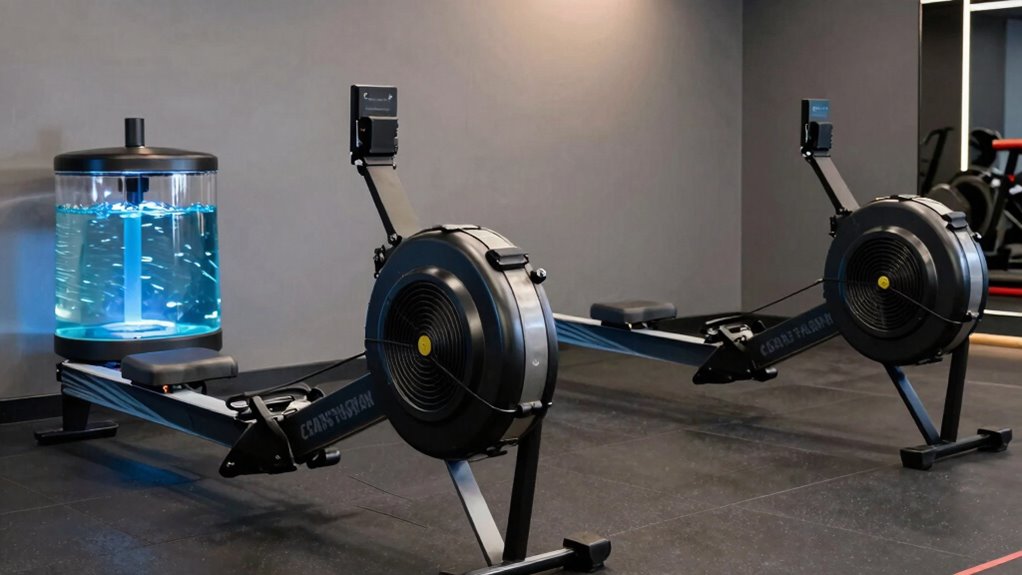
To get the most out of your rowing workouts with water, air, or magnetic resistance, focus on maintaining proper rowing posture and consistent effort. Keep your back straight, shoulders relaxed, and engage your core to protect your machine’s durability. Vary your intensity to challenge yourself without overexerting; this improves endurance and technique. Use the resistance type that best matches your feel preference, but always prioritize form over speed. Regularly check for smooth operation and clean your machine to prolong its lifespan.
| Technique Tips | Equipment Tips |
|---|---|
| Maintain a flat back during the drive | Ensure resistance remains smooth |
| Engage core throughout | Check for loose parts regularly |
| Avoid rushing the recovery | Keep the machine clean and lubricated |
| Focus on controlled strokes | Use appropriate resistance level |
Frequently Asked Questions
Can I Adjust the Resistance Level on Each Type of Rowing Machine?
Yes, you can adjust the resistance level on each type of rowing machine. Water rowers typically offer resistance customization by adding or removing water, while air rowers increase resistance with your effort, and some models have user control options like adjustable damper settings. Magnetic rowers provide precise user control options through digital resistance settings. This allows you to tailor your workout intensity easily, no matter which type you choose.
Which Resistance Type Is Most Suitable for Beginners?
If you’re a beginner, magnetic resistance rowing machines are the most suitable choice. They offer beginner-friendly features like smooth, adjustable resistance levels and easy resistance adjustment options, allowing you to gradually increase intensity. Did you know that 65% of new users prefer magnetic machines because they’re quieter and more controllable? This makes them perfect for building confidence and technique without overwhelming you early on.
Are Water, Air, and Magnetic Rowers Suitable for Indoor Use?
Yes, water, air, and magnetic rowers are all suitable for indoor use. Water resistance rowers provide a realistic feel, and their noise level varies based on water level. Air resistance rowers are great for high-intensity workouts, with adjustable resistance. Magnetic resistance models offer quiet operation and smooth adjustments. All three types fit well indoors, making them versatile options regardless of your space or workout style.
How Noisy Are Each Type of Rowing Machine During Operation?
Water rowers produce the most machine noise, creating a soothing sound but potentially disturbing others nearby. Air rowers generate moderate noise levels, which can vary based on your intensity, offering a realistic feel but possibly affecting user comfort during quiet moments. Magnetic rowers are the quietest, providing minimal machine noise, making them ideal if you want a distraction-free workout. Your choice impacts user comfort and the noise environment in your space.
Do Different Resistance Types Impact Rowing Technique or Posture?
Different resistance types can impact your rowing technique and posture alignment. Water resistance offers a smooth, natural feel that encourages proper form, while air resistance allows for a more dynamic, adjustable effort that can challenge your posture. Magnetic resistance provides a consistent feel, helping you maintain steady technique. Choose a resistance type that matches your fitness level and encourages good technique, preventing strain and ensuring effective workouts.
Conclusion
Choosing the right resistance type is like finding the perfect rhythm in a symphony—each offers a unique melody to match your fitness journey. Whether you prefer the splash of water, the whoosh of air, or the sleek silence of magnetic resistance, your rowing experience should feel like gliding smoothly across a tranquil lake, riding the wind, or gliding through still waters. Pick your tune, and let your rowing machine become your personal voyage to strength and stamina.