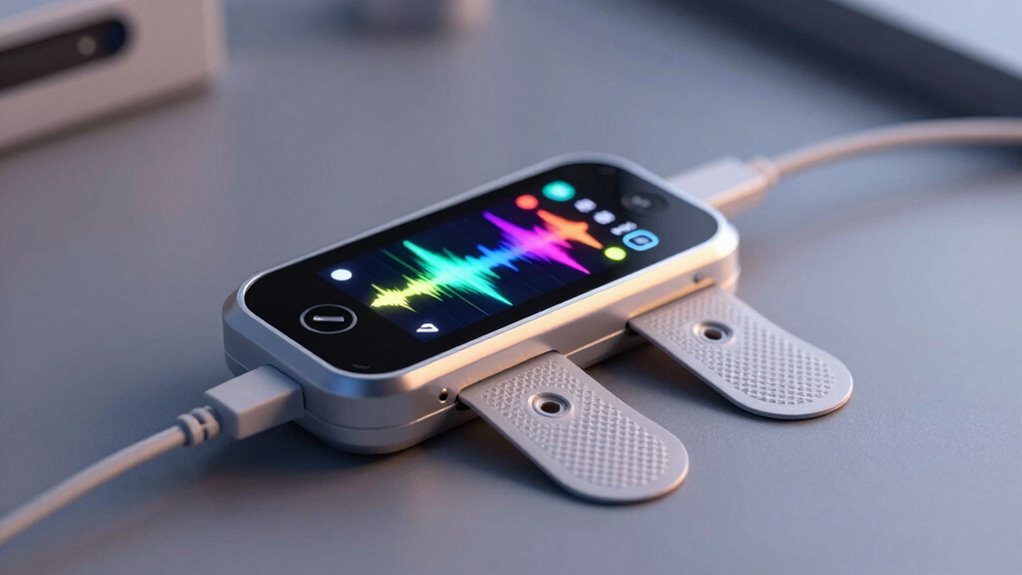

To get the most from your TENS and muscle stim devices, start with proper electrode placement over targeted muscles or nerves and set the device to a comfortable intensity, gradually increasing until you notice a muscle response without discomfort. Choose the right mode—pain relief or muscle engagement—and adjust the pulse frequency for smoother sensations or twitching. Keep session times between 15-30 minutes and regularly check your settings for ideal results. Keep exploring to master your device’s potential.

Get health and wellness essentials delivered free with Prime
- Fast, free delivery on millions of items
- Prime Video, Amazon Music and more included
- Member-only deals all year
Key Takeaways
- Start at a low intensity and gradually increase until you feel a comfortable tingling or muscle response without pain.
- Proper electrode placement over targeted muscles or nerves ensures effective stimulation and prevents useless sessions.
- Use the recommended modes and waveforms—biphasic for pain relief, Russian for muscle strength—to match your goals.
- Keep sessions between 15-30 minutes, adjusting settings based on muscle response and comfort to avoid overstimulation.
- Regularly clean electrodes, check placement, and reset device if settings feel ineffective to maintain optimal performance.
As an affiliate, we earn on qualifying purchases.
How TENS and Muscle Stim Devices Work
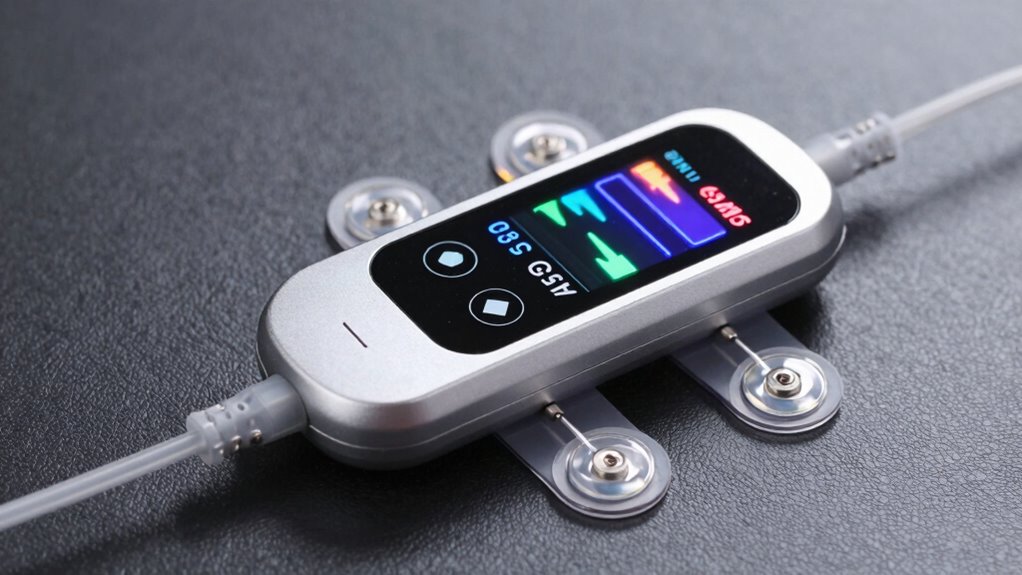
TENS and muscle stim devices work by sending electrical impulses through your skin to target nerves and muscles. Proper electrode placement is essential; placing electrodes on or near the area you want to treat guarantees effective stimulation. Make sure the electrodes adhere well and are positioned according to the device instructions for maximum results. Device maintenance also plays a key role; regularly cleaning electrodes and replacing worn pads prevent poor contact and skin irritation. Keep the device clean and store it properly when not in use. When you maintain your device and position electrodes correctly, you’ll maximize pain relief and muscle activation. Additionally, consulting DIY safety tips can help prevent common issues and ensure proper handling of electronic devices during therapy. Understanding electrode placement and proper device care will help you get consistent and safe results from your treatments. Incorporating sound therapy science principles can also enhance your overall therapy experience by promoting relaxation and healing. Staying informed about device settings can further improve treatment effectiveness and comfort. Being aware of device calibration ensures the electrical impulses are delivered at safe and effective levels.
As an affiliate, we earn on qualifying purchases.
Key Settings That Affect Pain Relief and Muscle Activation
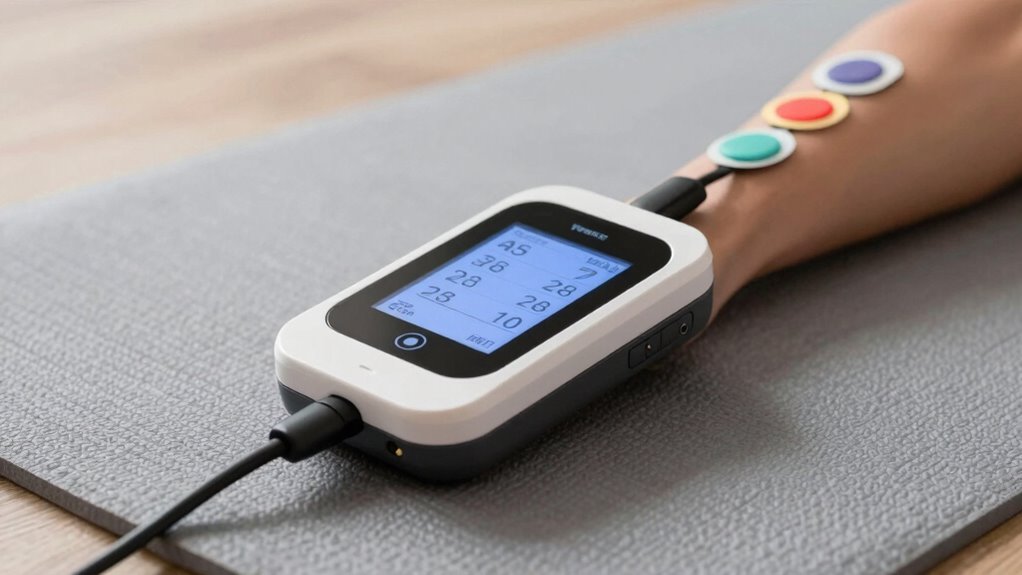
The effectiveness of your TENS or muscle stim device largely depends on adjusting key settings that influence pain relief and muscle activation. Electrode placement is vital—position them over the targeted area, ensuring they cover the nerve or muscle fibers properly. Proper skin preparation enhances conductivity; clean the area with alcohol wipes to remove oils and dirt, which helps the electrodes stick better and improves signal transmission. Avoid placing electrodes over bony areas or sensitive spots to prevent discomfort. Adjusting these settings correctly ensures the current reaches the intended muscles or nerves effectively. Additionally, understanding the contrast ratio of your device can help optimize visual clarity if you’re reviewing visual feedback during therapy sessions. Incorporating proper device settings tailored to your individual needs can further enhance treatment outcomes and comfort. Regularly checking your device’s output levels ensures safe and effective therapy sessions. Maintaining proper hygiene and regularly inspecting your device also ensures optimal performance and safety during your sessions. Paying attention to electrode adhesion can help prevent interruptions or inconsistent stimulation during therapy.
As an affiliate, we earn on qualifying purchases.
How to Properly Adjust Intensity for Comfort and Effectiveness
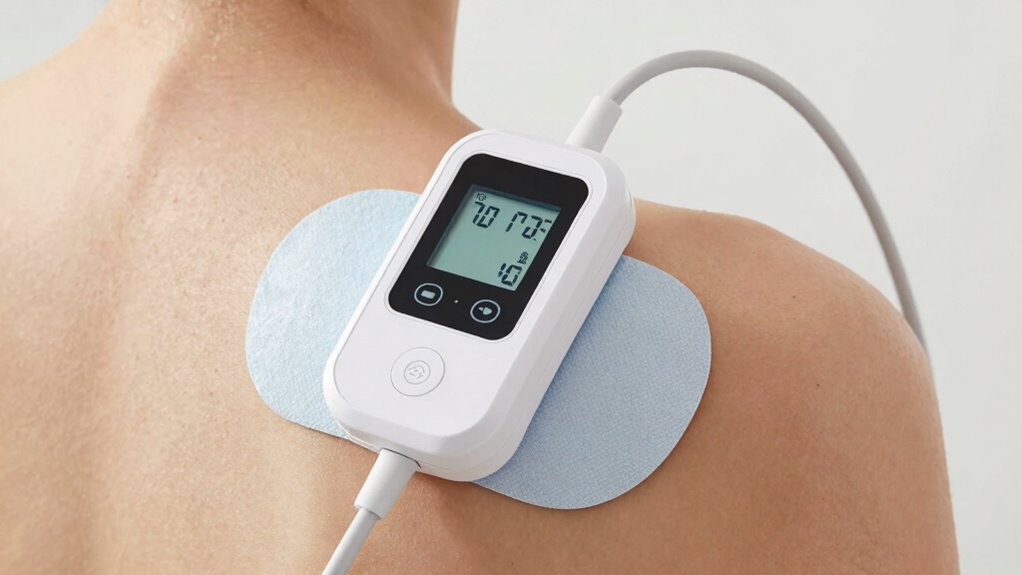
Start by finding an intensity level that’s comfortable for you, avoiding any pain or discomfort. Then, gradually increase the settings until you feel a noticeable muscle response without overdoing it. Keep an eye on how your muscles react to guarantee you’re applying the right amount for both comfort and effectiveness. Incorporating growth mindset principles can also help you stay motivated and resilient as you progress with your training. Remember to regularly check your device and perform maintenance, such as filter cleaning, to ensure optimal performance and safety. Additionally, selecting the appropriate wilderness survival kit or essential gear can boost your confidence and preparedness during outdoor activities. Being aware of digital content formats can also help you tailor your training materials for better engagement and understanding. Understanding basic car repair tips, like window regulator replacement, can empower you to handle minor issues confidently and safely.
Find Comfortable Intensity Level
Adjusting the intensity of your TENS or muscle stimulation device is essential for both comfort and effectiveness. Start by finding an ergonomic positioning that keeps your device comfortably in place without causing strain. Before adjusting, ensure your skin is properly prepared—clean and dry—to improve contact and reduce discomfort. Begin with a low setting, feeling for gentle tingling or muscle twitching. If it feels too weak, slowly increase the intensity until you notice a comfortable sensation that isn’t painful. Listen to your body—if you experience pain or excessive discomfort, lower the intensity immediately. Finding the right balance guarantees you get effective stimulation without unnecessary discomfort, making your treatment more enjoyable and beneficial. Additionally, understanding biohacking techniques can help optimize your overall health and response to stimulation. Incorporating home safety principles, such as regular device maintenance and proper setup, can also enhance your experience and ensure safe use. Being aware of proper device usage guidelines can further prevent discomfort and maximize benefits. Paying attention to device calibration can help maintain consistent and safe stimulation levels over time.
Gradually Increase Settings
To guarantee safe and effective treatment, gradually increase the intensity of your TENS or muscle stim device rather than jumping to higher settings. Start with a low level and observe how your body responds. Proper electrode placement ensures comfort and ideal results, so adjust placement if needed as you increase intensity. As you progress, pay attention to how your muscles respond without causing pain or discomfort. Regular device maintenance, like cleaning electrodes and checking connections, helps maintain consistent stimulation. Use the following guide to help you balance intensity and comfort:
| Step | Action | Focus |
|---|---|---|
| 1 | Start low | Electrode placement |
| 2 | Increment gradually | Comfort and response |
| 3 | Monitor sensations | Avoid pain |
| 4 | Adjust electrode placement | Maximize stimulation |
| 5 | Maintain device | Ensure consistent performance |
A key aspect of effective muscle stimulation is understanding how electrode placement influences the quality of the sensations and results. Additionally, proper device maintenance ensures longevity and optimal functioning of your equipment. Incorporating safe stimulation techniques can further enhance your experience and outcomes. Regularly reviewing device settings helps prevent overstimulation and promotes better results.
Monitor Muscle Response
Monitoring your muscle response is vital to guarantee you’re using the right intensity level. Pay attention to how your muscles contract and relax during stimulation. Proper electrode placement assures targeted muscle engagement, avoiding discomfort. Good skin preparation, like cleaning and drying the area, improves conductivity and reduces irritation. Adjust the intensity gradually until you notice a mild, twitching sensation without pain. Use these tips to fine-tune your settings:
- Check electrode placement for optimal muscle activation
- Ensure skin is clean and dry before applying electrodes
- Increase intensity slowly to avoid sudden discomfort
- Observe muscle movement and adjust accordingly
- Avoid overstimulating to prevent fatigue or soreness
- Maintaining proper electrode contact is essential for consistent and effective stimulation. Additionally, understanding muscle response monitoring can help prevent overuse and ensure safety during sessions.
As an affiliate, we earn on qualifying purchases.
Choosing the Best Mode for Pain or Muscle Engagement
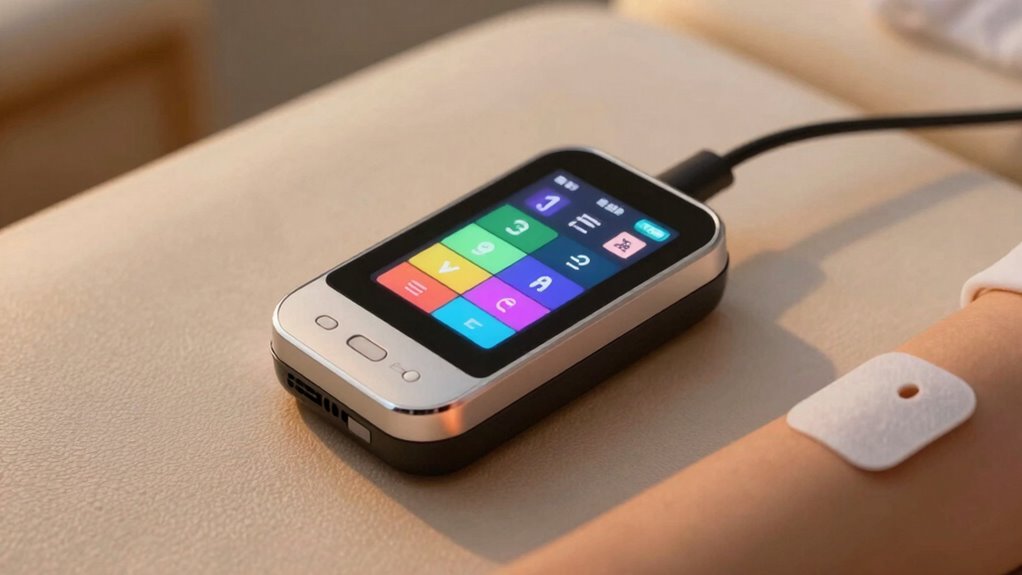
Choosing the right mode is key to targeting pain or muscle engagement effectively. You’ll want to select appropriate settings, adjust the intensity to your comfort level, and focus on specific areas. Getting these choices right helps maximize your treatment benefits and comfort.
Selecting Appropriate Modes
Ever wonder how to pick the right TENS mode to target pain or boost muscle engagement? Choosing the proper mode depends on your goals and the device’s features. For pain relief, select modes designed for sensory stimulation, which focus on blocking pain signals. For muscle engagement, opt for modes that promote muscle contraction through rhythmic pulses. Keep these ideas in mind:
- Adjust electrode placement for ideal coverage
- Match mode with your specific pain or muscle goal
- Ensure device calibration before switching modes
- Use continuous modes for sustained muscle activation
- Switch to burst or modulation modes for pain management
Adjusting Intensity Levels
Adjusting the intensity levels on your TENS device is essential to effectively target pain or enhance muscle engagement. Start by placing the electrodes correctly, ensuring proper electrode placement for your desired area. Once the electrodes are positioned, gradually increase the device calibration by turning up the intensity control. You should feel a comfortable, tingling sensation without pain. Too high, and it might cause discomfort; too low, and it won’t be effective. Pay attention to how your body reacts and adjust accordingly. Remember, different modes may require different intensity levels, so experiment to find what works best. Always listen to your body, and avoid pushing beyond comfort. Proper electrode placement combined with precise intensity adjustments maximizes the benefits of your treatment.
Targeting Specific Areas
To effectively target pain relief or muscle engagement, selecting the appropriate mode on your TENS device is vital. The right mode guarantees you focus on specific areas for ideal muscle recovery or pain management. For localized pain, choose modes that deliver steady, low-frequency pulses to soothe nerves. If you’re targeting muscle engagement, opt for modes that create rhythmic, higher-frequency stimulations to stimulate muscle fibers. Consider these options:
- Burst mode for deep muscle stimulation
- Modulation mode to prevent habituation
- Continuous mode for steady pain relief
- RF (Rapid Fire) for quick muscle engagement
- Pre-programmed modes tailored for specific needs
Choosing the right setting enhances effectiveness, guarantees comfort, and helps you get the most out of your therapy.
Pulse Frequency: What It Is and How It Impacts Results
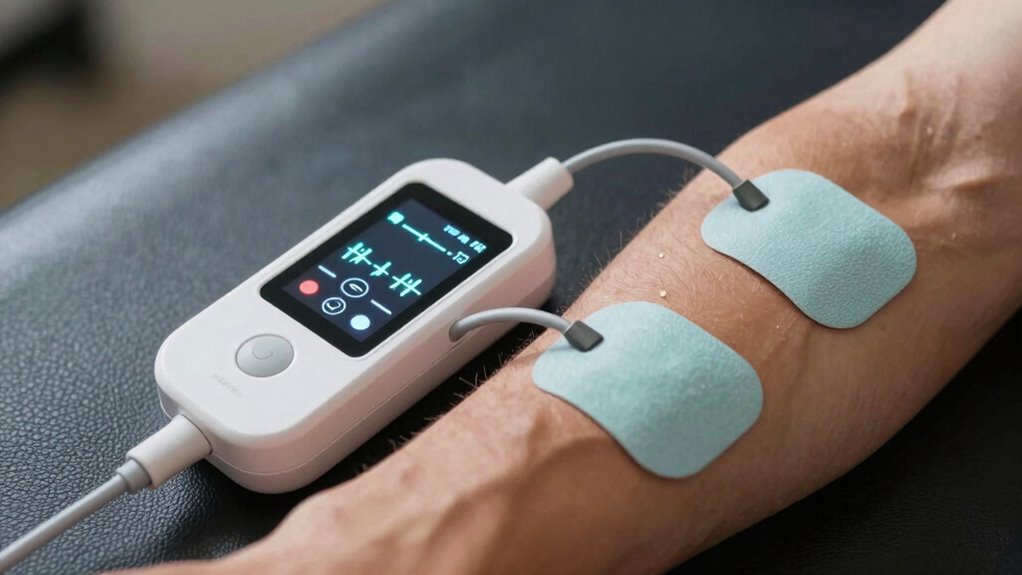
Pulse frequency refers to how often electrical impulses are delivered to your muscles during TENS or muscle stimulation sessions. This setting markedly impacts your experience and results. A higher pulse frequency, usually above 50 Hz, can produce a smooth, tingling sensation and may help reduce muscle fatigue by encouraging sustained muscle activity. Conversely, a lower pulse frequency, below 10 Hz, creates a twitching sensation and can be useful for targeting specific muscles without causing fatigue. Adjusting pulse frequency allows you to customize your treatment based on your goals—whether to relax muscles, promote circulation, or strengthen. Keep in mind that the right pulse frequency varies from person to person, so experimenting can help you find what works best without overwhelming your muscles.
When Should You Use Different Waveforms?
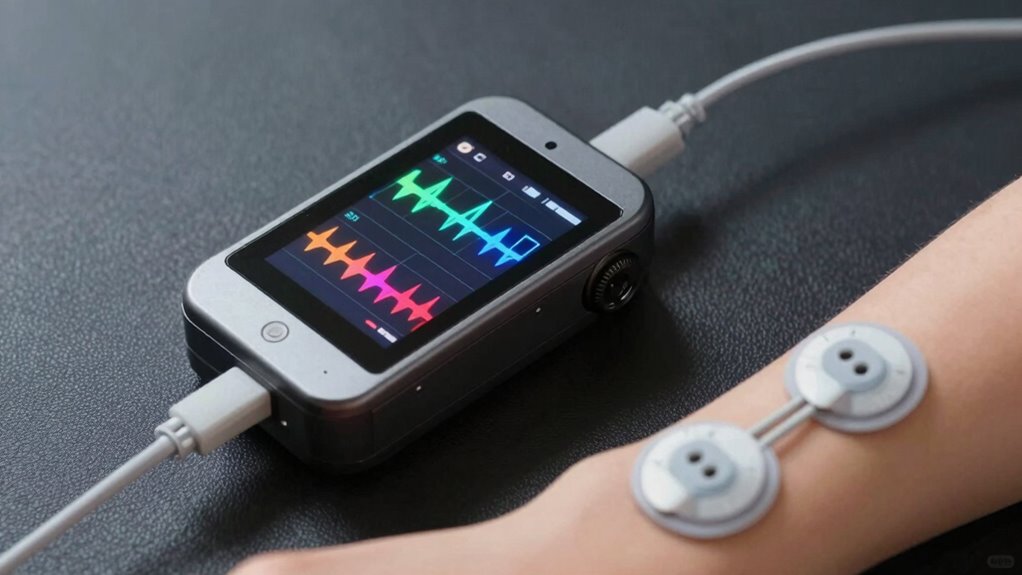
Choosing the right waveform depends on your specific goals and the response you want from your muscles. Different waveforms activate muscles in unique ways, and selecting the appropriate one can enhance your results. Consider your electrode placement to target specific areas effectively. For example, biphasic waveforms are good for pain relief, while Russian waveforms boost muscle strength. Adjusting pulse frequency in conjunction with waveform choice can optimize comfort and effectiveness. Use these ideas as a guide:
Choosing the right waveform enhances stimulation effectiveness for pain relief or muscle strengthening.
- For pain relief, choose biphasic or asymmetrical waveforms
- To stimulate muscle strength, try Russian or symmetrical waveforms
- Keep electrode placement consistent for targeted results
- Higher pulse frequency may increase comfort, depending on waveform
- Match your goal with the waveform to maximize benefits
Selecting the right waveform ensures efficient, comfortable stimulation tailored to your needs.
Setting Session Duration for Maximum Benefits
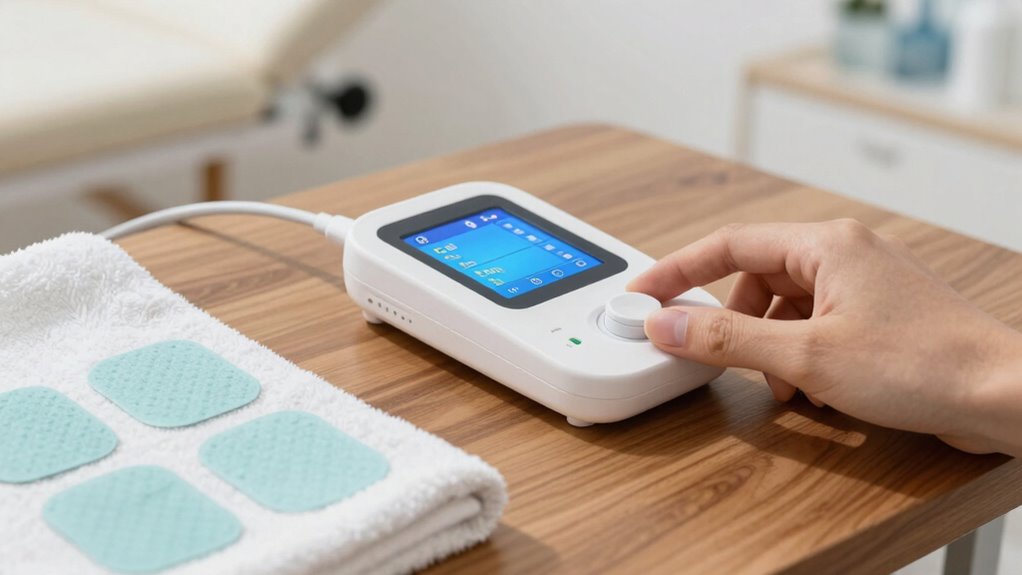
Optimizing your session duration guarantees you get the most benefit from your muscle stimulation without overdoing it. The key is finding the most suitable time for each session, typically between 15 to 30 minutes. Longer sessions aren’t always better and can lead to fatigue or irritation. Start with shorter durations and gradually increase until you find what works best for your body and goals. Consistency matters more than length, so sticking to a regular schedule helps maximize results. Pay attention to how your muscles feel during and after each session, adjusting the session duration as needed. Remember, the most appropriate time varies based on individual sensitivity and treatment purpose, so listening to your body is essential for safe and effective muscle stimulation.
Common Mistakes That Make Settings Useless: And How to Avoid Them
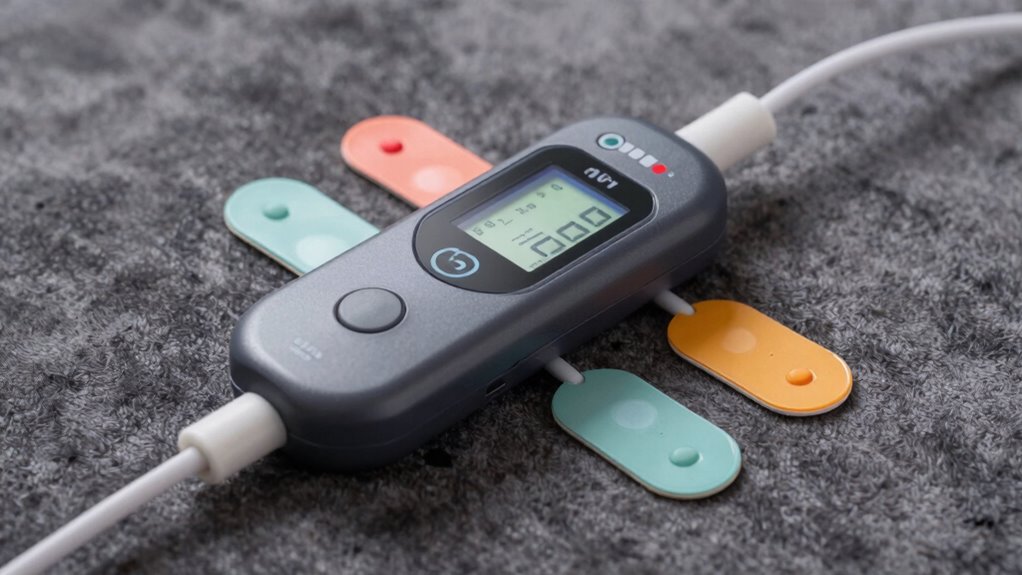
Many users find that simply turning on their TENS or muscle stim device isn’t enough to see results; if your settings aren’t correct, your efforts can be wasted. Common mistakes include poor electrode placement, which can reduce effectiveness, or ignoring device compatibility, risking ineffective stimulation. To avoid these errors:
- Place electrodes directly over the target area for better results
- Ensure electrodes are well-adhered and making good contact
- Use settings compatible with your device’s specifications
- Avoid overlapping electrodes, which can cause inconsistent stimulation
- Adjust intensity gradually to prevent discomfort and optimize response
Tips to Track Your Progress and Fine-Tune Settings Over Time
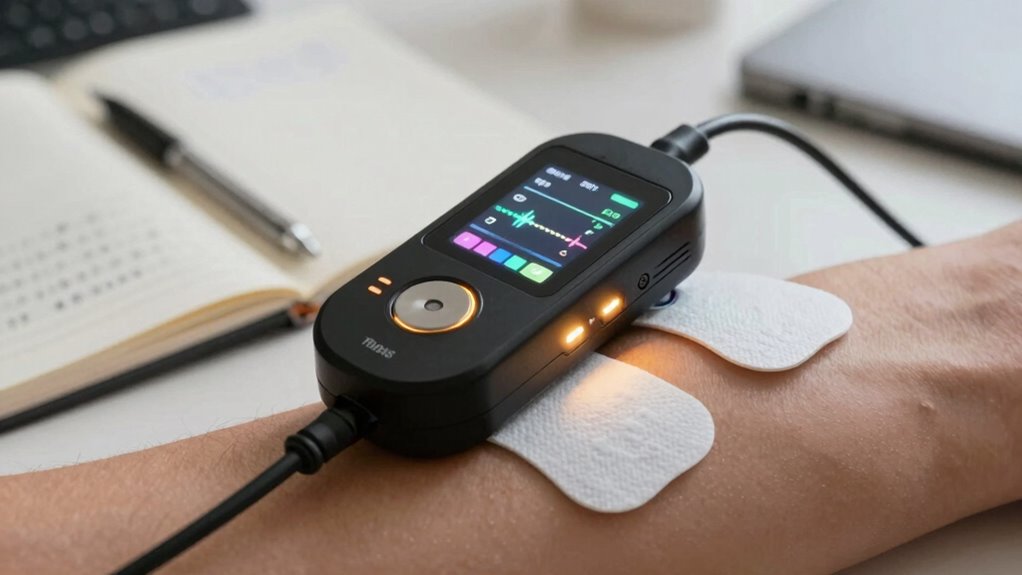
Keeping track of your progress is essential to guarantee your TENS or muscle stim sessions remain effective. Regularly logging your experiences helps you identify which settings work best and which may need adjustment. Use a journal or app to note your session duration, intensity levels, and how you feel afterward. This tracking progress allows you to detect patterns, such as improved pain relief or muscle fatigue. Over time, fine tuning settings becomes easier when you understand how your body responds. Adjust intensity, frequency, or pulse duration incrementally based on your observations. Consistent monitoring ensures you’re not stuck with ineffective settings and helps optimize your therapy. Remember, small adjustments guided by your tracked progress can markedly enhance your results and comfort.
Troubleshooting: What to Do When Settings Aren’t Working
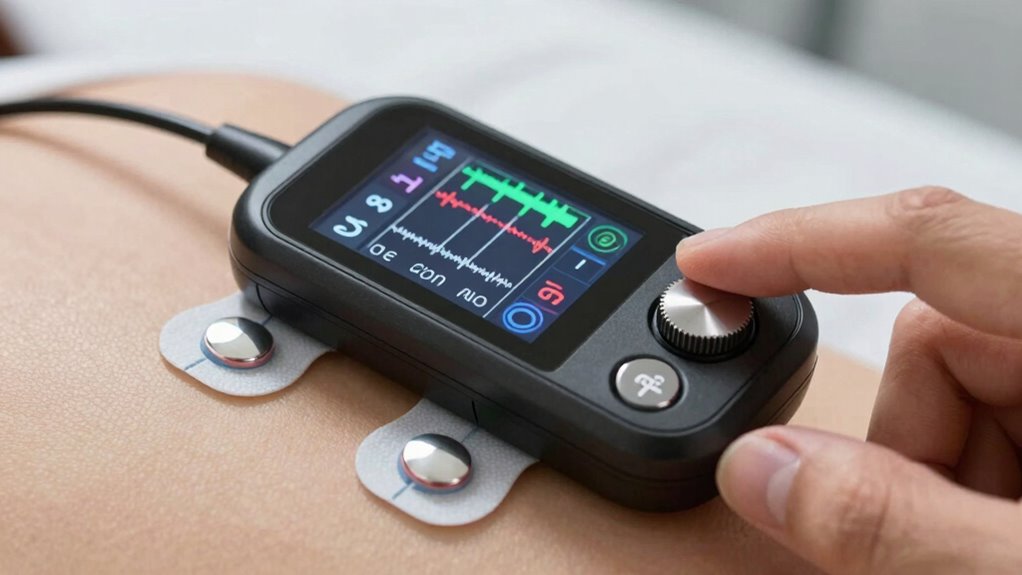
If your TENS or muscle stim settings aren’t working, start by checking your electrode placement to verify they’re positioned correctly. Next, try adjusting the intensity gradually to find a comfortable level, and if needed, reset the device to its default settings. These simple steps can often resolve common issues and get your therapy back on track.
Check Electrode Placement
When your TENS unit isn’t producing the expected results, checking your electrode placement is a crucial first step. Proper electrode placement ensures effective muscle targeting and essential stimulation. If the electrodes aren’t positioned correctly, you might not feel the desired sensation or relief.
Consider these tips:
- Place electrodes directly over the muscle you’re targeting.
- Keep electrodes at least 1 inch apart to avoid overlapping stimulation.
- Avoid bony areas or joints, which can dull the sensation.
- Ensure skin is clean and dry before application.
- Adjust electrode positioning if you don’t feel stimulation or if the sensation is weak.
Correct electrode placement maximizes muscle targeting and improves your overall experience.
Adjust Intensity Gradually
Once you’ve checked that your electrodes are placed correctly, the next step is to modify the intensity setting. Increase it gradually to find a comfortable level for pain management. Start with a low setting, then slowly raise it until you feel a tingling sensation or muscle twitching—never push to pain. Monitoring your response helps prevent discomfort and ensures effective relief. Use this table to guide your adjustments:
| Adjustment Step | What to Expect |
|---|---|
| Start Low | Feel a gentle tingling |
| Increase Slightly | Muscle twitching, not pain |
| Find Comfort | Tingling or twitching without pain |
| Avoid Pain | Stop increasing when pain begins |
| Maintain Level | Keep steady for consistent relief |
Gradual adjustments maximize comfort and optimize pain management with electrode placement.
Reset Device Settings
Sometimes, device settings can become unresponsive or behave unexpectedly, making it necessary to reset them to restore proper function. Resetting can resolve issues caused by incompatible device settings or degraded battery life affecting performance. To reset your device:
- Turn off the device completely
- Remove the batteries or disconnect power
- Wait for 30 seconds
- Reinsert batteries or reconnect power
- Turn the device back on and reconfigure settings
This process ensures your device’s firmware and settings are refreshed, improving device compatibility and optimizing battery life. Resetting is a simple troubleshooting step that clears minor glitches, helping your TENS or muscle stimulator work as intended without frustration or delay. Always check your user manual for specific reset instructions related to your model.
Frequently Asked Questions
Can TENS and Muscle Stim Devices Be Used Together Safely?
Yes, you can use TENS and muscle stim devices together safely if you verify device compatibility and follow safety precautions. Always check that both devices are designed for simultaneous use, and avoid placing electrodes over the same areas to prevent interference. It is crucial to consult your healthcare provider before combining these therapies, especially if you have underlying health conditions, to ensure safe and effective treatment.
How Often Should I Change or Update My Device Settings?
You should update your device settings regularly, typically every few weeks, to guarantee peak performance. Always refer to your user manual for specific guidance on recalibration and adjustments. Keep an eye on how the device feels and functions; if you notice inconsistencies, it’s time to recalibrate or update the settings. Regularly changing settings helps prevent device fatigue and maintains effectiveness, making your therapy more comfortable and beneficial.
Are There Specific Contraindications for Using TENS or Muscle Stimulators?
An ounce of prevention is worth a pound of cure, so you must know that there are specific contraindications for using TENS or muscle stimulators. Always follow safety precautions, and check device compatibility before use. People with pacemakers, pregnancy, or certain medical conditions should avoid these devices unless cleared by a healthcare professional. Skipping these steps can lead to adverse effects, so stay informed and prioritize safety.
What Are Signs That My Current Settings Are Ineffective or Harmful?
If your settings are ineffective or harmful, watch for signs like persistent discomfort, skin irritation, or unusual sensations. You might also notice a lack of relief, which indicates improper electrode placement or device malfunction. If you experience increased pain, tingling, or numbness, stop using the device immediately. Always verify electrodes are correctly positioned and the device functions properly to prevent harm and optimize results.
How Do I Differentiate Between Discomfort and Pain During Treatment?
Did you know that over 80% of users struggle to distinguish discomfort from pain during treatment? You can tell the difference by sensing treatment feedback: discomfort feels like mild, tolerable tingling, while pain is sharp or intense. If you experience pain, lower the intensity immediately. Discomfort is normal, but pain indicates you need to adjust settings or stop to avoid harm. Always listen carefully to your body’s signals.
Conclusion
Getting the most out of your TENS and muscle stim devices is like tuning a guitar—you need the right settings to hit the perfect note. By understanding how each setting works and paying attention to your comfort, you’ll turn these tools from useless noise into a symphony of relief and muscle engagement. Stay attentive, adjust as needed, and soon you’ll be playing your pain and soreness like a pro.
Fall Picks
fall essentials
As an affiliate, we earn on qualifying purchases.