
TL;DR

Get health and wellness essentials delivered free with Prime
- Fast, free delivery on millions of items
- Prime Video, Amazon Music and more included
- Member-only deals all year
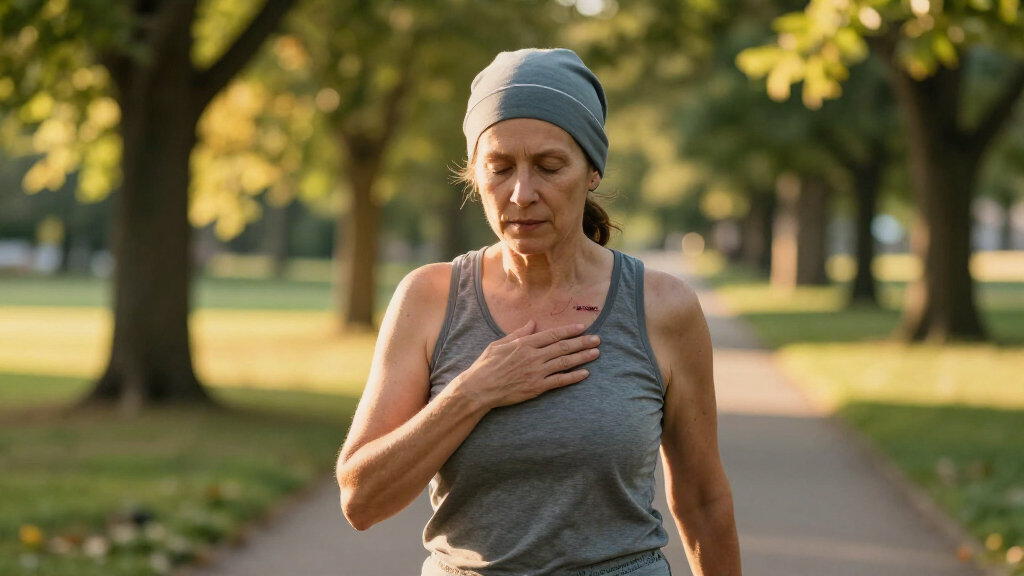
A Sixty and Me contributor is marking 25 years since her first breast cancer diagnosis and reflecting on a second diagnosis two years ago. Her account describes treatment, emotional recovery and journaling, while underscoring that each patient’s experience is different.
A contributor to Sixty and Me is marking 25 years since her first breast cancer diagnosis by recounting two diagnoses, two mastectomies and reconstructive surgeries, and the emotional work of recovery. In the personal essay, she says her first diagnosis was ductal carcinoma in situ (DCIS) and that a later diagnosis, at age 70, was invasive lobular breast cancer with lymph-node involvement.
The writer says her first diagnosis came months after the September 11, 2001 attacks. The DCIS was found in the milk ducts, and she reports there was no lymph-node involvement. She describes the diagnosis as a shock because, she says, breast cancer was not present in her family. She also worried about what it could mean for her two daughters and son.
Her second diagnosis came two years before the essay was written, despite annual mammograms, according to her account. She says the invasive cancer involved lymph nodes and that her treatment included radiation, mastectomy and reconstruction. She also reports beginning monthly injections of fulvestrant because her cancer was estrogen-driven. The essay recounts her own course of care; it does not provide medical records or details such as the cancer stage, treatment dates or current treatment status.
The writer also describes lasting physical and emotional effects, including loss of sensation around the nipple area after surgery. She credits a nurse-therapist, support from her husband, meditation and regular journaling with helping her adjust. She says journal entries later contributed to published writing and her memoir, Healing with Words.
A Survivor’s Account of Long-Term Effects
The essay offers a personal account of how breast cancer can shape life well beyond diagnosis and treatment. The writer describes physical changes after mastectomy and reconstruction, as well as emotional recovery that, in her experience, took longer than physical healing. Her account may help readers understand that survival can involve ongoing adjustment, not only completion of treatment.
It also puts attention on the range of experiences behind a broad cancer diagnosis: the contributor reports one early-stage diagnosis without node involvement and a later invasive cancer with node involvement. Her story is not evidence about how common those experiences are or a guide to another person’s care. It is a first-person reflection on the support and coping practices she found useful, including therapy, writing and family support.
Products Worth Considering

Oral-B iO Series 3 Rechargeable Electric Toothbrush for Adults, Black

Garmin Forerunner 55 GPS Running Smartwatch, Black

Blueair Blue Pure 511i Max Air Purifier for Home and Bedroom
As an affiliate, we earn on qualifying purchases.
Two Diagnoses Across 25 Years
The essay was published by Sixty and Me under the title “Celebrating My Survival: 25 Years Later.” Its focus is the author’s personal history rather than a new medical study, policy change or clinical announcement. She says the first diagnosis occurred 25 years before writing and the second occurred two years before, when she was 70.
The contributor refers to breast cancer statistics, including an estimate that one in eight women will develop invasive breast cancer in their lifetime and an incidence rate of about 132.5 cases per 100,000 people. Those figures are presented in the essay without a named data source, geographic population or reference period. They cannot be independently assessed from the supplied material, so they should not be treated as a newly verified or current statistical update.
The essay also recalls advice from the plastic surgeon who treated her after her first surgery. She says he encouraged her to keep a journal and rebuild confidence in her body at her own pace. Later, she worked with a nurse-therapist who used creative visualization and encouraged her to focus on her needs during recovery.
““In 25 years, I’ve had two breast cancers and two mastectomies and reconstructions.””
— The writer, in her Sixty and Me essay
Medical Details Not Provided
The essay does not identify the writer by name in the supplied material or provide records confirming her diagnoses, procedures or treatment. It also does not state her present health or whether she continues to receive fulvestrant. The timing of the second diagnosis is given relative to the essay’s publication, rather than as a calendar date.
The breast cancer statistics in the piece lack a cited source and a defined population or time period. The article is a personal account, not an epidemiological report, and it does not establish whether the writer’s experience is typical. No new research findings or changes to screening guidance are reported.
The Reflection Continues Through Writing
The supplied essay does not announce a new project, event or medical milestone. It closes by inviting readers to share how they remember difficult experiences and personal victories. The writer says she continues to use a journal to record thoughts and feelings and has taught writing, connecting those practices to her memoir, Healing with Words.
Any future update about the contributor’s health or writing plans would need to come from her or Sixty and Me; the source material gives no schedule for further reporting. Readers seeking information about their own breast health or treatment should speak with a qualified health professional, since an individual story cannot determine screening or treatment decisions.
Key Questions
What is the news in “Celebrating My Survival: 25 Years Later”?
It is a personal reflection published by Sixty and Me. The contributor looks back on a first breast cancer diagnosis 25 years earlier and a second diagnosis two years before writing.
What diagnoses does the writer describe?
She says her first diagnosis was DCIS, with no lymph-node involvement, and that her later diagnosis was invasive lobular breast cancer with lymph-node involvement. These details come from her account in the essay.
What treatment does she say she received?
The writer reports that treatment for her later cancer included radiation, mastectomy and reconstruction, as well as monthly fulvestrant injections. The essay does not give a complete treatment timeline or her current health status.
What helped the writer cope, according to her account?
She credits a nurse-therapist, support from her husband, meditation and regular journaling with helping her process the experience. These are practices she describes for herself, not medical recommendations for every patient.
Source: rss