
TL;DR

Get health and wellness essentials delivered free with Prime
- Fast, free delivery on millions of items
- Prime Video, Amazon Music and more included
- Member-only deals all year
Researchers from Virginia Commonwealth University and Emory University deployed HomePal, a home sensor system, in the homes of 70 adults aged 65 and older for three months. They are comparing the collected behavior data with loneliness assessments to see whether the system can identify patterns that merit follow-up; its accuracy and clinical usefulness have not yet been established.
Researchers from Virginia Commonwealth University and Emory University have tested a home sensor system called HomePal in the homes of 70 independently living adults aged 65 and older, collecting data for three months to investigate whether everyday behavior may be associated with loneliness. The team is comparing the sensor data with participants’ loneliness assessments; the system is not a diagnostic tool, and its accuracy has not yet been reported.
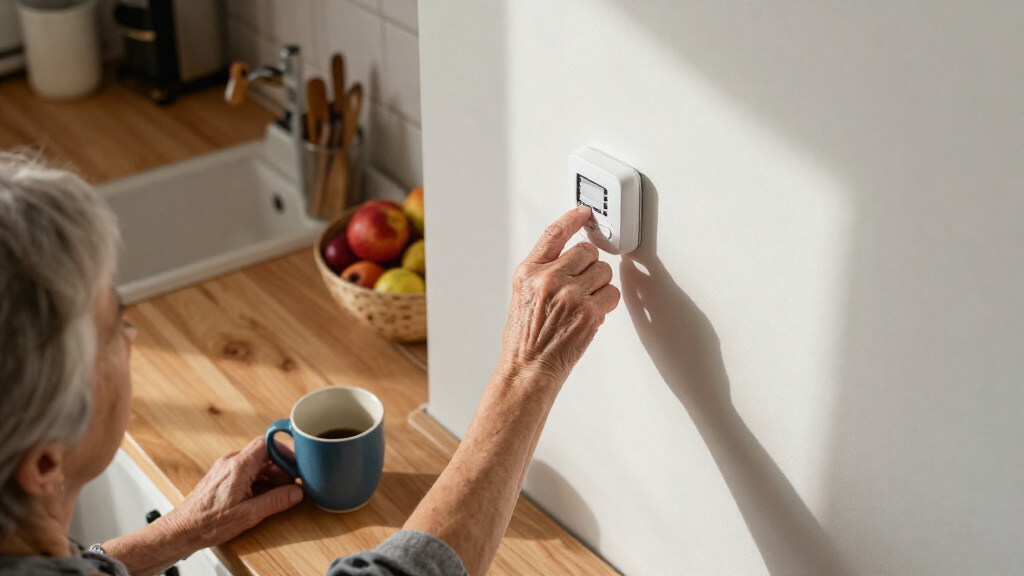
HomePal combines commercially available and custom sensors to passively record aspects of life at home, including movement, daily activity, sleep and phone use. The setup also uses smart speakers and smart television plugs. Motion and door sensors can capture changes in movement around the home; television use may help estimate time spent watching TV, while sleep sensors track rest patterns. Phone-call patterns are intended to provide one measure of social contact.
The researchers are matching those measurements with biweekly loneliness assessments completed by participants. An AI model is being developed to examine which behavioral patterns are associated with assessment results and how well the data correspond with people’s reported feelings. The researchers plan to test the model against the survey approach, but the supplied report does not provide a completed accuracy evaluation.
Mohamed Kamel, a computer science doctoral student at VCU and the study’s lead author, said the aim is to see whether routine behavior may offer early signs of loneliness or social withdrawal. The team says a future system might share a score or trend with a participant or caregiving team. That is a proposed use, not a capability shown to be reliable in the current report.
A Possible Signal Between Visits
Loneliness can be difficult for care providers to identify during occasional appointments, particularly when an older adult does not raise the issue. A system that tracks changes in everyday routines could, if validated, give a person or caregiver another reason to check in. The researchers describe HomePal as a way to flag patterns for follow-up, not replace conversations or professional assessment.
The potential value depends on whether sensor patterns reliably reflect loneliness rather than other reasons for changed behavior. A person may move less, sleep poorly or make fewer calls for many reasons. The study’s comparison with participants’ own assessments is intended to examine the relationship, but the available report does not establish that the system can distinguish loneliness from other circumstances or improve care outcomes.
For families and services supporting older adults living independently, the work raises practical questions about whether passive monitoring can add useful information without intruding on privacy. Any future benefit would depend on accuracy, consent and clear control over data sharing, as well as caregivers knowing what a flagged change does and does not mean.
As an affiliate, we earn on qualifying purchases.
How HomePal Collects Home Data
The project brings together researchers in computer science and nursing. HomePal’s sensors collect data about routine activity in a participant’s home, while the loneliness assessments provide a separate account of how participants say they feel. The researchers are using the two sources together to develop and evaluate a model, rather than treating sensor readings alone as proof of loneliness.
The study, Development of an AI-Enabled Remote Loneliness Assessment System for Older Adults Using Behavioral and Speech Data From IoT Sensors and Smart Speakers, was published in the journal Assessment in 2026. The reported deployment involved 70 adults aged 65 and older living independently in the Atlanta metro area and lasted three months. The team says it may adjust HomePal’s sensors as analysis continues.
The researchers also say the system could potentially be configured to use sensors that operate and store information on local networks. They have described local storage and limits on caregiver access as privacy options under consideration. The report does not specify a final product design, data-retention policy or commercial release schedule.
“The main idea is to see whether everyday behavior at home can give early signs that an older adult may be experiencing loneliness or social withdrawal.”
— Mohamed Kamel, VCU doctoral student and study lead
sleep monitoring sensors for seniors
As an affiliate, we earn on qualifying purchases.
As an affiliate, we earn on qualifying purchases.
Accuracy and Privacy Still Undetermined
The report does not give the model’s accuracy, identify which specific signals most closely correspond with loneliness assessments, or show whether HomePal changes care or health outcomes. It also does not say how often a potential alert might be wrong. Those questions matter because sleep, movement, television use and phone calls can change for reasons unrelated to loneliness.
The researchers have not presented HomePal as a diagnostic system. Kamel said the team is looking for patterns that may be related to loneliness and could merit a follow-up. It is also not clear what level of consent and caregiver involvement a future product would require, which data would be shared by default, how long records would be retained, or whether the proposed local-storage options will be included in a commercial version.
smart home motion sensors for older adults
As an affiliate, we earn on qualifying purchases.
As an affiliate, we earn on qualifying purchases.
Researchers Continue Model Testing
The team says it will continue analyzing the collected data, developing AI models and adjusting the sensor setup. Its stated next step is to compare model results with the participants’ loneliness assessments and evaluate how accurately the system identifies related patterns. No timeline for publishing those results or launching a product was provided.
Before HomePal could be used to guide care, the researchers would need to report how well it performs and clarify how alerts should be interpreted, who receives them and how participants control their information. For now, the project remains a research effort to determine whether home activity data can support a conversation or check-in—not a validated way to diagnose loneliness.
voice-activated smart speakers for seniors
As an affiliate, we earn on qualifying purchases.
As an affiliate, we earn on qualifying purchases.
Key Questions
What is HomePal?
HomePal is a research prototype that uses home sensors and connected devices to record patterns such as movement, sleep, television use and phone activity. Researchers are studying whether those patterns are associated with loneliness assessments.
Has HomePal been shown to detect loneliness accurately?
Not yet in the reported results. Researchers are developing a model and plan to compare its outputs with participants’ assessments. The report does not state an accuracy rate.
Does the system diagnose loneliness?
No. Study lead Mohamed Kamel said the team is not claiming to diagnose loneliness. The intended use is to identify possible patterns that could prompt follow-up.
Who took part in the study?
The prototype was deployed for three months in the homes of 70 adults aged 65 and older who were living independently in the Atlanta metropolitan area.
How will the researchers address privacy?
The researchers say HomePal could be adapted to use sensors that process and store data on local networks, and that access could be limited. The report does not specify a final privacy policy or product configuration.
Source: rss
Cold & flu season Picks
humidifiers
As an affiliate, we earn on qualifying purchases.