
TL;DR

Get health and wellness essentials delivered free with Prime
- Fast, free delivery on millions of items
- Prime Video, Amazon Music and more included
- Member-only deals all year
A Monash University-led study across 31 Australian general practices found that a 12-month nurse-led program improved estimated dementia risk profiles for more participants than standard care. The trial assessed risk factors, not dementia diagnoses or prevention, and researchers are awaiting 36-month follow-up data.
A Monash University-led trial found that a 12-month program delivered by general practice nurses improved estimated dementia risk profiles among adults aged 45 to 65 with modifiable risk factors. Across 31 Australian practices, 56% of participants offered nurse consultations and a tracking app improved their scores, compared with 44% receiving standard care; the study measured risk profiles, not dementia diagnoses or prevention.
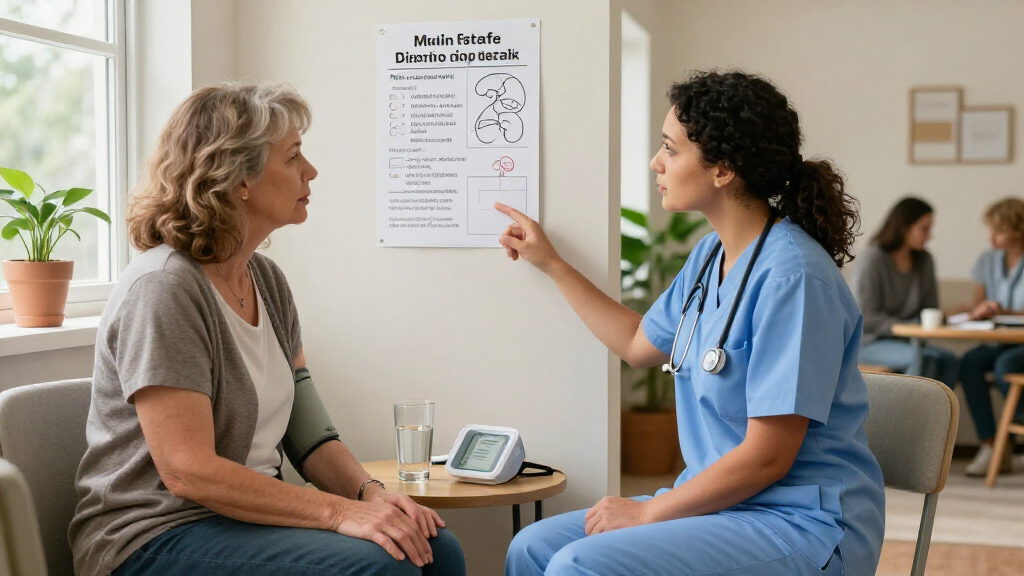
Published in The Lancet Regional Health – Western Pacific, the study evaluated more than 403 adults. Participants in the intervention group received five nurse consultations, a tailored action plan and access to the HAPPI MIND app, which supported self-monitoring and goal tracking between appointments. The comparison group received standard risk assessment results and educational material.
The researchers reported a statistically significant improvement in risk scores for the intervention group compared with standard care. They said the gains were driven mainly by changes in protective lifestyle behaviors, including increased physical activity, improved fish intake and better body mass index status. The report does not provide the size of the average score change in the supplied material.
Lead author Dr Muhammad Rehan Sarwar, a research fellow at Monash’s Centre for Medicine Use and Safety, said general practice could help middle-aged adults act on risk factors relevant to brain health. Senior author Associate Professor Johnson George described the approach as personalized support combining nurse coaching with a purpose-built app.
Primary Care as a Brain-Health Setting
The findings point to a practical way to provide structured risk-factor support in a familiar healthcare setting. Rather than relying only on written results or general advice, the program paired assessments with consultations, an action plan and follow-up tracking. That model may matter for people who want help turning health goals into specific steps, although this trial does not establish that the program prevents dementia.
The targeted behaviors may also matter beyond dementia risk. Co-author Dr Amanda Cross said improvements in midlife risk factors can support longer-term brain health and may bring more immediate benefits for cardiovascular or metabolic health. Those are the researchers’ stated rationale; the study report supplied here does not quantify those additional health outcomes.
The scale of dementia in Australia adds public-health relevance. The Australian Institute of Health and Welfare estimates that 459,000 Australians are living with dementia in 2026, with the number projected to exceed one million by 2066. The trial suggests one possible primary-care approach to addressing modifiable risk profiles, but broader use would depend on further evaluation.
Products Worth Considering

OMRON Complete 2-in-1 Upper Arm Blood Pressure Monitor with EKG

Garmin Venu 3 Fitness Smartwatch, 45 mm, Black

Oral-B iO Series 3 Rechargeable Electric Toothbrush for Adults, Black, with 2 Brush Heads and Travel Case
As an affiliate, we earn on qualifying purchases.
What the Trial Actually Measured
The program was designed around modifiable risk factors in midlife, not treatment for people already diagnosed with dementia. Researchers compared changes over 12 months between adults receiving the nurse-led intervention and a control group given standard risk results and educational material. The intervention combined professional support with an app, so the results describe that package rather than the effect of the app alone.
The study follows the publication of the World Health Organization’s guidelines on reducing risks linked to cognitive decline and dementia, as well as a Monash-led update to Australia’s Clinical Practice Guidelines for Dementia, according to the report. Those developments provide policy and clinical context, but they do not establish that the trial program is already part of routine care.
“The nurse helps people identify areas they can work on and turn advice into practical targets, while the purpose-built self-monitoring and goal-tracking app helps them track progress between appointments.”
— Associate Professor Johnson George, senior author
Long-Term Effects Still Unclear
The results concern estimated dementia risk profiles over 12 months. The trial did not track whether participants later developed dementia, establish that cognitive decline was prevented, or show whether the changes persisted. The supplied report also does not state the average score difference, the full range of participant risk factors, or whether the program’s effects varied across demographic groups.
It is also not clear from the report whether the program is being adopted by general practices outside the trial or what it would cost to deliver at scale. Although more intervention participants improved than comparison-group participants, the 44% improvement in the comparison group shows that changes were also seen with standard care. The reported percentages alone do not explain how large or clinically meaningful the score changes were for individuals.
Researchers Await 36-Month Follow-Up
The research team plans to examine 36-month follow-up data to assess whether participants’ early improvements last. Those results could clarify the durability of the changes, though the report does not say that follow-up will measure dementia diagnoses or cognitive decline. Further evaluation would also be needed to judge how well the program could be delivered across general practices beyond the study.
For now, the findings support a potential primary-care model for discussing and tracking modifiable health behaviors, not a guarantee of reduced dementia risk. People considering changes to their health should discuss personal medical decisions with a qualified health professional.
Key Questions
What did the Monash-led study find?
It found that 56% of participants in a nurse-led program improved their estimated dementia risk profiles over 12 months, compared with 44% receiving standard care. The researchers reported a statistically significant difference in risk scores between groups.
What did the nurse-led program include?
Participants received five nurse consultations, a personalized action plan and access to the HAPPI MIND app for self-monitoring and goal tracking. The comparison group received standard risk assessment results and educational material.
Does the study show that the program prevents dementia?
No. The study measured estimated risk profiles over 12 months, not long-term dementia diagnoses or prevention of cognitive decline. Researchers say longer follow-up is needed to understand whether the improvements last.
What happens next?
The researchers plan to assess 36-month follow-up data to see whether early improvements persist. The report does not specify when those results will be published.
Source: rss