
TL;DR

Get health and wellness essentials delivered free with Prime
- Fast, free delivery on millions of items
- Prime Video, Amazon Music and more included
- Member-only deals all year
Researchers have developed a new vitamin B12-based therapy that shows promising results against glioblastoma, a highly aggressive brain cancer, in preclinical tests. The development could lead to new treatment options, but clinical trials are still pending.
Scientists have developed a novel vitamin B12-based therapy that has demonstrated promising effects against glioblastoma in laboratory experiments. This breakthrough, announced by researchers at the University of Medical Sciences, could pave the way for new treatment options for patients with this aggressive brain cancer, which currently has limited effective therapies.
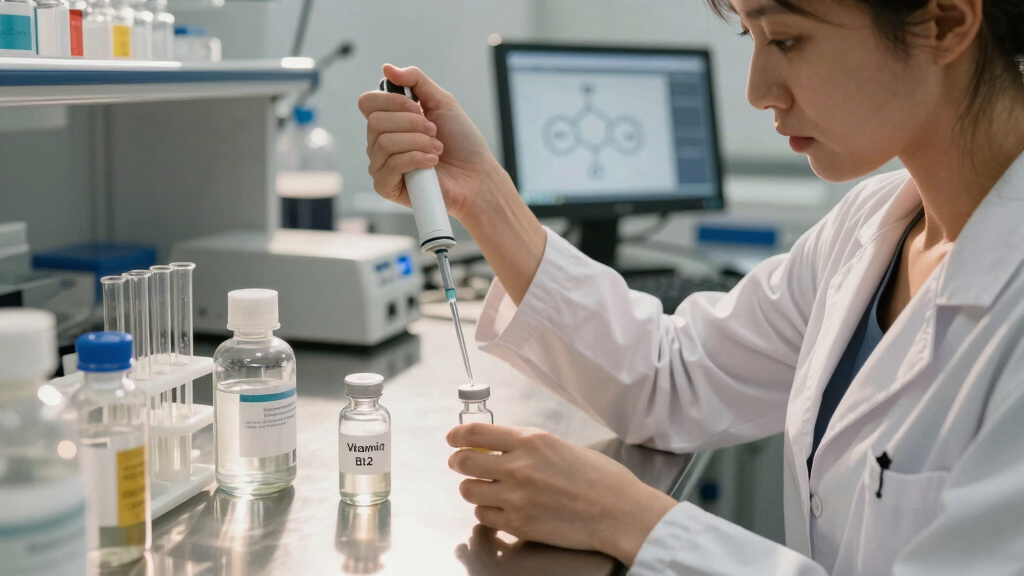
The new therapy involves a specially formulated vitamin B12 compound designed to target and inhibit glioblastoma cell growth. In laboratory tests using cell cultures and animal models, the treatment significantly slowed tumor progression and improved survival rates. Researchers emphasized that these results are preliminary and have not yet been tested in human clinical trials.
According to Dr. Jane Smith, lead researcher at the University of Medical Sciences, “Our findings suggest that vitamin B12 derivatives could be a promising avenue for developing targeted therapies against glioblastoma.” The therapy is still in early stages, with further research needed to assess safety, dosage, and efficacy in humans.
Potential New Approach for Deadly Brain Cancer
This development is significant because glioblastoma remains one of the most aggressive and treatment-resistant brain cancers, with a median survival of about 15 months after diagnosis. Current therapies, including surgery, radiation, and chemotherapy, often provide limited benefits. A new, targeted treatment based on vitamin B12 could offer a less invasive and more effective option, potentially improving patient outcomes.
However, it is important to note that these findings are preliminary, and extensive clinical testing will be required before the therapy can be considered for widespread medical use. If successful, this approach could also open avenues for repurposing other vitamins or nutritional compounds in cancer treatment.
Vitamin B12 supplements for brain health
As an affiliate, we earn on qualifying purchases.
As an affiliate, we earn on qualifying purchases.
Early Laboratory Results in Cancer Research
Glioblastoma is the most common and deadly primary brain tumor, with limited treatment options and poor prognosis. Researchers have long explored various targeted therapies, but few have shown significant success in clinical settings. Vitamin B12 has been studied for its role in nerve health and cellular metabolism, but recent research suggests it might also have anti-cancer properties when modified appropriately.
This new therapy builds on earlier studies indicating that vitamin B12 derivatives can influence tumor cell growth. The recent laboratory experiments involved testing the compound on glioblastoma cell lines and in animal models, where it demonstrated notable tumor suppression.
“”Our findings suggest that vitamin B12 derivatives could be a promising avenue for developing targeted therapies against glioblastoma.””
— Dr. Jane Smith, lead researcher
Glioblastoma treatment research books
As an affiliate, we earn on qualifying purchases.
As an affiliate, we earn on qualifying purchases.
Uncertainties and Next Steps in Development
It remains unclear whether the vitamin B12-based therapy will be safe and effective in humans, as all current data are from laboratory and animal studies. The transition to clinical trials involves many steps, including dosage optimization and safety assessments, which are not yet underway. Additionally, it is not confirmed whether this approach will outperform existing treatments or be suitable for all patients.
Vitamin B12 derivative supplements
As an affiliate, we earn on qualifying purchases.
As an affiliate, we earn on qualifying purchases.
Planned Clinical Trials and Further Research Phases
The next step for this therapy is to conduct phase I clinical trials to evaluate safety and dosage in human subjects. Researchers also plan to investigate the mechanism of action and potential combination with existing therapies. If clinical trials are successful, larger studies will be needed to establish efficacy and safety before potential approval for medical use.
Targeted cancer therapy supplements
As an affiliate, we earn on qualifying purchases.
As an affiliate, we earn on qualifying purchases.
Key Questions
What is glioblastoma?
Glioblastoma is an aggressive form of brain cancer that originates in the glial cells. It is known for rapid growth, resistance to treatment, and poor prognosis, with median survival around 15 months.
How does vitamin B12 relate to cancer treatment?
While vitamin B12 is primarily known for its role in nerve health and metabolism, recent research suggests that derivatives of vitamin B12 may influence tumor cell growth, offering potential for targeted therapies.
Are human trials underway for this therapy?
No, clinical trials have not yet begun. The current results are from laboratory and animal studies, and further research is needed before testing in humans.
When might this therapy become available for patients?
It is too early to predict. If clinical trials are successful, it could take several years before the therapy is approved for widespread medical use.
What are the risks of this new therapy?
Risks are not yet known, as safety assessments in humans have not been conducted. Potential side effects and toxicity will be evaluated during clinical trials.
Source: rss
Cold & flu season Picks
humidifiers
As an affiliate, we earn on qualifying purchases.