
TL;DR

Get health and wellness essentials delivered free with Prime
- Fast, free delivery on millions of items
- Prime Video, Amazon Music and more included
- Member-only deals all year
Researchers have announced a new sustainable spirulina-based solution to combat vitamin B12 deficiency. This development could provide an eco-friendly alternative to traditional B12 sources, with potential health and environmental benefits. Details are still emerging about the exact methods and efficacy.
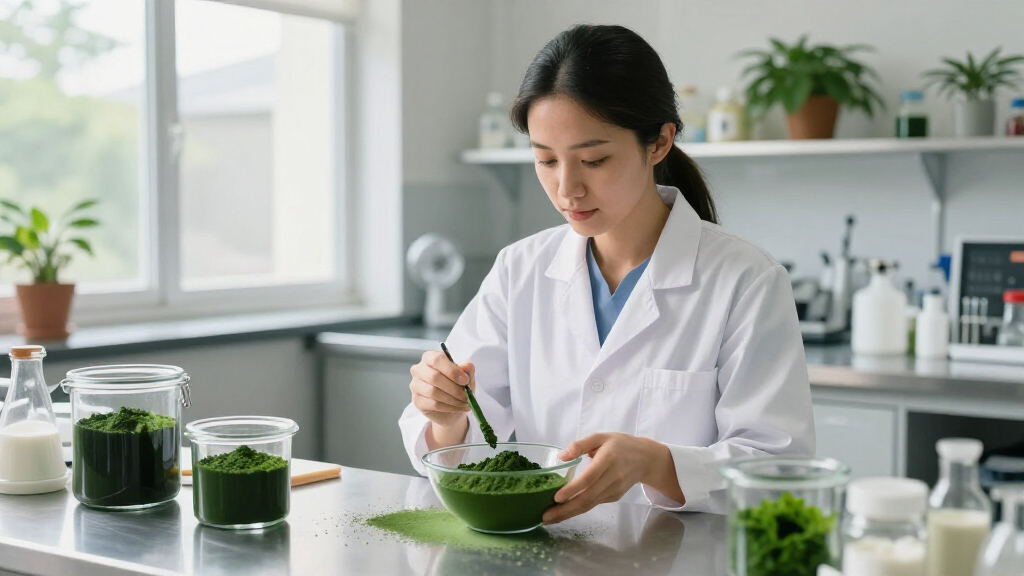
Researchers have introduced a novel, sustainable method of producing vitamin B12 using spirulina, a type of blue-green algae, which could help address global deficiencies in a more environmentally friendly way. This breakthrough was announced by a team of scientists aiming to develop eco-conscious nutritional solutions, highlighting its potential significance for health and sustainability.
The research team developed a process to cultivate spirulina in controlled environments that enhances its natural production of vitamin B12, a nutrient primarily obtained from animal products. According to the scientists involved, this method significantly reduces the environmental footprint compared to traditional B12 sources like meat or synthetic supplements.
While the details of the cultivation process are still under review, early laboratory tests indicate that the spirulina produced through this method contains bioavailable vitamin B12 levels comparable to those found in animal-based products. The team emphasizes that this approach could be scalable, making it suitable for large-scale production to meet dietary needs globally.
Experts caution that, although promising, further clinical trials are necessary to confirm the efficacy of spirulina-derived B12 for human health, especially for populations with severe deficiencies or absorption issues. The research has garnered interest from nutritional scientists and sustainability advocates alike, who see potential for this to become a sustainable alternative to current B12 sources.
Potential Impact on Global Nutrition and Environment
This development could have a significant impact on addressing vitamin B12 deficiency, which affects millions worldwide, especially vegetarians and vegans who lack reliable plant-based sources. If scalable, this spirulina-based solution offers a sustainable, eco-friendly alternative that reduces dependence on animal agriculture and synthetic supplements. It aligns with broader efforts to create environmentally conscious food sources and could contribute to reducing greenhouse gas emissions associated with traditional B12 production.
Moreover, this innovation might influence future nutritional guidelines and food industry practices, encouraging more plant-based and sustainable supplementation options. However, health authorities will need to verify the bioavailability and long-term safety of spirulina-derived B12 before widespread adoption.
As an affiliate, we earn on qualifying purchases.
Growing Interest in Sustainable Nutritional Solutions
The interest in plant-based and sustainable nutrition has surged in recent years, driven by concerns over climate change, animal welfare, and health. Spirulina, already recognized as a nutrient-dense superfood, has been studied for its potential to provide essential nutrients, including vitamin B12, which is typically lacking in plant-based diets.
Prior efforts to produce vegan B12 have relied on synthetic supplements or fermentation processes, which can be resource-intensive or costly. The current announcement follows a trend of exploring algae-based solutions, although the specific method of enhancing spirulina’s B12 content is still unconfirmed publicly. The trigger for this research appears to be increasing demand for sustainable, plant-based sources of vital nutrients, amidst rising global awareness of environmental issues.
It is worth noting that coverage interest has spiked recently, but the underlying technology and its efficacy remain under review, with details still emerging from the research team.
As an affiliate, we earn on qualifying purchases.
Unconfirmed Details and Ongoing Validation
While the initial results are promising, it is not yet clear how the bioavailability of spirulina-derived B12 compares to traditional sources in diverse human populations. The research is still in early stages, and large-scale clinical trials are pending to confirm safety and efficacy.
Additionally, the specific cultivation techniques and scalability of the process are still under review, and regulatory approval processes remain to be initiated.
As an affiliate, we earn on qualifying purchases.
Next Steps for Validation and Commercialization
The research team plans to conduct comprehensive clinical trials over the coming months to evaluate the effectiveness of spirulina-derived B12 in humans. Simultaneously, they aim to optimize cultivation methods for large-scale production and seek regulatory approval from health authorities.
Industry stakeholders and nutrition organizations will likely monitor these developments closely, as successful validation could lead to new market opportunities for sustainable, plant-based B12 supplements.
As an affiliate, we earn on qualifying purchases.
Key Questions
How does spirulina produce vitamin B12?
Spirulina naturally contains vitamin B12, but its bioavailability has been debated. The new method enhances its B12 content through controlled cultivation techniques, aiming to produce a bioavailable form suitable for human consumption.
Is this sustainable compared to current B12 sources?
Yes, the process reportedly has a lower environmental footprint than animal farming and synthetic B12 production, making it a more sustainable option for meeting global nutritional needs.
When could this become available as a supplement?
It is too early to determine exact timelines. The research team plans to conduct clinical trials soon, and regulatory approval will be needed before commercial distribution, which could take several years.
Will this help vegans and vegetarians?
Potentially, yes. If proven effective and bioavailable, spirulina-based B12 could provide a reliable plant-based source, addressing a common deficiency in vegan and vegetarian diets.
Are there any health risks associated with spirulina supplements?
While generally considered safe, some individuals may experience allergic reactions or contamination issues. Further testing is needed to confirm safety with the new production method.
Source: rss
Cold & flu season Picks
humidifiers
As an affiliate, we earn on qualifying purchases.