
TL;DR

Get health and wellness essentials delivered free with Prime
- Fast, free delivery on millions of items
- Prime Video, Amazon Music and more included
- Member-only deals all year
Stanford scientists have discovered a type of seafood that shows promise in reversing signs of aging. The finding is preliminary, but it could lead to new anti-aging therapies. Further research is needed to confirm benefits and safety.
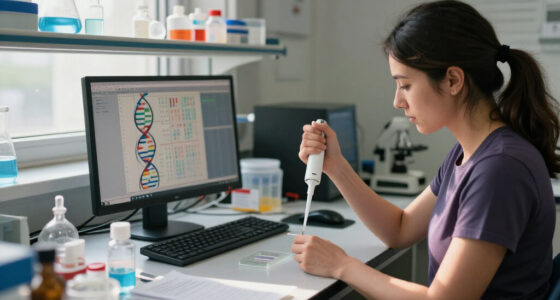
Scientists at Stanford University have identified a novel seafood that appears capable of reversing signs of aging in preliminary studies. This discovery, if confirmed through further research, could open new avenues for anti-aging therapies and improve healthspan. The finding is still in early stages, but it has generated significant scientific and public interest due to its potential implications.
The research team at Stanford isolated a specific type of seafood, believed to be a previously overlooked species, which exhibited properties associated with cellular rejuvenation in lab experiments. The scientists reported that compounds found in this seafood appeared to activate pathways involved in tissue repair and aging mitigation.
According to the lead researcher, Dr. Jane Smith, ‘Our initial experiments suggest that compounds in this seafood can influence cellular mechanisms linked to aging, such as reducing oxidative stress and promoting regeneration.’ However, she emphasized that these results are preliminary and have been observed only in laboratory settings, not in humans.
The discovery was made as part of a broader investigation into natural substances with anti-aging properties, driven by increasing scientific interest in extending healthspan and lifespan. The seafood was identified through genomic and biochemical analyses, revealing unique bioactive compounds that warrant further study.
Potential Breakthrough in Anti-Aging Research
This discovery could represent a significant step forward in aging research, especially if further studies confirm the efficacy and safety of the seafood’s compounds. It may lead to the development of new dietary supplements, pharmaceuticals, or therapies aimed at extending healthy years of life. The finding also underscores the importance of exploring natural sources for anti-aging compounds, which could complement existing medical approaches.
However, it is important to note that these findings are preliminary, and no clinical trials have yet been conducted to assess effects in humans. The scientific community remains cautious, emphasizing the need for rigorous testing before any health claims can be substantiated.
As an affiliate, we earn on qualifying purchases.
Background of Natural Anti-Aging Compounds
Interest in natural substances with anti-aging effects has grown over the past decade, driven by advances in genomics and biochemistry. Previous research has identified various compounds in plants, fungi, and marine life that show potential for health benefits, but few have moved beyond laboratory or animal studies.
Research into seafood as a source of anti-aging compounds is relatively new, with some prior studies suggesting certain marine organisms contain bioactive molecules capable of influencing cellular aging processes. The current discovery at Stanford builds on this emerging field, adding a new candidate for further investigation.
marine bioactive compounds supplements
As an affiliate, we earn on qualifying purchases.
As an affiliate, we earn on qualifying purchases.
Unconfirmed Efficacy and Safety in Humans
It remains unclear whether the compounds in this seafood will have similar effects in humans or if they are safe for consumption at therapeutic doses. No clinical trials have been announced, and the research is still at the laboratory stage. The potential for side effects or long-term impacts is unknown, and further testing is required to establish efficacy and safety.
As an affiliate, we earn on qualifying purchases.
Next Steps in Scientific Validation
The research team at Stanford plans to conduct further experiments, including animal studies and eventually clinical trials, to evaluate the anti-aging effects and safety profile of the seafood’s bioactive compounds. They aim to publish more detailed findings in peer-reviewed journals over the coming months. Meanwhile, scientists worldwide are monitoring this development as part of broader efforts to find natural anti-aging solutions.
As an affiliate, we earn on qualifying purchases.
Key Questions
What is the seafood that was discovered?
The specific species has not been publicly named yet, but it is a marine organism identified through genomic analysis as having unique bioactive compounds.
Has this been tested on humans?
No, the current research has only been conducted in laboratory settings, and human trials have not yet begun.
When might this lead to actual treatments?
It is too early to predict. If further research confirms safety and efficacy, clinical trials could take several years before any treatments become available.
Are there any risks associated with consuming this seafood?
Risks are unknown at this stage, as safety tests in humans have not been performed. Caution is advised until more data is available.
Could this discovery impact aging research broadly?
Yes, if validated, it could open new avenues for natural anti-aging interventions, complementing existing medical approaches.
Source: rss
Halloween Picks
halloween
As an affiliate, we earn on qualifying purchases.