
TL;DR

Get health and wellness essentials delivered free with Prime
- Fast, free delivery on millions of items
- Prime Video, Amazon Music and more included
- Member-only deals all year
Recent trend signals increased interest in fermented foods potentially aiding in nanoplastic detoxification. Current evidence is preliminary, with scientific validation still needed. This development could impact future dietary recommendations and environmental health efforts.
Recent online discussions and search trends indicate growing public interest in the idea that certain fermented foods may help eliminate nanoplastics from the human body. However, there is currently no definitive scientific evidence confirming this link, and experts caution that research is still in early stages. This trend reflects broader concerns about nanoplastics’ potential health impacts and the search for accessible detoxification methods.
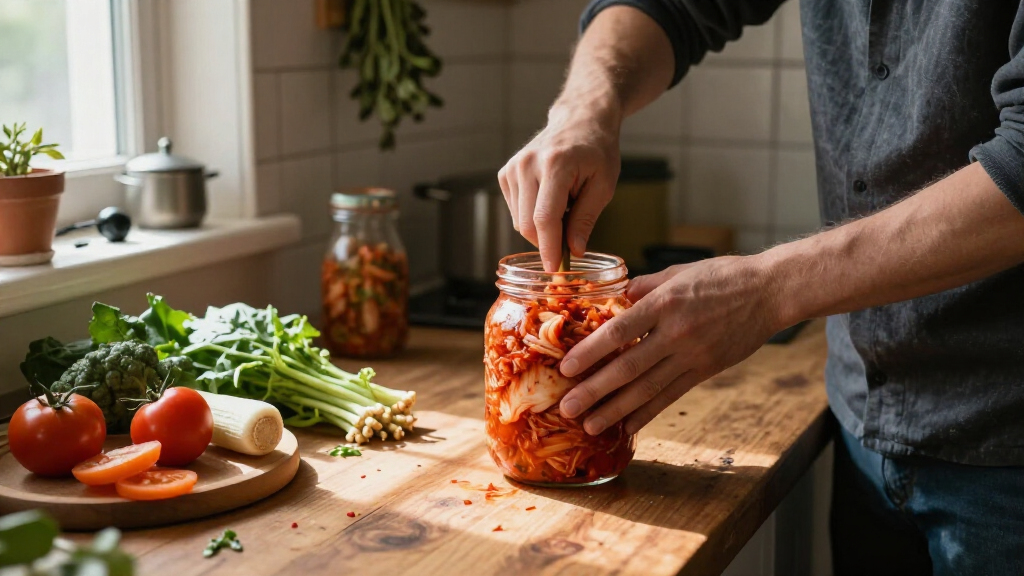
The trend emerged as online interest in fermented foods such as kimchi, sauerkraut, and kefir spiked alongside claims that these foods could support the body’s ability to flush out tiny plastic particles, known as nanoplastics. Nanoplastics are minuscule plastic particles, less than 100 nanometers in size, increasingly detected in environmental samples and possibly ingested via contaminated food and water. Some preliminary studies suggest that certain probiotics found in fermented foods might bind to or facilitate the removal of nanoplastics in laboratory settings, but these findings have not yet been confirmed in human trials.
Experts emphasize that current scientific understanding of nanoplastics’ impact on human health remains limited. While some animal studies have indicated potential bioaccumulation and toxicity, there is no established evidence that dietary interventions, including fermented foods, can reliably detoxify or eliminate nanoplastics from the human body. The claims circulating online are largely anecdotal or based on early-stage research, and the scientific community urges caution before drawing conclusions.
Potential Impact on Public Health and Dietary Choices
If future research confirms that fermented foods can aid in nanoplastic detoxification, it could influence dietary recommendations and public health strategies. Given the widespread presence of nanoplastics in the environment, identifying accessible methods to reduce internal exposure would be significant. However, at this stage, the claims are unverified, and reliance solely on fermented foods for detoxification is not supported by scientific consensus. The development underscores the importance of continued research into nanoplastics’ health effects and effective removal strategies.
fermented foods probiotic supplements
As an affiliate, we earn on qualifying purchases.
As an affiliate, we earn on qualifying purchases.
Rising Concerns About Nanoplastics and Dietary Interventions
Nanoplastics have become a growing environmental concern as tiny plastic particles are increasingly detected in oceans, soils, and even in the food chain. Public awareness has risen over recent years, prompting interest in potential health impacts. While research is ongoing, definitive evidence of harm to humans is limited, and no approved medical or dietary protocols exist for nanoplastic removal. The current trend of exploring fermented foods as a detox method is part of broader efforts to understand and mitigate nanoplastics’ effects, but it remains speculative without robust scientific validation.
As an affiliate, we earn on qualifying purchases.
Unverified Claims and Lack of Human Trial Data
It remains unclear whether fermented foods can effectively bind, neutralize, or facilitate the excretion of nanoplastics in humans. No peer-reviewed clinical trials have confirmed this potential benefit, and current evidence is limited to laboratory or animal studies. The scientific community emphasizes that these claims are speculative and require further investigation to establish safety and efficacy.
fermented food probiotics capsules
As an affiliate, we earn on qualifying purchases.
As an affiliate, we earn on qualifying purchases.
Calls for Rigorous Research and Clinical Trials
Researchers are expected to prioritize controlled studies to evaluate whether probiotics or compounds in fermented foods can impact nanoplastics levels in humans. Public health agencies may also monitor emerging evidence to inform future guidelines. Until then, experts advise maintaining a balanced diet and supporting environmental efforts to reduce plastic pollution, rather than relying solely on dietary changes for nanoplastic detoxification.
best fermented foods for gut health
As an affiliate, we earn on qualifying purchases.
As an affiliate, we earn on qualifying purchases.
Key Questions
Can eating fermented foods currently help remove nanoplastics?
There is no scientific evidence at this time confirming that fermented foods can effectively remove nanoplastics from the human body. Claims are preliminary and based on early research or anecdotal reports.
What are nanoplastics, and why are they a concern?
Nanoplastics are tiny plastic particles less than 100 nanometers in size, found increasingly in the environment and food chain. Their potential health impacts are still being studied, but they may pose risks due to their ability to bioaccumulate.
Are there any proven methods to detoxify nanoplastics from humans?
Currently, there are no validated medical or dietary methods proven to detoxify nanoplastics from the human body. Research is ongoing to understand how nanoplastics behave in biological systems.
Should I start eating more fermented foods to protect myself?
While fermented foods are generally healthy, relying on them specifically for nanoplastic detoxification is not supported by scientific evidence. Maintaining a balanced diet and supporting efforts to reduce plastic pollution are recommended.
Source: rss
Cold & flu season Picks
humidifiers
As an affiliate, we earn on qualifying purchases.