To choose the right air purifier size, focus on matching its CADR (Clean Air Delivery Rate) with your room’s size. A higher CADR cleans air faster, but it shouldn’t be too powerful for your space. Measure your room accurately, multiply by 1.5 to 2, and select a device with a CADR that meets or slightly exceeds this number. Keep this in mind, and you’ll avoid unnecessary expenses and noise. If you’d like detailed steps, you’ll find the tips helpful.
Key Takeaways
- Measure your room’s square footage accurately to determine the minimum CADR needed for effective air cleaning.
- Multiply room size by 1.5 to 2 to calculate the ideal CADR based on pollution levels and allergies.
- Match the air purifier’s CADR rating with your room size to ensure efficient, effective filtration.
- Avoid oversizing or undersizing to prevent wasted energy, noise, or inadequate air purification.
- Regularly maintain and replace filters to sustain optimal performance and extend your device’s lifespan.
Why Proper Air Purifier Sizing Matters for Your Space

Choosing the right-sized air purifier is vital because an undersized unit won’t effectively clean your air, leaving pollutants behind, while an oversized one can waste energy and create unnecessary noise. When your air purifier matches your room size, it improves air quality by efficiently filtering out dust, allergens, and pollutants. Proper sizing also promotes better air circulation, ensuring clean air moves evenly throughout the space. If the unit is too small, it struggles to keep up with pollution levels, leaving your environment less healthy. Conversely, an oversized purifier may run excessively, wasting power and generating noise that disrupts your comfort. To achieve ideal air quality and circulation, selecting a unit suited to your room size is essential for effective, energy-efficient purification. Additionally, understanding Clean Air Delivery Rate (CADR) helps you determine the appropriate air purifier for your space’s needs. Knowing how credit card data security impacts payment processing security can also inform your choices when purchasing or maintaining air purifiers with smart features. It’s also beneficial to consider the technology behind smart sensors, which can help optimize purifier performance based on real-time air quality data.
What Is CADR and How Does It Affect Room Coverage?
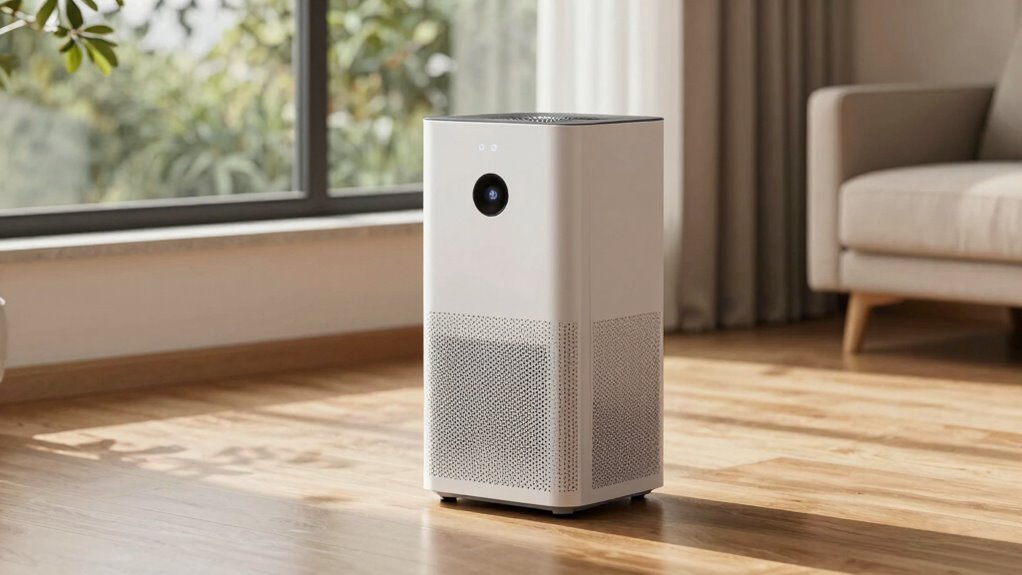
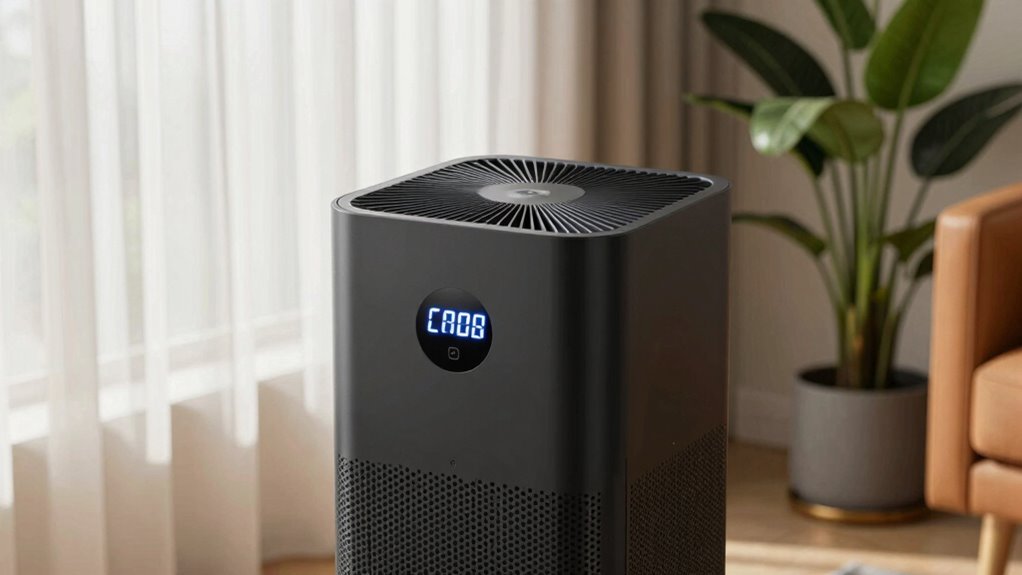
CADR, or Clean Air Delivery Rate, measures how effectively an air purifier filters contaminants and supplies clean air to a room. The higher the CADR, the faster your purifier improves air quality, which is essential for reducing allergens, dust, and smoke. When selecting a purifier, consider the CADR relative to your room size—larger rooms need higher ratings for effective coverage. A higher CADR often means the filter works harder, which can impact its lifespan. If the CADR is too low, the purifier won’t adequately clean the air, leading to poorer air quality. Conversely, choosing a unit with a suitable CADR ensures ideal room coverage without overburdening the filter, helping it last longer and maintaining its effectiveness over time. Understanding how filter efficiency impacts performance can help you select the right air purifier for your needs. Additionally, considering air exchange rates can optimize your overall air quality management. For optimal performance, matching the CADR with room size is crucial to ensure comprehensive coverage without unnecessary strain on the filter. Properly matching your air purifier’s CADR with your room’s characteristics can also prevent energy consumption from increasing unnecessarily.
Key Factors That Influence Your Air Purifier’s Effectiveness and Size

Your air purifier’s effectiveness depends mainly on whether it matches your room size and how well it circulates air. If the device isn’t suited for the space, it won’t clean the air efficiently. Pay attention to airflow and CADR ratings to guarantee your purifier can handle the room’s needs.
Room Size Compatibility
When selecting an air purifier, understanding how room size impacts its effectiveness is essential. If the unit isn’t suitable for your space, it won’t improve air quality efficiently, and filter maintenance may become more frequent. To guarantee proper sizing, consider these key points:
- Match the purifier’s recommended room size with your space to optimize air cleaning.
- Larger rooms require higher CADR ratings and possibly multiple units for even air quality improvement.
- Proper sizing reduces strain on the filter, extending its lifespan and maintaining effective filtration.
- Ensuring your air purifier’s air exchange rate matches your room size maximizes its efficiency and air quality benefits.
Airflow and CADR
Airflow and CADR are key factors that determine how well an air purifier performs in your space. Proper airflow optimization guarantees that air moves efficiently through the unit, maximizing filtration efficiency. If airflow is too slow, pollutants linger longer, reducing the purifier’s effectiveness. Conversely, excessive airflow can lead to noise and reduced filter lifespan. Optimal airflow ensures that your device operates at peak performance without unnecessary strain. CADR (Clean Air Delivery Rate) measures how much filtered air your purifier delivers per minute, directly impacting its ability to clean a room quickly. To choose the right size, ensure the airflow matches your room’s needs, and that CADR ratings align with the pollutants you want to eliminate. Balancing airflow and CADR guarantees your air purifier works effectively without overworking or underperforming. Additionally, considering air quality monitoring can help you fine-tune your device’s performance for optimal results. Regularly assessing air quality data enables you to adjust settings for maximum efficiency and health benefits. Incorporating proper maintenance practices also ensures sustained performance and longevity of your air purifier. Understanding filter replacement intervals helps prevent performance drops and maintains optimal air quality over time.
How to Calculate the Correct CADR for Your Room Size
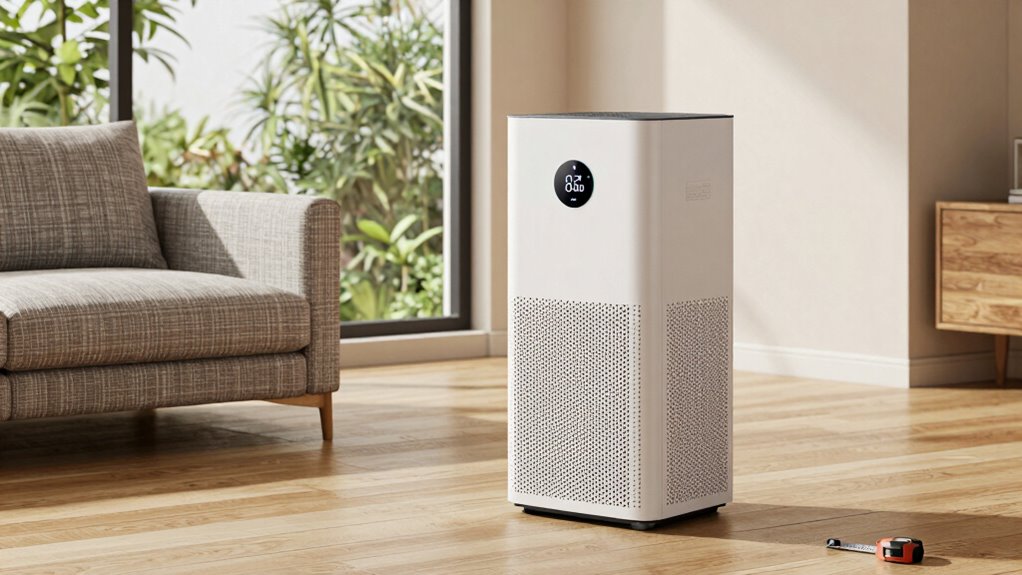
To guarantee your air purifier effectively cleans your space, you need to determine the appropriate Clean Air Delivery Rate (CADR) based on your room size. First, measure your room’s square footage. Next, multiply that number by 1.5 to 2, depending on how heavily polluted the air quality is or if you have allergies. This calculation gives you the minimum CADR needed for your space. Additionally, understanding Free Floating concepts can help you optimize airflow and filtration efficiency within your environment. For large numbers, converting between crores and other units like millions or billions can help you better understand the scale of your space or air quality data. Moreover, considering air quality standards can guide you in selecting the most effective air purifier for your needs. Ensure the selected CADR matches or exceeds this value for maximum efficiency. Keep in mind that a higher CADR may require more frequent filter replacements. Regular filter replacement maintains air quality, preventing dust and pollutants from bypassing the filter. This approach helps you select the right size, saving money and ensuring clean, healthy air.
Comparing CADR Ratings: Which Is Best for Your Home or Office?

When comparing CADR ratings, make sure the numbers match your room size for effective purification. Higher ratings generally mean faster air cleaning, but they need to suit your space. Understanding what CADR ratings mean helps you choose the right purifier for your home or office.
Room Size Compatibility
Choosing the right air purifier depends heavily on matching its Clean Air Delivery Rate (CADR) to the size of your room. If the CADR is too low, your air quality won’t improve, and you may feel the need to replace or upgrade sooner. Conversely, a unit with a higher CADR than your space requires could lead to unnecessary filter maintenance costs. To guarantee compatibility:
- Measure your room’s square footage accurately.
- Select an air purifier with a CADR that meets or exceeds that size.
- Consider how often filters need replacing based on usage and air quality conditions.
- Keep in mind that transaction monitoring/security features can help ensure your device operates safely and securely over time.
- Remember that understanding passive voice detection can improve your overall writing clarity and effectiveness.
- Additionally, knowing how to interpret measurement accuracy ratings can help you choose models that deliver reliable performance over their lifespan.
- Recognizing the importance of herbal and natural wellness principles can also guide you toward eco-friendly and holistic air purification options.
- A comprehensive understanding of filter lifespan and how it relates to CADR can further optimize your device’s efficiency and longevity.
Matching CADR to room size optimizes air quality and minimizes filter replacements, saving you money and hassle in the long run.
CADR Ratings Explained
Understanding CADR ratings is essential for selecting an air purifier that effectively cleans your space. CADR, or Clean Air Delivery Rate, measures how quickly a purifier filters specific pollutants like dust, smoke, and pollen. The higher the CADR, the better the air quality improvement in a given room size. When comparing models, focus on the CADR ratings relevant to your primary air quality concerns. Keep in mind, a higher CADR often means more frequent filter maintenance, as filters work harder to keep air clean. Choosing an air purifier with appropriate CADR ratings guarantees you don’t overspend or underperform. The importance of accurate sizing ensures you select a device that matches your room’s dimensions and air quality needs, preventing unnecessary costs or inefficiencies. Additionally, selecting a device with suitable cultural and aesthetic appeal can enhance your decor while effectively purifying the air. Properly understanding CADR ratings also helps you avoid inefficient overbuying, ensuring your investment is aligned with your specific needs. Ultimately, understanding these ratings helps you find an efficient device that maintains excellent air quality without unnecessary filter replacements. For example, Dri Dri Gelato highlights the importance of quality and freshness, which can be likened to selecting a high-CADR air purifier for optimal results.
Common Mistakes to Avoid When Choosing an Air Purifier Based on CADR
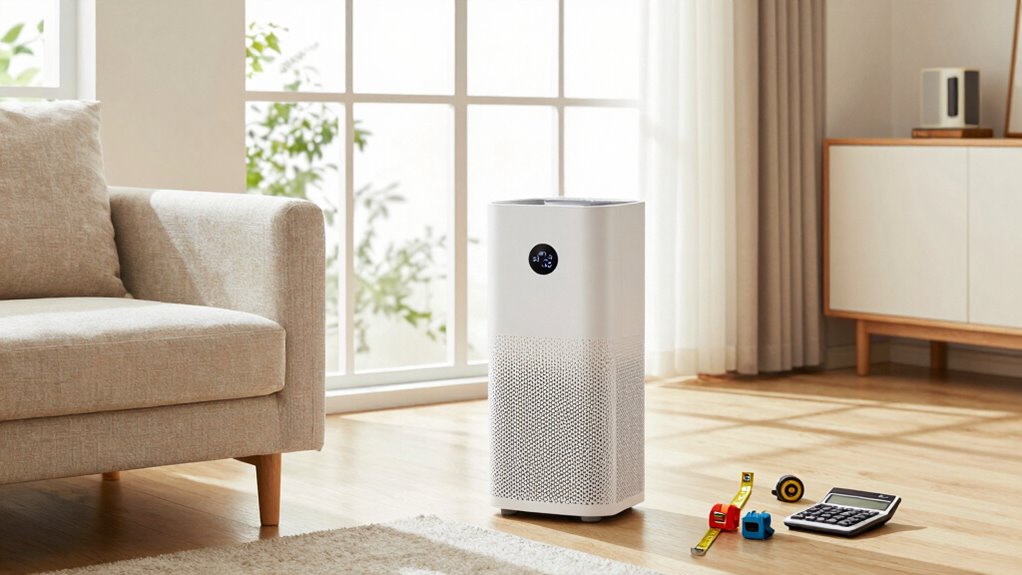
One common mistake people make is relying solely on the CADR number without considering the size of their space. A high CADR isn’t enough if the purifier is too powerful or too weak for your room. Additionally, overlooking filter replacement intervals can lead to reduced efficiency and higher long-term costs. Noise levels are also vital—choosing a unit with a high CADR that’s too loud can disturb your daily activities or sleep. To avoid these pitfalls, consider these points:
- Match the CADR to your room size for ideal air cleaning.
- Check filter replacement requirements to guarantee ongoing performance.
- Balance CADR with noise levels to maintain comfort without sacrificing purification power.
Sticking to these guidelines helps you select an effective, cost-efficient air purifier.
Tips to Ensure Your Air Purifier Performs at Its Best
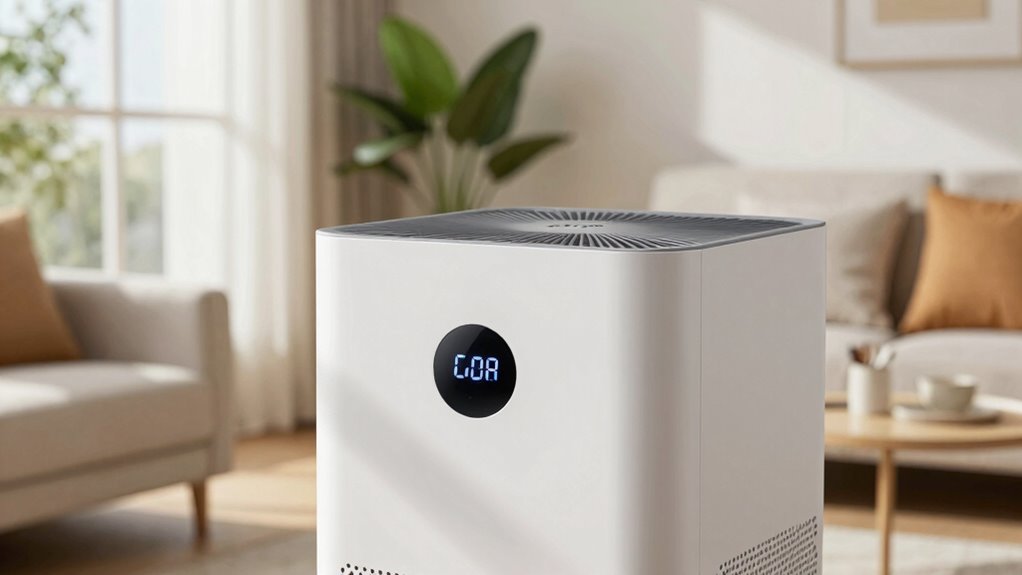
To keep your air purifier running at its best, regular maintenance is essential. Start by checking and replacing your air purifier filters according to the manufacturer’s recommended maintenance schedules. Dirty or clogged filters reduce efficiency and can compromise air quality. Keep a schedule to remind you when to change filters, especially if you use the purifier frequently. Clean the exterior and vents regularly to prevent dust buildup that can hinder airflow. Ensure the air purifier is placed in an ideal location—away from obstructions and in a central spot for better circulation. By staying consistent with filter replacements and cleaning, you maximize performance and prolong the lifespan of your device. Proper maintenance helps your air purifier deliver clean, healthy air every day.
Frequently Asked Questions
How Often Should I Replace or Clean My Air Purifier Filters?
You should replace or clean your air purifier filters based on the manufacturer’s recommended filter lifespan, typically every 3 to 6 months. Follow your maintenance schedule closely to keep your purifier running efficiently. Regularly check the filters for dirt and buildup, and clean or replace them as needed. Proper maintenance guarantees ideal air quality and extends your device’s lifespan, saving you from costly replacements and ensuring continuous clean air.
Can Multiple Air Purifiers Improve Air Quality More Effectively?
Using multiple air purifiers can increase effectiveness, especially in large or polluted spaces. Adding more units boosts the air purifier number, which enhances overall air cleaning capacity and reduces pollutants faster. This setup is especially useful if one purifier isn’t enough to cover the area effectively. Just guarantee each purifier is appropriately sized for its space, and you’ll see a noticeable improvement in air quality, making the environment healthier.
Do Different Room Shapes Affect Air Purifier Performance?
A picture is worth a thousand words, and this applies to room shapes too. Your room shape profoundly affects airflow patterns, which in turn influence purifier performance. Irregularly shaped rooms can cause dead zones where air isn’t cleaned efficiently. To maximize effectiveness, place your air purifier where airflow converges and guarantee it’s appropriately sized for the room’s shape. Proper placement and understanding airflow patterns help your purifier work smarter, not harder.
How Does Room Humidity Impact Air Purifier Efficiency?
Higher humidity levels can reduce your air purifier’s efficiency because moisture impacts its ability to filter airborne particles effectively. When humidity is too high, mold spores and bacteria thrive, making it harder for your purifier to keep the air clean. Conversely, low humidity can cause dust and allergens to become more airborne. To optimize performance, maintain balanced humidity levels around 40-60%, ensuring your purifier works at its best.
Are There Specific Features to Look for in a High-Cadr Air Purifier?
A high-CADR air purifier is like a powerhouse, so look for features like easy-to-read filter indicators that tell you when to change filters. You’ll also want low noise levels to keep your space peaceful. These features guarantee ideal performance, saving you time and money. Prioritize models with adjustable fan speeds and smart sensors, so you maintain clean air efficiently without disruptions or guesswork.
Conclusion
Getting your air purifier size just right is like fitting a puzzle piece—everything clicks perfectly. When you choose the right CADR, you’re not just avoiding a purchase mistake, you’re setting your space up for fresh, clean air. Don’t let the wrong size be a wolf in sheep’s clothing—arm yourself with the right math, and watch your air quality soar. After all, a well-sized purifier is the key to breathing easy, every single day.