To achieve real comfort with indoor air quality monitors, focus on tracking PM2.5 particles, CO2 levels, and VOCs. PM2.5 indicates tiny airborne pollutants that can harm your lungs, while CO2 shows if your ventilation is sufficient for mental clarity and alertness. VOCs represent chemical emissions that can cause headaches or irritation. Monitoring these metrics helps you create a healthier space. Keep exploring to discover how to set up and interpret your monitor effectively.
Key Takeaways
- Monitor PM2.5 for dust, allergens, and pollutants to reduce respiratory risks and improve overall air safety.
- Track CO2 levels to ensure proper ventilation, enhance mental clarity, and prevent fatigue.
- Measure VOCs to detect chemical emissions from household products and maintain a healthier indoor environment.
- Use real-time alerts and data visualization to respond quickly to air quality fluctuations for immediate comfort.
- Combining PM2.5, CO2, and VOC data provides a comprehensive view for targeted air quality improvements.
Why Indoor Air Quality Is So Important for Your Health
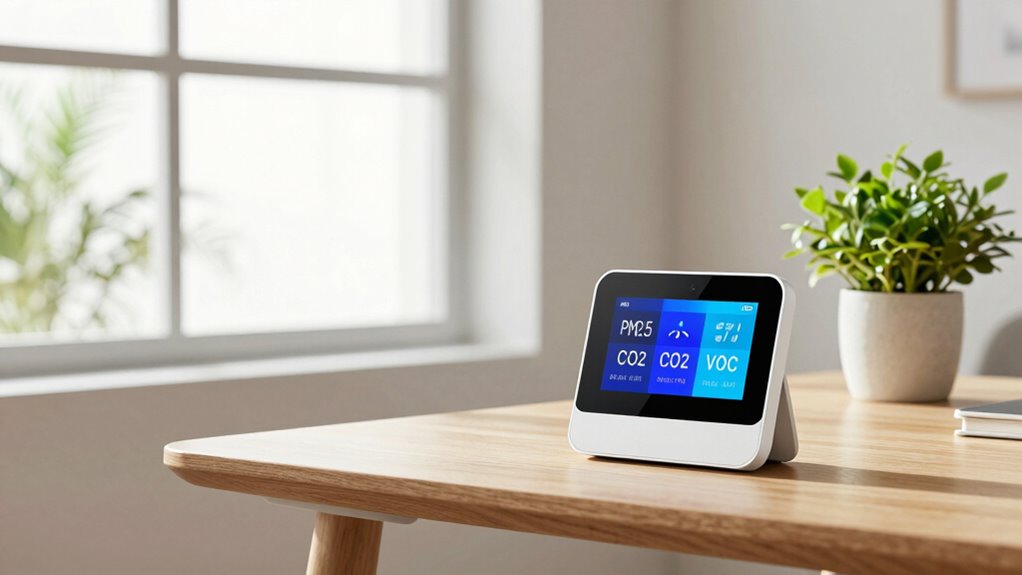
Since we spend the majority of our time indoors, the quality of the air inside your home or office directly affects your health. Poor indoor air can lead to allergies, respiratory issues, and long-term health problems. Proper air filtration removes dust, allergens, and pollutants, making the air safer to breathe. Ventilation systems play an essential role by exchanging stale indoor air for fresh outdoor air, reducing concentrations of harmful substances. When you improve your indoor air quality, you reduce the risk of asthma attacks and other respiratory conditions. Monitoring indoor air quality with appropriate sensors can help you identify and address issues promptly. Clean, well-ventilated spaces support better sleep, focus, and overall well-being. Investing in good air filtration and ventilation isn’t just about comfort—it’s a critical step toward safeguarding your health every day. Regularly inspecting and maintaining air filtration systems ensures they operate effectively and continue to improve indoor air quality. Incorporating air quality monitoring into your routine allows for real-time adjustments and better control over your environment. Additionally, understanding the specific pollutants present can help tailor solutions more effectively.
What Are PM2.5 Particles and Why Should You Track Them?
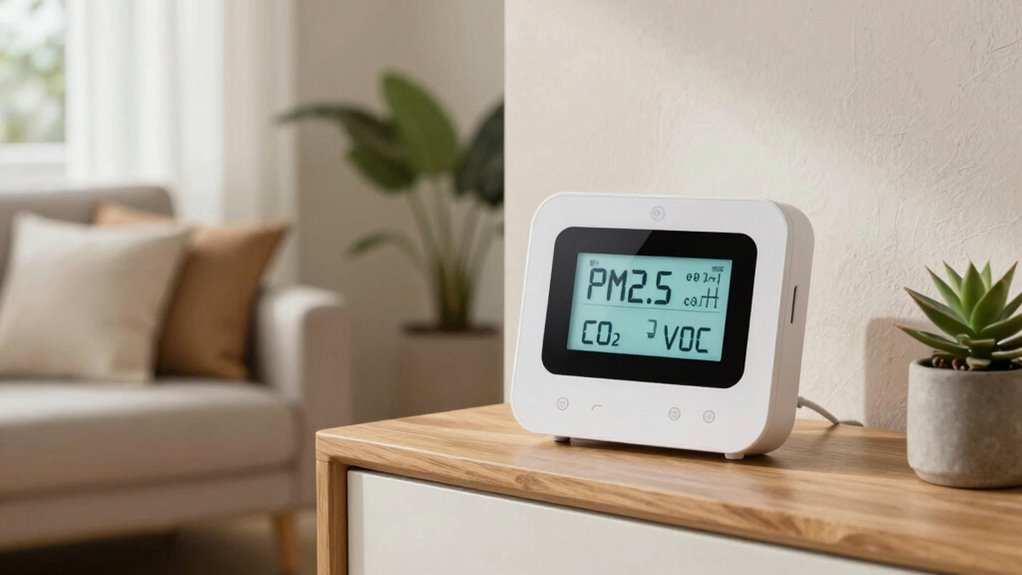
PM2.5 particles are tiny airborne pollutants measuring less than 2.5 micrometers in diameter, small enough to bypass your body’s natural defenses and penetrate deep into your lungs. Because of their small particle size, PM2.5 particles can easily enter your respiratory system, posing serious health implications. Long-term exposure has been linked to respiratory issues, heart disease, and even lung cancer. Tracking PM2.5 levels helps you understand indoor air quality risks and take steps to reduce exposure. High concentrations often result from sources like cooking, smoking, or outdoor pollution infiltrating your home. Monitoring these particles ensures you’re aware of potential health hazards, enabling you to create a safer, healthier indoor environment for you and your loved ones. Understanding particle size is crucial for assessing air quality risks accurately, especially since particle size determines how deeply pollutants can penetrate your respiratory system. Additionally, air quality monitoring can help identify specific sources of pollutants, allowing for targeted mitigation strategies.
How Monitoring CO2 Levels Can Boost Your Comfort at Home
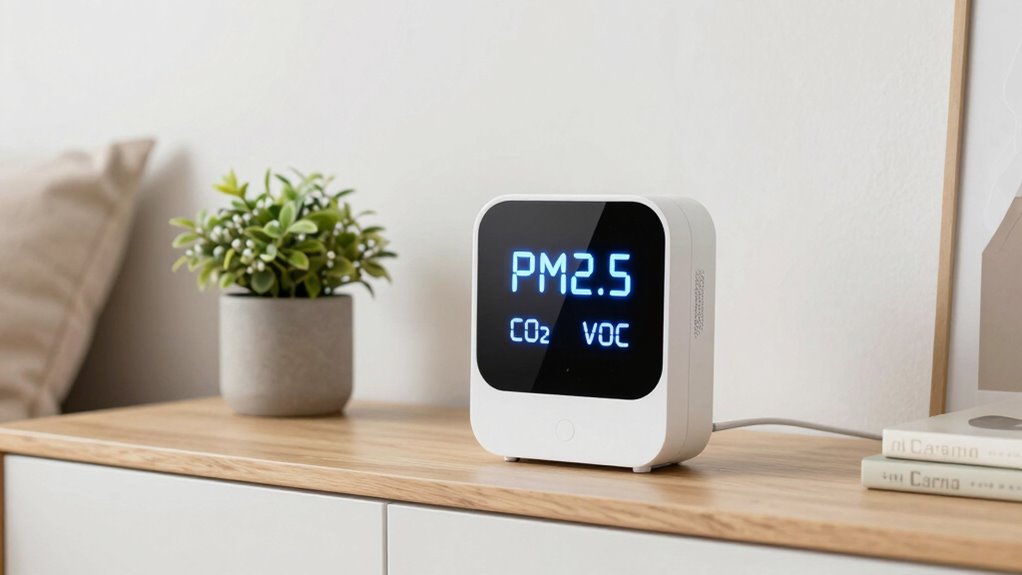
Monitoring CO2 levels helps guarantee fresh air in your home, which can improve your thinking and focus. When CO2 builds up, you might feel more tired or drowsy, making daily tasks harder. Keeping track of these levels lets you boost your comfort and stay alert throughout the day. Additionally, understanding regional flavors and pairings can enhance your overall indoor environment by creating a more inviting and enjoyable space. Incorporating air quality awareness can further support healthier living conditions and better overall well-being. Recognizing the significance of air quality-related names inspired by mythology can also empower you to choose meaningful symbols of health and vitality for your space. Being mindful of air quality testing methods ensures you maintain optimal indoor conditions for comfort and safety.
Fresh Air and Cognitive Function
Improving indoor air quality by keeping CO2 levels in check can considerably enhance your cognitive performance and overall comfort at home. Elevated CO2 can cause fatigue, reduce concentration, and impair decision-making. Many air quality myths suggest that simply opening windows isn’t enough, but effective ventilation strategies are key. Monitoring CO2 helps you identify when fresh air is needed, avoiding the false belief that indoor air is always safe. Proper ventilation improves mental clarity and prevents stuffiness. Use this table to understand common misconceptions and strategies:
| Myth | Reality |
|---|---|
| Opening windows always helps | Ventilation must be continuous and strategic |
| CO2 is harmless | High levels impair cognition and alertness |
| Air purifiers replace ventilation | They complement but don’t replace fresh air |
| Indoor air is always safe | CO2 buildup can be sneaky and harmful |
| Ventilation is unnecessary in winter | It’s essential year-round for mental clarity |
Additionally, awareness of air quality monitoring can help you make informed decisions about when to increase ventilation efforts. Regularly tracking indoor CO2 levels can prevent health issues and support better decision-making throughout the day.
Reducing Fatigue and Drowsiness
When CO2 levels rise indoors, you may notice increased fatigue and drowsiness that affect your comfort and productivity. Monitoring CO2 helps you maintain air quality awareness, which directly impacts your sleep quality and daytime alertness. Here’s how you can benefit:
- Recognize early signs of poor air quality before fatigue sets in.
- Increase ventilation or open windows to lower CO2 levels.
- Create a healthier environment that promotes better sleep and reduces drowsiness.
- Implementing indoor air monitoring devices can provide continuous updates to help you manage air quality proactively. Additionally, understanding air quality metrics enables more precise adjustments to your indoor environment, ensuring sustained comfort throughout the day. Regularly checking CO2 levels can also prevent excessive buildup that might impair cognitive function and overall well-being. Staying informed about air quality trends and associated spirituality insights allows you to make timely interventions, further enhancing your indoor comfort.
What Are VOCs and How Do They Affect Your Indoor Air?
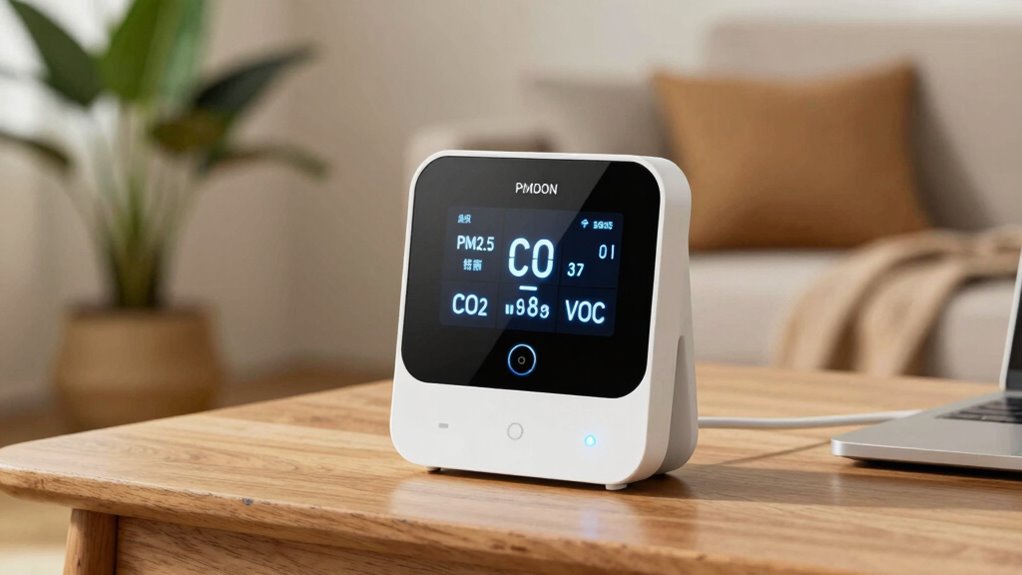
Ever wondered what VOCs are and how they impact your indoor air quality? Volatile organic compounds, or VOCs, are gases emitted from common household products like paints, cleaning supplies, air fresheners, and furniture. When you’re exposed to these chemicals indoors, it heightens your indoor chemical exposure, which can cause health issues. Short-term effects may include headaches, dizziness, or irritation of your eyes, nose, and throat. Long-term exposure can lead to more serious problems like respiratory issues or even damage to your liver, kidneys, and central nervous system. Understanding VOCs helps you recognize potential sources of indoor pollution and take steps to improve your air quality. Monitoring VOC levels ensures your environment stays safe and comfortable.
What Features Should You Look for in an Indoor Air Quality Monitor?
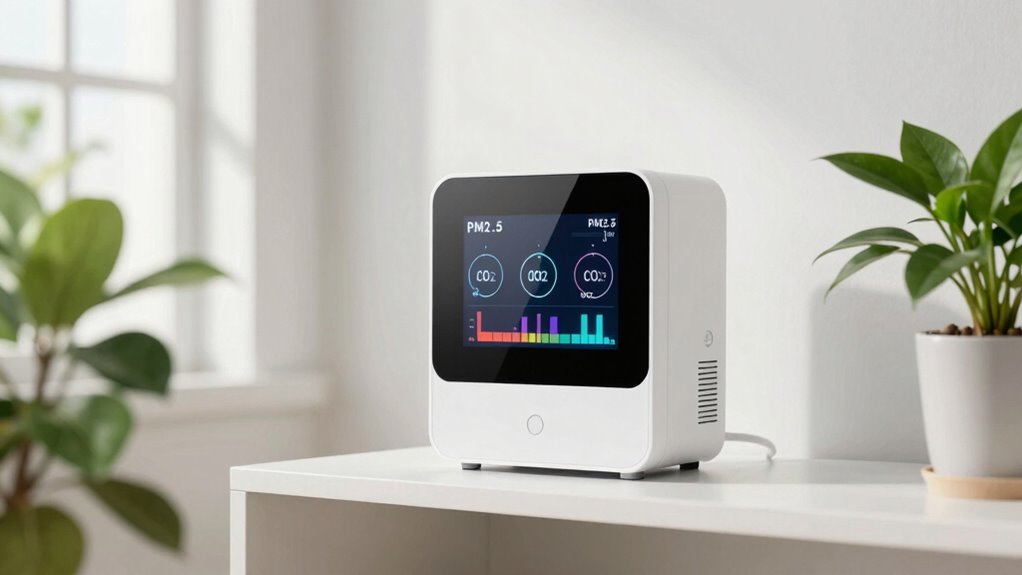
Choosing the right indoor air quality monitor involves understanding which features will best help you maintain a healthy environment. First, look for accurate sensor calibration to ensure reliable readings over time. Second, prioritize devices with robust data privacy measures, so your personal information stays secure. Third, consider monitors with user-friendly interfaces and real-time alerts, making it easier to respond quickly to air quality issues. Additional features like Wi-Fi connectivity allow remote monitoring, while long-lasting batteries reduce maintenance. Clear, easy-to-understand displays help you interpret data at a glance. By focusing on sensor calibration, data privacy, and ease of use, you’ll select a device that truly supports a healthier indoor space. Ensuring your monitor has proper maintenance features can also extend its lifespan and accuracy, especially when it includes regular calibration updates.
How to Set Up and Use Your Indoor Air Quality Monitor Effectively

To get accurate readings, choose the right spot to place your air quality monitor—avoid corners, vents, and areas with direct airflow. Once set up, regularly check the readings and learn what they mean for your home’s air quality. Respond promptly to any alerts to improve your indoor environment and keep your family safe. Monitoring airborne pollutants can help you identify specific issues like VOCs or particulate matter that may require targeted actions. Being aware of indoor air quality standards can guide you in making informed decisions to enhance your home’s environment. Additionally, understanding air quality monitoring best practices ensures you interpret data correctly and maintain an effective monitoring setup. Familiarizing yourself with accessibility features can also help ensure the device is usable by all family members, including those with sensitivities or disabilities.
Placement Tips for Accuracy
Proper placement of your indoor air quality monitor is essential for accurate readings. To optimize sensor calibration and guarantee reliable data, consider these tips:
- Place the monitor at breathing height, about 3-6 feet above the floor, away from windows, vents, or direct sunlight.
- Avoid placing it near sources of pollution like cooking areas or fireplaces, which can skew results.
- Position the device in a central location, ensuring good airflow around it for consistent measurements.
Interpreting and Responding
Once your monitor is correctly placed, it’s important to understand how to interpret its readings and respond accordingly. Regular sensor calibration guarantees your data remains accurate over time, preventing false alarms or misinformation. Use data visualization features, like graphs and color-coded alerts, to quickly grasp air quality trends. If levels of PM2.5, CO2, or VOCs spike, increase ventilation, air purification, or reduce pollutant sources immediately. Pay attention to threshold settings and alerts—these guide you on when action is necessary. Consistently reviewing your monitor’s data helps identify patterns and triggers, enabling proactive adjustments. Proper interpretation and quick responses keep your indoor environment safe and comfortable, making your monitor a valuable tool for maintaining healthy air quality.
How to Interpret Air Quality Data and Improve Your Indoor Environment
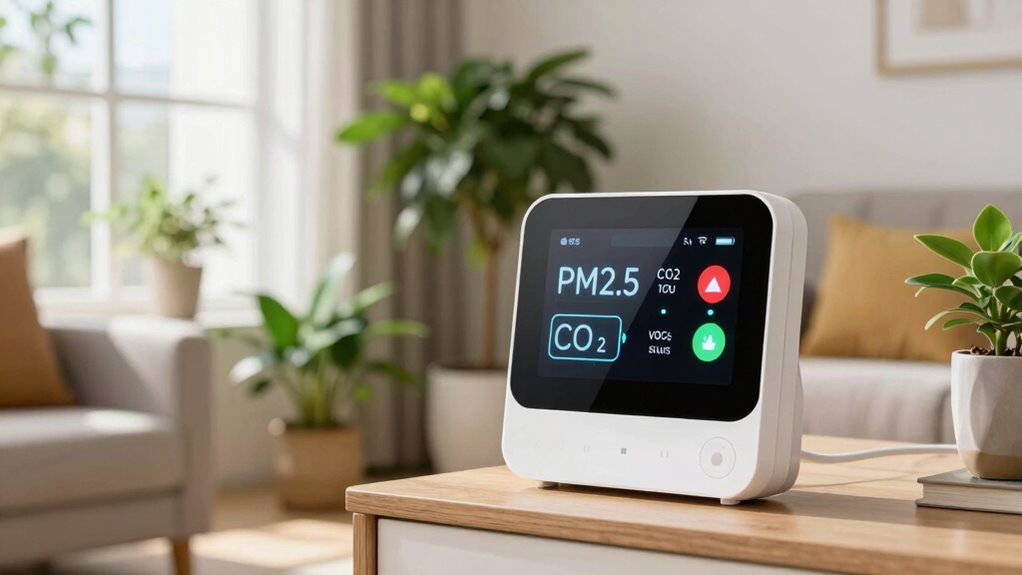
Understanding your indoor air quality data is essential for creating a healthier environment. By analyzing the data visualization from your monitor, you can identify patterns and determine when air quality exceeds established air quality standards. Here’s how to interpret your data effectively:
Monitoring your indoor air quality helps identify issues and create a healthier environment.
- Look for consistently high PM2.5 or VOC levels, indicating pollution sources needing attention.
- Watch for spikes in CO2, which suggest poor ventilation and require increased airflow.
- Compare your readings against air quality standards to assess if your indoor environment is safe or needs improvement.
Once you identify issues, improve your space by increasing ventilation, reducing pollutants, or using air purifiers. Proper interpretation helps you take targeted action, ensuring a healthier, more comfortable indoor environment.
Troubleshooting Tips for Your Indoor Air Quality Monitor

If your indoor air quality monitor isn’t providing accurate readings, troubleshooting can help identify and resolve common issues quickly. Start with calibration tips—confirm your device is calibrated according to the manufacturer’s instructions, as improper calibration can lead to inaccurate data. Check for connectivity issues, especially if your monitor relies on Wi-Fi or Bluetooth; ensure it’s within range and reconnect if needed. Restart your device to refresh its connection and clear temporary glitches. Inspect sensors for dust or dirt, as buildup can affect performance. If problems persist, update the firmware or software, as updates often fix bugs. Regular maintenance and following calibration tips help keep your monitor functioning accurately, giving you reliable data to improve your indoor environment.
Creating a Healthier Home by Combining Air Quality Metrics

Combining multiple air quality metrics provides a more thorough view of your indoor environment, enabling you to identify issues that might be missed when focusing on a single parameter. By tracking PM2.5, CO2, and VOCs together, you get a complete picture of air safety and comfort. This insight helps you choose the right solutions, like air purifiers that target specific pollutants or humidity control to reduce mold and dust mites. For example:
- If PM2.5 levels spike, an air purifier can filter out fine particles.
- Elevated CO2 indicates poor ventilation, prompting you to increase airflow.
- High VOC readings suggest chemical off-gassing, which humidity control can help mitigate.
Combining these metrics empowers you to create a healthier, more comfortable home environment.
Frequently Asked Questions
How Often Should I Calibrate My Indoor Air Quality Monitor?
You should calibrate your indoor air quality monitor every 1 to 3 months to guarantee sensor accuracy. Regular calibration helps maintain reliable readings, especially for sensors measuring PM2.5, CO2, and VOCs. Check the manufacturer’s instructions for specific calibration guidelines. If your monitor is used continuously or in varying conditions, more frequent calibration may be necessary to keep sensor accuracy at its best.
Can Air Quality Monitors Detect Mold Spores or Bacteria?
Your air quality monitor can’t directly detect mold spores or bacteria, but it’s a powerful tool for mold detection and bacteria monitoring indirectly. By tracking humidity, VOCs, and other air quality indicators, it can alert you to conditions that favor mold growth or bacterial proliferation. Think of it as a detective narrowing down suspects—you won’t catch spores or bacteria themselves, but you’ll spot the environmental clues that signal their presence.
What’s the Ideal Threshold for PM2.5, CO2, and VOCS Indoors?
You should aim for PM2.5 levels below 12 μg/m³, CO2 under 1,000 ppm, and VOCs as low as possible, ideally under 500 ppb. These thresholds align with health guidelines and guarantee comfort. Keep in mind, sensor accuracy varies—so choose monitors with reliable readings. Regularly check your device’s calibration to maintain precise tracking, helping you create a healthier, more comfortable indoor environment.
Are There Portable Air Quality Monitors Suitable for Outdoor Use?
You bet, there are portable sensors perfect for outdoor monitoring. These devices are designed to withstand the elements, so you can keep tabs on air quality wherever you go. They’re lightweight, easy to carry, and provide real-time data on pollutants like PM2.5, CO2, and VOCs. Don’t be caught flat-footed—using outdoor-specific air quality monitors guarantees you’re always aware of environmental conditions, no matter where your adventures take you.
How Do Seasonal Changes Affect Indoor Air Quality Readings?
Seasonal variations can markedly impact your indoor air quality readings. During colder months, you might notice higher CO2 levels due to reduced indoor ventilation, while warmer seasons can increase VOCs from outdoor sources. You should monitor these changes closely, adjusting your ventilation habits accordingly. Properly tracking seasonal shifts helps you maintain healthier indoor air, ensuring comfort all year round by optimizing airflow and reducing pollutant buildup.
Conclusion
By tracking PM2.5, CO2, and VOCs, you gain a clear picture of your indoor environment, empower yourself to make healthier choices, and create a space that’s cleaner, fresher, and more comfortable. Monitoring these key metrics helps you identify issues, improve air quality, and enjoy the benefits of better health and well-being. Take control, stay informed, and transform your home into a truly healthy sanctuary.