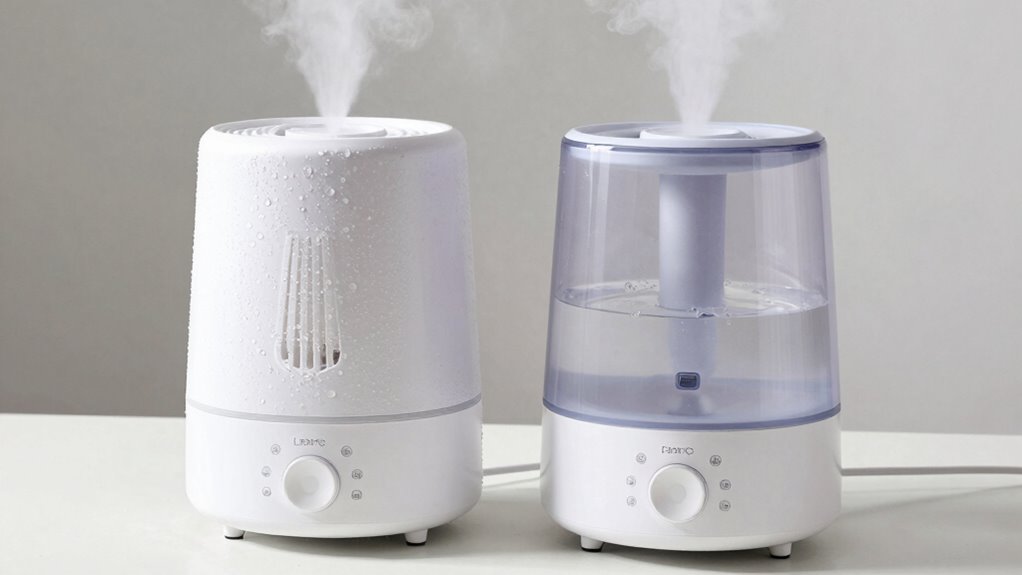

Evaporative humidifiers use a water-saturated wick and a fan to naturally add moisture, while ultrasonic models create a fine mist with high-frequency vibrations. Ultrasonic units tend to get slimy more quickly because their fine mist fosters bacterial growth and mineral buildup, especially with tap water. If you want to keep your humidifier clean and effective, understanding these differences helps. Keep exploring to discover tips on maintenance and choosing the right type for your space.
Key Takeaways
- Evaporative humidifiers use a wick filter and fan for steady moisture, while ultrasonic models vibrate a diaphragm to produce mist.
- Ultrasonic humidifiers are more prone to slimy buildup due to fine mist and mineral deposits.
- Using distilled water reduces mineral deposits and slime in ultrasonic units.
- Regular cleaning and water changes are essential for both types to prevent microbial growth and slime.
- Evaporative units tend to resist slime formation better but respond slower to humidity adjustments.
How Do Evaporative and Ultrasonic Humidifiers Work?
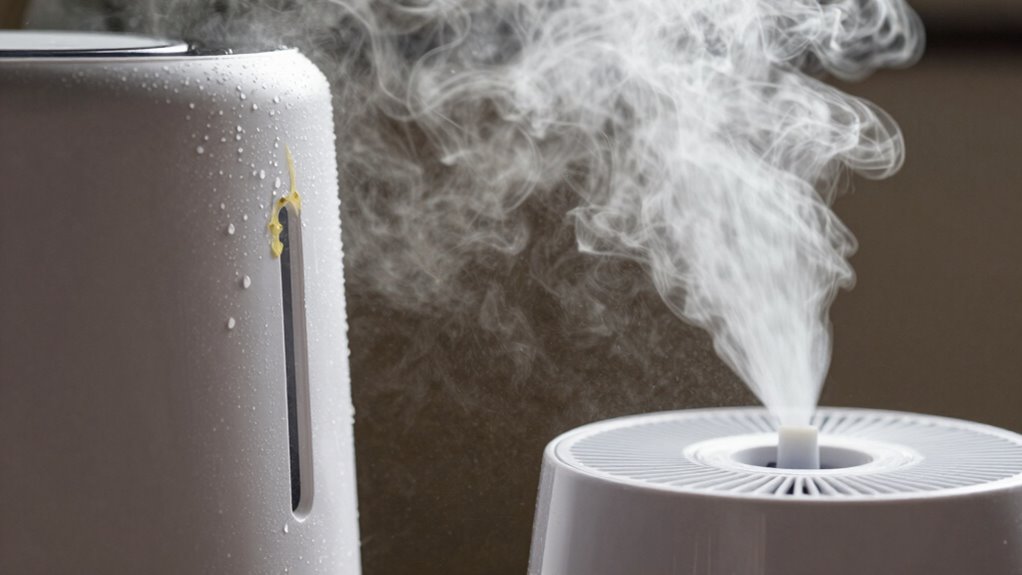
Evaporative and ultrasonic humidifiers work differently to add moisture to the air. In evaporative humidifiers, humidifier technology relies on water evaporation. You fill the tank, and a wick filter soaks up water. A fan then blows air through the filter, causing water to evaporate into the room. This process naturally adjusts humidity levels based on the room’s conditions. These units are often more self-regulating due to the water evaporation process, which helps maintain consistent humidity levels without manual adjustments. Ultrasonic humidifiers, on the other hand, use a vibrating metal diaphragm at ultrasonic frequencies. This vibration creates a fine mist of water particles that disperse into the air instantly. The key difference lies in how they generate moisture: evaporative units depend on water evaporation driven by airflow, while ultrasonic models produce a cool mist through high-frequency vibrations. Both methods effectively humidify your space but operate on distinct humidifier technology principles. Additionally, the choice between them can influence issues like slimy buildup, which is more common in certain humidifier types. Proper cleaning and maintenance are essential to prevent filter clogging and ensure optimal performance in both types. Regularly monitoring humidity levels can also help reduce the risk of bacterial growth and other microbial issues.
What Are the Pros and Cons of Evaporative vs Ultrasonic Humidifiers?

When comparing evaporative and ultrasonic humidifiers, you’ll notice differences in how effectively they distribute moisture throughout a space. Maintenance and hygiene can also vary, with each type presenting unique cleaning challenges. Understanding these pros and cons helps you choose the best option for your needs. Additionally, proper safety precautions should be followed to prevent issues like sliminess or mold buildup. For example, regular cleaning and using appropriate disinfectants can significantly reduce the risk of bacterial growth and ensure a healthier environment. Being aware of humidifier maintenance practices can further extend the device’s lifespan and maintain optimal performance. Considering the impact of microplastics in dust and other indoor pollutants is also important for maintaining overall air quality. Proper humidity levels can also influence the growth of mold and bacteria, which is crucial for a safe and healthy home environment.
Moisture Distribution Efficiency
Understanding how different humidifier types distribute moisture is key to choosing the right one for your needs. Evaporative humidifiers rely on natural evaporation, providing steady, consistent moisture with high evaporative efficiency. They tend to humidify evenly but may be slower to respond to changes. Ultrasonic humidifiers use vibrations to disperse water as fine mist, offering rapid, adjustable humidity levels through ultrasonic dispersion. However, they can sometimes produce uneven moisture distribution if not properly maintained. The table below compares their moisture distribution characteristics:
| Feature | Evaporative Humidifiers | Ultrasonic Humidifiers |
|---|---|---|
| Distribution Speed | Moderate | Fast |
| Consistency | High | Variable |
| Efficiency | High | Moderate |
Choosing depends on your need for even, efficient humidification versus quick adjustments.
Maintenance and Hygiene Challenges
While both evaporative and ultrasonic humidifiers serve to add moisture to the air, they each present distinct maintenance and hygiene challenges that can affect their performance and safety. Evaporative models rely on filters that need regular replacement to prevent mold, bacteria, and mineral buildup. Failing to change filters can lead to slimy residues and airborne contaminants. Ultrasonic humidifiers, on the other hand, are prone to mineral buildup from hard water, which can clog the device and create white dust. Regular cleaning is essential for both types to prevent mold growth and bacterial growth. Ultrasonic models may require descaling solutions, while evaporative units need timely filter replacements. Proper maintenance guarantees healthier humidification and reduces the risk of slimy or contaminated surfaces.
Why Are Ultrasonic Humidifiers More Prone to Slimy Buildup?
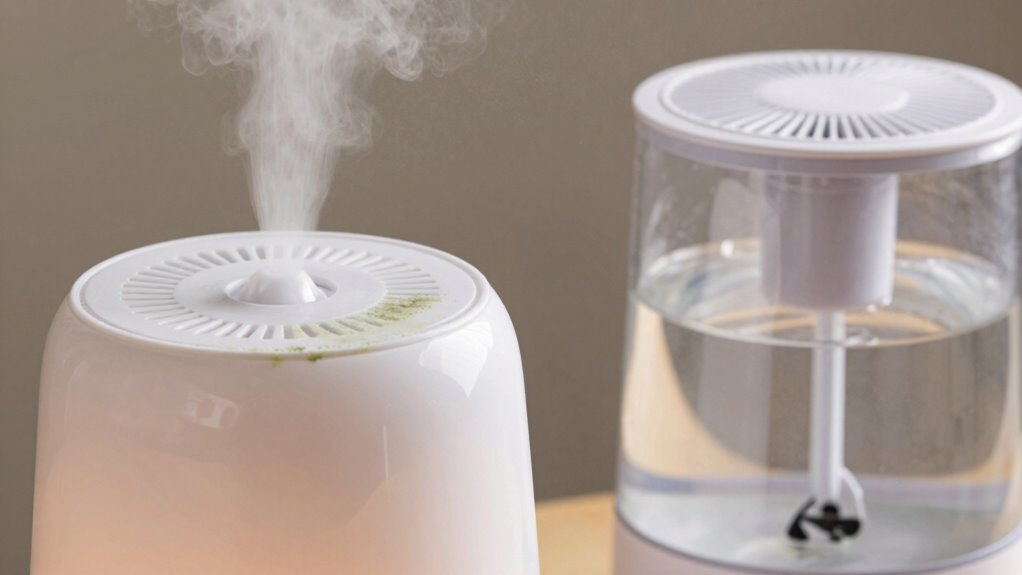
Ultrasonic humidifiers are more prone to slimy buildup because their fine mist creates an ideal environment for bacteria and mold to thrive. The constant moisture encourages microbial growth, especially if mineral-laden water is used. This leads to water mineral buildup inside the device, which can promote slimy residue. To avoid this, consider these points:
- Mineral deposits can accumulate quickly, providing a breeding ground for microbes.
- The mist disperses tiny water droplets, spreading bacteria and mold spores.
- Using water with high mineral content accelerates buildup and microbial growth.
- Regular cleaning is essential to prevent slimy residue and keep the mist clean.
- Choosing the right humidifier type can significantly reduce the risk of slimy buildup and promote better air quality.
- Employing proper maintenance routines, such as descaling and disinfecting, can further minimize microbial growth and keep your humidifier hygienic.
- Paying attention to water quality can also make a difference in reducing microbial and mineral buildup.
Understanding these factors helps you recognize why ultrasonic units need extra attention to stay hygienic.
How to Prevent Slimy Buildup in Your Humidifier

To keep your humidifier free of slimy buildup, you should clean it regularly to remove any residue. Using distilled water helps reduce mineral deposits that promote slimy growth, and changing the water often prevents bacteria from thriving. Following these simple steps keeps your humidifier clean and guarantees better air quality. Additionally, choosing models with easy-to-clean components can make maintenance more straightforward and effective. Incorporating proper filtration methods can also help prevent contaminants from entering the unit and contributing to slime buildup. Being aware of humidifier maintenance routines can further extend the device’s lifespan and efficiency.
Regularly Clean Your Unit
Regular cleaning is essential to prevent slimy buildup in your humidifier. Neglecting this can lead to mold, bacteria, and mineral deposits that compromise air quality. To keep your unit in top shape:
- Change the water daily to improve water quality and reduce slimy residue.
- Remove and clean the water tank and base weekly with mild soap and a soft brush.
- Perform filter maintenance as recommended by the manufacturer to prevent mold growth.
- Use clean, fresh water each time to minimize mineral buildup and bacteria proliferation.
- Employ proper maintenance procedures to ensure your humidifier functions efficiently and safely.
Consistent cleaning not only prevents slimy buildup but also prolongs your humidifier’s lifespan. Regular upkeep ensures filter performance remains ideal and air stays healthy and safe.
Use Distilled Water
Have you considered how mineral content in tap water contributes to slimy buildup in your humidifier? Using distilled water substantially reduces water mineral content, preventing mineral deposits that can foster slimy residue. Since minerals in tap water settle and create buildup, switch to distilled water to keep your unit cleaner and functioning efficiently. Additionally, using distilled water means you’ll need to replace filters less often, as mineral buildup accelerates filter wear. Regular filter replacement is essential, but starting with pure water minimizes the initial accumulation of residues. This simple change helps maintain better air quality, prolongs your humidifier’s lifespan, and reduces cleaning time. Incorporating water purification techniques can further ensure the purity of the water you use, minimizing mineral deposits. Employing proper water storage methods can also help prevent contamination and mineral buildup. Choosing distilled water is a smart, straightforward step to prevent slimy buildup and keep your humidifier operating smoothly. Informed water choice is key to avoiding mineral-related issues and ensuring optimal humidifier performance. Additionally, selecting humidifier-specific filters designed to trap minerals can further enhance your unit’s longevity.
Change Water Frequently
Changing the water in your humidifier frequently is one of the simplest ways to prevent slimy buildup. Stale water promotes bacteria and mold growth, which can compromise air quality and hinder humidity control. To keep your unit clean and functioning efficiently, follow these tips:
- Empty the tank daily to remove any standing water.
- Rinse thoroughly to eliminate mineral deposits and slime.
- Refill with fresh, preferably distilled water.
- Clean the humidifier weekly with vinegar or a manufacturer-approved cleaner.
- Using vetted products designed specifically for humidifier maintenance can further reduce the risk of slimy buildup.
Easy Maintenance Tips for Evaporative and Ultrasonic Models
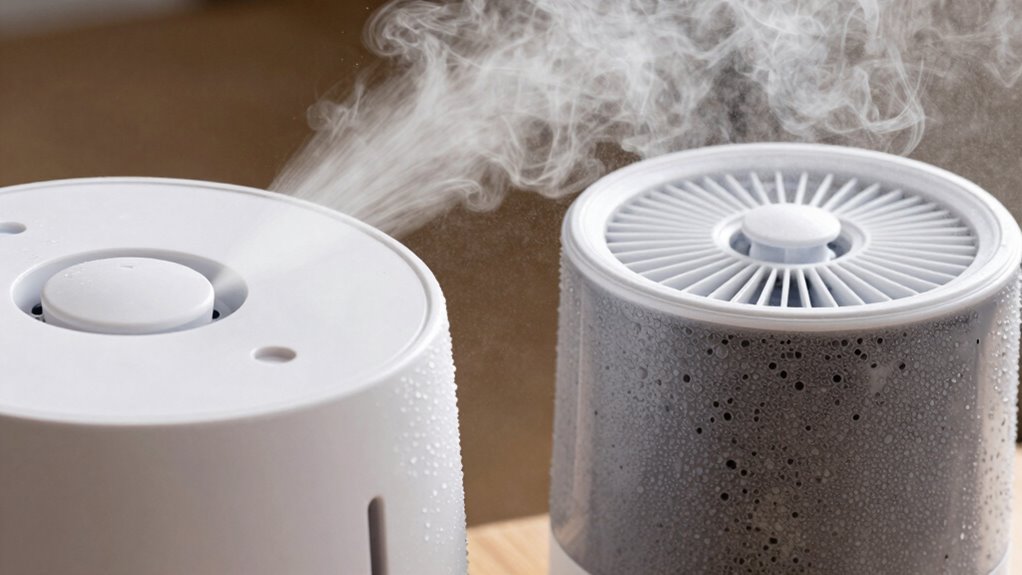
Maintaining your evaporative and ultrasonic humidifiers is straightforward if you follow a few simple steps. Regularly inspect and replace humidifier filters to ensure peak air purification and prevent mold buildup. Clean the water tank weekly with mild soap and water to remove mineral deposits and slimy residues. Use a soft brush to scrub hard-to-reach areas, avoiding harsh chemicals that could damage your device. Empty and dry the tank when not in use to prevent bacteria growth. Keep the outside surfaces dust-free with a damp cloth. For ultrasonic models, be especially vigilant about mineral buildup, which can affect performance. Proper maintenance includes checking filters and descaling to avoid mineral deposits that can impair function. Ensuring cable safety by avoiding electrical hazards is essential when using humidifiers near water sources. Proper maintenance not only extends your humidifier’s lifespan but also ensures healthier, cleaner air in your home. Support healthy breathing by following these simple care routines.
Which Humidifier Is Right for Your Home? A Simple Guide
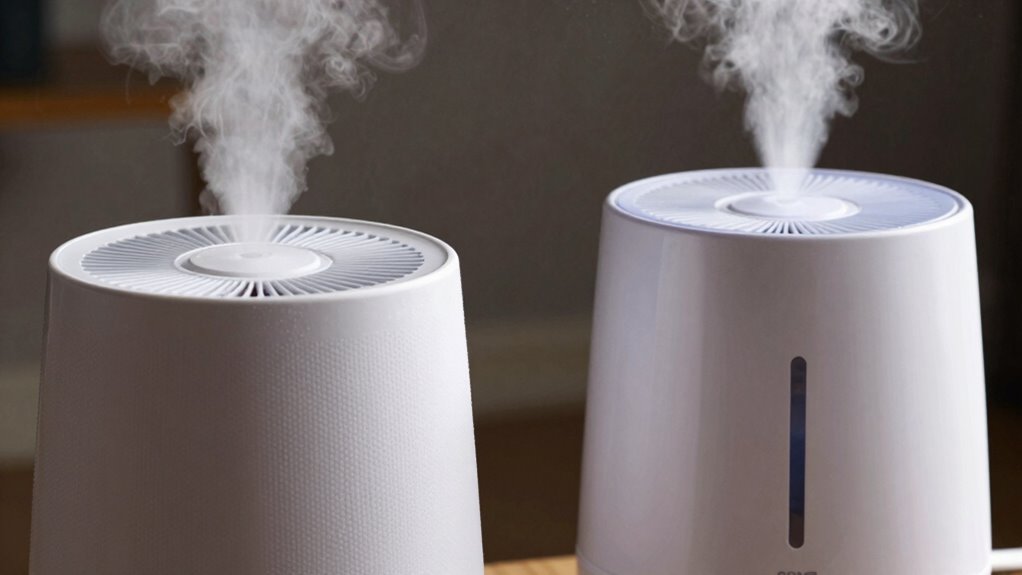
Choosing the right humidifier for your home depends on your specific needs and living environment. Consider these factors to find the best fit:
Selecting the ideal humidifier depends on your unique needs and living space.
- Room size: Larger rooms may require a whole-house or larger portable humidifier, while smaller spaces suit compact models.
- Humidifier placement: Place your humidifier on a flat, elevated surface away from direct sunlight or electronics for ideal performance.
- Noise levels: If you sleep in the same room, choose quieter ultrasonic models; evaporative humidifiers tend to be noisier but are often more durable.
- Maintenance: Pick a model that’s easy to clean to prevent slime buildup and ensure healthy moisture levels.
Final Tips: Keeping Your Humidifier Clean and Slimy-Free
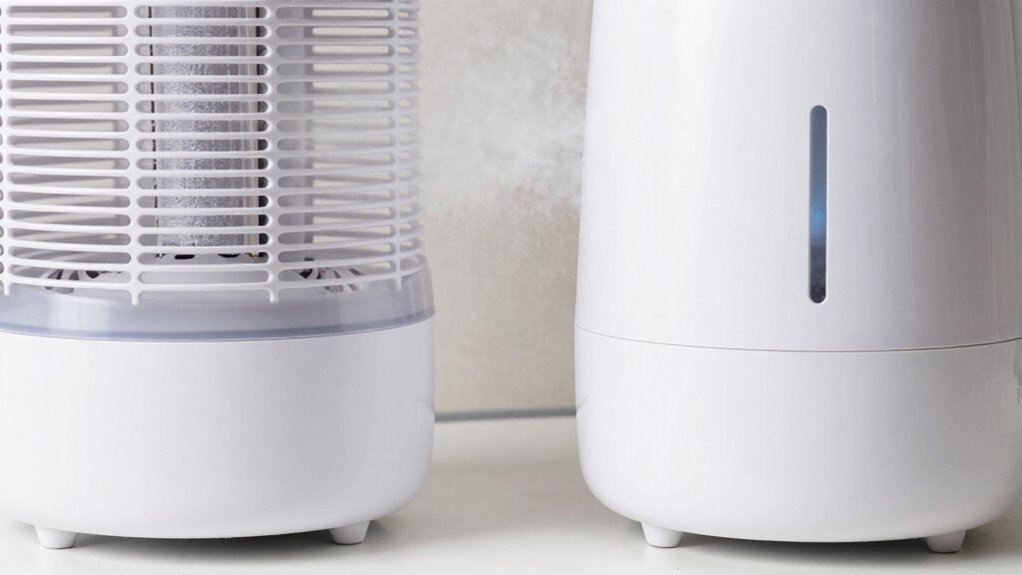
To keep your humidifier functioning effectively and prevent slime buildup, regular cleaning is a must. Make sure to clean the water tank and components weekly, and replace filters as recommended to maintain ideal humidity control. Regular filter replacement ensures your device runs efficiently and reduces the chance of mold or bacteria growth. Use mild cleaning solutions, like vinegar or hydrogen peroxide, to disinfect parts and prevent slimy residues. Always dry all parts thoroughly before reassembling. Check your user manual for specific cleaning instructions and filter replacement schedule. Proper maintenance not only keeps your humidifier free of slime but also extends its lifespan. Consistent cleaning and timely filter changes help you enjoy healthy, balanced humidity without the worry of slimy buildup.
Frequently Asked Questions
Can Different Water Types Affect Slimy Buildup?
Yes, different water types can influence slimy buildup in your humidifier. Mineral-rich water, like hard water with high mineralization, promotes slime growth because minerals create a breeding ground for bacteria and mold. Water pH effects also matter; alkaline water can encourage slimy residue, while acidic water tends to reduce buildup. To prevent slime, use distilled or demineralized water, and regularly clean your humidifier to minimize mineral deposits and microbial growth.
How Often Should I Replace Filters or Pads?
Did you know that most humidifier filters need changing every 1-3 months? You should replace your filter or pad based on the filter lifespan recommended by the manufacturer, usually every 1-2 months. Regularly check your humidifier, and if it looks dirty or has a musty smell, it’s time for a replacement. Sticking to the pad replacement schedule guarantees peak performance and helps prevent slime buildup.
Are There Specific Cleaning Products for Humidifiers?
You should use gentle, non-abrasive humidifier cleaning products, like vinegar or diluted hydrogen peroxide, to keep your device hygienic. Avoid harsh chemicals that may damage parts or release fumes. For product recommendations, look for humidifier cleaning solutions specifically designed for your model or natural options like white vinegar. Regular cleaning with these products helps prevent slime buildup, mold, and bacteria, ensuring healthier, cleaner humidifier operation.
Do Humidifiers Emit Bacteria or Mold?
Think of your humidifier as a gentle garden pond; without proper care, it can become a breeding ground. Yes, it can emit airborne bacteria and mold spores if not cleaned regularly. These microorganisms thrive in moist environments, risking your health. To keep your air clean and safe, clean your humidifier often with appropriate products, preventing bacteria and mold from spreading into your home’s air.
What Are Signs My Humidifier Needs Maintenance?
You’ll notice your humidifier needs maintenance if you see mineral buildup, mold spots, or a foul odor. To extend its lifespan, follow a regular maintenance schedule, including cleaning weekly and replacing filters as recommended. Neglecting this can cause bacteria growth and reduce efficiency. Address these signs promptly to keep your humidifier running smoothly, ensuring better air quality and avoiding costly repairs.
Conclusion
Choosing the right humidifier depends on your needs, and keeping it clean guarantees it stays slime-free. Regular maintenance is your best defense against buildup, much like a knight tending to their armor before battle. Whether you opt for evaporative or ultrasonic, a little effort now prevents a swamp of slimy inconvenience later. Stay vigilant, and your humidifier will serve you well, preserving the comfort of your home without turning into a modern-day plague.