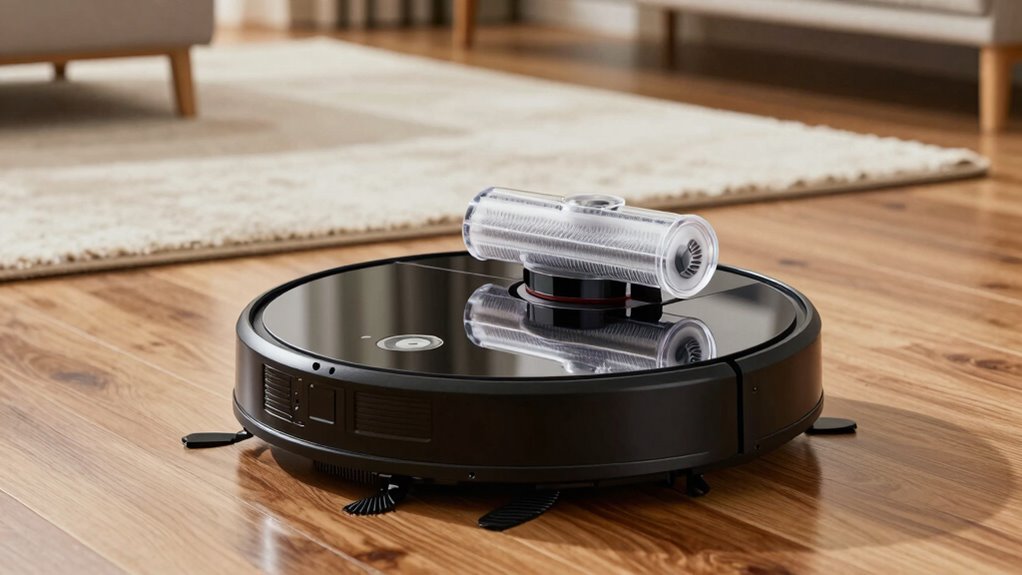

Before buying a robot vacuum and mop combo, the key thing to check is whether it’s compatible with your floor types and surfaces. Different floors, like hardwood, tile, or carpet, require specific cleaning settings to prevent damage. Testing small areas first can help guarantee gentle operation without scratches or residue. If you want a device that works well on all your surfaces and fits your cleaning needs, there’s more to contemplate to make the best choice.
Key Takeaways
- Ensure the device’s surface compatibility to prevent damage to hardwood, tile, or delicate flooring types.
- Check if the vacuum has adjustable mopping and suction settings suitable for different surfaces.
- Confirm the robot’s navigation and obstacle detection features for efficient cleaning on various floor plans.
- Review battery life and charging capabilities to cover your entire cleaning area without interruption.
- Verify if the model offers customizable cleaning modes for optimal performance on your specific floor types.
How to Identify Your Floor Types and Surfaces
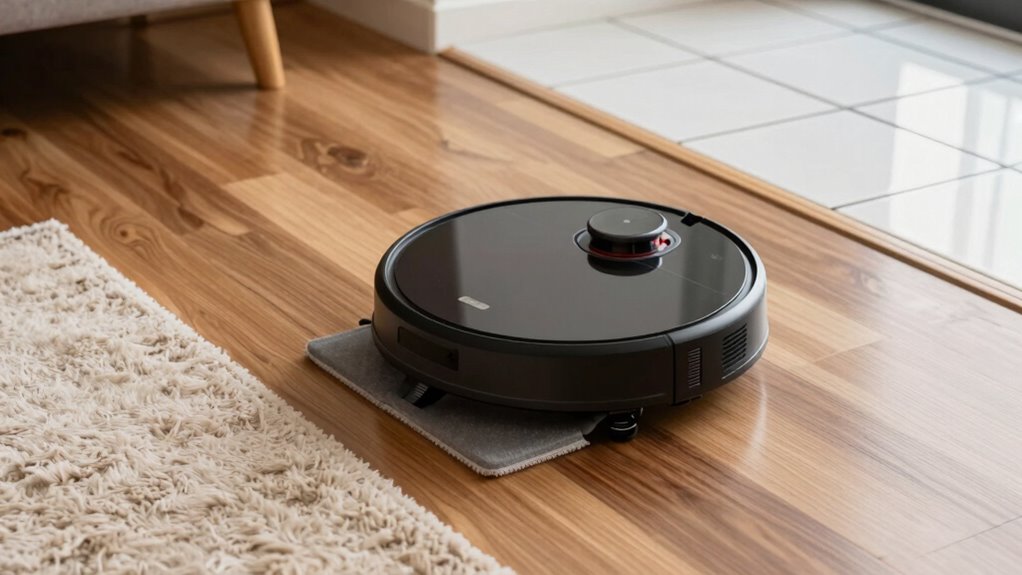
Understanding your floor types and surfaces is essential for choosing the right robot vacuum and mop combo. Start by examining your flooring materials—are they hardwood, tile, laminate, or carpet? Each material reacts differently to cleaning methods. Surface textures also matter; smooth surfaces like tile are easier to clean, while textured or plush carpets may require more powerful suction or specialized brushes. Take note of any variations within a room, such as area rugs or uneven surfaces. Recognizing flooring properties and how they influence cleaning performance ensures you pick a robot vacuum and mop combo suited to your home’s unique needs, providing ideal cleaning results. Additionally, understanding the technology capabilities of different models can help you select a device that adapts well to your specific floor types without causing damage or leaving residues. Being aware of surface sensitivities can help prevent potential damage and optimize cleaning efficiency. Considering these factors also helps in choosing a device with appropriate adjustable settings for different floor types, ensuring thorough and safe cleaning across your home. Knowing how imaginative solutions can be integrated into your cleaning routine may inspire innovative ways to maintain your space more effectively.
Which Features Make a Robot Vacuum and Mop Suitable for Your Floors
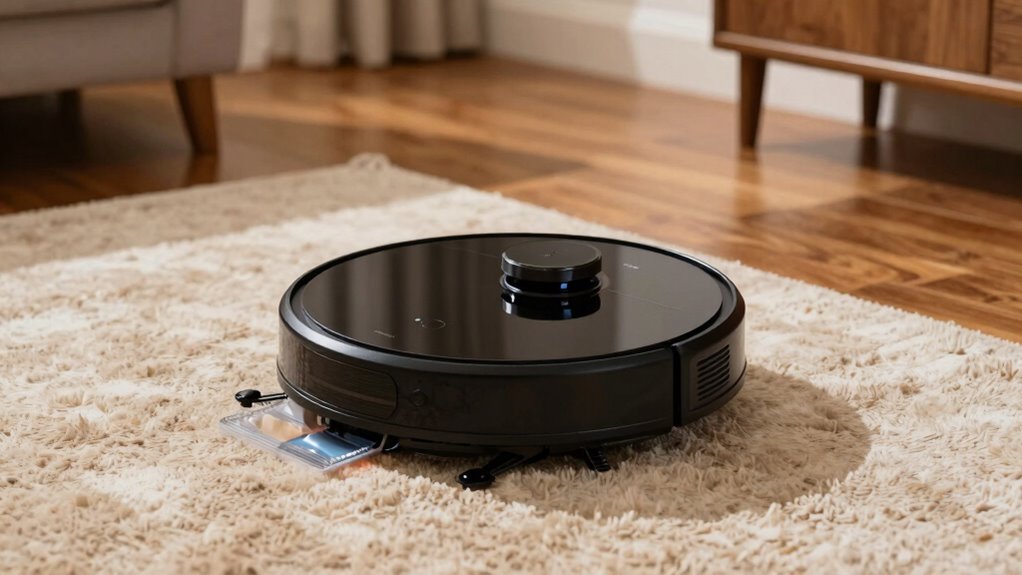
Choosing the right robot vacuum and mop combo depends on the features that match your floor types. Different flooring materials, like hardwood, tile, or carpet, require specific cleaning capabilities. For hardwood or tile, look for models with gentle mopping functions to avoid damage. If you have carpets, guarantee the device can adjust suction power and has a strong brush system for deep cleaning. Additionally, consider your cleaning schedules—if you need frequent maintenance, select a model with scheduled cleaning options and smart navigation. Some combos offer adjustable mopping settings or sensors to prevent excessive moisture on delicate floors. Incorporating Free Floating suspension systems can enhance maneuverability across diverse floor surfaces, providing more thorough cleaning. Also, selecting a model with adaptive cleaning modes can help tailor the cleaning process to different floor types for optimal results. Furthermore, paying attention to user reviews can provide valuable insights into real-world performance and durability. As technology advances, many models now include floor type recognition, allowing them to automatically adjust settings for optimal cleaning results. Moreover, advanced sensors can help the device navigate more efficiently and avoid obstacles, enhancing overall cleaning effectiveness.
How to Test Your Robot Vacuum and Mop on Your Surfaces Without Damage
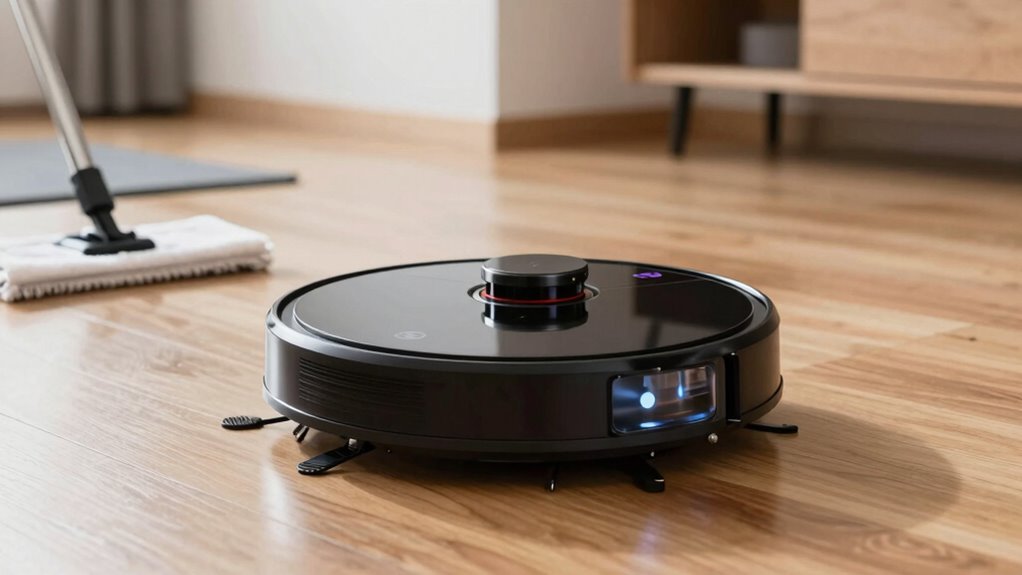
Before testing your robot vacuum and mop, check your surfaces for compatibility to prevent damage. Use gentle testing techniques, like starting on a small, inconspicuous area first. This approach helps verify your floors stay safe while you evaluate performance. Additionally, considering microplastics in dust can be beneficial, as they may affect the effectiveness of your cleaning device and indoor air quality. Understanding auditory processing can also be useful, as some surfaces or environments may impact sound detection and device operation. Being aware of surface hardness can help determine whether your surfaces are suitable for robotic cleaning technology, and inspecting cable failures is important if your device relies on wired connections or charging stations.
Surface Compatibility Checks
Testing your robot vacuum and mop on your surfaces is essential to prevent potential damage. Start by examining your floor material, whether it’s hardwood, tile, laminate, or carpet. Each surface reacts differently to cleaning tools. For example, hardwood and laminate floors require gentle settings, while textured surfaces like tile with grout might need specific brush or pad adjustments. Pay attention to the surface texture; rough or uneven textures can cause scratching or ineffective cleaning. Before full use, test in a small, inconspicuous area to see how your device interacts with the surface. Check for any signs of scratching, discoloration, or residue. Additionally, understanding surface compatibility can help you select the right settings and attachments for optimal results. Conducting a test cleaning on a hidden area can provide valuable insight into how your device performs on that surface. It’s also helpful to consult your device’s manufacturer guidelines to ensure proper use. By performing these surface compatibility checks, you ensure your robot works effectively without risking damage to your floors. Incorporating appropriate attachments can also improve cleaning efficiency and surface safety. Remember to also consider surface age and finish, as older or delicate finishes may require even more careful testing.
Gentle Testing Techniques
To prevent damage when trying out your robot vacuum and mop, start with gentle testing techniques. Begin with a surface assessment by selecting small, inconspicuous areas to test. Use gentle cleaning modes initially, avoiding high suction or aggressive scrubbing. Observe how your surfaces respond before full operation. This cautious approach helps you identify any potential issues without causing harm. Here’s a quick guide:
| Test Step | Surface Type | Tips |
|---|---|---|
| Gentle test run | Hard floors | Use low suction settings |
| Spot cleaning | Carpets or rugs | Check for fiber snagging |
| Edge cleaning | Near walls or corners | Ensure no surface damage |
Additionally, calibrating your device’s color accuracy can help optimize cleaning performance by ensuring the vacuum’s sensors are functioning correctly. Regularly inspecting the battery life and ensuring the device is fully charged before testing can also improve initial performance assessments. Incorporating surface sensitivity adjustments, if available, can further protect delicate surfaces during testing. Moreover, reviewing your device’s sensor calibration settings can help prevent unintended surface markings during testing. To ensure your device’s sensors are properly aligned, perform a calibration check periodically to maintain optimal operation.
What Battery Life and Cleaning Cycles Do You Need for Your Floors
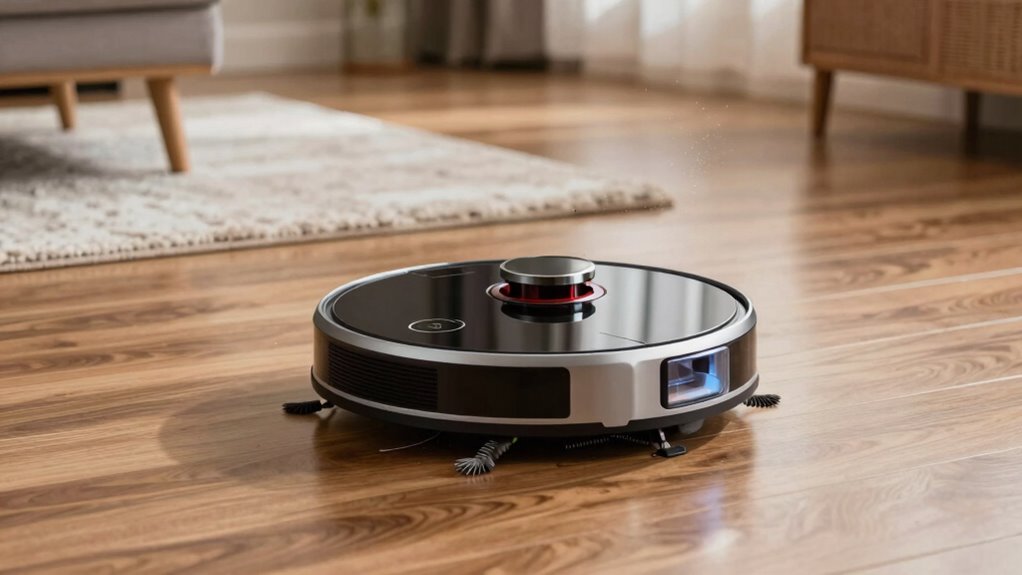
Choosing the right battery life and cleaning cycles for your robot vacuum and mop combo depends on the size and mess level of your floors. If you have large areas, look for a model with a higher battery capacity to guarantee longer cleaning sessions without frequent recharges. Check the battery capacity to determine how much area it can cover per charge. Also, consider the charging time—some units recharge quickly, while others take longer, which affects scheduling. For heavily soiled floors, you may need multiple cleaning cycles or a longer-lasting battery. Smaller spaces or light messes might only require shorter battery life and fewer cycles. Matching these factors helps you avoid interruptions and keeps your floors consistently clean. Additionally, understanding the noise levels of your device can ensure it operates quietly during busy or quiet hours.
How to Adjust Cleaning Settings for Different Surfaces
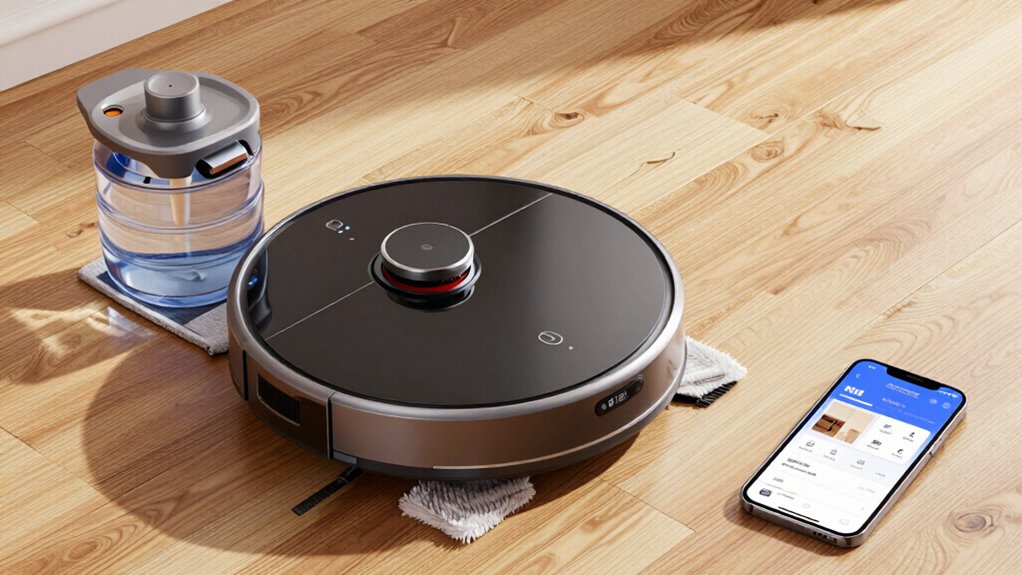
Adjusting your cleaning settings for different surfaces guarantees ideal performance and prevents damage. With cordless convenience, you can easily switch between modes for hardwood, tile, or carpet, ensuring thorough cleaning without harming your floors. For pet hair, increase the suction power and select a setting designed to lift stubborn fur. Lower the brush height on delicate surfaces like hardwood to avoid scratches, while raising it on thick carpets for deep cleaning. Many robot vacuums offer customizable settings, so take advantage of these features to optimize each cleaning session. Proper adjustments not only improve efficiency but also extend your device’s lifespan. By tailoring your settings to each surface, you get a spotless home with less effort and fewer worries about potential damage.
How to Confirm Compatibility Before Buying Your Robot Vacuum and Mop
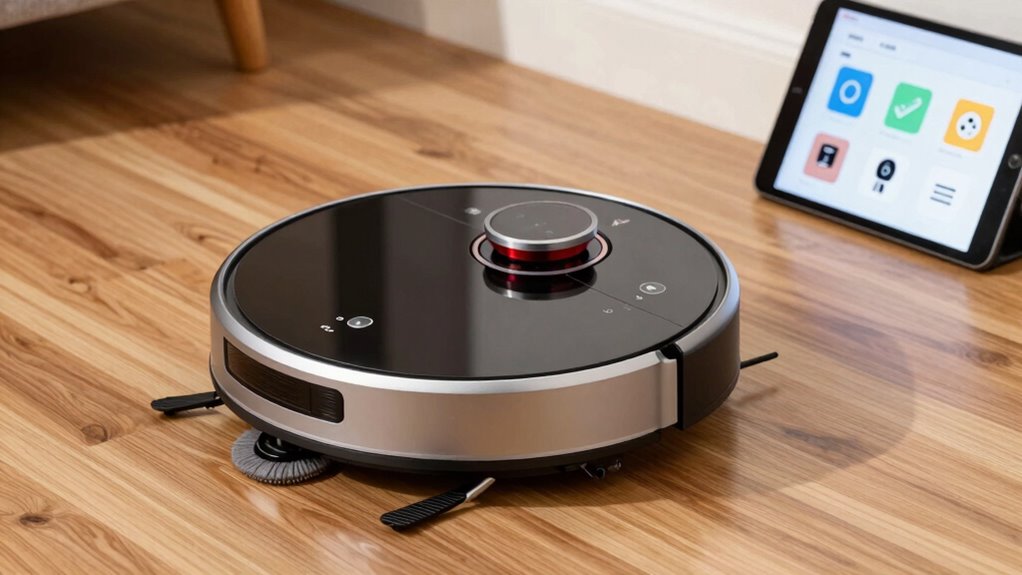
Before purchasing a robot vacuum and mop combo, confirming that the device is compatible with your home’s flooring and cleaning needs is essential. Check if the robot has effective robot mapping features, which help it navigate your space efficiently and avoid obstacles. If your home has multiple floor types, verify the device adjusts cleaning modes accordingly. Additionally, consider noise levels; some models operate quietly, making them ideal for homes with children or pets. Confirm that the vacuum can handle your specific flooring, whether it’s hardwood, tile, or carpet, and that its mapping technology covers all areas thoroughly. By confirming these aspects beforehand, you guarantee your robot vacuum and mop combo will perform at its best without surprises or disruptions.
Putting It All Together: Choosing the Best Robot Vacuum and Mop for Your Home
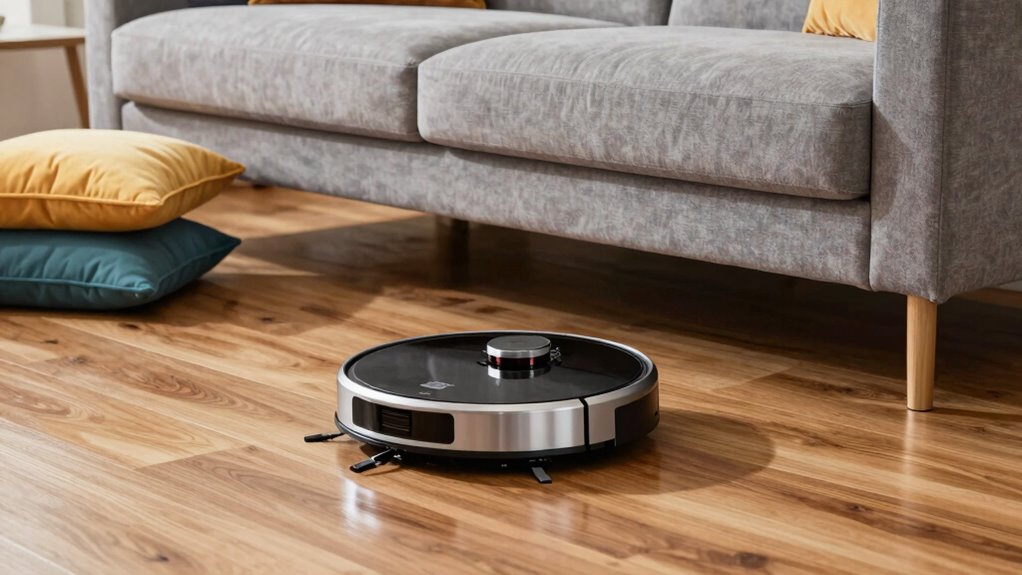
When selecting the best robot vacuum and mop for your home, you need to consider compatibility and features to ensure they work well together. Finding the right balance between cleaning performance and affordability helps you get value without sacrificing quality. By focusing on these points, you can make a confident decision that fits your needs and budget.
Compatibility and Features
Choosing the right robot vacuum and mop combo depends on understanding their compatibility and key features. You want devices that work seamlessly together and fit your needs. Consider these factors:
- Compatibility with your home’s layout and smart home systems, ensuring features like dust sensors sync smoothly.
- Noise levels, especially if you need quiet operation during work or sleep hours.
- Features like adjustable cleaning modes, which can optimize dust sensors for better dirt detection and efficient mopping.
Cleaning Performance Balance
Balancing cleaning performance means selecting a robot vacuum and mop combo that effectively handles your specific home environment without sacrificing efficiency or convenience. Look for models with advanced mapping obstacles technology, ensuring thorough cleaning without missing spots or repeatedly covering the same areas. Consider noise levels because a quieter device allows for cleaning during your daily activities or while you sleep. If your home has delicate surfaces or noise-sensitive family members, a lower noise level becomes even more critical. Striking the right balance guarantees your robot can navigate complex layouts, like furniture or pet zones, while maintaining acceptable noise and cleaning power. Ultimately, a well-balanced combo saves you time and effort, keeping your home spotless without unnecessary disruptions.
Budget and Value
Finding a robot vacuum and mop combo that fits your budget doesn’t mean you have to sacrifice quality or features. To make the most of your investment, consider these:
- Price considerations: Set a realistic budget and compare models within that range, balancing features and cost.
- Brand reputation: Stick to trusted brands known for durability and good customer support to avoid future hassles.
- Value for money: Focus on what features you really need, rather than paying extra for bells and whistles you won’t use.
Frequently Asked Questions
Can Robot Vacuum and Mop Combos Handle Pet Hair Efficiently?
Yes, robot vacuum and mop combos can handle pet hair efficiently if they have strong suction and specialized brushes. Look for models designed for pet hair removal, which often feature rubber brushes that prevent hair tangles. Additionally, consider units with allergen capture filters to trap pet dander and improve air quality. These features guarantee thorough cleaning, making it easier to manage pet hair and allergens in your home.
Are There Specific Brands Known for Durable Robot Vacuum and Mop Combos?
Some brands stand out for durable robot vacuum and mop combos, thanks to their strong reputation and warranty coverage. You should look at brands like iRobot, Roborock, and Eufy. They’re known for quality build and reliable customer support. Always check the warranty coverage, so you’re protected if parts break or issues arise. Doing this helps you choose a product that lasts longer and offers peace of mind.
How Noisy Are Robot Vacuum and Mop Combos During Operation?
You’ll find that robot vacuum and mop combos vary in noise levels, but most operate quietly enough for daily use. Some models offer sound customization features, allowing you to adjust volume during cleaning. If noise is a concern, look for units with lower decibel ratings or adjustable sound settings. This way, you can maintain a peaceful environment while still getting thorough cleaning without disturbance.
Do Robot Vacuum and Mop Combos Work Well on Uneven or Textured Floors?
Imagine a gentle mountain stream traversing rocky, textured surfaces; that’s how robot vacuum and mop combos handle rugged terrain. They work reasonably well on textured floors, adapting to uneven surfaces with smart sensors and adjustable brushes. While they might not conquer the most challenging rugged terrain perfectly, they do a good job cleaning textured surfaces and minor unevenness, making them suitable for most homes with varied flooring.
What Maintenance Is Required to Keep the Device Functioning Optimally?
To keep your robot vacuum and mop combo functioning ideally, you should regularly check the battery lifespan and replace it if it’s degraded. Also, perform brush maintenance by removing hair and debris to prevent clogs. Clean sensors and filters weekly for better navigation and cleaning performance. These simple steps ensure your device runs efficiently, extends its lifespan, and maintains powerful suction and mopping capabilities.
Conclusion
By understanding your floor types, testing your options carefully, and confirming compatibility, you can confidently choose a robot vacuum and mop combo that truly fits your home. Remember, even the most advanced device can fall short if it’s not suited to your surfaces or cleaning needs. Trusting this approach aligns with the theory that tailored solutions outperform generic ones. Ultimately, the right combo makes cleaning smarter, not harder.