When shopping for filters, “HEPA” can be misleading since true HEPA filters meet strict standards, capturing 99.97% of particles at 0.3 microns, while “HEPA-like” or “HEPA-type” filters often do not. Many marketing tricks use impressive claims or attractive packaging to hide lower-quality filters. To get genuine protection, you need to look for certified, laboratory-tested filters. If you want to know what you’re really getting, pay attention to certification labels and standards—more details follow if you continue.
Key Takeaways
- True HEPA filters meet strict standards, capturing 99.97% of 0.3-micron particles, verified through certified testing.
- “HEPA-like” or “HEPA-type” labels often indicate lower-performance filters that do not meet true HEPA standards.
- Certifications like DOE True HEPA or EN1822 confirm filter efficiency and reliability, unlike unverified marketing claims.
- Manufacturers may use vague terms or impressive specs to mislead consumers; always check for independent testing and certification.
- Proper maintenance and replacement based on certified lifespan are key to ensuring ongoing air filtration effectiveness.
What Does ‘HEPA’ Really Mean? Understanding the Basics
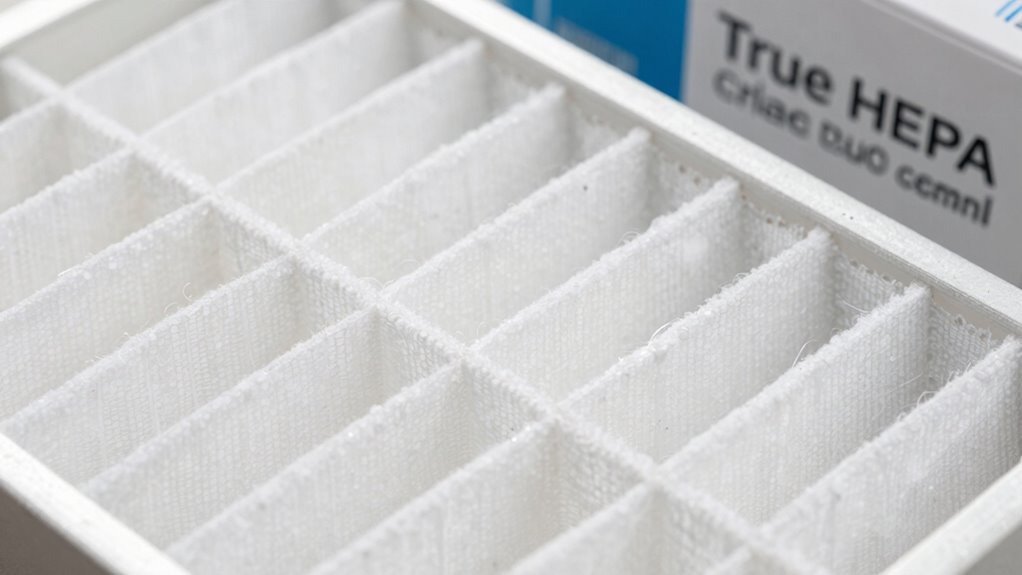
Have you ever wondered what ‘HEPA’ really means on air purifier labels? HEPA stands for High-Efficiency Particulate Air, and it’s a standard that guarantees the filter can trap at least 99.97% of particles as small as 0.3 microns. This means it markedly improves your air quality by capturing dust, pollen, and allergens. But keep in mind, the label doesn’t specify how long the filter will last; filter lifespan varies based on usage and air quality. A true HEPA filter requires regular maintenance and replacement to stay effective. If it’s not replaced when needed, its ability to improve air quality diminishes, and it may even become a source of pollutants. So, understanding what ‘HEPA’ really means helps you choose an effective, reliable air purifier. Additionally, knowing about filter technology can help you better evaluate the performance and filter lifespan, ensuring you get the most out of your investment. Recognizing the performance standards associated with HEPA filters can also guide you in selecting the right product for your needs. In particular, understanding filter efficiency can help you distinguish genuine HEPA filters from marketing tricks. Moreover, awareness of filter replacement intervals can prevent you from unknowingly reducing your purifier’s effectiveness over time.
How Do True HEPA and Other Filters Differ?
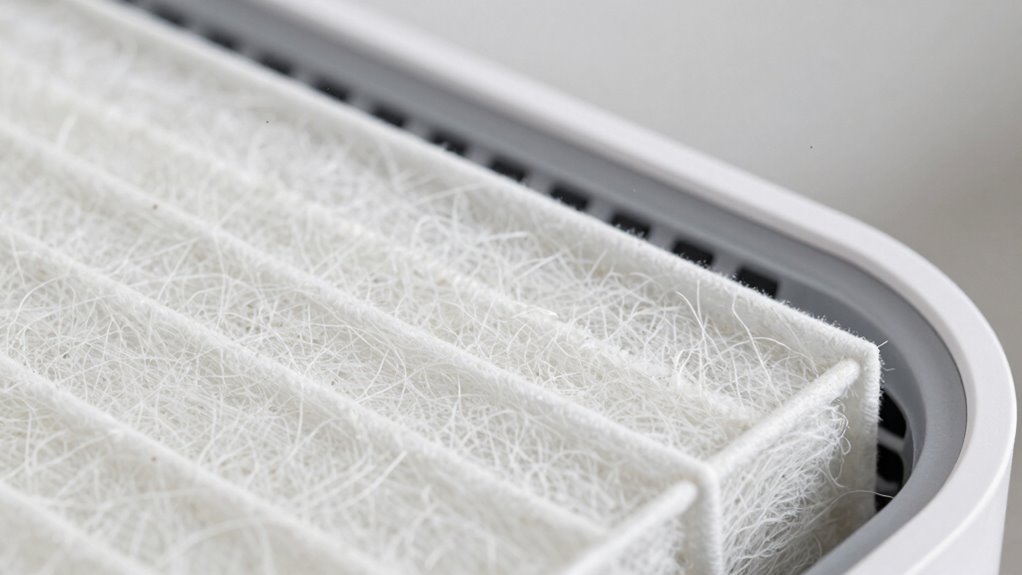
While a true HEPA filter guarantees the capture of at least 99.97% of particles as small as 0.3 microns, not all filters labeled as “HEPA” meet this standard. This difference impacts your air quality and allergen removal efforts. True HEPA filters are tested and certified to meet strict guidelines, ensuring they effectively trap dust, pollen, pet dander, and other allergens. In contrast, some filters are marketed as “HEPA-like” or “HEPA-type,” which may not provide the same level of filtration. These lesser filters might look similar but often lack the necessary pore size and efficiency, reducing their ability to improve air quality and remove allergens. Understanding the filtration standards helps you choose an effective filter for healthier indoor air. Additionally, checking for certification labels can help verify the filter’s authenticity and performance. Recognizing the importance of scientific research can further guide you in selecting the most reliable filtration options.
How Are HEPA Filters Tested and Certified?
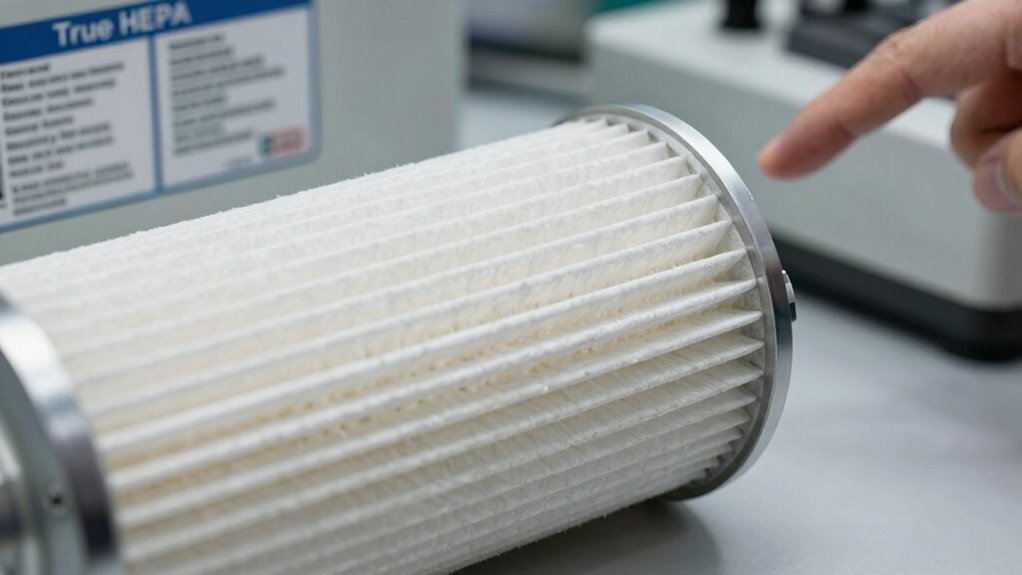
HEPA filters undergo rigorous testing and certification processes to guarantee they meet strict performance standards. During testing, they are evaluated for their ability to remove at least 99.97% of airborne particles as small as 0.3 microns. Certification often involves laboratory tests that measure their efficiency, filter lifespan, and potential ozone emissions. Ozone emissions are closely monitored because some filters can produce harmful ozone as a byproduct, which defeats their purpose. A certified HEPA filter must also demonstrate durability over time, ensuring it maintains high performance throughout its lifespan. These tests ensure that when you buy a HEPA filter, you’re getting a product that reliably improves air quality without introducing new health concerns. Certification guarantees you’re investing in a trustworthy, effective air purification solution.
What Are Common Marketing Tricks That Make Air Purifiers Look Better Than They Are?
Ever notice how some air purifiers seem to promise more than they deliver? That’s often due to clever marketing tactics designed to attract you. Manufacturers use claims like “high CADR,” “superior filtration,” or “advanced technology” to boost appeal, even if their products don’t perform as promised. They might highlight impressive-sounding specs or include attractive packaging to distract from actual efficiency. These marketing tricks can lead to consumer deception, making you believe you’re getting a top-tier device when it may only be average. Sometimes, filters labeled as “HEPA-like” or “air cleaning technology” are not true HEPA, but they’re marketed as such. Being aware of these tactics helps you see through the hype and choose an air purifier that genuinely meets your needs. Additionally, understanding the difference between Free Floating particles and true HEPA filtration is crucial in evaluating a purifier’s effectiveness. Recognizing the distinction between HEPA and “HEPA-like” filters can prevent you from overestimating a device’s filtration capabilities. Moreover, filtration standards vary widely, which can be misleading if not properly understood. Being informed about filter ratings and certifications can help ensure you get what you pay for. Knowing how marketing claims influence perceptions can also empower you to make smarter purchasing decisions.
Are ‘HEPA-like’ or ‘HEPA-type’ Filters as Effective as True HEPA?
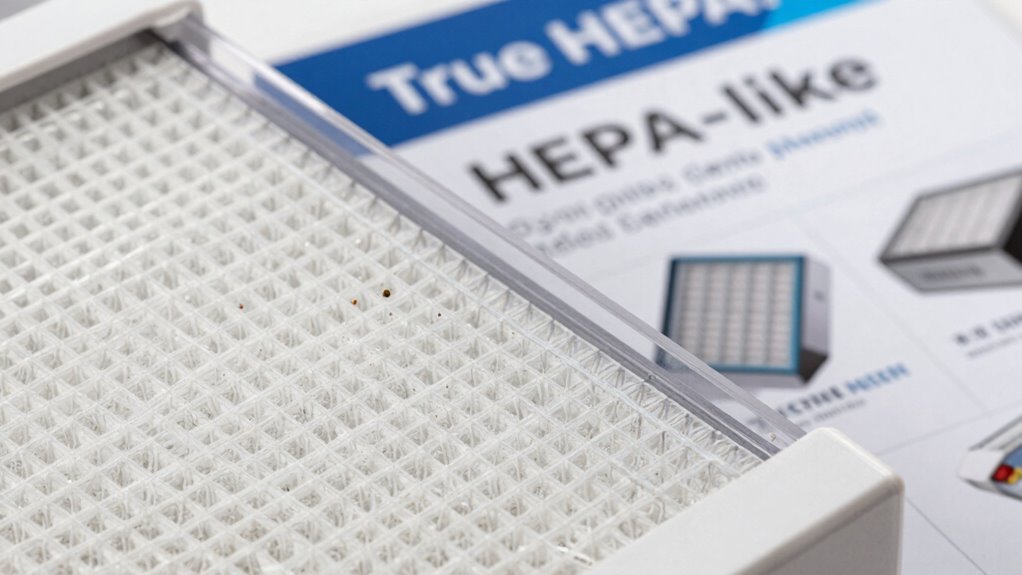
You might wonder if ‘HEPA-like’ or ‘HEPA-type’ filters perform as well as true HEPA filters. Their filtration efficiency is often lower, meaning they may not capture the same small particles. In real-world use, this difference can markedly impact how effective your air purifier actually is.
Filtration Efficiency Differences
While many products advertise themselves as “HEPA-like” or “HEPA-type,” these labels often refer to filters that don’t meet the strict standards of true HEPA filters. The key difference lies in particle removal efficiency; true HEPA filters must capture at least 99.97% of particles as small as 0.3 microns. In contrast, “HEPA-like” filters typically use different air filter materials that don’t guarantee this level of performance.
Here’s what sets them apart:
- Particle removal efficiency varies considerably.
- True HEPA filters meet rigorous testing standards.
- Cheaper filters often use less effective materials.
- Effectiveness depends on proper sealing and fit.
Real-World Effectiveness
Despite claims of similar performance, ‘HEPA-like’ or ‘HEPA-type’ filters often fall short in real-world settings compared to true HEPA filters. They may look similar, but their ability to improve air quality and reduce indoor pollution is limited. In everyday environments, these filters typically don’t capture the smallest particles that impact health, such as allergens and airborne viruses. As a result, you might not notice a significant difference in air quality, especially in spaces with high pollution levels. True HEPA filters are tested and proven to remove at least 99.97% of particles as small as 0.3 microns, making them more effective for maintaining cleaner indoor air. Relying on ‘HEPA-like’ filters could give a false sense of security, leaving indoor pollution levels higher than expected.
What Key Factors Should You Consider When Buying a HEPA Filter?
When choosing a HEPA filter, you need to pay attention to its filtration efficiency ratings to guarantee it captures the smallest particles. It’s also important to check for proper certification and standards to verify its effectiveness. Additionally, consider how easy it is to maintain and replace the filter to keep it working at its best over time. Understanding ethical consumer choices can help you make more informed decisions about products like HEPA filters that impact your health and the environment. Being aware of indoor air quality factors such as dust, microplastics, and pollutants can further guide your selection process and ensure healthier living spaces. Moreover, considering filter lifespan can help you choose options that provide sustained performance without frequent replacements. Regular maintenance, such as cleaning or replacing filters as recommended, can also significantly enhance the overall air purifier efficiency.
Filtration Efficiency Ratings
Understanding filtration efficiency ratings is crucial when choosing a HEPA filter because they directly impact how well the filter captures airborne particles. These ratings are based on rigorous filter testing and are governed by certification standards, guaranteeing consistent performance. When evaluating filters, consider the following:
- Minimum Efficiency Percentage – Look for filters rated at least 99.97% for 0.3-micron particles, indicating true HEPA performance.
- Filter Testing Protocols – Verify that tests follow recognized certification standards for accuracy, which often involve standardized testing methods to ensure reliability.
- Particle Size Ratings – Understand the specific particle sizes a filter is tested against, which directly influence real-world effectiveness. Additionally, knowing the testing environment can help determine how well the filter performs in typical settings.
- Performance Claims – Be cautious of marketing tricks; rely on verified efficiency ratings rather than vague claims.
- Traceability and Documentation – Ensure the filter’s testing and certification processes are documented and traceable, which is essential for verifying compliance standards and establishing trust in performance claims.
This helps ensure you’re getting a filter that performs reliably in capturing airborne contaminants.
Certification and Standards
Are you confident that the HEPA filter you’re considering meets recognized certification standards? Certification guarantees the filter’s claimed performance, giving you confidence in its ability to trap tiny particles. Look for standards like the U.S. Department of Energy’s (DOE) True HEPA or European EN1822 certification. These standards verify that the filter meets specific efficiency criteria, such as capturing 99.97% of particles at 0.3 microns. Additionally, consider the filter’s lifespan; a certified filter typically maintains effectiveness longer, reducing replacement frequency. Proper airflow enhancement is vital, too—certified filters are designed to allow maximum airflow without sacrificing filtration efficiency. Choosing a certified HEPA filter ensures you’re getting a reliable product that balances filtration performance, filter longevity, and peak airflow. Furthermore, understanding piercing aftercare can help prevent infections and ensure your body jewelry heals properly, which is similar to how selecting certified filters ensures optimal performance and longevity. To optimize your filtration system, it’s also important to consider filter maintenance and replacement schedules. Being aware of Vetted – wave and wind can also help in understanding environmental factors that affect filter performance and durability.
Maintenance and Replacement
Have you considered how often you’ll need to replace your HEPA filter to maintain ideal performance? The filter lifespan varies based on use, environment, and filter quality. To guarantee your air purifier functions effectively, follow these maintenance tips:
- Check the manufacturer’s recommended replacement schedule regularly.
- Monitor for reduced airflow or increased noise, signaling it’s time for a change.
- Keep the filter clean by gently vacuuming or washing if applicable.
- Replace filters promptly to prevent dirt buildup and maximize filtration efficiency.
- Be aware of filter lifespan factors, such as environmental conditions, that can impact how often you need to replace your filter.
Understanding your filter’s lifespan helps you avoid unnecessary expenses and maintains air quality. Proper maintenance secures your HEPA filter performs at its best, protecting your health and prolonging device longevity. Regularly replacing your filter is a simple, essential step in effective air purification.
Does Price or Brand Guarantee Better HEPA Quality?
When it comes to HEPA filters, neither a higher price nor a well-known brand automatically guarantees better filtration quality. Cheaper filters can sometimes perform just as well, especially if they meet the same standards. The key factors are how well the filter improves air quality and its lifespan. A more expensive or popular brand might promise longer-lasting filters, but that doesn’t always translate into superior filtration. Instead, focus on the specifications and certifications, like True HEPA standards. A filter’s ability to trap airborne particles is what really matters, not the brand name or cost. Remember, the overall performance depends on the filter’s design and materials, not just its price tag or reputation.
How Can You Spot False or Misleading HEPA Claims?
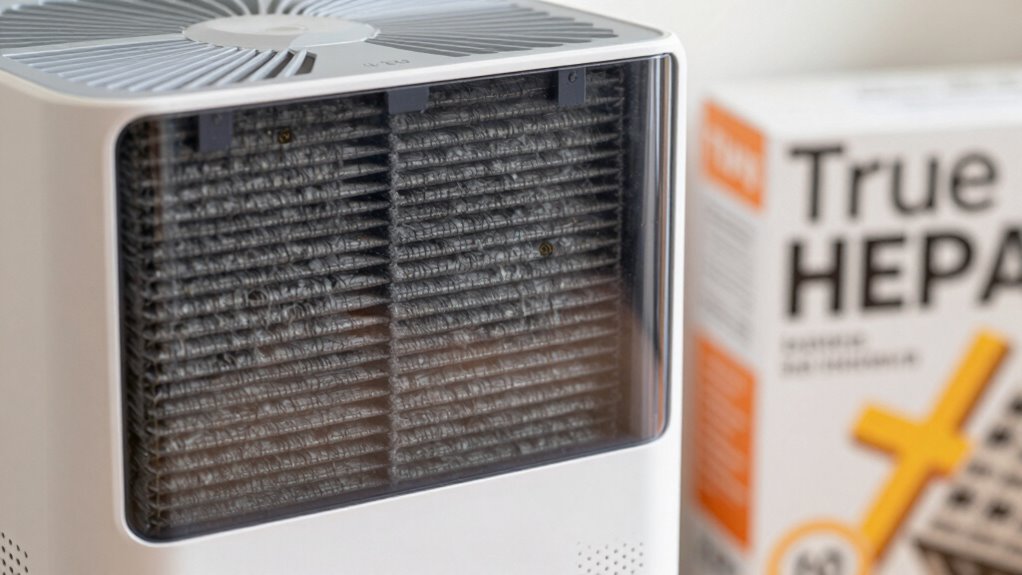
Spotting false or misleading HEPA claims requires a careful eye, as some manufacturers may exaggerate their filters’ capabilities to attract buyers. To avoid falling for misleading marketing, look out for these signs:
Watch for exaggerated claims and unverified certifications to spot false HEPA marketing.
- Vague language – Claims like “HEPA-like” or “99% filtration” without specific standards can be false or misleading.
- Lack of certification – Ensure the product is independently tested and certified as true HEPA by reputable organizations.
- Overly high claims – Be skeptical of filters claiming to remove 100% of particles or allergens, which is unrealistic.
- Misleading packaging – Some products showcase “HEPA” prominently but only contain a weaker or partial filter. Stay vigilant to avoid false claims.
Tips for Choosing an Air Purifier That Truly Uses HEPA Technology
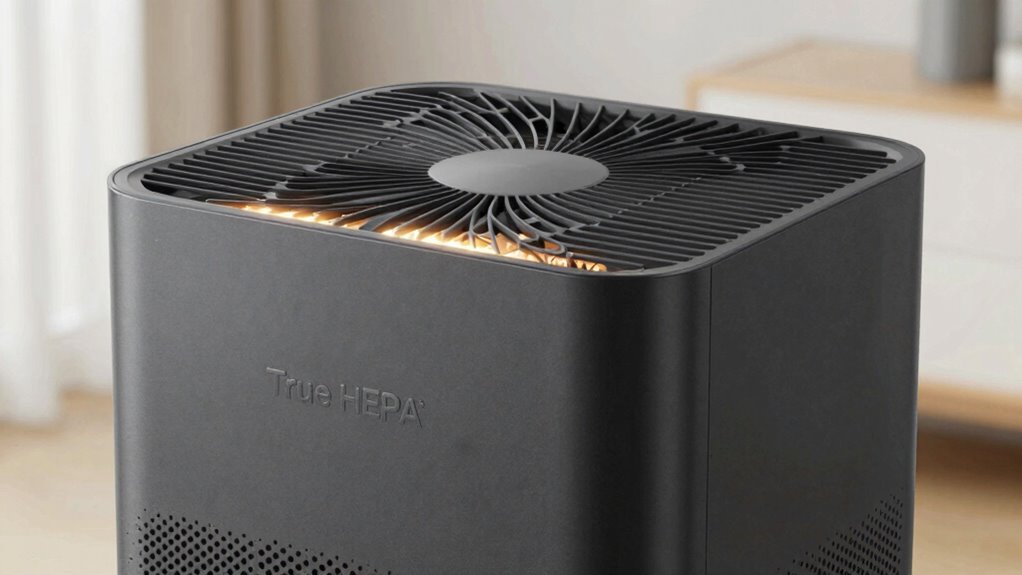
Choosing an air purifier that genuinely uses HEPA technology requires careful evaluation. Start by checking if the device is certified as true HEPA, which ensures it captures at least 99.97% of airborne particles. Look for specifications that specify particle size removal, especially for allergens like pollen, dust mites, and pet dander, to improve indoor air quality. Avoid models that advertise “HEPA-type” or “HEPA-like,” as these may not be true HEPA filters. Consider the room size and airflow rate to guarantee effective allergen reduction. Also, review user feedback and expert reviews to verify performance. By selecting a certified true HEPA purifier tailored to your space, you’ll markedly improve indoor air quality and reduce allergens effectively.
Frequently Asked Questions
How Often Should HEPA Filters Be Replaced for Optimal Performance?
You should replace your HEPA filter every 12 to 18 months for peak performance. The filter lifespan depends on usage, air quality, and environment, so regular checks are essential. If you notice reduced airflow or musty odors, it’s time for a replacement. Maintaining the proper replacement frequency ensures your air purifier works efficiently, protecting your health and keeping indoor air clean. Don’t wait too long to swap out your filter.
Are HEPA Filters Effective Against Viruses and Bacteria?
Think of HEPA filters as fierce guardians against airborne pathogens. They’re highly effective at capturing viruses and bacteria, thanks to their superior filtration efficiency. While they don’t completely eliminate all germs, they markedly reduce the presence of dangerous particles in your environment. You can feel more confident that your air is cleaner and safer, especially when combined with good ventilation and other health measures.
Can a Lower-Cost HEPA Filter Perform as Well as a Premium One?
A lower-cost HEPA filter can perform similarly to a premium one if it uses high-quality filter material and meets strict manufacturing standards. Cheaper options may lack durability or proper construction, reducing efficiency over time. You should check the filter’s ratings and certifications to guarantee it effectively traps particles, viruses, and bacteria. Ultimately, performance depends on adherence to standards, not just price, so choose wisely based on verified specifications.
What Maintenance Is Required to Keep HEPA Filters Functioning Properly?
To keep your HEPA filter working well, you need to replace it regularly, clean surrounding areas, and monitor air quality. Check the filter’s lifespan, replacing it when it’s full or clogged. Use air quality monitoring to identify when performance drops, and follow manufacturer instructions for cleaning or replacing. Consistent maintenance ensures your filter’s efficiency, prolongs its life, and maintains ideal air quality in your space.
Do All Air Purifiers With HEPA Claim Meet the Same Standards?
Not all air purifiers with HEPA claim meet the same standards. You should check the filter certification and confirm it complies with recognized air quality standards, like those set by the EPA or ASTM. Some products may label themselves as HEPA but don’t meet the true filtration requirements. Always verify the certification to ensure you’re getting an effective purifier that genuinely improves your air quality.
Conclusion
When shopping for an air purifier, knowing what true HEPA means helps you avoid costly mistakes. Remember, only filters that meet strict testing standards can truly capture 99.97% of particles. Did you know that misleading claims are common, with over 50% of products exaggerating their HEPA capabilities? By understanding the basics and asking the right questions, you can confidently choose a filter that genuinely improves your air quality—and your health.