
To solve stubborn kitchen odors, focus on improving air circulation with effective habits. Turn on exhaust fans or range hoods during cooking and keep vents clean and unobstructed. Open windows or create cross-breezes to boost airflow naturally. Use odor absorbers like baking soda or activated charcoal, and regularly clean surfaces to eliminate residue that traps smells. Consistently applying these ventilation practices can make a noticeable difference—if you stay committed, you’ll discover even more ways to keep your kitchen fresh.
Key Takeaways
- Consistently use and maintain exhaust fans or range hoods during and after cooking to remove odors at the source.
- Create cross-breezes by opening windows or using fans to enhance airflow and eliminate lingering smells.
- Regularly clean and unobstruct vents and filters to ensure maximum efficiency of your ventilation system.
- Incorporate natural odor absorbers like baking soda or activated charcoal in strategic locations to neutralize lingering smells.
- Maintain a clean kitchen by wiping surfaces with vinegar or lemon solutions to prevent odor buildup from grease and food residues.
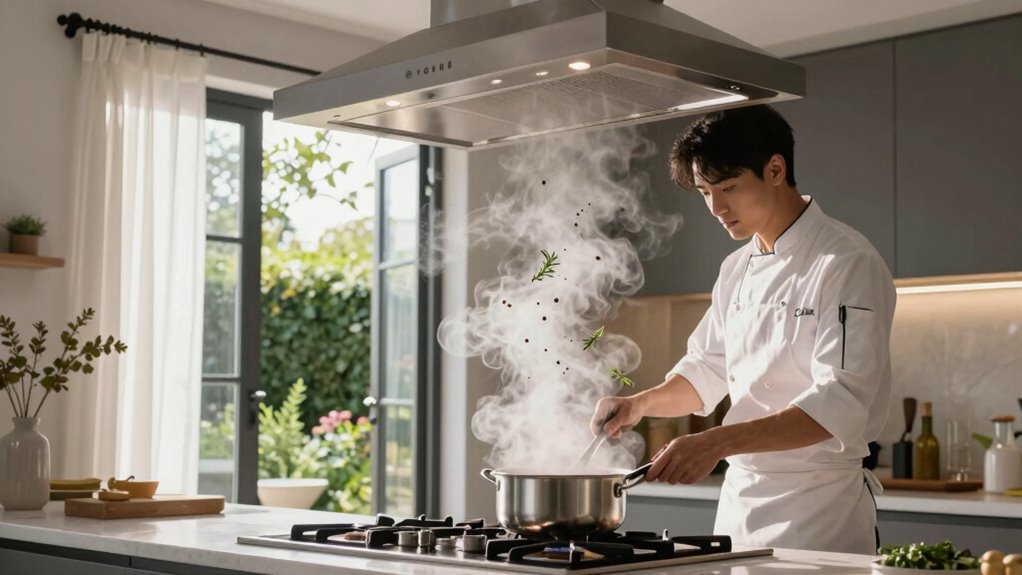
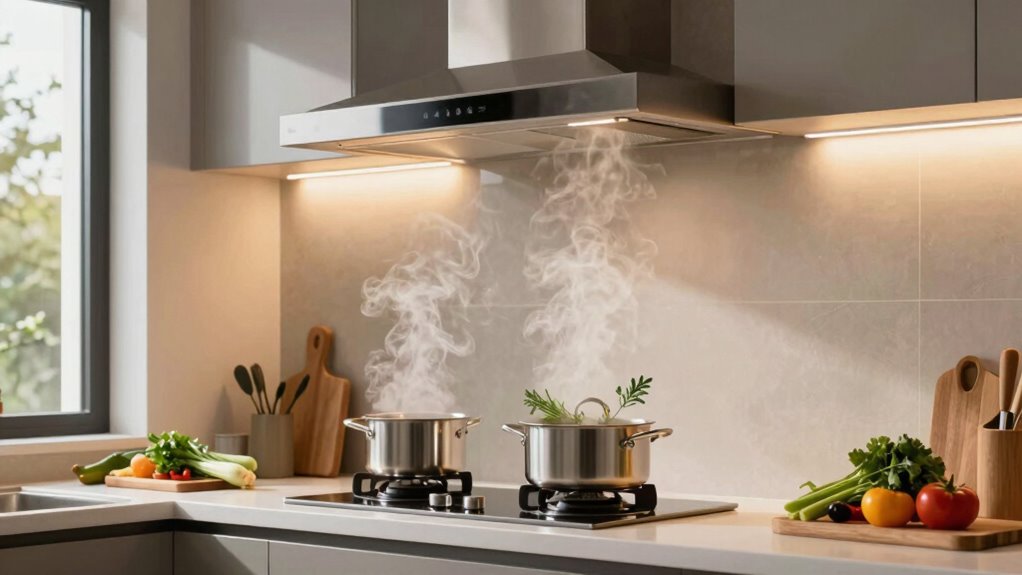
A lingering kitchen odor can quickly turn your cooking space into an unpleasant environment. No matter how fresh your ingredients are or how often you clean, that stubborn smell can hang around, making even simple meals less enjoyable. The key to tackling this issue lies in understanding the significance of proper air circulation and odor absorption. When your kitchen’s air doesn’t move effectively, odors tend to settle and linger longer. Improving air circulation ensures that airborne molecules responsible for bad smells don’t stick around but are instead replaced with fresh air. This means turning on your exhaust fan or range hood every time you cook, especially when frying or using strong spices. Keep these vents clean and unobstructed so they work efficiently, pulling out odors before they spread throughout your home. If your ventilation system isn’t enough, consider opening windows or using a fan to create a cross-breeze that pushes stale air out and draws in fresh air from outside. Good air circulation doesn’t just get rid of odors; it also prevents them from settling into your kitchen surfaces, fabrics, or cabinets, which can make smells even harder to eliminate later. Additionally, ensuring your ventilation systems are well-maintained and functioning optimally enhances their ability to remove odors effectively.
In addition to circulating air, odor absorption plays a vital role in maintaining a fresh kitchen. You can use natural ingredients like baking soda or activated charcoal, which are excellent at absorbing odors from the air and surfaces. Placing bowls of baking soda near your stove or in corners of the kitchen helps soak up lingering smells without any harsh chemicals. Activated charcoal, available in small bags or filters, is another powerful odor absorber that can be placed in your cabinets or under the sink. Regularly replacing these items ensures they continue to work effectively. Don’t forget about cleaning surfaces, as residual grease or food particles can trap odors and contribute to a persistent smell. Wiping down countertops, cabinets, and appliances with vinegar or lemon solutions not only cleans but also neutralizes odors. Ventilation habits, combined with strategic odor absorption, create a proactive approach to odor control that stops smells at their source and prevents them from re-establishing themselves. Maintaining proper air flow and routinely using odor-absorbing materials are essential steps in keeping your kitchen smelling fresh and inviting.
Frequently Asked Questions
How Often Should I Clean My Kitchen Exhaust Fan?
You should clean your kitchen exhaust fan at least once every three to four months. Regular fan maintenance helps remove kitchen grease buildup, ensuring it functions efficiently and reduces bad odors. If you cook frequently or notice greasy residue, consider cleaning it more often. Use warm soapy water and a brush to scrub the fan blades and filters. Proper maintenance keeps your kitchen fresh and your ventilation system working smoothly.
Do Air Purifiers Effectively Eliminate Kitchen Odors?
Think of an air purifier as a sponge for odors, but it’s not magic. While it can help reduce kitchen smells, many air purifier myths overstate their effectiveness. They don’t fully absorb odors like specialized odor absorption methods, such as activated charcoal or baking soda. For best results, combine an air purifier with proper ventilation habits, like using exhaust fans and cleaning your exhaust fan regularly, to truly keep your kitchen smelling fresh.
Can Opening Windows During Cooking Reduce Smell Buildup?
Yes, opening windows during cooking can markedly reduce smell buildup. By using window ventilation, you allow fresh air to enter and help with odor dispersion. This natural airflow pulls cooking smells out of your kitchen, preventing them from lingering. Keep windows open while cooking or right after to maximize odor control. It’s an effective, simple way to keep your kitchen smelling fresh without relying solely on other ventilation methods.
What Are the Best Natural Odor Absorbers for Kitchens?
If you want to banish kitchen odors instantly, forget sprays—try herbal blends and activated charcoal! Herbal blends like mint, basil, or lavender absorb smells and leave a fresh scent, while activated charcoal is a powerhouse that traps and neutralizes even the strongest odors. Place bowls of these natural absorbers around your kitchen, and you’ll notice odors disappear faster than you can say “fresh baked bread.”
How Does Humidity Affect Kitchen Odor Retention?
Humidity control plays a essential role in kitchen odor absorption. When humidity levels are high, odors tend to linger longer because moisture traps smells in the air and surfaces. You should use dehumidifiers or ventilation fans to reduce excess moisture, which helps prevent odor retention. Maintaining ideal humidity levels not only improves air quality but also enhances your efforts to keep your kitchen smelling fresh and clean.
Conclusion
Now that you know the secrets to effective ventilation, imagine the next time you cook—will you leave the odors lingering, or will you unveil the hidden power of your ventilation habits? The choice is yours, and the difference it makes could surprise you. Don’t underestimate the impact of a simple habit—soon, you might discover a kitchen that smells fresher than ever before. Are you ready to take control and finally solve the odor mystery?