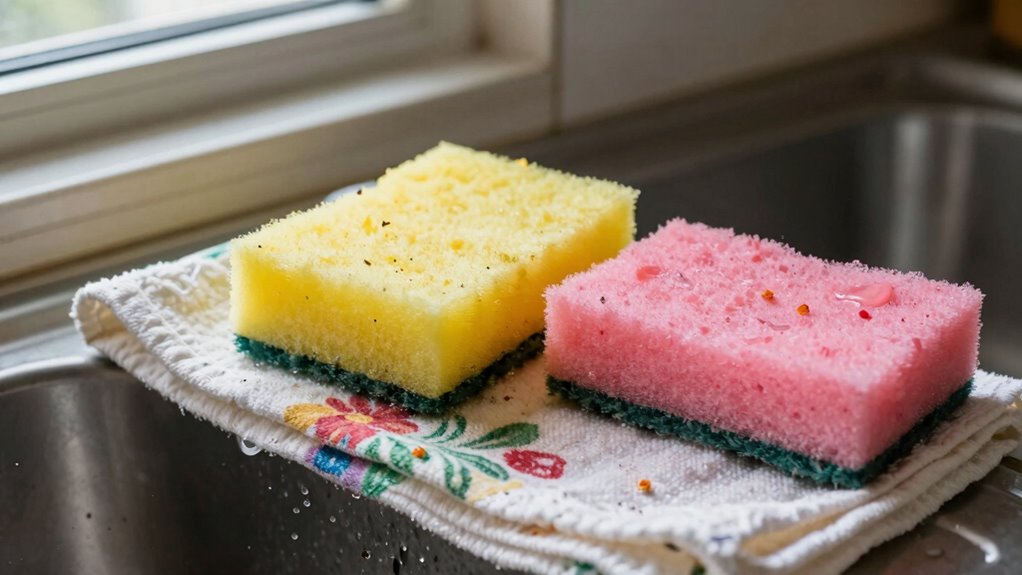

Many people overlook how they disinfect their kitchen sponges and towels, thinking hot water alone keeps them clean. But bacteria like Salmonella and E. coli can survive if you don’t disinfect properly. Microwaving damp sponges or using the dishwasher’s hot cycle is more effective. Towels also need frequent washing in hot water and thorough drying. If you want to prevent germs from spreading, there’s more to learn about proper hygiene practices—keep going.
Key Takeaways
- Many people rely solely on hot water, which doesn’t fully disinfect sponges and towels.
- Regularly microwaving damp sponges or using dishwasher cycles is often overlooked.
- Towels are frequently reused without proper washing or thorough drying, promoting bacteria growth.
- Using the same towel for different tasks increases cross-contamination risk.
- People often neglect replacing sponges and towels frequently, allowing bacteria to thrive.
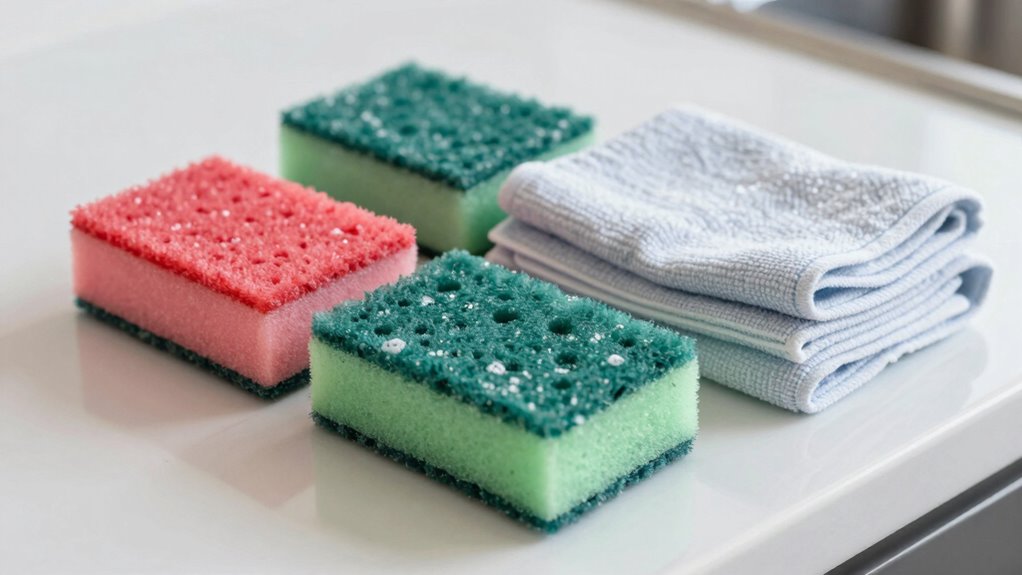
Kitchen sponges and towels are essential tools for maintaining cleanliness and hygiene in your cooking space. They’re your go-to items for wiping up spills, drying dishes, and keeping surfaces spotless. But despite their importance, many people unknowingly undermine their effectiveness by falling for dishwashing myths or ignoring towel material differences. These misconceptions can lead to cross-contamination and the spread of germs, making your kitchen less safe rather than more hygienic.
One common dishwashing myth is that using hot water alone sanitizes your sponges and towels. While hot water helps, it doesn’t kill all bacteria. Many bacteria, including potentially harmful ones like Salmonella or E. coli, can survive in warm or even hot water if the sponge or towel isn’t properly disinfected. Relying solely on hot water creates a false sense of security. Instead, you should regularly disinfect sponges by microwaving damp sponges for about a minute, running them through the dishwasher with hot cycles, or replacing them frequently. Towels, on the other hand, should be washed in hot water with detergent and dried thoroughly to prevent bacteria buildup.
Hot water alone doesn’t eliminate all bacteria from sponges and towels.
Another mistake involves ignoring towel material differences. Not all towels are created equal when it comes to hygiene. For instance, cotton towels are highly absorbent and quick-drying, making them ideal for drying dishes and hands. However, they can harbor bacteria if left damp for too long. Microfiber towels are also popular—they dry quickly and tend to trap fewer bacteria, but you must wash them regularly at high temperatures. On the flip side, terry cloth towels can trap more bacteria if not washed properly. Understanding these differences helps you choose the right towel for each task and ensures you wash and replace them often enough to prevent germs from spreading.
Many forget that towels can become a breeding ground for bacteria if left in the sink or crumpled up after use. It’s best to hang them up properly in a well-ventilated area, allowing them to dry completely between uses. Additionally, using separate towels for different purposes—such as one for drying hands and another for dishes—reduces cross-contamination. When it’s time to wash, opt for hot water cycles with bleach or a disinfectant to eliminate bacteria effectively. Proper disinfection methods are crucial for maintaining a hygienic kitchen environment.
Frequently Asked Questions
How Often Should I Replace My Kitchen Sponge?
You should replace your kitchen sponge every one to two weeks, depending on sponge material and how often you use it. Sponges made of synthetic materials tend to harbor bacteria faster, so more frequent replacements are smart. If your sponge shows signs of wear, a foul smell, or looks dirty despite cleaning, it’s time for a new one. Regular replacement helps prevent bacteria buildup and keeps your kitchen hygienic.
Can I Sanitize Sponges in the Dishwasher?
Absolutely, you can give your sponge a spa day with dishwasher sanitizing. Just place it on the top rack and run a hot cycle to boost sponge longevity and kill germs. This method keeps your sponge fresh and hygienic, preventing bacteria buildup. Remember, regular dishwasher sanitizing not only extends your sponge’s life but also ensures your kitchen stays healthier. So, yes—your dishwasher is a great tool for sponge upkeep!
Are Paper Towels More Hygienic Than Cloth Towels?
You’ll find paper towels more hygienic than cloth towels because they’re disposable and reduce bacteria transfer. Cloth towels, especially if made from porous materials, can harbor germs if not washed frequently. Dishwasher safety for sponges varies with material—synthetic sponges often withstand heat well, but natural ones may not. Using paper towels minimizes cross-contamination, making them a safer choice for quick, hygienic cleanup.
What’s the Best Way to Dry Kitchen Towels?
Did you know that damp towels can harbor bacteria, multiplying rapidly? To dry your kitchen towels effectively, use a high-quality cotton or linen material for better airflow and quick drying. Air-drying is best—hang towels in a well-ventilated area and avoid leaving them in damp spots. For dish drying techniques, switching towels frequently keeps bacteria at bay, making your kitchen safer and more hygienic.
Do Antibacterial Sponges Actually Prevent Bacteria Buildup?
Antibacterial sponges can help prevent bacteria buildup, but they don’t completely eliminate it. The antibacterial coating offers bacteria resistance, reducing the growth of germs on your sponge’s surface. However, you still need to regularly sanitize and replace your sponge to maintain hygiene. Relying solely on antibacterial properties isn’t enough; proper cleaning routines guarantee your sponge stays as germ-free as possible.
Conclusion
So, next time you reach for your sponge or towel, remember to clean, replace, and dry them regularly. Keep them sanitized, keep them fresh, and keep your kitchen safe. Don’t let germs linger, don’t let bacteria build up, and don’t ignore the hygiene rule most people break. By taking these simple steps, you protect your health, protect your family, and protect your home. Clean smart, stay safe, and make hygiene a habit you won’t break.