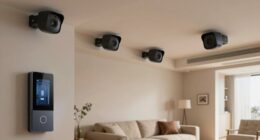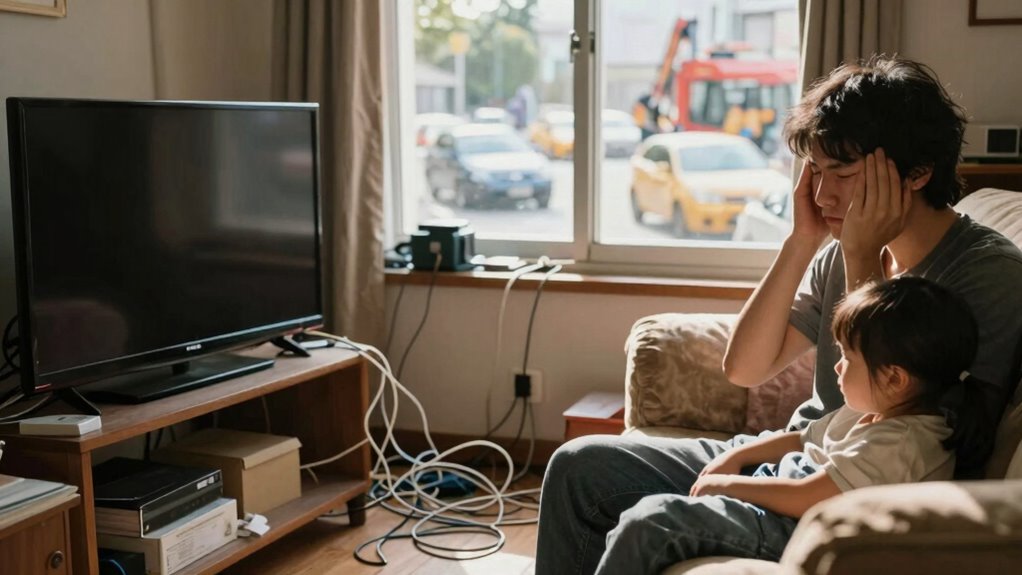

Noise pollution at home often quietly causes stress, disrupting your sleep, focus, and relaxation. You might not realize how much it impacts your mood and health. Simple fixes like sealing gaps, using heavy curtains, or installing soundproof panels can make a big difference. Creating a dedicated quiet zone with rugs, books, or white noise can boost your peace further. Keep exploring ways to minimize noise—you’ll find ways to reclaim your calm and comfort.
Key Takeaways
- Noise pollution at home disrupts sleep, concentration, and increases stress, impacting overall well-being.
- Sealing gaps, installing acoustic panels, and using heavy curtains effectively reduce sound transmission.
- Creating a designated quiet zone with rugs, bookshelves, and calming sounds enhances serenity.
- Understanding sound transmission helps select appropriate soundproofing materials for better results.
- Simple modifications like weatherstripping and soft furnishings significantly improve home comfort and reduce hidden stress.
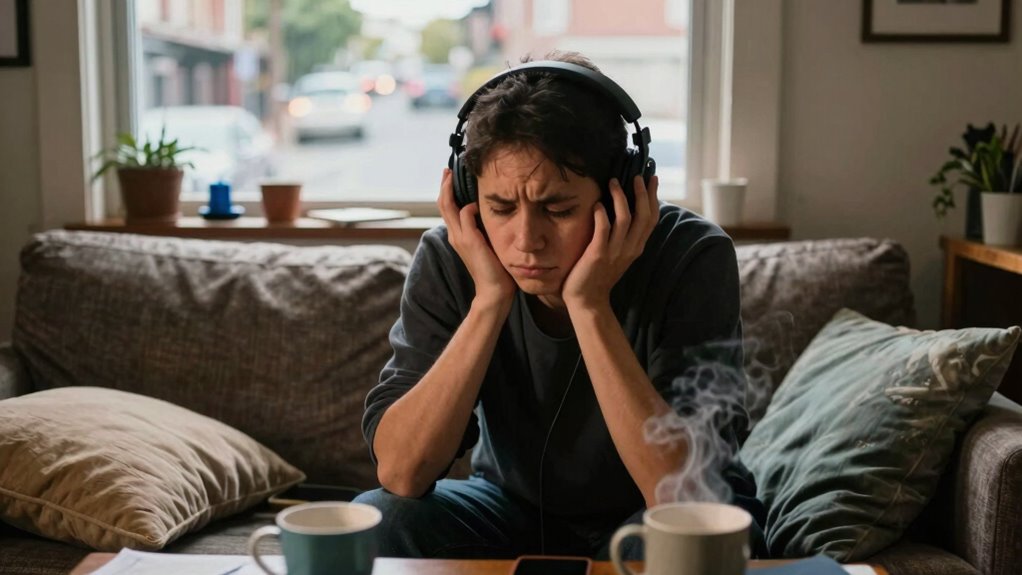
Have you ever noticed how noise pollution at home can disrupt your daily life? The constant background sounds—from traffic, neighbors, or household appliances—can wear you down without you even realizing it. Fortunately, there are effective ways to minimize these disturbances, starting with soundproofing techniques. Implementing these methods can help you create a more peaceful environment where you can focus, relax, and sleep better. Soundproofing isn’t just about adding thick walls or expensive insulation; it’s about blocking or absorbing unwanted noise at its source or preventing it from entering your space. Simple steps like sealing gaps around doors and windows, using weatherstripping, or hanging heavy curtains can make a noticeable difference. For more significant noise issues, consider installing acoustic panels or foam on walls, or even adding a layer of drywall with soundproofing mats. These modifications help absorb sound waves and prevent them from traveling freely through your home. Additionally, understanding sound transmission and how it travels through different building materials can help you choose the most effective soundproofing solutions. Creating a quiet zone is another highly effective strategy. Designate a specific area in your home as a sanctuary where noise levels are kept to a minimum. This could be your bedroom, a meditation nook, or a home office. Once you establish a quiet zone, you can focus on soundproofing techniques tailored to that space. For example, installing plush rugs or carpets can reduce echo and absorb sound, while adding bookshelves filled with books can act as additional sound barriers. You might also consider using white noise machines or calming background sounds in your quiet zone to mask residual noise and promote relaxation. Soundproofing techniques and quiet zone creation work hand-in-hand to foster a serene atmosphere, especially in busy households or noisy neighborhoods.
Frequently Asked Questions
How Does Noise Pollution Affect Sleep Quality at Home?
Noise pollution can seriously disrupt your sleep quality by causing sleep disturbances and increasing noise sensitivity. When loud or persistent sounds occur, you might find it harder to fall asleep or stay asleep throughout the night. Over time, this can lead to tiredness and decreased alertness during the day. To improve your sleep, consider using earplugs, white noise machines, or soundproofing your bedroom to minimize noise impacts.
Can Noise Pollution Impact Mental Health Over Time?
Did you know that prolonged exposure to noise pollution can increase your risk of mental health issues by 25%? Over time, constant noise causes chronic stress, leading to anxiety, depression, and difficulty concentrating. You might not notice it daily, but persistent noise affects your mood and mental well-being. To protect yourself, create quiet zones at home, use earplugs, or incorporate calming sounds to reduce stress and support your mental health.
What Are the Best Soundproofing Materials for Homes?
You should consider acoustic panels and soundproof curtains as top soundproofing materials for your home. Acoustic panels absorb sound, reducing echo and noise, while soundproof curtains block out external sounds effectively. Installing these materials helps create a quieter, more peaceful environment. Use acoustic panels on walls and soundproof curtains over windows to maximize noise reduction and improve your mental well-being by minimizing stress caused by unwanted noise.
How Can I Alert Neighbors About Noise Issues Amicably?
Think of your neighborly communication as tending a delicate garden—approach with kindness and patience. Start with a friendly chat, expressing your concerns calmly. Use noise complaint etiquette by avoiding blame and focusing on how the noise affects you. Respectful, open dialogue fosters understanding, turning a potential conflict into cooperation. Remember, a gentle word often clears the way for peaceful coexistence, much like sunlight nurturing blooming flowers.
Are There Legal Limits for Acceptable Noise Levels in Residential Areas?
Yes, there are legal noise limits for residential areas based on noise regulation standards. These legal noise limits typically specify maximum decibel levels during certain hours to prevent disturbance. You should check your local ordinances or government websites, as regulations can vary by location. If noise exceeds these limits, you can report it to local authorities, who enforce these laws and help guarantee a quieter, more peaceful neighborhood for everyone.
Conclusion
Managing noise pollution at home isn’t just about comfort; it’s essential for your well-being. Did you know that prolonged exposure to household noise can increase stress levels by up to 30%? By taking simple steps like soundproofing, using white noise machines, or scheduling quiet times, you can markedly reduce stress. Remember, creating a peaceful environment at home helps you relax, recharge, and improve your overall health—so take action today for a calmer, healthier future.