
To make your home feel cozier, adopt the two-zone temperature habit by dividing your space into separate areas, like living rooms and bedrooms, with independent controls. This way, you can keep main living areas warmer during the day while cooling bedrooms at night, or save energy in unoccupied rooms. Smart thermostats and zone dampers help manage this effectively. Want to learn how to set it up for maximum comfort and efficiency? Keep going to discover more tips.
Key Takeaways
- Dividing your home into separate zones allows tailored heating and cooling for increased comfort.
- Using smart thermostats and zone dampers optimizes temperature control in each area.
- Setting warmer temperatures in main living areas during the day and cooler in bedrooms at night creates coziness.
- Targeted zoning reduces energy waste, maintaining a comfortable environment efficiently.
- Implementing two-zone heating and cooling minimizes hot or cold spots, ensuring a cozy, evenly heated home.
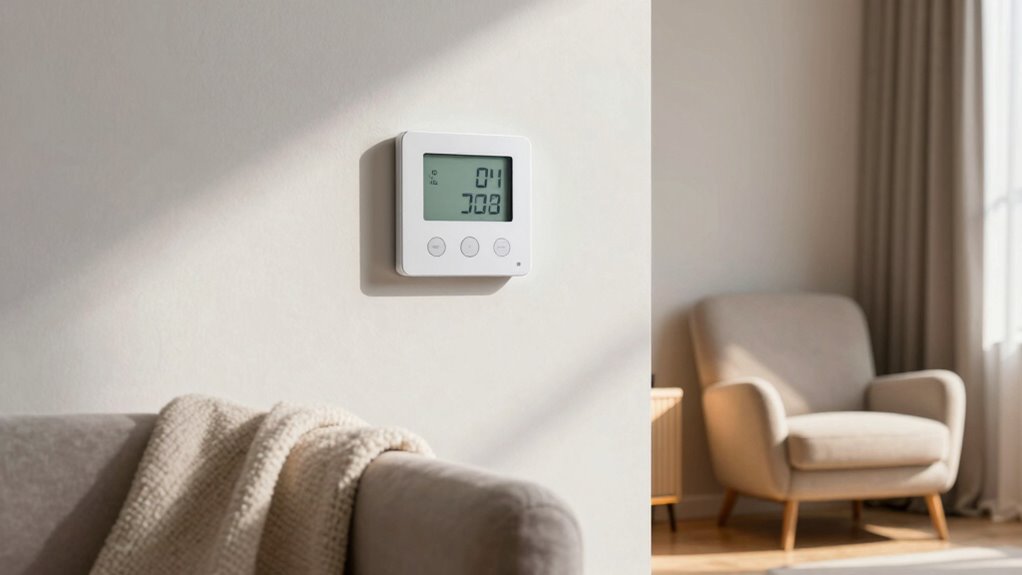
Adopting a two-zone temperature habit can substantially improve your comfort and energy efficiency at home. By implementing zone control and temperature zoning, you can tailor the heating and cooling in different areas, making your living space more comfortable and cost-effective. Instead of maintaining a uniform temperature throughout your home, you focus on splitting it into two distinct zones—typically the main living area and the bedrooms or other less-used spaces. This approach allows you to adjust the climate in each zone independently, ensuring you’re never wasting energy heating or cooling rooms that aren’t in use or don’t need to be at the same temperature.
When you embrace temperature zoning, you gain better control over your environment. For example, during the day, you can keep the main living area warmer while keeping bedrooms cooler, saving energy during times when those rooms aren’t occupied. Conversely, at night, you can reverse that setup, making bedrooms cozy for sleeping while dialing down the temperature in the common areas. This flexibility reduces the tendency to overheat or overcool the entire house, which often leads to higher energy bills and less consistent comfort. With zone control, you can set different thermostats or use smart thermostats to precisely manage each zone, ensuring that every part of your home reaches the desired temperature efficiently.
You’ll find that adopting this habit encourages a more mindful approach to energy use. Instead of cranking up the heat or air conditioning for the whole house, you target specific areas, which not only saves money but also minimizes wear and tear on your HVAC system. Over time, you’ll notice a reduction in your utility bills and a more stable indoor climate. Additionally, temperature zoning can help prevent hot or cold spots, which are common in homes with a single thermostat. By clearly defining zones, you eliminate the guesswork and discomfort that often come with uneven heating and cooling. Understanding the benefits of zoning can help motivate you to implement this efficient strategy.
Target specific areas to save energy, reduce HVAC wear, and prevent hot or cold spots.
Getting started with zone control is straightforward. Many modern HVAC systems come with built-in zoning capabilities, or you can add zone dampers and smart thermostats to your existing setup. The key is to identify the zones that make the most sense for your home’s layout and your lifestyle. Once set up, you’ll enjoy greater comfort, reduced energy costs, and a more sustainable way to manage your home’s climate. Embracing a two-zone temperature habit isn’t just about convenience—it’s a smart move toward a more efficient and cozy living environment.
Frequently Asked Questions
How Does the Two-Zone Temperature System Save Energy?
You save energy with a two-zone temperature system by using zonal heating to target specific areas in your home. Instead of heating the entire house equally, you keep living spaces warmer and less-used rooms cooler, which boosts energy efficiency. This approach reduces unnecessary heating, lowers your energy bills, and minimizes environmental impact. By customizing temperatures in different zones, you optimize comfort while conserving energy effectively.
Can This Habit Be Implemented in Small Apartments?
Yes, you can implement the two-zone temperature habit in small apartments. It enhances space optimization and offers design flexibility by allowing you to set different temperatures for distinct areas, like the living room and bedroom. You might use portable heaters or smart thermostats to create zones. This approach makes your small space more comfortable and energy-efficient, giving you better control over your environment without sacrificing style or functionality.
What Are the Best Thermostat Settings for Each Zone?
Think of your home as a cozy café with two rooms—you want each to be just right. For best thermostat settings, keep the main zone around 68-70°F and the secondary zone slightly cooler at 65-67°F. Proper thermostat calibration and zone insulation help maintain these temps efficiently. Adjust based on comfort and activity, ensuring each zone feels just right without overworking your system or wasting energy.
Is Professional Installation Required for a Two-Zone System?
You don’t necessarily need a professional for a DIY installation of a two-zone system, but it’s often recommended for safety and efficiency. Doing it yourself can save you money upfront, but a professional guarantees proper setup and may prevent costly mistakes later. When comparing costs, consider installation fees versus potential issues from improper setup. Ultimately, assess your comfort level and technical skills before deciding.
How Quickly Can I See Comfort Improvements?
You can notice comfort improvements within a few days of implementing temperature zoning. By adjusting zones to match your needs, you optimize energy efficiency and create a cozier environment. Proper zoning allows you to target specific areas, reducing hot or cold spots quickly. As you fine-tune your system, you’ll experience more consistent temperatures and lower energy bills, making your home feel more comfortable almost immediately.
Conclusion
By embracing the two-zone temperature habit, you might find your home feels unexpectedly warmer and more inviting. Sometimes, it’s the small changes—like setting different temps for each area—that create a cozy atmosphere you didn’t realize you were missing. It’s funny how a simple habit can transform your space, making it feel just right without extra effort. So, next time you adjust your thermostat, remember, a little coincidence might just make your home even cozier.