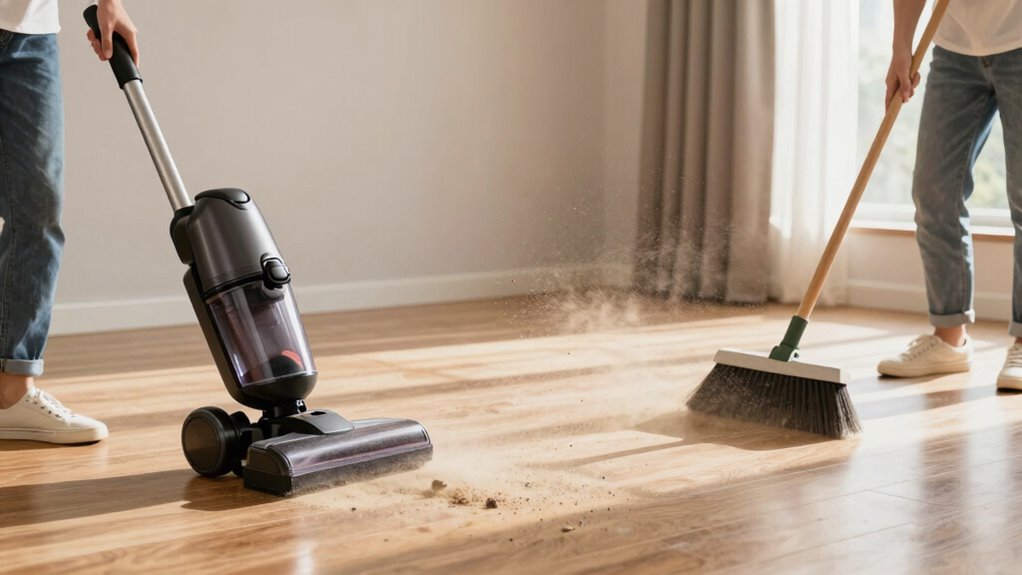
When comparing vacuuming and sweeping, vacuuming spreads less dust because it captures airborne particles with filters and sealed systems, preventing them from dispersing into the air. Sweeping tends to push dust around, temporarily worsening indoor air quality. Using a vacuum regularly can help keep your space cleaner and healthier. If you want to discover more about the advantages of vacuuming over sweeping and how to improve your indoor air quality, keep exploring.
Key Takeaways
- Vacuuming with sealed filters traps dust particles, reducing airborne dust spread compared to sweeping.
- Sweeping often disperses dust and allergens into the air, increasing indoor particulate levels.
- Modern vacuums with HEPA filters contain dust better than traditional brooms.
- Sweeping can push dust under furniture or into cracks, missing removal and increasing dispersal.
- Regular vacuuming minimizes dust spread over time more effectively than sweeping.

Have you ever wondered which method is better for cleaning your floors—vacuuming or sweeping? When it comes to maintaining a clean home, your choice impacts more than just appearance; it affects air quality and cleaning efficiency. Sweeping might seem straightforward, but it can stir up dust and allergens that linger in the air, potentially worsening indoor air quality. On the other hand, vacuuming, especially with a good filter system, tends to trap dust particles more effectively, reducing the amount that escapes into the air you breathe. This makes vacuuming a better option if your goal is to improve air quality and create a healthier living environment.
In terms of cleaning efficiency, vacuuming generally outperforms sweeping. A vacuum’s motorized brush or beater bar agitates carpet fibers and hard floors alike, loosening dirt, pet hair, and debris that sweeping might leave behind. Sweeping relies on a broom or dustpan, which can miss fine dust or small particles lodged deep in cracks or embedded in textured surfaces. As a result, sweeping may require multiple passes to achieve the same level of cleanliness a vacuum can deliver in a single try. Plus, vacuums equipped with HEPA filters or high-efficiency particulate air filters trap microscopic particles that sweeping often disperses back into the air, making vacuuming more efficient at removing airborne contaminants.
Another factor to evaluate is the spreading of dust. Sweeping tends to push dust and allergens around rather than contain them, especially if you’re using a broom that isn’t designed to trap particles. This dispersal can temporarily reduce air quality and contribute to respiratory issues for sensitive individuals. Vacuuming, especially with sealed systems and quality filters, minimizes this problem by containing most of the debris within the machine. When you vacuum properly, you’re less likely to spread dust and allergens into the air, helping maintain better indoor air quality over time.
Additionally, advancements in smart lock technology and office gear have made cleaning tools more accessible and efficient, indirectly supporting cleaner environments by reducing the need for harsh chemicals and manual labor. When you choose the right equipment, you can enhance your overall cleaning routine and indoor air quality.
While sweeping might be quicker for small areas or quick clean-ups, it often isn’t as thorough as vacuuming. If you want to maximize cleaning efficiency and reduce airborne dust, investing in a good vacuum cleaner is worthwhile. It might take a bit more effort initially, but you’ll notice a cleaner floor and fresher air more quickly. Plus, regular vacuuming can prevent dust buildup, making your overall cleaning routine more effective. So, if your priority is cleaner air and more efficient dirt removal, vacuuming clearly has the edge over sweeping.
Frequently Asked Questions
Which Method Is More Effective for Pet Hair Removal?
Vacuuming is more effective for pet hair removal because it offers better dust containment and pulls hair from carpets and upholstery more thoroughly. You should use a vacuum with a high-efficiency filter to trap pet dander and reduce airborne dust. Sweeping often pushes pet hair and dust around rather than removing them, making vacuuming the better choice for cleaner, allergen-free spaces.
How Do Vacuum Filters Impact Dust Dispersion?
Vacuum filters, especially HEPA filters, are your best defense against dust dispersion—they trap 99.97% of particles, preventing them from escaping back into the air. Without proper dust retention, dust can spread like wildfire every time you vacuum. Using a vacuum with a high-quality HEPA filter minimizes dust release, keeps your air cleaner, and protects your respiratory health. So, invest in a good filter and breathe easier every day.
Can Sweeping Cause More Airborne Allergens Than Vacuuming?
Sweeping can cause more airborne allergens than vacuuming because it often leads to dust resuspension, releasing allergens into the air. When you sweep, the movement stirs up dust particles, increasing allergen dispersion. In contrast, vacuuming with a good HEPA filter captures most allergens, reducing airborne dust. So, if you’re concerned about allergies, vacuuming is generally the better choice to minimize dust resuspension and allergen dispersion.
Are There Specific Types of Vacuums That Spread Less Dust?
Definitely, you should choose vacuums with HEPA filters and dust containment systems. These specialized vacuums trap tiny particles, limiting dust dispersion and reducing allergens in the air. By opting for these efficient devices, you prevent dust from escaping back into your environment. So, for cleaner, healthier homes, prioritize vacuum models designed for maximum dust containment and effective filtration, ensuring less dust spreads and your space stays fresher longer.
How Does the Frequency of Cleaning Affect Dust Spread?
Your cleaning schedule directly impacts dust spread; frequent cleaning reduces dust accumulation, preventing it from becoming airborne. When you clean regularly, you minimize the amount of dust that can be stirred up, especially during sweeping. Conversely, infrequent cleaning allows dust to settle and build up, making it more likely to spread when you do clean. So, sticking to a consistent routine helps keep dust levels lower and cleaner indoor air.
Conclusion
So, next time you’re debating between vacuuming and sweeping, remember—sweeping might just be the dust-spreading champion you didn’t see coming. While it feels like a quick fix, it tends to toss more dust into the air, making your clean space potentially dirtier. Ironically, that trusty broom could be your dirtier secret. Maybe it’s time to embrace the vacuum, even if it’s a bit noisier. Sometimes, the less dusty choice is the one you least expect.