Many believe outdoor dirt causes most household dust, but in fact, indoor sources are the primary culprits. Dust mostly comes from activities like moving around, shedding skin cells, and fibers from furniture, carpets, or curtains. Dust mites, pet dander, and food particles also contribute, settling over time. Humidity and poor ventilation can make dust worse. Want to discover how your everyday routines and items fuel dust buildup? Keep exploring to learn more.
Key Takeaways
- Most household dust originates from indoor activities, not outdoor dirt tracked inside.
- Indoor airborne particles like skin cells, fibers, pollen, and pet dander are primary dust sources.
- Fabrics, furniture, and dust mites shed particles that settle as dust over time.
- Activities like walking, cleaning, and cooking disturb and release dust particles into the air.
- Humidity and poor ventilation increase dust accumulation more than external dirt.
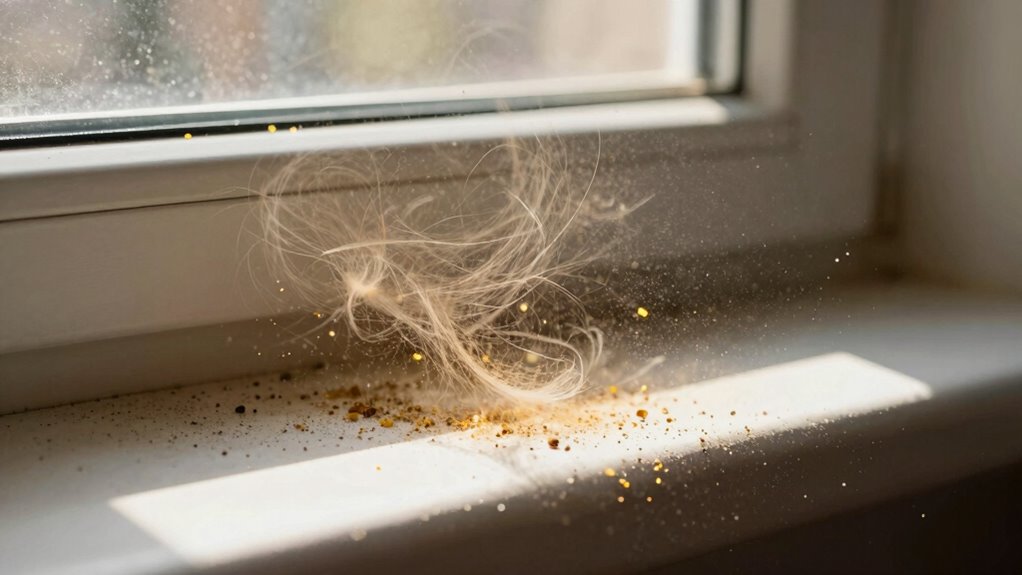
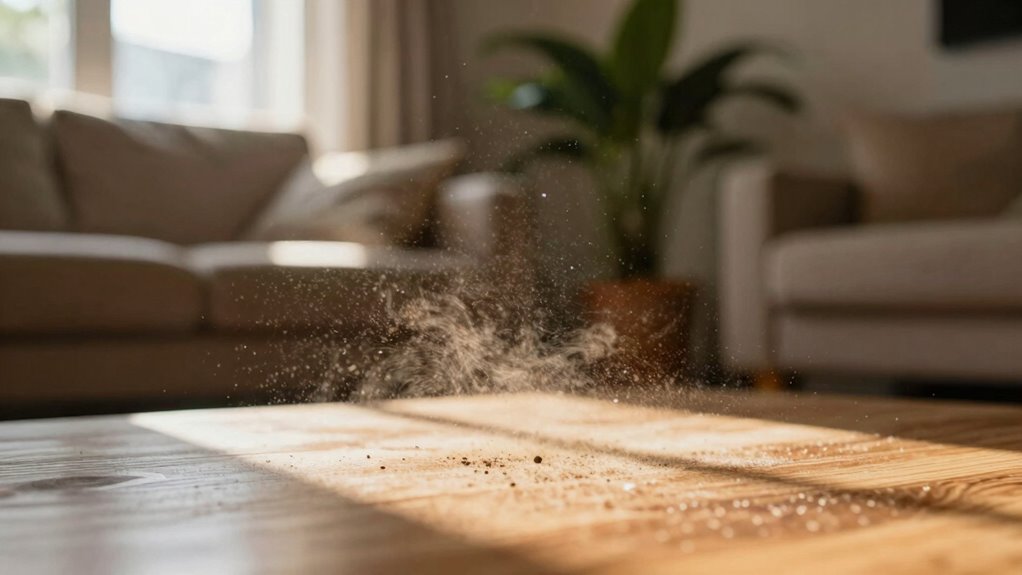
Many people believe that dust mainly comes from outdoor dirt being tracked inside, but in reality, most household dust originates from everyday activities and indoor sources. When you think about dust, you might picture dirt blown in from outside, but a considerable portion actually begins indoors. The key players in dust formation are airborne particles, which you constantly generate through daily routines. From walking around to cooking, you release tiny particles into the air that settle on surfaces. These airborne particles are made up of skin cells, fibers from clothes and furniture, pollen, pet dander, and even bacteria. Over time, these particles accumulate and become the dust you see settling on shelves and floors.
Indoor sources are the primary contributors to household dust. Your home’s fabrics, such as carpets, curtains, and upholstery, shed fibers that get suspended in the air. As you move through your space, you disturb these fibers, causing them to become airborne. Dust mites thrive in warm, humid environments like beds and couches, and they contribute to the dust by shedding their parts and fecal matter. These tiny creatures are invisible to the naked eye but are a major component of indoor dust. Additionally, cooking releases grease, ash, and tiny food particles into the air, which settle as dust over time. Even everyday activities like making your bed, vacuuming, or simply walking across a carpet can stir up airborne particles that settle and become part of your home’s dust. Regular appliance maintenance plans can help reduce the accumulation of dust by ensuring your appliances operate efficiently and do not contribute excess particles to the indoor environment.
Indoor fabrics and daily activities significantly contribute to household dust buildup.
Your indoor environment constantly generates dust, and it’s not just about what’s coming from outside. Dust can also form from indoor sources like household products, textiles, and human activity. Items like cleaning supplies, air fresheners, and scented candles release chemicals that can attach to airborne particles, making dust more complex. Pets add another layer, shedding hair and skin flakes that become airborne and settle as dust. Excess humidity and poor ventilation can make dust accumulation worse because they allow airborne particles to linger longer in the air and settle on surfaces more quickly.
Understanding that most of your household dust comes from indoor sources and airborne particles helps you realize how your everyday routines contribute to dust buildup. Instead of blaming outdoor dirt, focus on controlling indoor environments—regular cleaning, reducing humidity, and maintaining good ventilation. By doing so, you can markedly reduce the amount of dust circulating in your home and improve the air quality you breathe daily.
Frequently Asked Questions
How Can I Reduce Indoor Dust Without Frequent Cleaning?
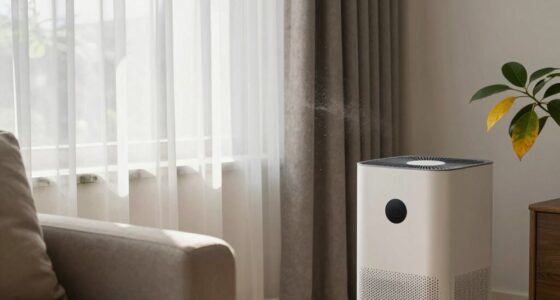
To reduce indoor dust without frequent cleaning, invest in an air purifier with high efficiency to capture airborne particles. Keep humidity levels between 40-50% to prevent dust mite buildup, which markedly contributes to dust. Regularly wash bedding, curtains, and soft furnishings to prevent dust accumulation. Using hypoallergenic covers and avoiding clutter also helps. These steps work together to minimize dust and improve indoor air quality effortlessly.
Does Humidifying My Home Increase or Decrease Dust Levels?
Wondering if humidifying your home actually changes dust levels? It can go either way, but generally, humidifier effects tend to decrease airborne dust particles by making particles stick together and settle faster. When humidity hits the right level, dust particle size increases, making them easier to capture with filters or cleaning. Just be cautious—too much humidity can encourage mold, so keep it balanced for ideal dust control.
Are Certain Types of Furniture More Prone to Dust Accumulation?
Certain types of furniture are more prone to dust accumulation due to their material and dust retention qualities. For example, fabric or upholstered furniture tends to trap more dust than wood or metal pieces. Cushions and textured surfaces also hold onto dust particles more easily. To reduce dust buildup, regularly clean and vacuum these items, and consider choosing furniture made from smoother, less dust-retentive materials for easier maintenance.
Can Air Purifiers Completely Eliminate Household Dust?
Think of an air purifier as a net trying to catch tiny fish in a river. While it traps many dust particles, especially larger ones, it can’t catch every single one due to air purifier limitations and dust particle size. Smaller particles slip through, so it won’t completely eliminate household dust. Regular cleaning and good ventilation complement the purifier, helping you keep dust levels lower and your home fresher.
How Does Dust Affect People With Allergies or Asthma?
Dust can worsen allergy triggers and trigger asthma symptoms, making it harder for you to breathe and causing discomfort. When dust particles settle on surfaces or become airborne, they introduce allergens like pollen, pet dander, and mold. Regular cleaning, using HEPA filters, and controlling humidity help reduce dust levels. These steps can make your environment safer and improve your overall respiratory health, especially if you suffer from allergies or asthma.
Conclusion
Now that you know dust isn’t just dirt from outside, picture tiny fibers, pet hair, and skin flakes gently floating in the air like invisible snowflakes. As you walk through your home, they settle on surfaces, turning your cozy space into a quiet, dusty landscape. With this understanding, you can breathe easier, knowing you’re not fighting a losing battle against invisible particles—you’re simply managing the natural, persistent dance of dust inside your sanctuary.